
Add slabs to your wishlist so we can give you custom quote.
Add productions from our slab collection so we create a quote for your next project!
If you're unsure of what you're after please reach out via our contact page.
-.jpg)
The Best Benchtop Material for an Airbnb (And Why It's Not the One You'd Choose for Yourself)
The Best Benchtop Material for an Airbnb (And Why It's Not the One You'd Choose for Yourself)
For most premium Airbnbs, the right call is one of three engineered surfaces: silica-free engineered stone, sintered stone, or porcelain. They're non-porous, stain-resistant, don't etch, don't need sealing, and come in hundreds of colours and patterns that natural stone simply can't replicate. If the property doubles as a family weekender you stay in yourself, quartzite earns its place. The difference comes down to who's living with the stone, how often, and how much aesthetic flexibility you want.
If you're renovating a property you plan to list on Airbnb, the question of what stone to put in the kitchen looks the same as the question for your own home. It isn't. The two are different problems with different right answers.
Your own kitchen is a relationship. You learn how the stone behaves. You wipe the wine before it sits. You know which pan is the heat risk. You forgive small etch marks because they came with a meal you remember.
A guest doesn't have that relationship. They cook a curry on a tea towel. They leave lemon halves on the bench overnight. They spill red wine and notice three days later when they're packing up. They use whatever cleaning product is under the sink, which is whatever the housekeeper bought from Bunnings on a Tuesday. By month six, the surface that looked flawless on listing day is starting to show the wear of a hundred small accidents.
So the material question for an Airbnb is really a different one: what surface holds up to people who don't love it the way you do, resists the stains that come with that, photographs like a premium property a year from now, and gives you design freedom that fits the look you're chasing?
Here's how to think about it.
The short answer
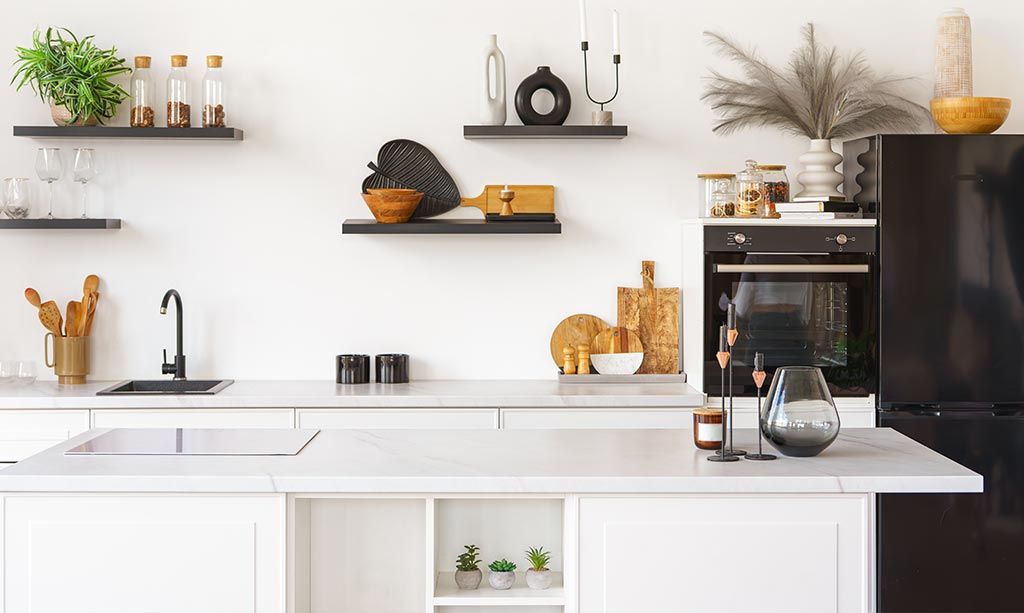
For most short-stay rentals at a premium price point, the best benchtop material sits inside three options: silica-free engineered stone, sintered stone, or porcelain.
All three are non-porous. None need sealing. None etch from lemon, wine, or vinegar. Sintered stone and porcelain are stain-proof. Silica-free engineered stone is highly stain-resistant. That matters more in a rental than almost anywhere else, because guests will spill turmeric, red wine, coffee, beetroot, and food colouring, and they won't always tell you about it. Between the three categories, you have access to hundreds of colours, patterns, and finishes, including looks that don't exist in natural stone at all. Solid charcoals, true whites, concrete looks, onyx looks, marble-look slabs that hold up to a rental's reality. Design options for short-stay properties are functionally endless.
If the property is also a family weekender or is a high-end designed space, quartzite earns its place. Taj Mahal, Mont Blanc, Biancatto, Ijen Blue, etc. Real stone, premium in photographs, harder than granite, lower-maintenance than marble. Slightly more care than the engineered surfaces, but it brings something engineered products can't quite match in person.
The engineered stone correction
A lot of older "best Airbnb benchtop" articles still recommend engineered stone without qualification. They were right at the time. They're now incomplete, and the difference matters.
Since 1 July 2024, engineered stone containing 1% or more crystalline silica has been banned in Australia. Manufacture, supply, processing, and installation. The ban came in because cutting and polishing the old product caused silicosis in stonemasons at rates around one in four screened workers. Imports were banned from 1 January 2025.
What replaced it is a newer category: silica-free engineered stone. Same density, same visual range, same finish options, same stain resistance. The silica has been removed and replaced with safer materials, so fabricators can cut it without the health risk.
For a short-stay rental, this category is almost purpose-built. So is sintered stone. So is porcelain. Let's walk through the three.
The three surfaces, and when each one wins
The closest of the three to natural stone in feel and weight. Comes in slab thicknesses similar to traditional benchtops (around 20mm), with a tactile quality that reads as stone in person.
Where it wins: kitchens and bathrooms where you want the warmth and depth of stone without the maintenance. Non-porous, so wine, oil, coffee, and tomato don't penetrate. Stain-resistant in everyday rental conditions. Marble-look ranges have come a long way. Some now hold up against natural Calacatta in photography while behaving like a synthetic surface in real life.
Design range: very broad. Marble looks, concrete looks, soft veined neutrals, solid colours. Most ranges offer honed, polished, and increasingly leathered finishes.
Budget position: low to mid-tier. More accessible than premium quartzite, comparable to mid-range granite, generally less than statement marble.
Where it's average: sintered stone outperforms it on heat resistance. Porcelain offers wider format options and is both stain and heat proof. For pure performance, they all hold up on budget and design. For warmth and stone feel, silica-free engineered stone holds its ground if budget is first on your list whereas other 2 options can deliver a more realistic stone look.
Sintered stone
Made by compressing natural minerals under high heat and pressure. The result is the hardest, densest of the three. UV-stable, heat-resistant to a degree the others aren't, stain-proof against almost everything a guest can throw at it, and rated for both indoor and outdoor use.
Where it wins: properties with indoor-outdoor flow. The Palm Beach house with a covered outdoor kitchen that opens to a pool. Sintered stone runs from the inside bench through to the outside bench in the same finish, which is something natural stone struggles with because of UV fading and weather exposure. Outdoors also means coffee-table tops, BBQ surrounds, and pool-deck benches that won't stain from sunscreen, citrus, or red wine.
Design range: strong. Calacatta-look, concrete-look, travertine-look, solid colours, metallics. Slabs are thinner than engineered stone, which suits contemporary architectural homes where a 12mm or 20mm bench reads more current than a chunky profile.
Budget position: premium. Usually the most expensive of the three engineered options. The price reflects the durability and the indoor-outdoor flexibility.
Where it's average: in person, sintered stone can read slightly cooler than silica-free engineered stone. For very warm-toned, lived-in coastal kitchens, that's worth knowing.
Porcelain slabs have digital printing which means they feel more authentic. The lightest of the three, with the widest aesthetic range. They work in all areas, kitchen, bathroom, outdoor, anywhere.
Where it wins: kitchens where design flexibility matters more than the in-person stone feel. Non-porous and stain-proof. Want a true black benchtop with no patterning? Porcelain. Want a 3.2m island with no seam? Porcelain. Want a concrete-look bench that doesn't actually have concrete's stain and efflorescence problems? Porcelain. Want a natural stone-look or metal-look surface? Porcelain.
Design range: the widest of the three that give a realistic stone look. The consistent pattern from slab to slab so you can have peace of mind to what you are getting on all slabs.
Budget position: it can be the most accessible of the three engineered surfaces but the overall details of the job can impact the total cost.
Where it's average: in person, porcelain can read thinner than the other two if left as a 12mm slab edge. The edge will not have a pattern on it, due to the image doesn't run all the way through like engineered and sintered stone does. It photographs beautifully and lives well, but if you put your hand on it, you can sometimes feel that it isn't stone. For most guests, this doesn't matter. For trophy-tier properties where guests are specifically looking for "real" finishes, it can.
Why stain resistance matters more in rentals
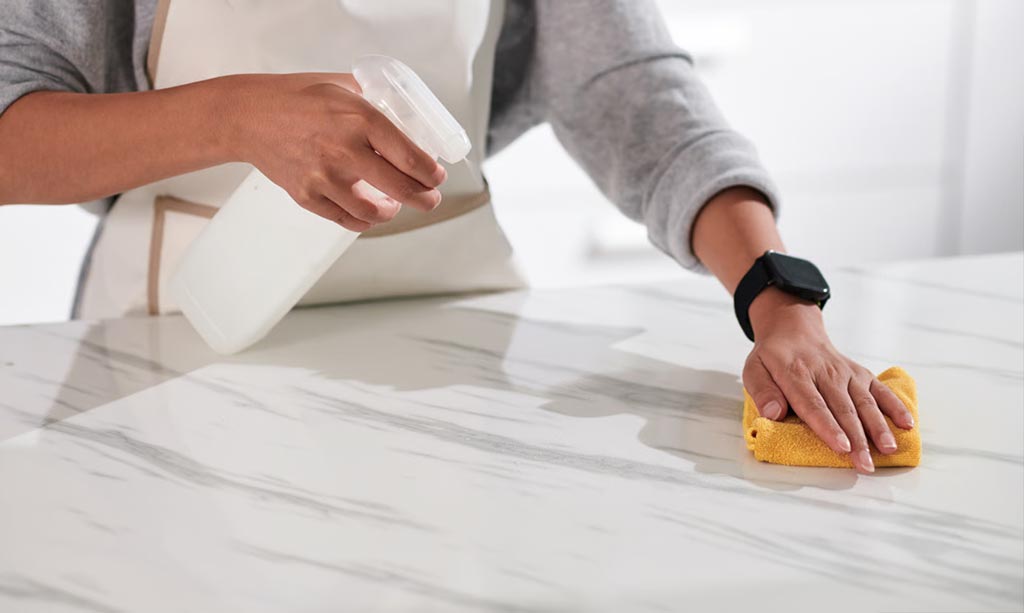
Stain resistance is the attribute that separates rental-suitable surfaces from the ones that look beautiful but generate disputes.
In your own kitchen, you deal with the occasional stain by knowing exactly what caused it and what to do about it. In a rental, you don't get that chance. You arrive between bookings to find a dark ring on the bench that's been there for three days. The guest who caused it has already checked out. The cleaner thought it would come off and scrubbed it harder, which made it worse.
On natural stone, that's an etch and stain that may need professional restoration. On silica-free engineered stone, sintered stone, or porcelain, No sealing schedule to remember. No conversation with the housekeeper about which products are safe.
For rentals, that's not a small advantage. It's the whole argument.
The design options are genuinely endless
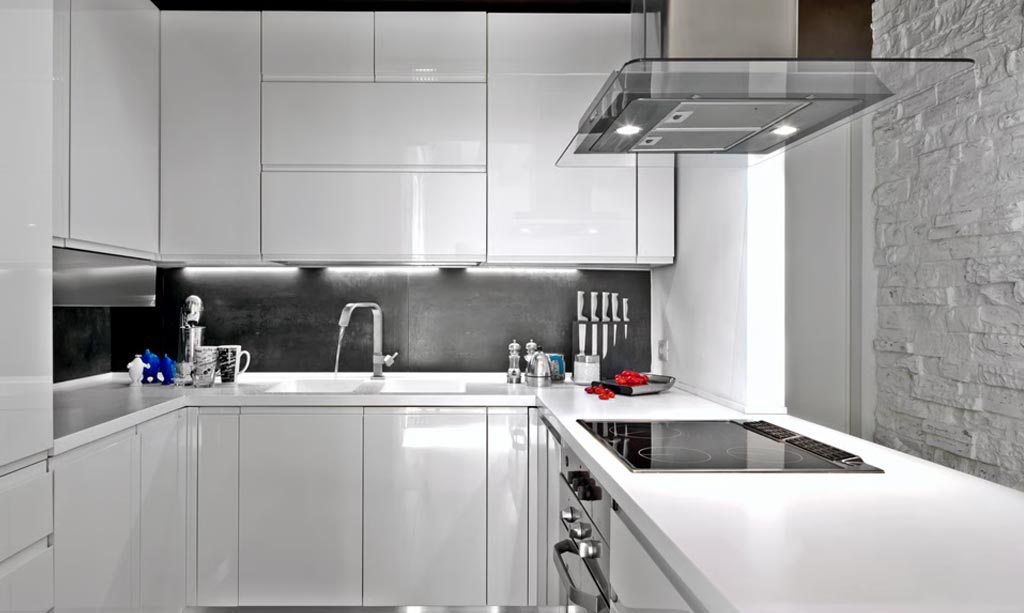
Across these three categories, Marble Hub offers hundreds of colours and patterns. The design choices are endless and this becomes the fun challenge of which one to use for a rental.
Natural stone gives you what nature made. Beautiful, but you work with limitations on maintenance. Engineered surfaces give you a different proposition: many design styles, stone look-a-like, set slab sizes, with consistent appearance across slabs no need to select individual slabs.
The budget reality
Engineered surfaces sit at a lower per-slab price than premium natural stone. Not always dramatically, but consistently enough that it shows up in the final invoice.
For a rental project, that gap quietly compounds across the kitchen. The saved capital can lift the rest of the space (better joinery, better tapware, better lighting), extend across the project (two bathrooms in the same property without inflating the budget), or simply stay in the account.
This isn't an argument against natural stone. It's a note that engineered surfaces let you spend the capital where it lifts the property most, which in a rental isn't always the bench itself.
Quartzite, for hybrid-use properties
If the property is also a family weekender, somewhere you stay yourself when it's not booked, and especially if you're positioning at the very top of the rental market (think $1,500+ per night in Palm Beach, Whale Beach, Avalon, Mosman, Bilgola), quartzite is the call.
Taj Mahal carries a warm, sandy palette that suits coastal homes. Mont Blanc is a quieter white-and-grey that pairs with more architectural interiors. Biancatto has a subtle pearlescent depth that lifts in natural light.
What it gives you: real stone, with veining that no engineered product replicates. Listings convey luxury at a level engineered surfaces can't quite match. The kitchen reads as a home, not a hotel suite. Quartzite is also genuinely stain-resistant when sealed correctly, which is the important factor.
What it costs you: annual sealing, slightly more care from cleaners, and natural variation between slabs that means future repairs need slab-matching from the same supplier. Build the maintenance into the property management contract from day one, not into a guest instruction sheet that no one will read.
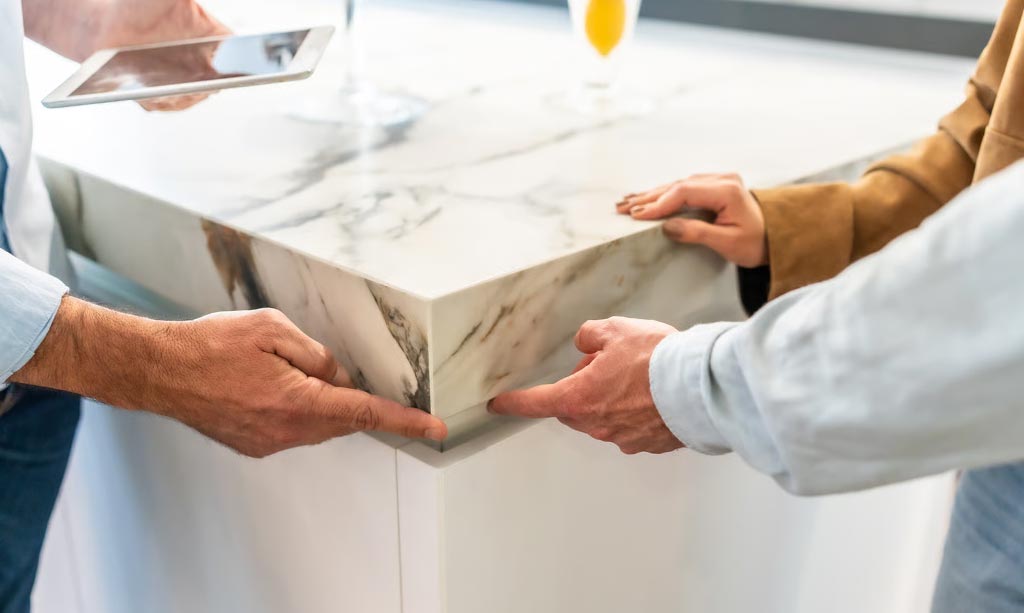
The maintenance reality nobody talks about
The single most overlooked factor in choosing stone for a rental is who actually maintains it.
In your own home, you do. In a rental, your cleaner does. Cleaners work fast. They use what's under the sink. They follow checklists, not stone-care guidelines. Even with the best maintenance brief in the world, the product in their cart on day 800 of the rotation is whatever was on special at the wholesaler.
This is the real reason engineered surfaces win for rentals. They survive the gap between your good intentions and day-to-day reality. No sealing schedule to track. No special cleaners required. No conversations with housekeepers about which chemicals are safe. No stain disputes when a guest leaves a coffee cup on the bench overnight. The surface tolerates whatever the world throws at it, and looks the same on year five as it did on day one.
Decision framework: how to choose
If the property is a pure investment rented most of the year, choose one of the engineered surfaces.
- Want the warmth of stone in feel? Silica-free engineered stone.
- Have an outdoor kitchen or strong indoor-outdoor flow? Sintered stone.
- Want maximum aesthetic range and best value? Porcelain.
If the property is a family asset that you also list when you're away, and you're positioning at the very top of the market, choose quartzite. Taj Mahal if it's coastal and warm. Mont Blanc if it's architectural and calm. Build sealing into the property management contract.
If you're torn between the two, ask yourself one question: do you want guests to feel like they're staying in a beautifully designed home, or in a well-run holiday rental? Both are valid positioning. The answer tells you which surface is right.
Two things worth saying directly
The phrase "best material for an Airbnb" usually gets answered as if all Airbnbs are the same. They aren't. A $400-a-night apartment in Newtown has a different brief from a $2,400-a-night family house in Newport. The surface that's right for one is wrong for the other. We've written this for the upper end of the market because that's who we build for.
The wrong stone in a luxury rental is rarely catastrophic. The right surface, though, lifts perceived value, photographs better, attracts more careful guests, resists stains from a thousand small spills, and ages without surprise costs. Over a ten-year hold, that compounds.
Frequently asked questions
Is engineered stone really banned in Australia?
Only engineered stone containing 1% or more crystalline silica. The new silica-free engineered stone is fully legal, safe to fabricate, and widely available. For a rental, it's often the strongest choice.
Are these surfaces actually stain-resistant, or is that marketing?
Sintered stone and porcelain are genuinely stain-proof. Silica-free engineered stone is highly stain-resistant. All three are non-porous, which means liquids sit on the surface rather than soaking into it. Wine, coffee, turmeric, oil, all wipe off with a normal cleaner even after sitting briefly on the surface. The stain resistance is a function of the material itself, so less likely to wear off over time or be an issue.
What's the difference between sintered stone and porcelain?
Both are engineered surfaces made under high heat and pressure. Sintered stone uses compressed natural minerals and tends to be denser and more heat-resistant. It also has colour throughout meaning when you have a 20mm edge pencil rounded edge you will see some colour tones similar to on the surface. Porcelain is clay-based with surface printing, which gives a wider aesthetic range and usually better pricing. Both are non-porous, stain proof, and excellent for rentals. Both are offered at Marble Hub.
If you're renovating a Sydney property for short-stay rental, we'd usually start by visiting our showroom with photographs of the space and the listing tier you're targeting. Stone selection for rentals is genuinely different from stone selection for personal homes, and the choice between silica-free engineered stone, sintered stone, porcelain, and quartzite is best made by looking at slabs in person against your specific design brief.
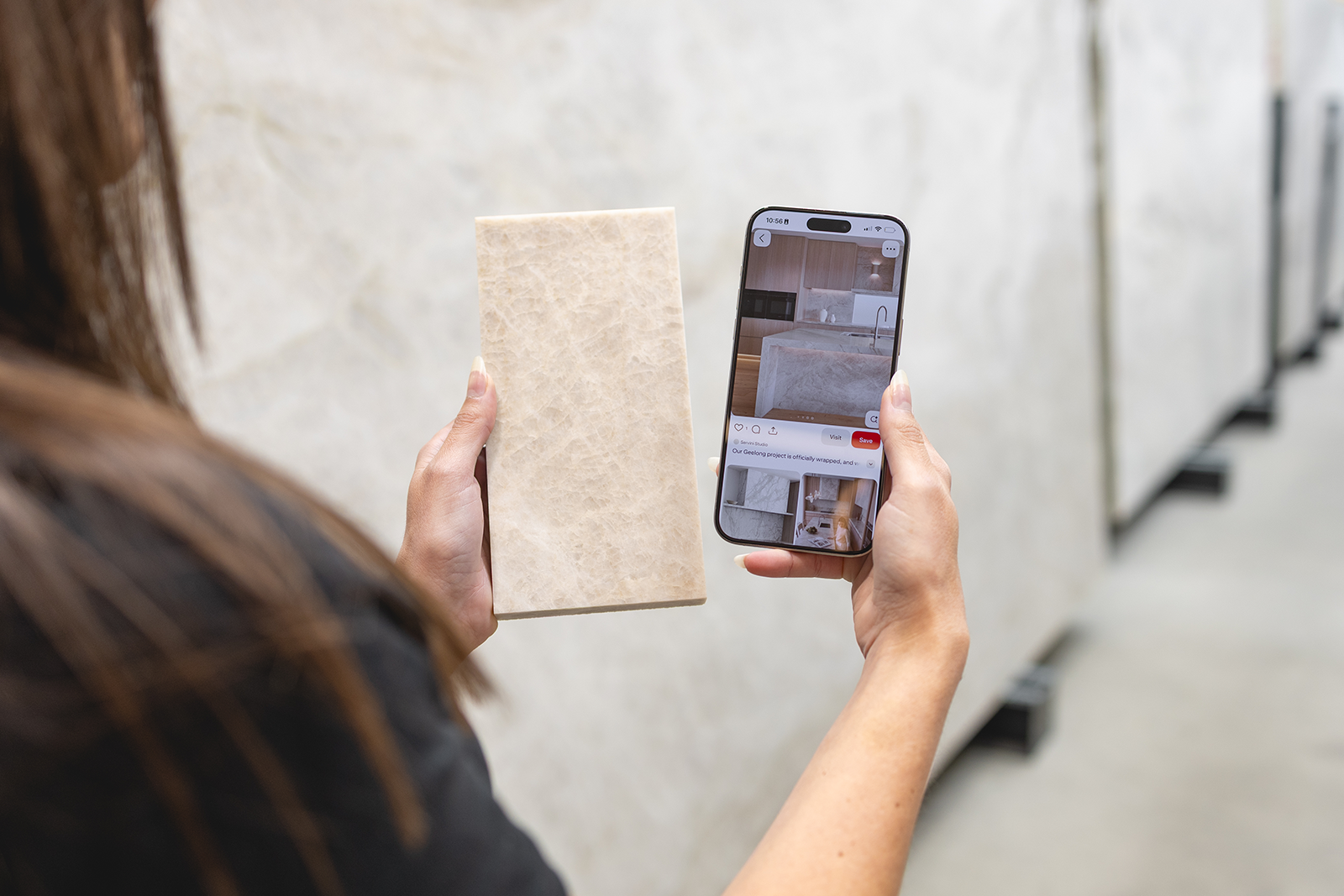
Where to Start When You Don't Know the Stone in Your Inspo Photos
For homeowners who don't know where to begin with stone. You don't need a stone name to start. Send your inspiration photos, tell us what you like and why you're drawn to it, and we'll identify the material and point you to the right slabs. Covers how your eye already picks matching tones, reading stone from a photo, which photos to trust online, and why picking stone is like picking art. Tags: how to choose stone, where to start, inspo photos, identify marble from photo, stone selection, Marble Hub Sydney.
Where to Start When You Don't Know the Stone in Your Inspo Photos
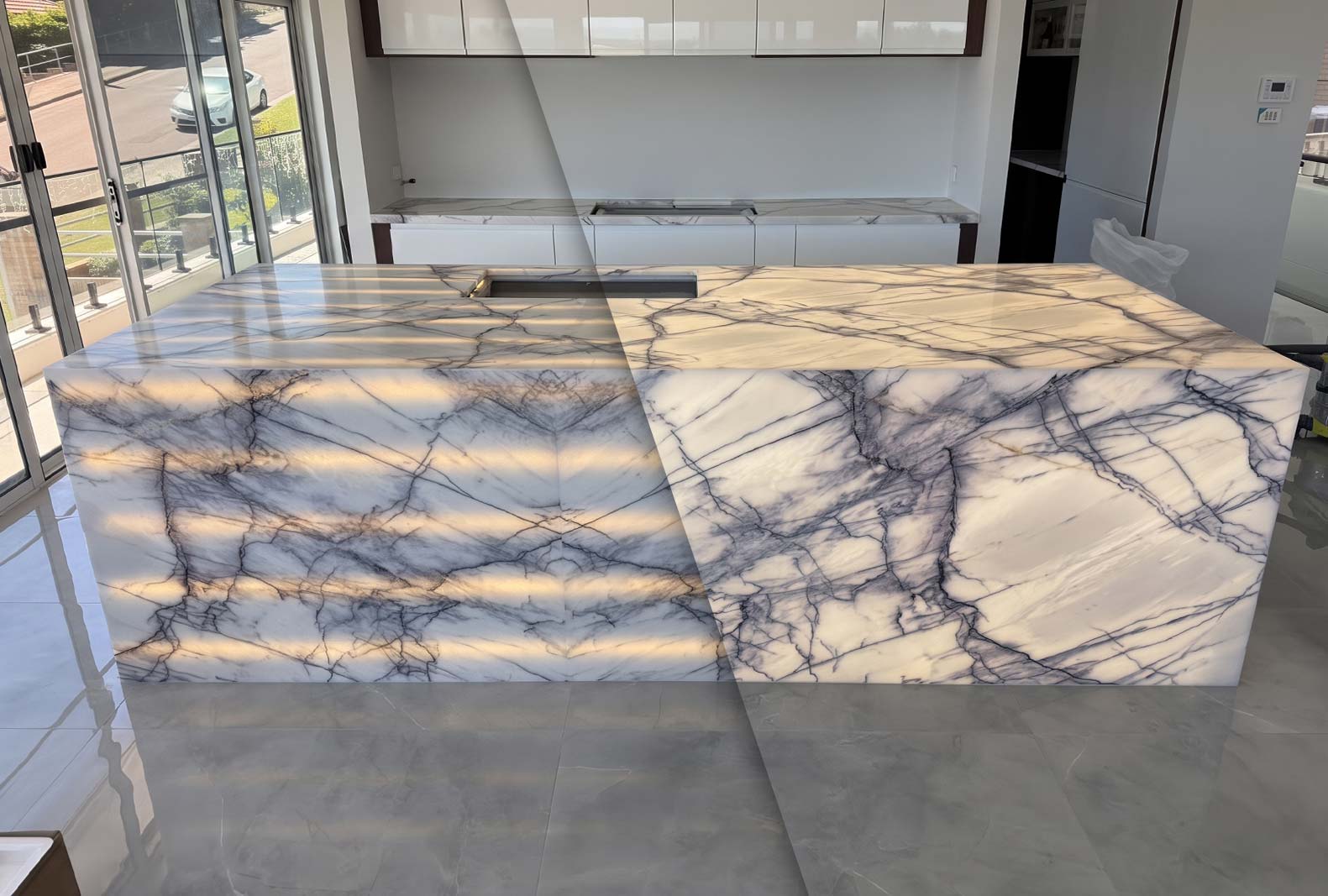
Backlit Stone and Why the LED You Choose Changes Everything
Backlit stone explained simply. The look changes a lot with the light behind the slab. LED strips give a striped, patterned glow; a full LED panel lights the whole slab evenly so it looks lit from within. Both are valid, so do what suits your budget, but plan it early with your electrician. Covers which stones are translucent and why the light install feeds into the check-measure. Tags: backlit stone, backlit marble, translucent stone, LED stone panel, backlit onyx, feature lighting, Marble Hub Sydney.
Backlit Stone and Why the LED You Choose Changes Everything
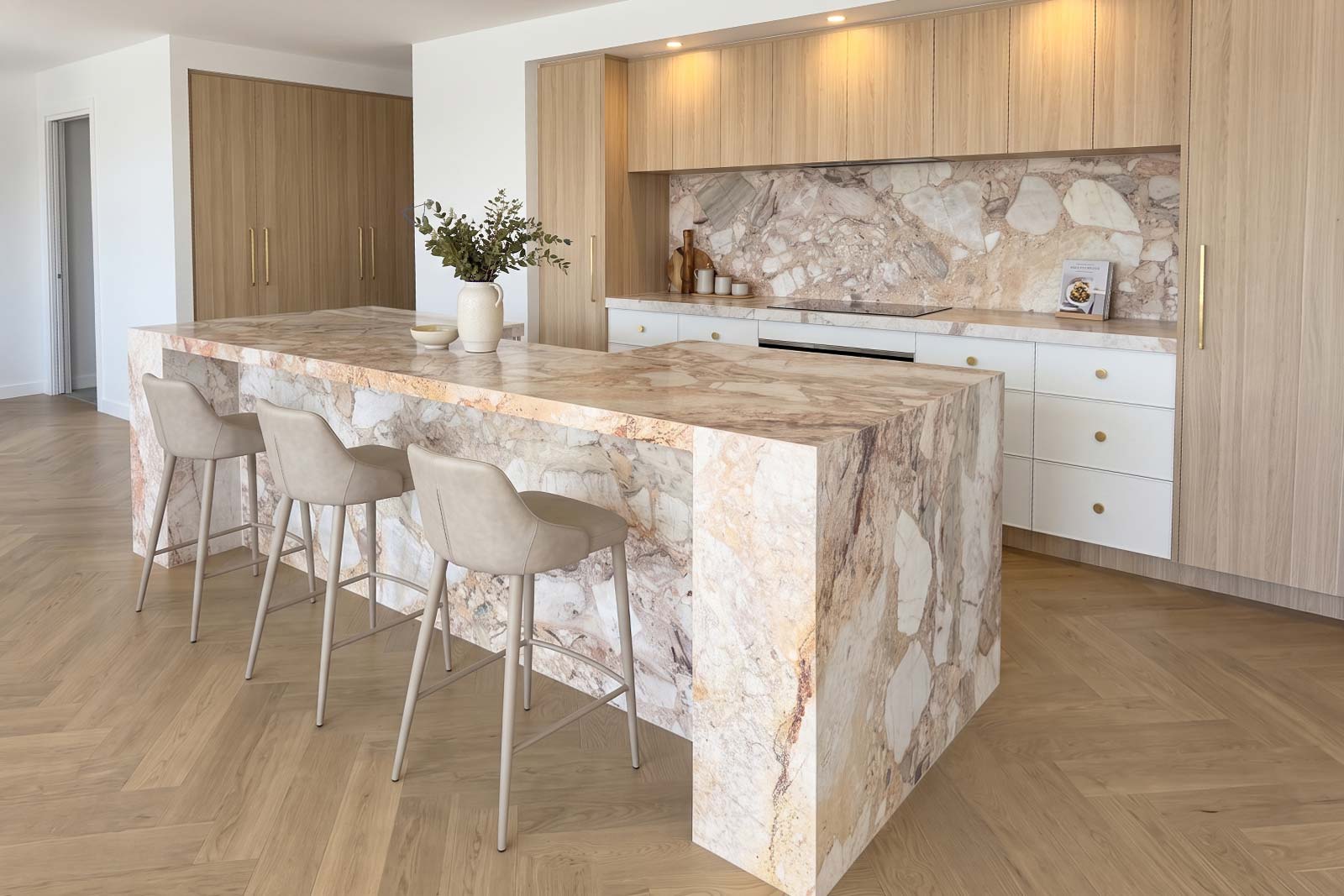
How We Plan Stone Across a Duplex Without Wasting a Slab
Planning stone across a duplex or dual-occupancy build. We work out real slab count, map every piece across the slabs, balance feature stone across both homes, and plan the stages so the check-measure and install land when each side is ready. Covers slab yield, offcut planning, mapping the cut to the stages, and getting every trade working to the same target dates. Tags: duplex stone benchtops, dual occupancy, slab count, stone yield, staged install, trade coordination, Marble Hub Strathfield South.
How We Plan Stone Across a Duplex Without Wasting a Slab
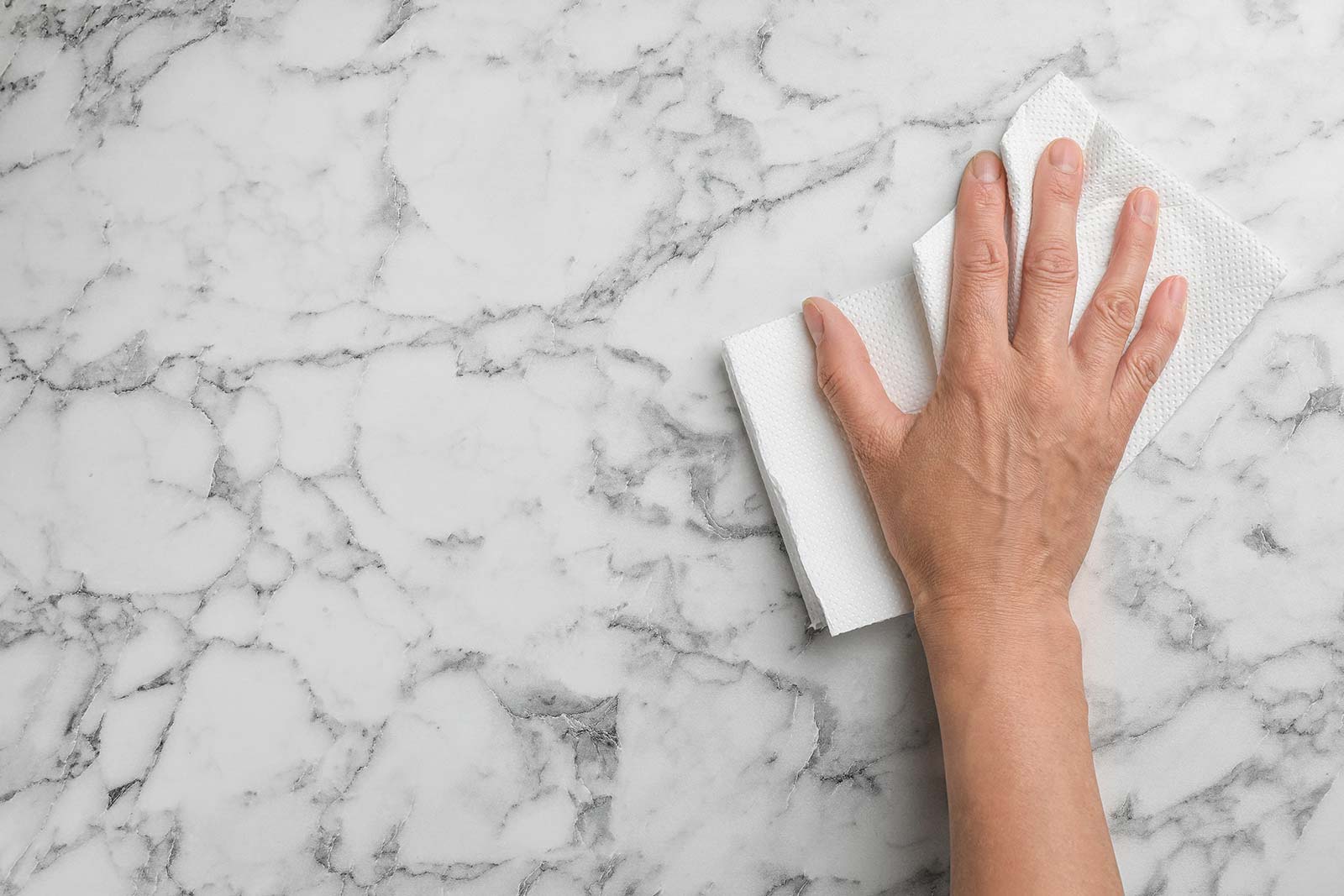
How to Clean and Care for a Marble Benchtop
How to clean and care for a marble benchtop, written for people who already own marble or are about to. Covers the daily routine, warm water and pH-neutral cleaner, wiping acidic spills fast, sealing with Lithofin MN Stain-Stop every 6 to 12 months, and the difference between a stain and an etch. Explains why heavy veining hides marks better than plain marble, and why a rehone and rebuff after 3 to 4 years brings a tired benchtop back. Honest about trade-offs. Marble is a relationship, not a set-and-forget surface. Written by Marble Hub, a Strathfield South stone factory and showroom.
How to Clean and Care for a Marble Benchtop
Let’s Get Started on Your Dream Space
Whether it’s a kitchen, bathroom, or laundry, Kitchen Hub is here to bring your vision to life.
