
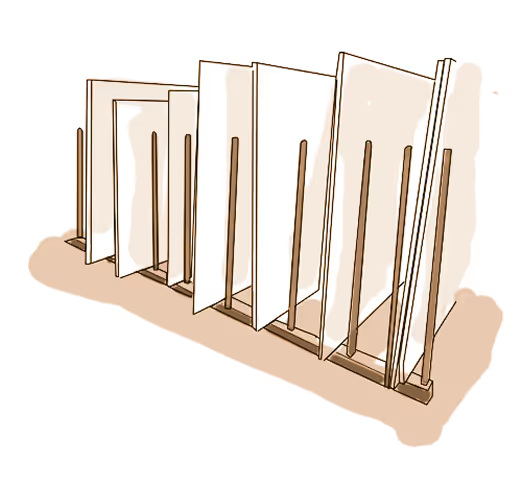
Add slabs to your wishlist so we can give you custom quote.
Add productions from our slab collection so we create a quote for your next project!
If you're unsure of what you're after please reach out via our contact page.

Kitchen Island Design: The Four Decisions That Decide Everything
Kitchen Island Design: The Four Decisions That Decide Everything
Most people add a kitchen island for the obvious reason: more bench space and a spot for the sink.
Then they stand in their new kitchen with an island sitting in the middle of it and realize it was never just about storage and space. The island was the heart. The driving anchor in the space. It draws people to it and changes how you entertain. How you actually enjoy cooking. The true centrepoint for the spaces around it.
Most island conversations get lost in the wrong details. Stone. Stool count. Pendant placement. The four decisions that actually shape how an island feels are made earlier, when selecting stone, and most people don't think of them as decisions at all.
Why Islands Are Different From Perimeter Benches
Here's the thing about islands: they anchor the room.
Perimeter benches sit against cabinetry and walls. They're the back up anchor. Lighting hits them from predictable angles. You see them from one main vantage point while you're cooking. The stone is seen on that bench but only after seeing the island.
Islands are different. Light hits them from multiple directions. You see them from multiple angles simultaneously. They become architecture in a way that perimeter benches don't. The sculpture in the space.
This is why an island that looks beautiful in a showroom sample can feel wrong once it's installed across a 2 or 3 metre span in your actual kitchen. Edge thickness, waterfalls, overhang, curves, bar back. These all change the impact.
In a good island design, it stops being furniture and becomes part of the room's structure. It anchors the space. It makes everything feel intentional.
In a bad island design, it feels like something someone added as an afterthought. It divides the room awkwardly. The material doesn't match the visual weight you need. The thickness feels fragile or overwhelming. You notice it constantly because something's off. The scale and balance are the building blocks for how you feel in the space.
Decision 1: Material (It's Not About Colour)
Most people choose island material the same way they choose everything else: by picking a colour they like. That's why this is the first decision to get right. Colour comes later, once the shape and impact have been reviewed.
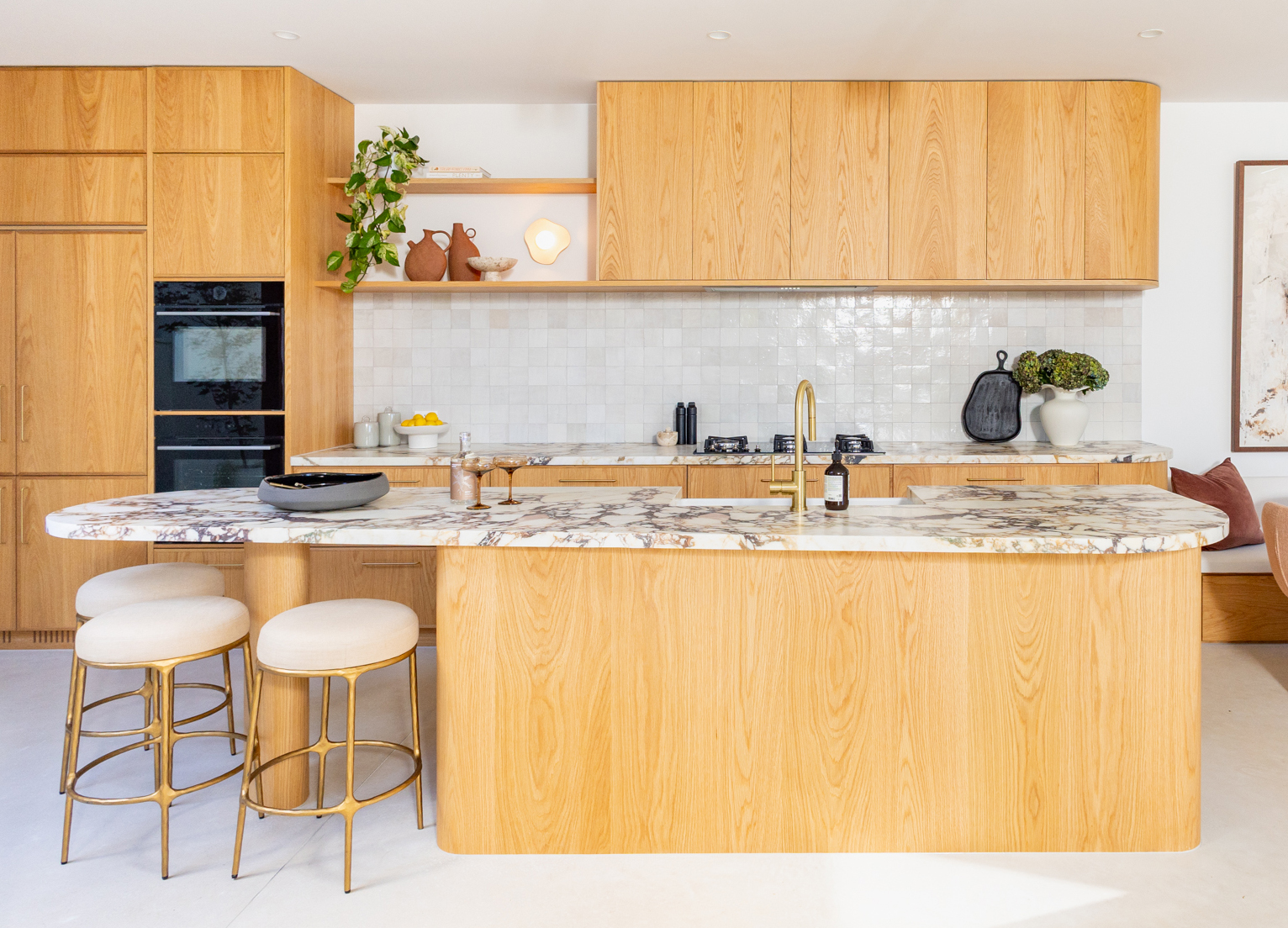
Let's say you love the look of Calacatta Viola marble. Soft veining, all over pattern, warm tone, sophisticated.
On the perimeter bench, the stone has impact, but close-up. You touch it. You prep on it. You read its details at arm's length.
The island is doing something else. It's setting the atmosphere of the room. People feel it before they stand at it.
The same stone can absolutely work on both. What changes is the detail. Stone alone will hold attention, it always does, but the detail is what takes an island from beautiful to architectural. A waterfall end. A thicker edge profile. A generous overhang. A curved corner, or a curved waterfall return. A bar back built to command attention. An edge profile deliberately different to the perimeter.
These are the elements that give an island its weight and presence. Without them, even the right stone will sit in the room rather than anchor it.

Now imagine Taj Mahal Quartzite on the same island.
The warm cream and honey tones anchor the space. The subtle veining reads as natural and intentional when spread across a large surface. No matter the material, the same thought has to go into the island. The details. The material is seen but the small details are felt. When the island feels like it belongs in the room, the design level is heightened.
The same logic applies to all stone types:
Taj Mahal Quartzite works beautifully for islands in most Sydney kitchens because the warmth doesn't feel cold or clinical, and the movement doesn't feel dramatic when spread across a larger surface. Great balance for larger islands due to the subtle stone details that won't compete.
Biancatto Quartzite works in contemporary kitchens because the lighter tone reads sophisticated without creating visual disconnection when adding layers of details to the island design.
Patagonia Quartzite is statement material. It can easily be placed on all surfaces and won't feel overpowered, but slab selection is critical due to the large pattern movement, colour and vein flow which are the highlights of this stone.
New York Marble or Calacatta Oro marble work anywhere but vein flow must be reviewed. The veins on larger islands make a statement. Same goes for a more compact streamline island design, but the beauty of these stones is the clean background colour with the striking linear veins. To see the full impact, the design needs space to show that off.
The principle: your island material should feel like it belongs in the space and connect with the space.
Decision 2: Thickness (It's About Scale, Not Budget)
This is where most island decisions go wrong.
Thickness isn't just about durability and about the slab. It's about proportion, and whether your eye registers the island as an intentional and harmonising design element.
In a sleek, minimal kitchen with lower ceilings (2.4–2.7m) and compact proportions, a 20mm benchtop with a pencil round or half bullnose edge reads as intentional and sophisticated. Everything feels scaled together.
That same 20mm in a large, open kitchen with high ceilings (3m+) feels thin, light and visually airy. Which in the right design can be a good thing. But this might make the kitchen feel unbalanced because the benchtop doesn't have enough visual weight to anchor the space.
A 40mm mitred benchtop works in almost any kitchen. It's the proportion sweet spot. It looks designed rather than budget-conscious. Most people choosing luxury kitchens land here because it works everywhere. It also gives you more of a visual edge to see the stone pattern, therefore seeing it from a distance.
In a large kitchen with high ceilings and generous proportions, 40mm with a bullnose or double bullnose profile anchors the space beautifully. The island feels commanding without overwhelming.
In a smaller kitchen, that 40mm can feel heavy and dominant. The space starts feeling cramped because the visual weight of the benchtop is too much.
Here's what people underestimate: the thickness difference is visually noticeable. Stand next to a kitchen where thickness and proportions match perfectly, then one where they don't. Your eye registers something is off, even if you can't articulate why.
That's scale and balance at work.
Decision 3: Edge Profile (This Is Where Kitchens Feel Refined or Ordinary)
Edge profiles are subtle. They're also where the difference between “nice kitchen” and “refined kitchen” actually lives.
For 20mm island benchtops (appropriate for sleek, simple kitchens):
• Pencil round: Slightly rounded on top, creates elegance without sharpness. Works beautifully in contemporary kitchens.
• Half bullnose: Curved on the top edge, creates softness and refinement. Versatile across styles. Similar to full bullnose.
• Arised: A subtle chamfered edge, creates clean definition without sharpness. Modern and intentional.
For islands that become design features (40mm, 60mm, or 80mm+), mitred edges create the architectural statement:
• Mitred bullnose: Curved on all visible surfaces, creates presence and luxury.
• Mitred edge: Clean statement and defined, sophisticated and architectural.
• Mitred ogee: Decorative and classical.
For dramatic, custom designs:
• Double bullnose: Layered curves that create visual depth.
• Royal Ogee: Available in 60mm or 80mm, it creates classical architectural presence.
The critical principle: thickness and edge profile must match your kitchen's actual scale and proportions.
A 40mm mitred bullnose on a generous island in a large kitchen with high ceilings reads as anchoring and intentional.
That same profile in a small, compact kitchen feels heavy and unbalanced.
The scale is off. And while people can't always articulate why a kitchen doesn't feel right, they feel it.
Decision 4: Finish (How Your Island Looks and Ages)
The finish determines how your island reads in different light and how the stone shows wear.
Polished material on an island is stunning in photos. It reflects light, which can make the space feel larger or feel cold depending on natural light. It tends to show fingerprints and dust more. In a kitchen where actual cooking happens, a polished marble island over time can be risky.
Honed material is the sophisticated choice. It absorbs light instead of reflecting it, which reveals depth in the stone. It reduces the visible wear that comes with daily use. Honed is what you see in professionally designed kitchens, not because polished is bad, but because honed actually works for real life.
Quartzite material: Some stones only come polished, others are available in both. When a stone is known worldwide and typically offered in one finish, it becomes a standard for that stone. Almost always, honed is still the preferred option. The softer finish suits both contemporary and warm-minimalist aesthetics.
Beyond the Four
The four decisions above are where most island designs are won or lost. Two more questions shape how your island actually lives in the room.
Proportion (Size and Scale Matter)
Here's a practical consideration that affects whether your island actually feels right: proportion to the room.
An island that's too small feels like a missed opportunity. An island that's too large makes the kitchen feel cramped.
The general rule: you need at least one metre of clearance on each side of the island for comfortable movement. Stone pattern and fabrication details matter too. Proportions are critical.
Beyond that practical calculation, there's a visual proportion question.
A 2 metre island in a 5 metre wide kitchen feels right. That same kitchen with a 1.2 metre island might feel odd, but maybe it has thick waterfall ends with a bar back. That adds visual weight.
This is where material choice becomes important. A large island in a modest kitchen can feel overwhelming if you choose heavy stone or dark colours. The same size island feels manageable if you choose warmer tones with soft movement.
Scale matters because it determines whether the island feels like part of the architecture or like furniture you added.
Function (What Goes On Your Island)
An island is just a bench until you decide what goes on it.
An island with overhang seating (three stools on one side) changes how the kitchen gets used. It becomes a gathering point. The bench surface needs to be deeper, which affects room proportions.
An island with a sink can interfere with prep space. The location, design, be it symmetrical or asymmetrical, all are a factor.
An island with a cooktop is practical for some kitchens and pointless for others. It depends on your actual cooking habits and kitchen layout. As well as ventilation and hood design, or down draft appliance.
A waterfall end and bar back panel (stone continuing down the side of the island to the floor) is a dramatic design feature. It's beautiful and luxurious. It works best in designs where the island is seen from all angles, especially once you're standing in the space.
Most of these conversations should happen during the consultation, before you choose materials. Reviewing options with our design and joinery team early on means we can quote a few options to see what works best for the design, your budget and your material.
Two Rules to Remember
After all of that, the whole approach distils into two principles.
The material rule: Choose the stone based on how it will anchor the room, not how it looks in a small sample. Always view the full slab, in the light it will live under, before committing.
The design rule: The island has to hold its own and belong at the same time. Scale it against the room, not the kitchen alone. An island that's right for the cabinetry but wrong for the ceiling height will always feel off. Balance its visual weight against the perimeter, the joinery, and the negative space around it. Think about the sight lines too: what you see when you walk in, what reads from the dining room, what frames the view from the lounge. The goal isn't impact for its own sake. It's an island that anchors the room without overpowering it.
The Reality Check
The islands that still look intentional and beautiful five years later share something in common: they were designed for the specific kitchen, not chosen from a generic island catalog.
This means: thickness matched to proportions. Material matched to light and lifestyle. Edge profile matched to design intent. Finish chosen for real-world performance and your design, not showroom beauty.
It means the island feels like part of the architecture, not like an afterthought.
Ready to Choose?
The best approach is bringing actual kitchen plans, concept photos and cabinetry samples to a consultation.
We can show you how different stones, thicknesses, and profiles work in your specific space with your actual light and proportions. See what works best with your inspiration photos.
That's where you move from guessing to knowing.
Book a design consultation to talk through your island vision, your kitchen's proportions, and the material and design choices that will make it feel intentional and timeless.
Undermount vs Flush Mount vs Drop-In Sink for Stone Benchtops | Marble Hub
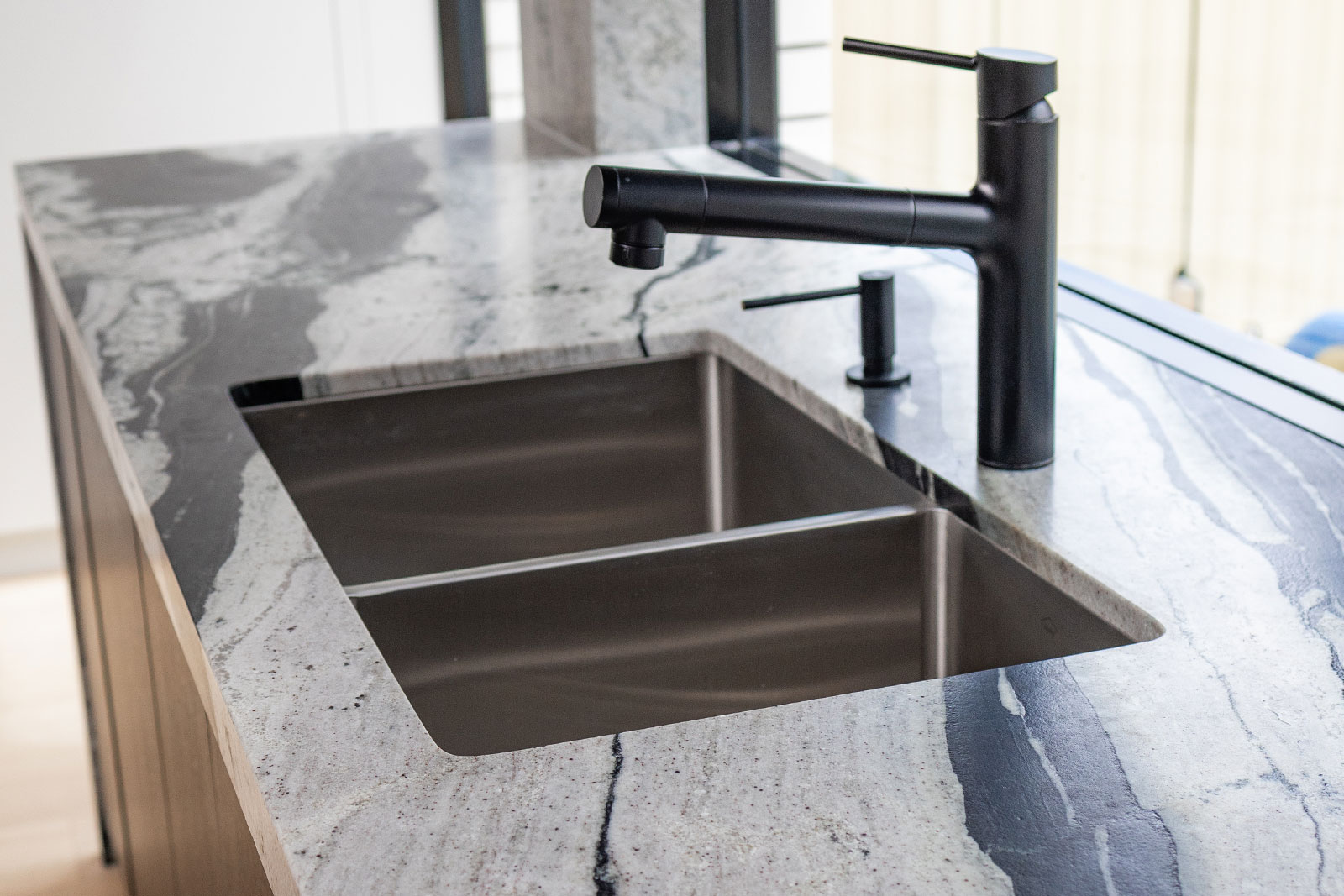
There's no wrong sink style for a stone benchtop, only the right one for how you'll use it. This guide explains the look, cost and maintenance of undermount, flush mount, drop-in and integrated stone sinks from a fabricator's point of view. Drop-in sinks work hard in busy kitchens, butler's pantries and utility laundries, while flush mount gives the sharpest look and needs the most planning. It also explains how Marble Hub reviews and supports every flush mount sink at the factory. Tags: undermount sink, flush mount sink, drop in sink, top mount sink, integrated stone sink, butler's pantry sink, laundry sink, sink cut-out, stone benchtop sink, kitchen sink styles, Sydney stone fabricator, Marble Hub
Undermount vs Flush Mount vs Drop-In Sink for Stone Benchtops | Marble Hub
Stone Splashback vs Tiles: Full Slab Marble Splashbacks | Marble Hub Sydney
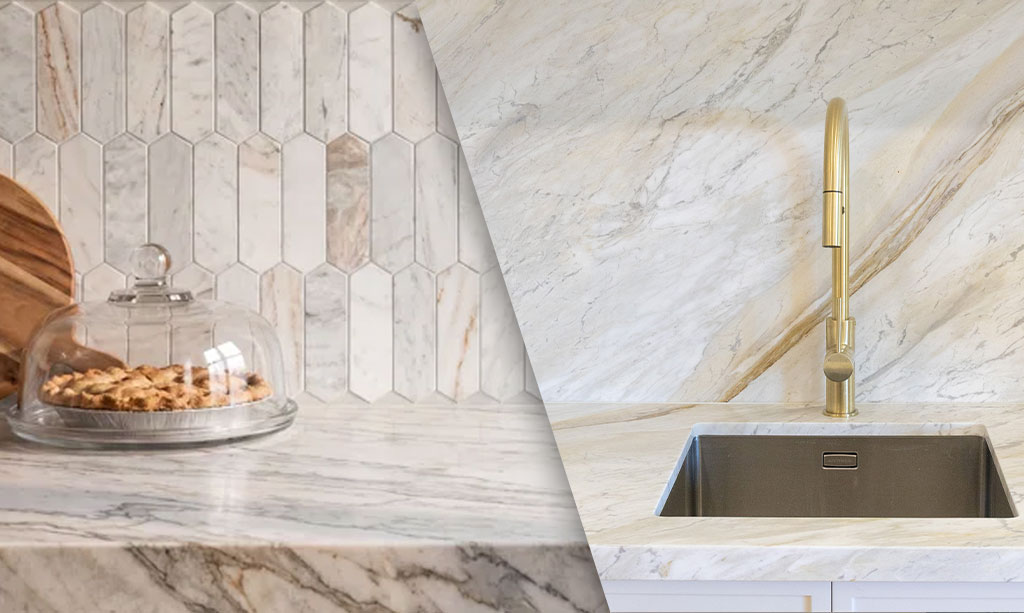
A full slab splashback takes the benchtop stone straight up the wall, so the design feels more cohesive and sleek, and the stone has more impact. This guide covers vein flow, windows and mitred sills, ledges, power points, and the clearances a splashback's thickness affects. It also explains the practical side: joins, slab count, and getting large pieces into your home. And it's honest about when tiles are the better call.
Stone Splashback vs Tiles: Full Slab Marble Splashbacks | Marble Hub Sydney
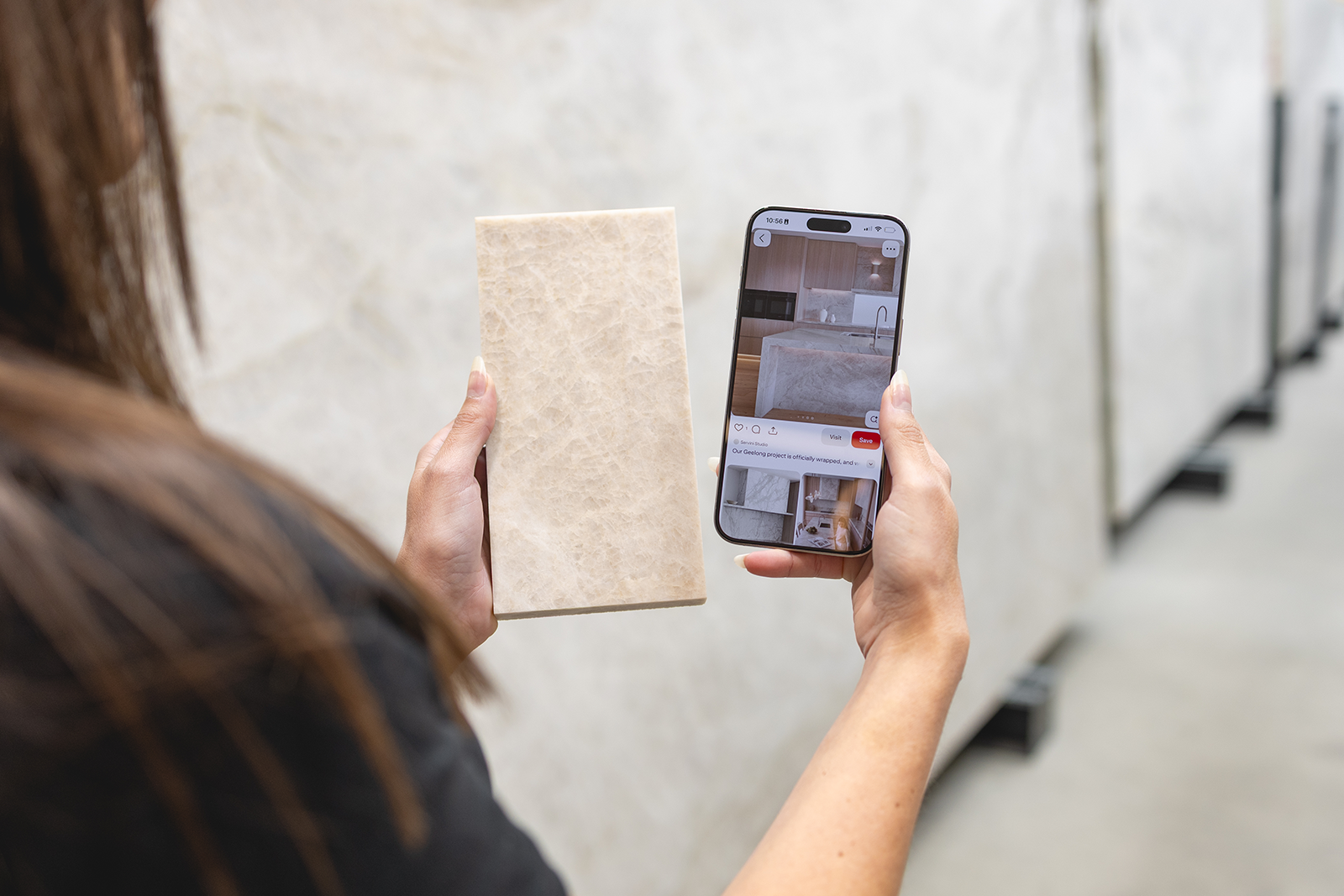
Where to Start When You Don't Know the Stone in Your Inspo Photos
For homeowners who don't know where to begin with stone. You don't need a stone name to start. Send your inspiration photos, tell us what you like and why you're drawn to it, and we'll identify the material and point you to the right slabs. Covers how your eye already picks matching tones, reading stone from a photo, which photos to trust online, and why picking stone is like picking art. Tags: how to choose stone, where to start, inspo photos, identify marble from photo, stone selection, Marble Hub Sydney.
Where to Start When You Don't Know the Stone in Your Inspo Photos
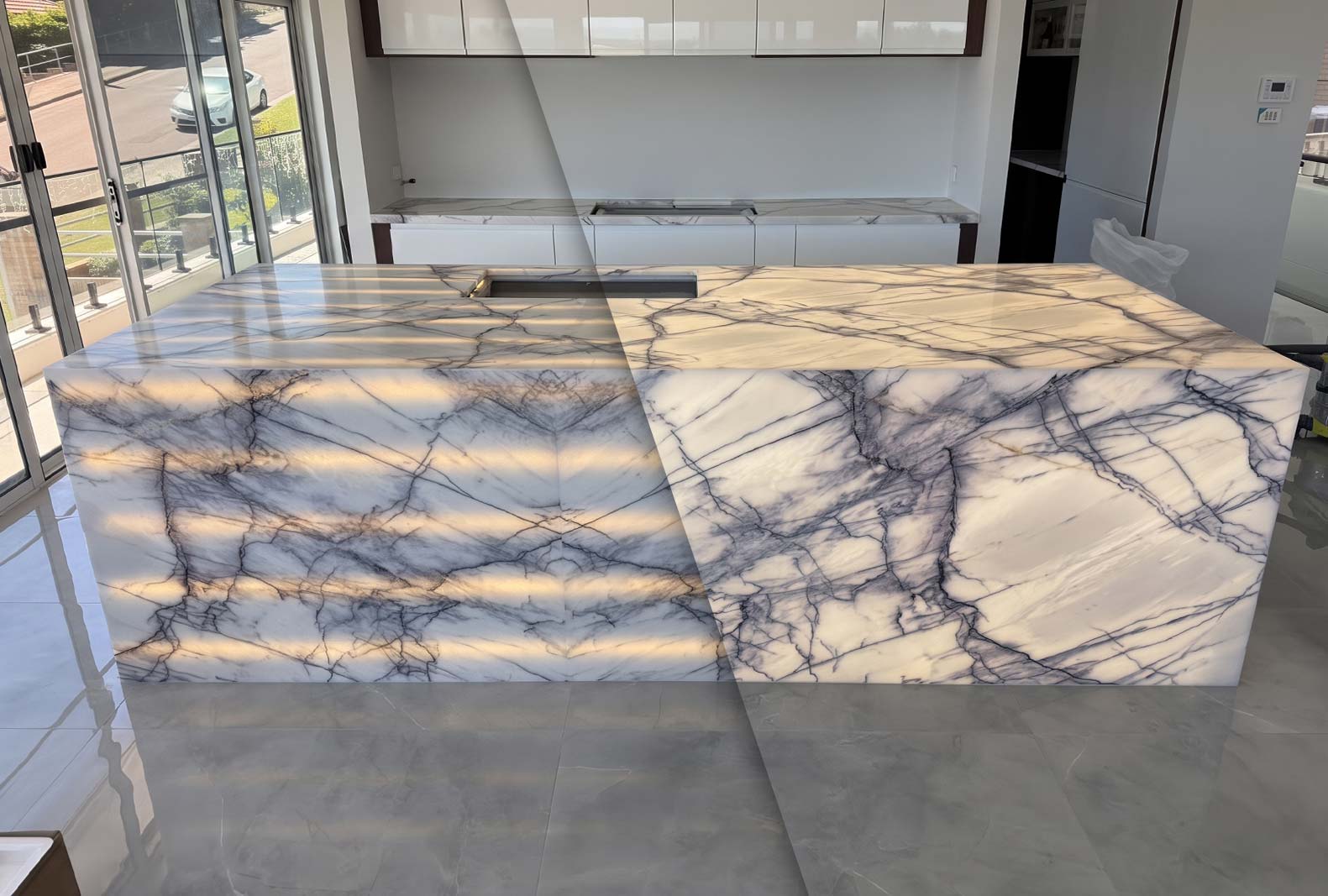
Backlit Stone and Why the LED You Choose Changes Everything
Backlit stone explained simply. The look changes a lot with the light behind the slab. LED strips give a striped, patterned glow; a full LED panel lights the whole slab evenly so it looks lit from within. Both are valid, so do what suits your budget, but plan it early with your electrician. Covers which stones are translucent and why the light install feeds into the check-measure. Tags: backlit stone, backlit marble, translucent stone, LED stone panel, backlit onyx, feature lighting, Marble Hub Sydney.
Backlit Stone and Why the LED You Choose Changes Everything
Let’s Get Started on Your Dream Space
Whether it’s a kitchen, bathroom, or laundry, Kitchen Hub is here to bring your vision to life.
