
Add slabs to your wishlist so we can give you custom quote.
Add productions from our slab collection so we create a quote for your next project!
If you're unsure of what you're after please reach out via our contact page.
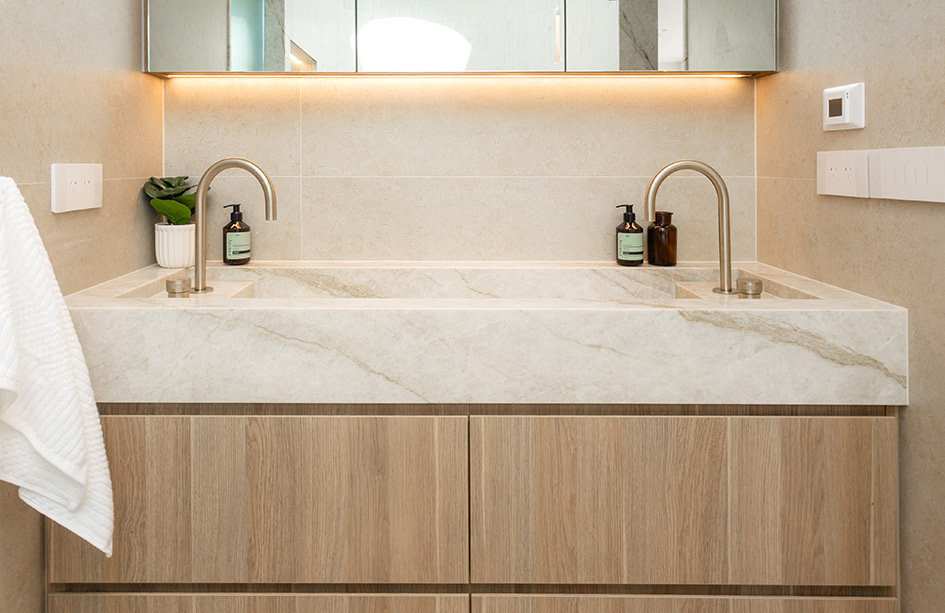
Integrated Stone Sink: The Fastest Way to a High-End Stone Vanity
Integrated Stone Sink: The Fastest Way to a High-End Stone Vanity
TL;DR: An integrated stone sink is a basin built in our factory from the same stone as your vanity top. The pieces are joined and mitred, sink to bench, so with the vein flow running through, the top and the bowl read as one. It is the fastest way to make a stone vanity feel high-end, because it is the one detail you cannot buy off a shelf. Here is why it works, what you get to control, and the honest trade-offs.
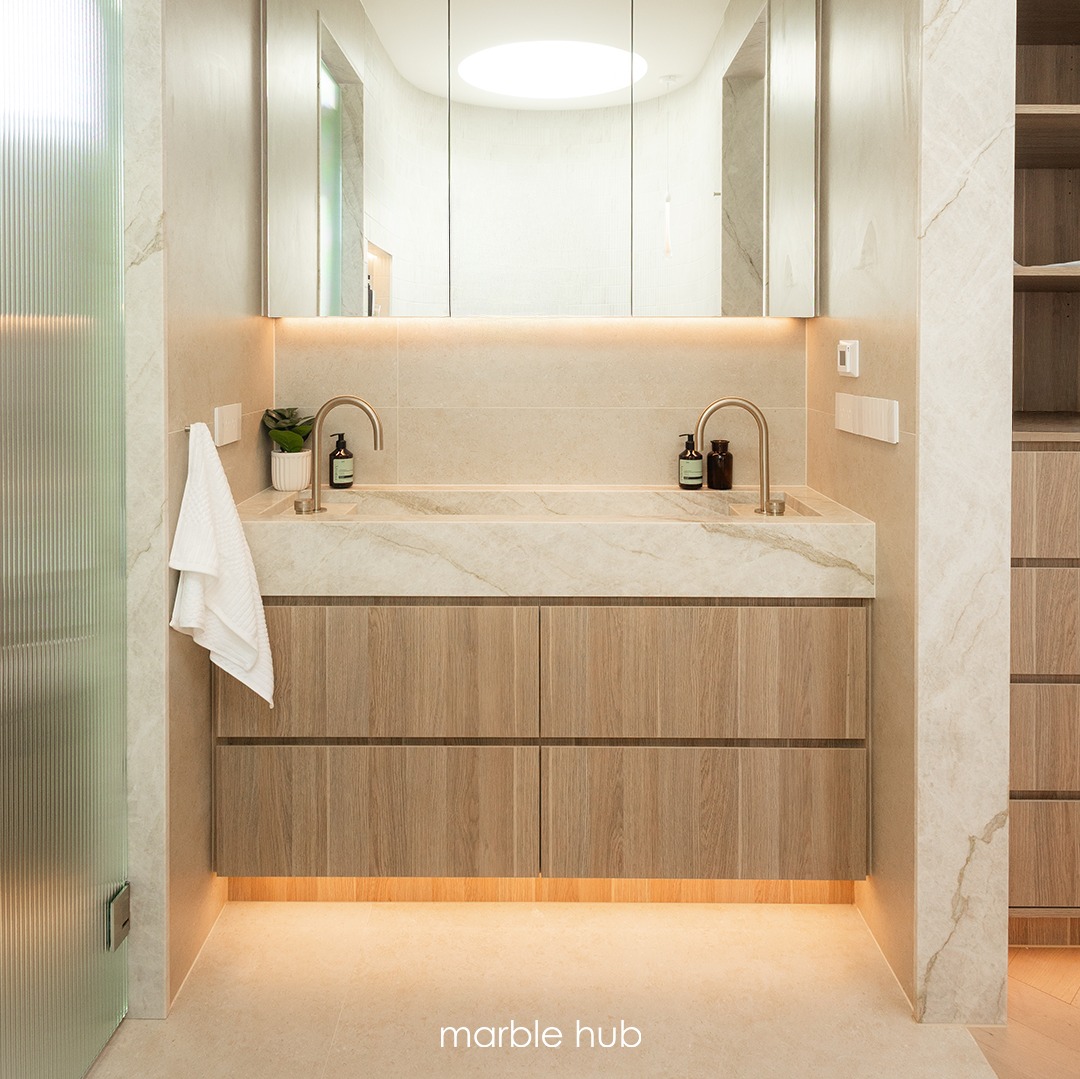
If a stone sink is calling to you, trust it
Start here, because it matters. If you have been drawn to the idea of a stone vanity built around a sink, your instinct is good. It is one of those details that looks right before you can explain why. You are already pointed toward a high-end bathroom. The rest is just understanding what you are choosing.
What “integrated” actually means
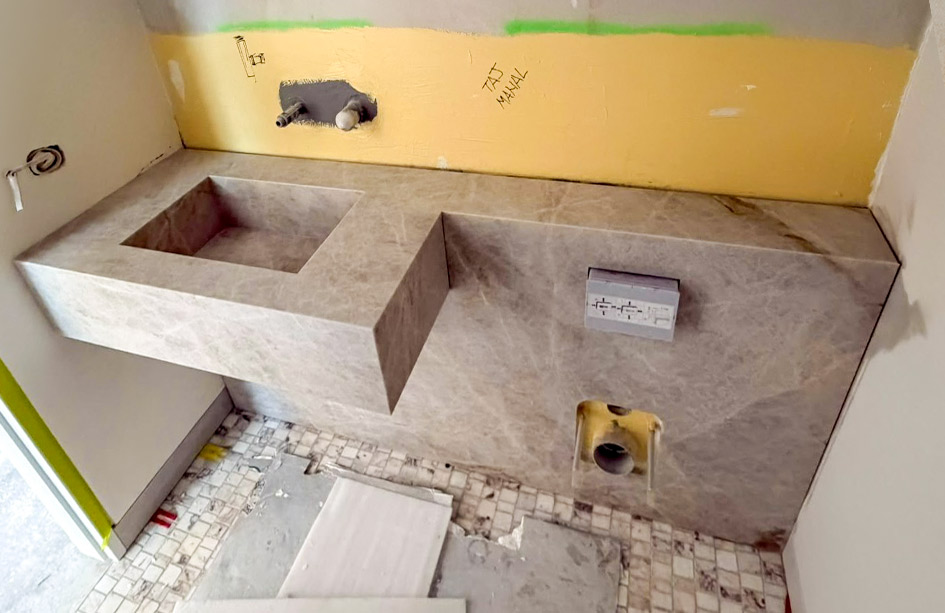
An integrated stone sink is a basin built from the same stone as the vanity top, so the top and the bowl read as one. We make it in our own factory. We cut the sink and the vanity top from the slab you have chosen and join and mitre the pieces together, sink to bench, so the joins sit tight and the vein flow carries from the vanity top into the bowl. There are seams. You just stop seeing them, because the stone runs through. It is fabrication, not a sink bought and fitted.
Why it reads high-end straight away
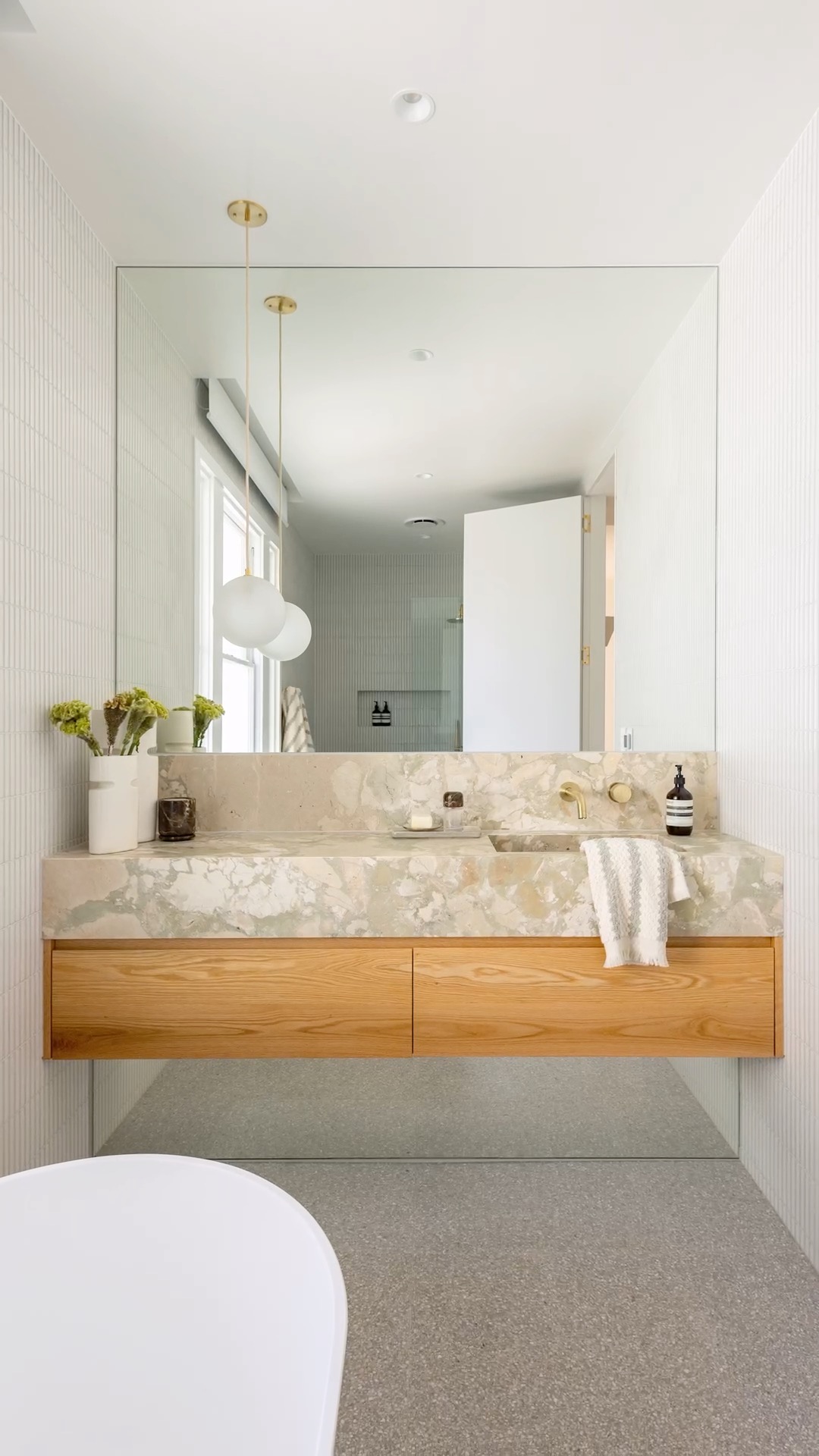
A stone sink is the one thing in a bathroom you cannot buy off a shelf. A tap can be bought. A ceramic basin can be bought. An integrated stone sink has to be built, from your slab, for your space. The eye picks that up without being told. When the stone and the vein flow run through from vanity top to bowl, the room reads as considered and custom, because it is.
That is why it is the fastest way to make a bathroom feel expensive. You are not adding more. You are hiding the joins, so the stone reads as one.
If not integrated, choose a stone basin on top
An integrated sink gives the illusion that the whole stone vanity is one piece of stone. The vanity top and the bowl read as a single block, and that is the look most people picture when they think custom.
If you do not go integrated, the next way to keep it in stone is a natural stone basin that sits on top of the vanity. It gives you drama of a different kind. The stone does not disappear into one surface. The basin becomes the piece you notice first, a sculptural object on the vanity, and it carries the room in a different way. It suits a powder room, or any vanity where you want one striking piece.
We make a curated range of custom stone basins and freestanding units at Marble Basin Hub. Depending on your budget and the design, a basin on the vanity can be a great way to reach the same high-end feel without an integrated build. Bring us the space and we will tell you which direction suits it.
What you get to control
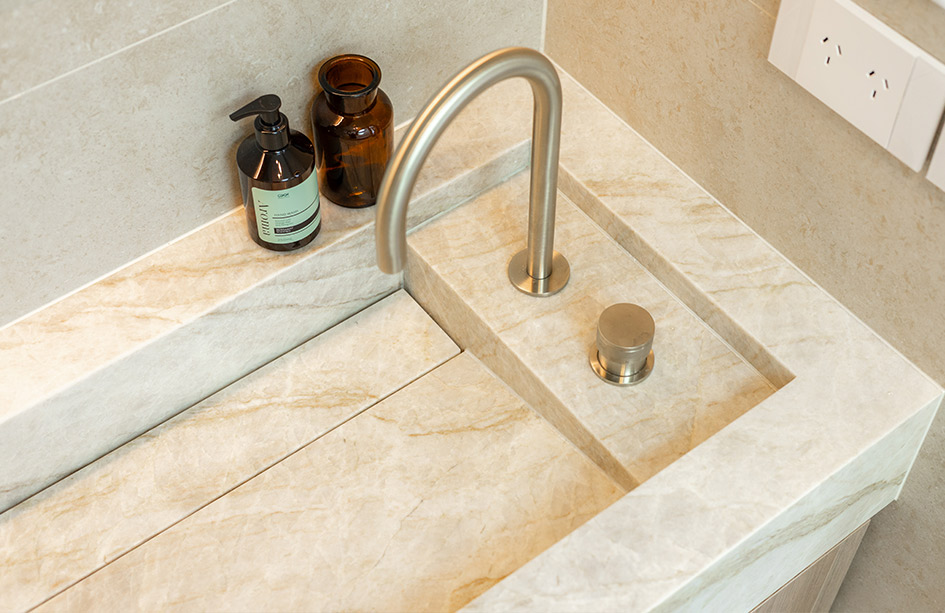
The real advantage of an integrated sink is not one particular shape. It is that you decide how it works, in ways a bought basin can’t offer.
You choose the bowl depth. A shallow basin feels light and sculptural. A deeper one contains splashes and suits a busy family bathroom. It is your call, not the manufacturer’s.
You choose the drainage. A stone pop-up waste, made from the same stone, keeps the eye on one material with nothing shiny interrupting it. Or a hidden drain, tucked so the basin reads as a clean, uninterrupted surface. Small details, but they are what separate a custom sink from a standard one.
The slope, we work out with you. We go over the fall of the basin, the drain style and its position, and make sure it all works before anything is cut. The same goes for the details that are easy to overlook: the tap spout length and style, and where the tap sits. We review those with you, then review them again at the check measure on site, so the finished sink drains cleanly and the taps land exactly where they should.
You choose the size. The basin is made to your space and your vanity top, not squeezed in around a fixed off-the-shelf bowl. A trough can run long for two, or a single basin can sit neatly in a compact powder room.
A note on shape, since it matters. Because these are built from mitred stone rather than turned on a lathe, they work best as squared, straight-sided shapes, troughs and defined basins. A true round bowl built from a block is a rare, specialist piece, not a standard integrated sink. If a soft curved bowl is the look you are set on, that is a conversation to have with us early, because it is a different build.
Carry the stone up the wall
Once you have an integrated stone sink, the natural next move is a stone splashback behind it, cut from the same slab so the vein flow runs from the bowl up the wall. Wall-mounted taps keep the top clean and let the vein flow carry up without a tap breaking it. It is the difference between a beautiful sink and a bathroom that reads as one.
Which stone to choose
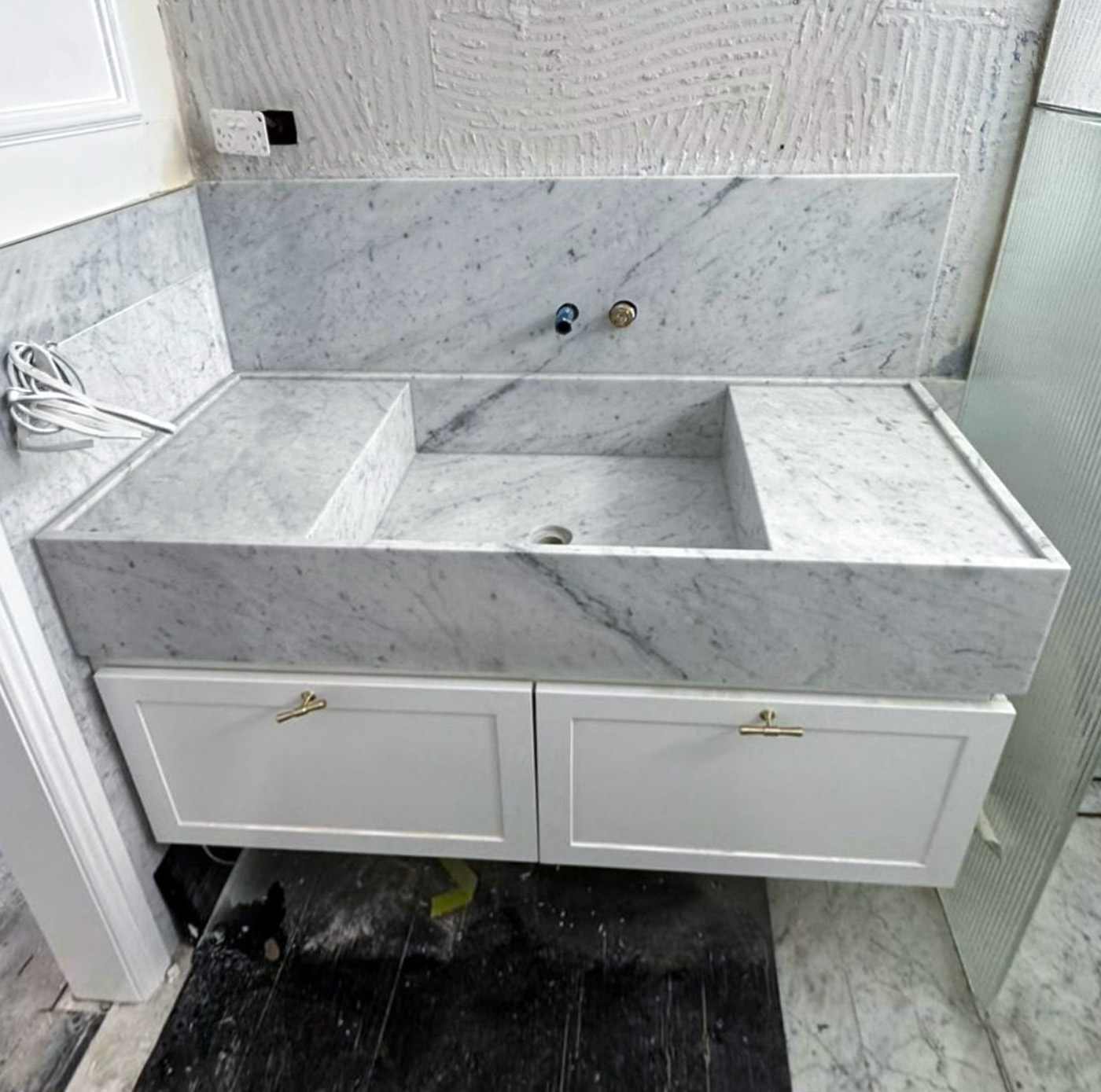
For the hardest-working bathrooms, a quartzite gives you the look with less thought, because it is denser and more forgiving than marble.
Marble is a lovely choice too, and easier in a bathroom than most people assume. A vanity does not see lemon juice or hot pans, so the usual marble worries mostly are not present. A honed finish and a sensible routine handle the rest.
Of the marbles, Calacatta is the one to reach for. Its vein flow and movement work in your favour. The pattern and tone blur the small marks a bathroom picks up over time, where a paler marble with less veining shows every one. Quartzite is always a safe choice, but the honest truth is that any of these stones works, as long as you give it a little care to keep it right.
If you want the look with the least care of all, a silica-free engineered stone does the job.
Where it lands best
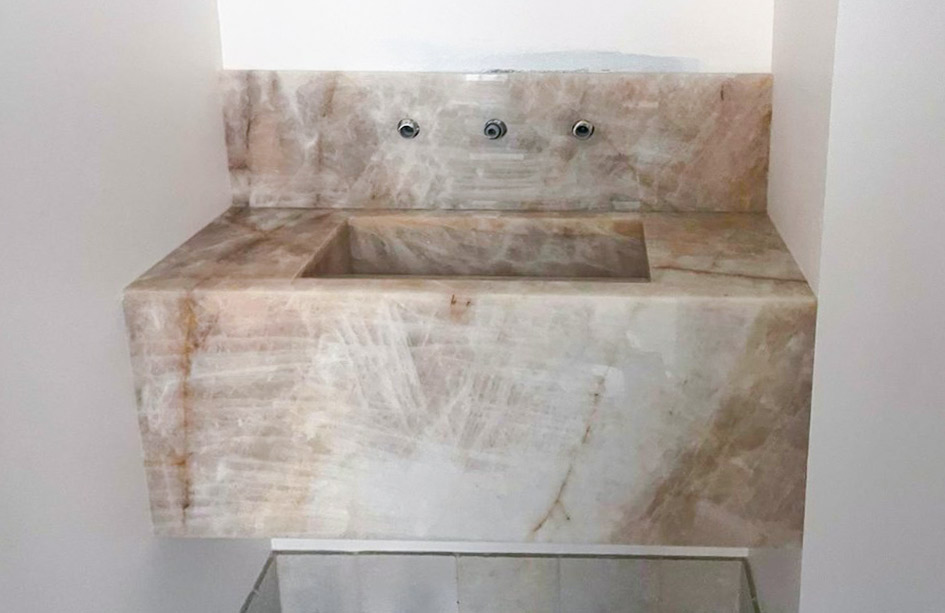
A powder room is the perfect place for an integrated stone sink. It is a small room a guest steps into for a moment, so one bold gesture carries the whole space. An ensuite or main bathroom in a forever home is the other. If you are building for the long term, this is where you follow the instinct and commit to the stone you love.
You are on the right track
If you have read this far, you already have the taste for it. An integrated stone sink is not a risk. It is one of the surest ways to make a stone vanity feel high-end, and it is the kind of detail people remember.
This is what we do. We build integrated basins in our own factory from the slab you choose, mitre them to match your vanity top or bath, set the depth, drainage and size to suit your space, shape the falls so they drain properly, and finish them to last. Bring your plans, or just an idea and a photo, to the showroom and we will find the stone and design the sink with you.
FAQ
What is an integrated stone sink?
A basin built from the same stone as the vanity top, so the top and the bowl read as one. We make them in our factory, cutting from your slab and joining and mitring the pieces, sink to bench. There are seams, but with the vein flow kept running through, the eye reads it as one. It is fabrication, not a sink you buy and fit.
Can I choose the depth and size of an integrated stone sink?
Yes, that is the point of building it rather than buying it. You set the bowl depth, the drain style, whether the waste is a matching stone pop-up or hidden, and the size, so it fits your vanity and your space. Squared and trough shapes work best, as the sink is built from mitred stone.
How much does an integrated stone sink cost?
As a very rough starting point, a simple integrated basin with a butt join and no slope starts around $2,500 per basin. With a sink with a slope drain, or a unique drain design, and a stone pop-up, it starts at $3,500 per basin. Treat both as ballpark. Basins are always different sizes and built custom to what a client needs, and the stone you choose moves the price, so it is always best to have your actual job quoted. Bring us the space and the slab you like and we will price it properly rather than guess.
Can an integrated stone sink be round or curved?
Squared and trough shapes work best, because the sink is built from mitred stone rather than turned from a block. A true round bowl is a rare, specialist piece, not a standard integrated sink. If a soft curved bowl is the look you are set on, tell us early, because it is a different build.
Does an integrated stone basin need special care?
It requires sealing the stone every 6 months or so, though that depends on how the room is used and the traffic it gets. The base is shaped so water drains to the waste rather than sitting. Choose the right stone and it lasts for years.
Which stone is best for an integrated sink?
Quartzite for the hardest-working bathrooms, as it is denser and more forgiving. Among the marbles, Calacatta is a strong pick, its vein flow blurs the small marks a bathroom picks up over time where a paler marble shows them. A silica-free engineered stone gives the look with the least care. Any of them works with a little maintenance.
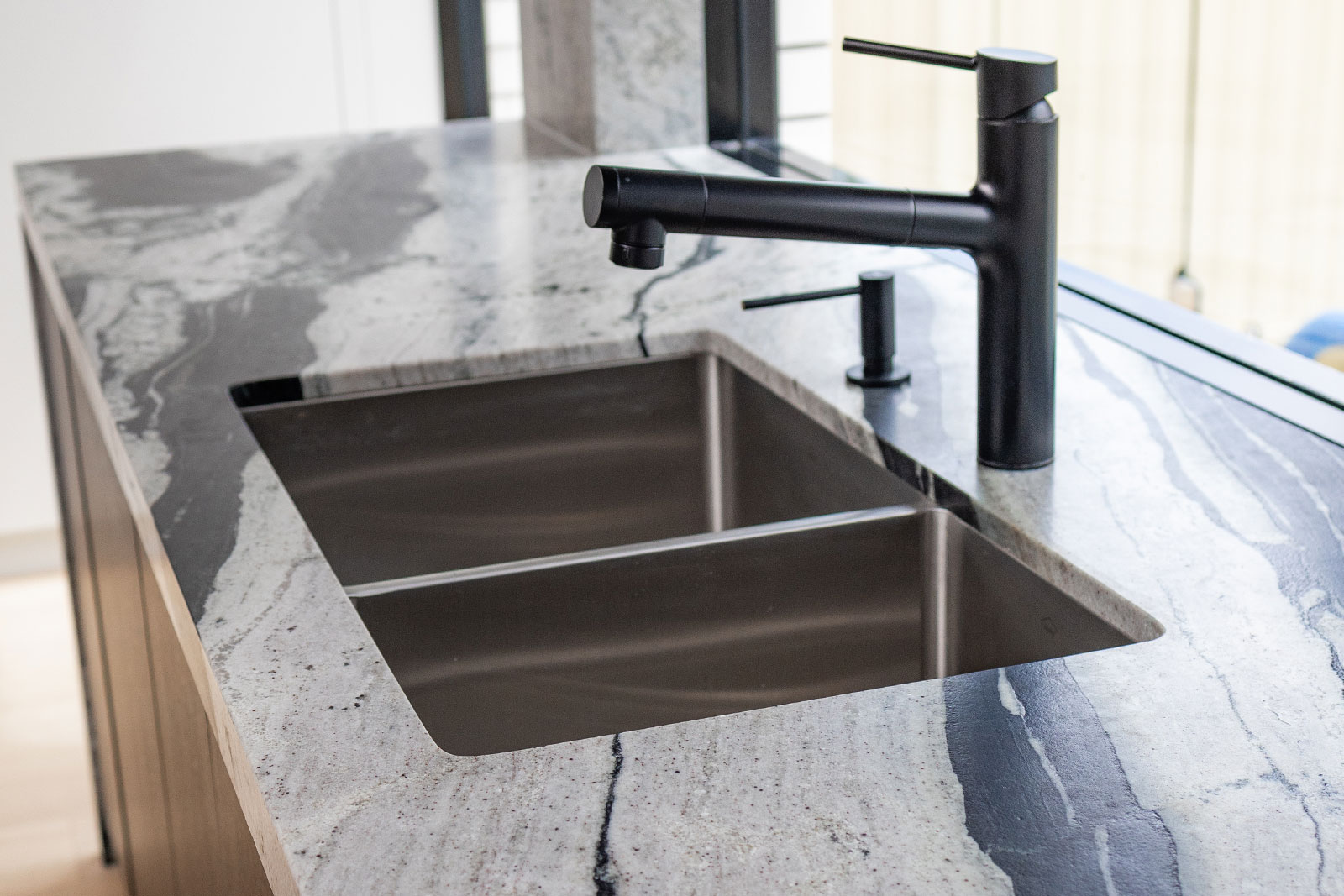
Undermount vs Flush Mount vs Drop-In Sink for Stone Benchtops | Marble Hub
There's no wrong sink style for a stone benchtop, only the right one for how you'll use it. This guide explains the look, cost and maintenance of undermount, flush mount, drop-in and integrated stone sinks from a fabricator's point of view. Drop-in sinks work hard in busy kitchens, butler's pantries and utility laundries, while flush mount gives the sharpest look and needs the most planning. It also explains how Marble Hub reviews and supports every flush mount sink at the factory. Tags: undermount sink, flush mount sink, drop in sink, top mount sink, integrated stone sink, butler's pantry sink, laundry sink, sink cut-out, stone benchtop sink, kitchen sink styles, Sydney stone fabricator, Marble Hub
Undermount vs Flush Mount vs Drop-In Sink for Stone Benchtops | Marble Hub
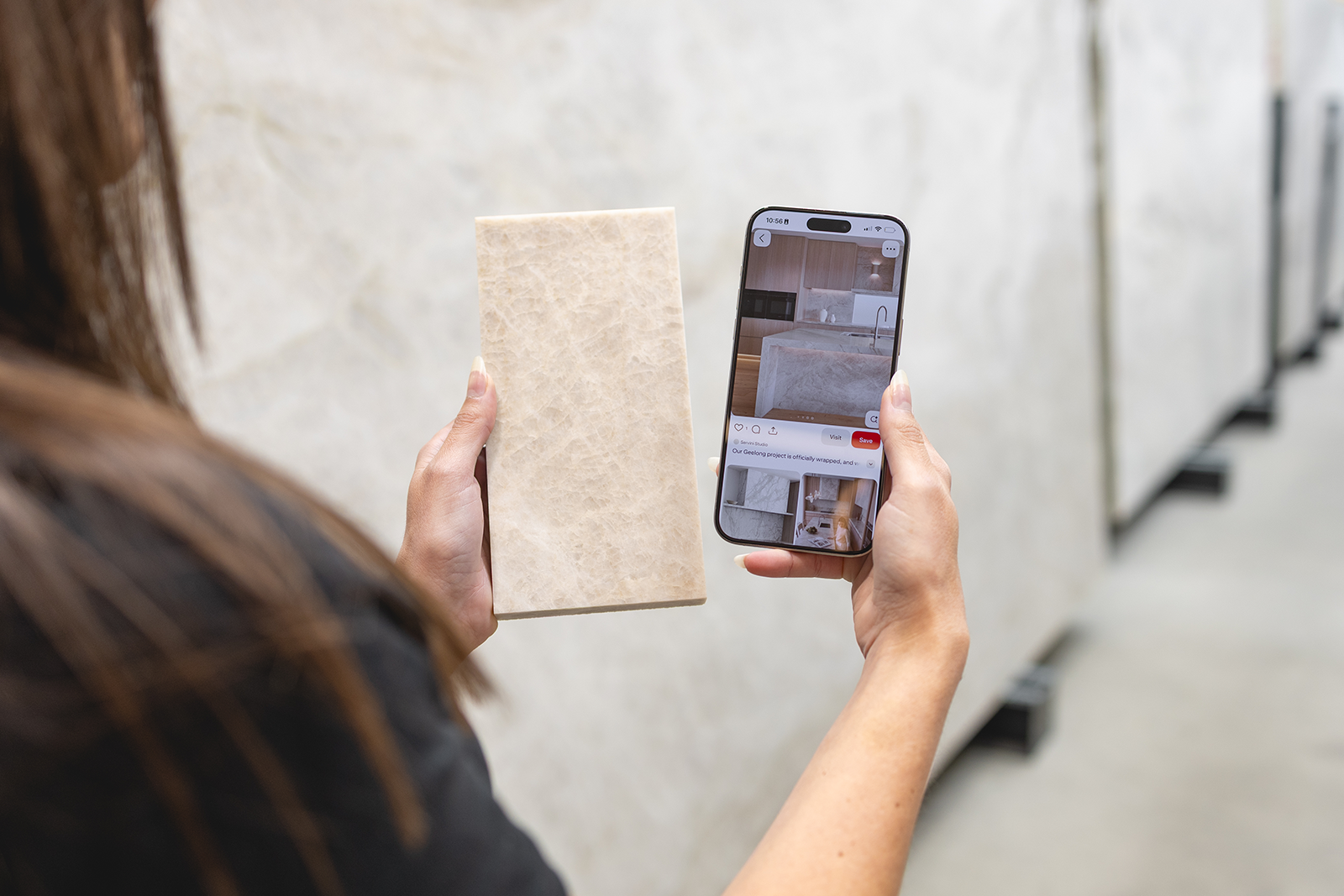
Where to Start When You Don't Know the Stone in Your Inspo Photos
For homeowners who don't know where to begin with stone. You don't need a stone name to start. Send your inspiration photos, tell us what you like and why you're drawn to it, and we'll identify the material and point you to the right slabs. Covers how your eye already picks matching tones, reading stone from a photo, which photos to trust online, and why picking stone is like picking art. Tags: how to choose stone, where to start, inspo photos, identify marble from photo, stone selection, Marble Hub Sydney.
Where to Start When You Don't Know the Stone in Your Inspo Photos
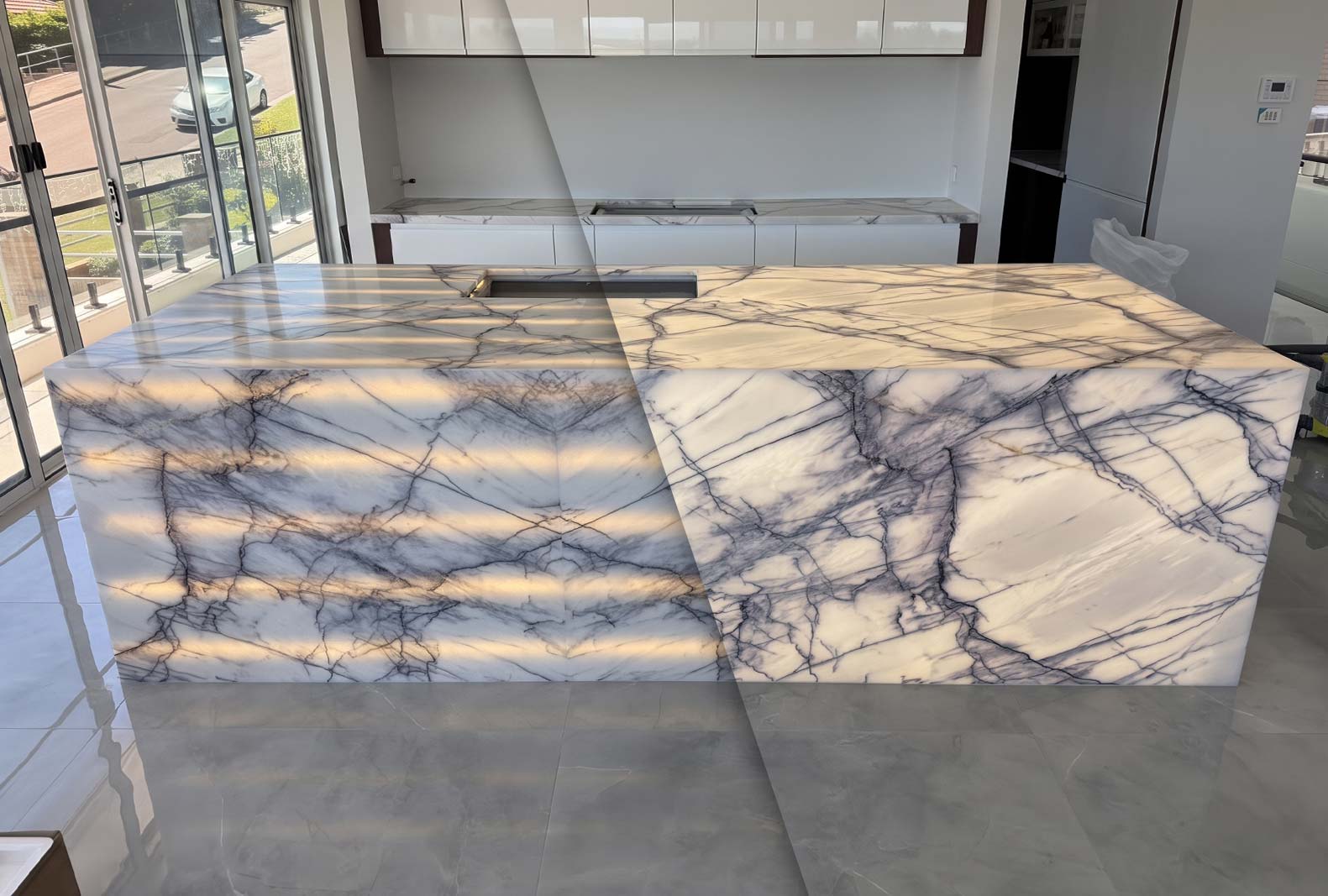
Backlit Stone and Why the LED You Choose Changes Everything
Backlit stone explained simply. The look changes a lot with the light behind the slab. LED strips give a striped, patterned glow; a full LED panel lights the whole slab evenly so it looks lit from within. Both are valid, so do what suits your budget, but plan it early with your electrician. Covers which stones are translucent and why the light install feeds into the check-measure. Tags: backlit stone, backlit marble, translucent stone, LED stone panel, backlit onyx, feature lighting, Marble Hub Sydney.
Backlit Stone and Why the LED You Choose Changes Everything
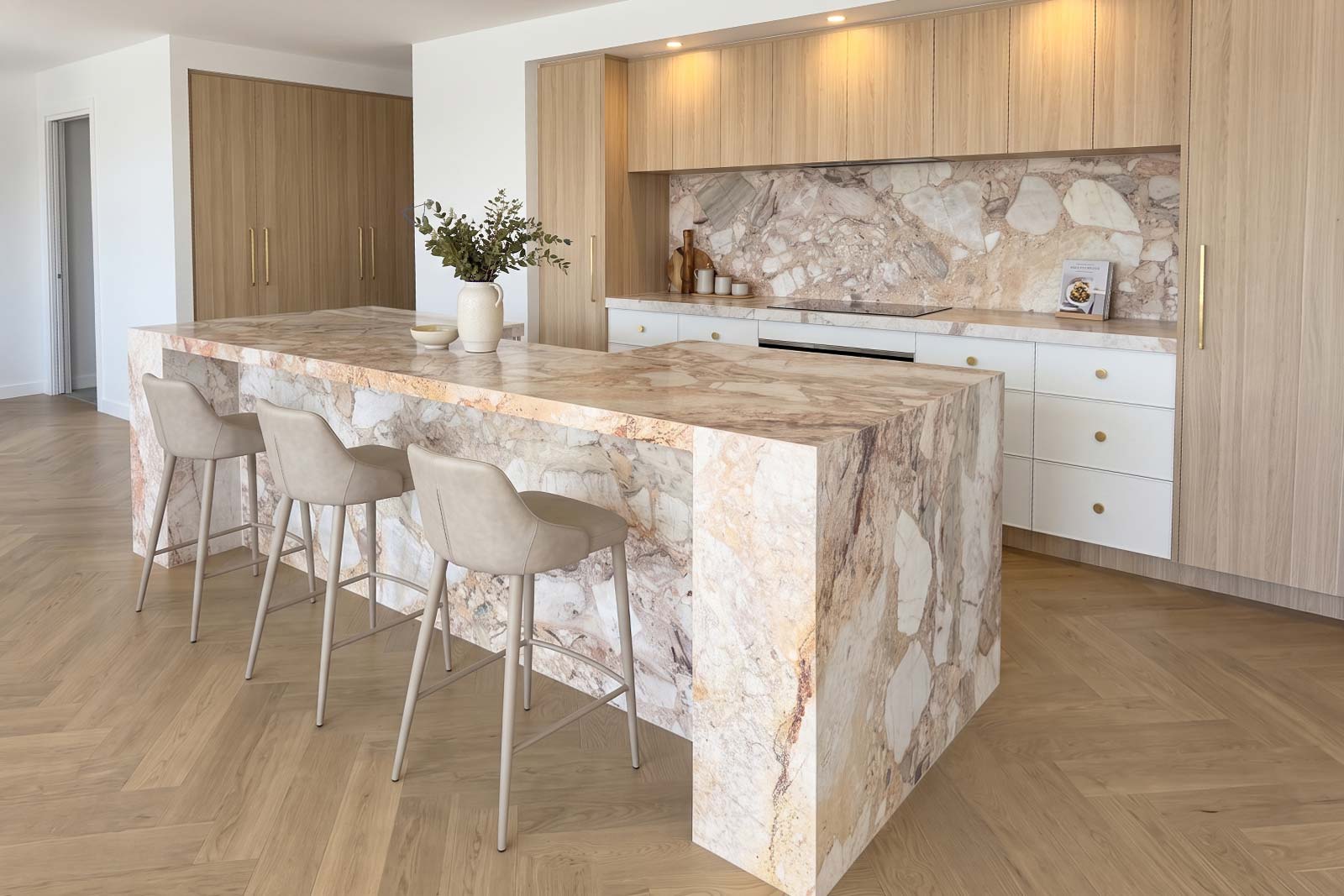
How We Plan Stone Across a Duplex Without Wasting a Slab
Planning stone across a duplex or dual-occupancy build. We work out real slab count, map every piece across the slabs, balance feature stone across both homes, and plan the stages so the check-measure and install land when each side is ready. Covers slab yield, offcut planning, mapping the cut to the stages, and getting every trade working to the same target dates. Tags: duplex stone benchtops, dual occupancy, slab count, stone yield, staged install, trade coordination, Marble Hub Strathfield South.
How We Plan Stone Across a Duplex Without Wasting a Slab
Let’s Get Started on Your Dream Space
Whether it’s a kitchen, bathroom, or laundry, Kitchen Hub is here to bring your vision to life.
