
Add slabs to your wishlist so we can give you custom quote.
Add productions from our slab collection so we create a quote for your next project!
If you're unsure of what you're after please reach out via our contact page.

Honed, Polished or Leathered: How the Finish Changes the Way a Kitchen Feels
Honed, Polished or Leathered: How the Finish Changes the Way a Kitchen Feels
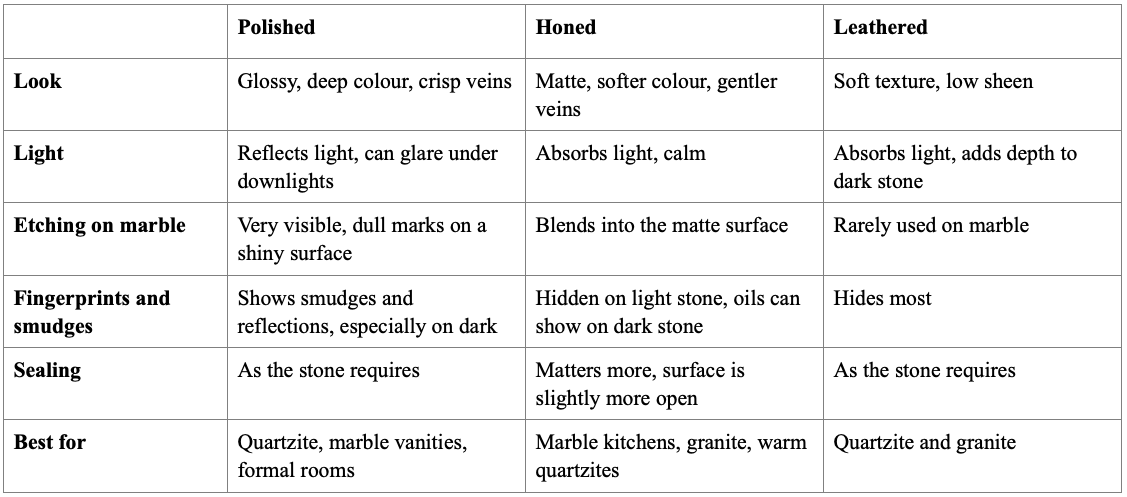
Polished stone is glossy, deepens colour and shows etching more on marble. Honed stone is matte and calm, and hides etching better. Leathered stone is softly textured and hides almost everything. For most marble kitchens we recommend honed. For quartzite, honed, leathered and polished all work. For granite, we mainly recommend honed, because polished dark stone shows every fingerprint and crumb.
The finish is the decision people make last and notice most. The same slab can look like three different materials depending on how its surface is finished. It changes how light moves across the kitchen, how deep the colour reads, and what you'll see every morning when the sun comes in.
Honed vs polished vs leathered at a glance
How is each finish made?
Polished stone goes through the full sequence until the surface is closed and reflective. Honed stone stops earlier, leaving a smooth, matte surface. Leathered stone is brushed with abrasive brushes that follow the softer minerals in the stone, leaving a gentle texture you can feel.
Same stone, same block. Different surface, different kitchen.
Is honed or polished better for a marble benchtop?
For most marble kitchens, honed. This is the finish we recommend most often, and etching is the reason.
Etching is a chemical reaction between acid and the calcium in marble. Lemon, wine, vinegar and some cleaners all do it, and it happens on every finish. What changes is how visible it is. On polished marble, an etch reads as a dull mark on a shiny surface. On honed marble, it blends into the matte surface, and the kitchen develops a gentle, even patina instead of shiny and dull patches.
The trade-off is that honed stone is slightly more open, so sealing matters more and oils need a prompt wipe. Our guide on how to clean and care for a marble benchtop covers the routine, and living with natural stone explains etching and staining in plain terms, including why both can be corrected.
Polished marble is at its best in bathrooms, where acids are rare. Our marble vanity guide explains why the vanity might be the best room for it.
When does polished stone make sense?
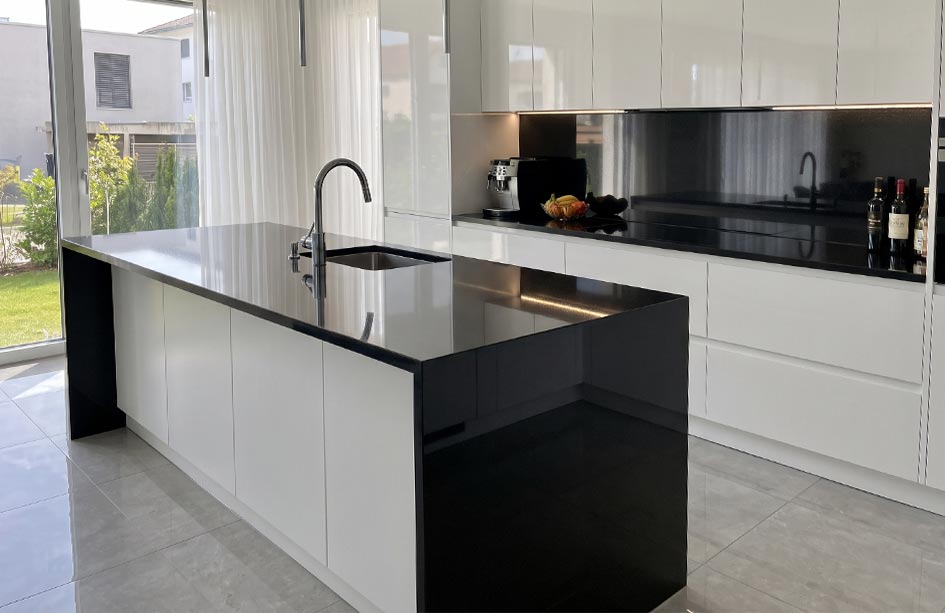
Polishing deepens colour and sharpens contrast. Veins look crisper and darker stones look deeper. The surface reflects light, which makes a kitchen feel brighter and more formal.
It's most forgiving on quartzite, where etching isn't a concern. A polished quartzite in a well-lit, formal kitchen can be beautiful.
Polished surfaces show reflections, including from overhead lights. In a kitchen with strong downlights, that can create glare. On dark stone, polish also shows every fingerprint and crumb, which is why we mainly offer granite honed.
What is a leathered finish?
Leathered stone has a subtle texture with a low sheen. It's the most tactile finish. You notice it every time your hand moves across the bench.

It hides fingerprints, water spots and minor wear better than honed or polished, and it gives darker stones depth without reflection. Leathering suits hard stones with varied mineral structure, especially quartzite and granite. It's less common on marble.
The trade-off: crumbs and spills can sit in the texture slightly, so wiping takes a moment longer. Some people also find a textured surface less pleasant for rolling pastry. You'll sometimes see a similar finish called brushed. Ask to touch a sample, because the depth of texture varies between stones and suppliers.
Which finish suits quartzite and granite?
Quartzite is hard and far less prone to etching than marble, so all three finishes work. Honed brings out the soft warmth of stones like Taj Mahal quartzite. Leathered adds texture and hides marks. Polished gives depth and a formal look.
Granite we mainly offer honed. Its colour and pattern are already forgiving, and a honed surface stops dark granite reflecting every light, fingerprint and crumb. Leathered is the other good option. A lot of granite's dated reputation comes from the high-gloss finish it was often paired with, and changing the finish goes a long way to making it look current.
How does the finish change light and colour?
Light is the factor most people overlook. A polished white stone in a kitchen with lots of natural light can feel bright, even clinical. The same stone honed feels calmer and warmer. A dark stone polished reflects every light source. Honed or leathered, it absorbs light and feels more architectural.
If you're choosing between white stones, finish can even change the undertone you see. Our guide on which white explains why undertone matters so much.
The finish also works with everything around it. Kitchens feel most considered when the surfaces share a similar sheen. A honed stone beside matte joinery and a brushed tap reads calm and cohesive. Add one gloss surface, such as lacquered doors, and it becomes the focal point whether you meant it to or not. Decide which surface, if any, gets to shine.
Edge profile plays the same game. A honed stone with a thin pencil edge reads calm and contemporary. A polished stone with an ogee edge reads traditional. Our edge profile guide shows the options.
Can you change the finish of a stone benchtop later?
With natural stone, yes. Polished marble can be honed, and honed marble can be repolished. That's one of the real advantages of natural stone: you can change your mind years later.
Finishes also change with use. Polished marble softens in the areas you use most, so you may see a duller zone around the sink and prep area. Honed marble develops an even patina. Leathered stone softens slightly as the texture wears. Quartzite and granite hold any of the three finishes well for many years.
With porcelain and crystalline-silica-free engineered stone, the finish is set at the factory. You choose it from the range, and it can't be changed later. The finish you choose is the one you keep.
Some natural stones are also offered in in-between finishes, often called satin or silk, with a soft sheen and less glare than polished. On marble, they still show etching more than a true honed finish. If honed feels too flat and polished feels too formal, ask to see one.
Which finish for bathrooms and outdoor areas?
Bathrooms are gentler than kitchens. Polished marble vanities work well because acids are rare. On bathroom floors, choose honed or textured for grip.
Outdoor areas suit honed or leathered, to reduce glare in full sun and hide water marks.
Whichever finish you choose, use a pH-neutral cleaner and avoid scouring pads, which can change the sheen over time. Our stone care page covers sealing and cleaning for each stone.
A simple decision framework
Choose honed if you're using marble in a kitchen, or granite anywhere, and you want the room calm and grounded.
Choose leathered if you're using quartzite or granite, want texture, and want a surface that hides fingerprints and water marks.
Choose polished if you want depth of colour and a formal look, especially with quartzite or a marble vanity.
The best way to decide is to see the same stone in all three. Ask to see finished samples at the showroom, under natural light if possible, and take a sample home for a weekend if one is available. Morning and evening light in your own kitchen will tell you more than an hour in ours.
Frequently Asked Questions
Is honed or polished better for a marble kitchen benchtop?
For most marble kitchens, honed. Acids etch marble on both finishes, but on honed marble the marks blend into the matte surface. On polished marble, an etch reads as a dull patch on a glossy surface. Polished marble suits bathrooms better, where acids are rare.
Does honed stone stain more than polished?
Honed stone can be slightly more absorbent, because the surface isn't as closed. With regular sealing and a prompt wipe of oils, honed stone performs well. Dark honed stones can show fingerprints and oils more than light ones.
What is a leathered finish?
A leathered finish is made by brushing the stone with abrasive brushes, leaving a soft texture and a low sheen. It hides fingerprints and water spots, and suits quartzite and granite especially well.
Is a leathered finish the same as brushed?
They're close. Both are textured finishes made with abrasive brushes, and suppliers use the names differently. The depth of texture varies, so touch a sample of the actual stone before deciding.
Should granite be honed or polished?
We mainly offer granite honed. Polished dark granite is extremely reflective and shows every fingerprint and crumb. Honed, it absorbs light and looks current. Leathered is the other good option.
Is honed quartzite a good choice for a kitchen?
Yes. Quartzite is hard and far less prone to etching than marble, so honed quartzite is a calm, practical kitchen finish. It brings out warm undertones in stones like Taj Mahal.
Can you change the finish of a stone benchtop later?
Yes, with natural stone. Polished marble can be honed, and honed marble can be repolished. Porcelain and engineered stone finishes are set at the factory and can't be changed.
Which finish hides fingerprints best?
Leathered, then honed on light stones. Polished stone shows smudges and reflections, and polished dark stone shows every fingerprint and crumb.

If You're Sick of Taj Mahal, Try These Eight Stones
A light-hearted look at eight natural stones for people who love Taj Mahal's warm, neutral look but want something different. It covers three quartzites (White Cristallo Extra, Biancatto, Cristallo Oro) and five marbles (Hermes Gold, Gold Santorini, Athena Gold, Ceppo di Vagli Extra, Breccia Roma). And if none of them win you over, the answer is simple: go with Taj Mahal.
If You're Sick of Taj Mahal, Try These Eight Stones
How to Design a Calm Kitchen Around a Bold Stone
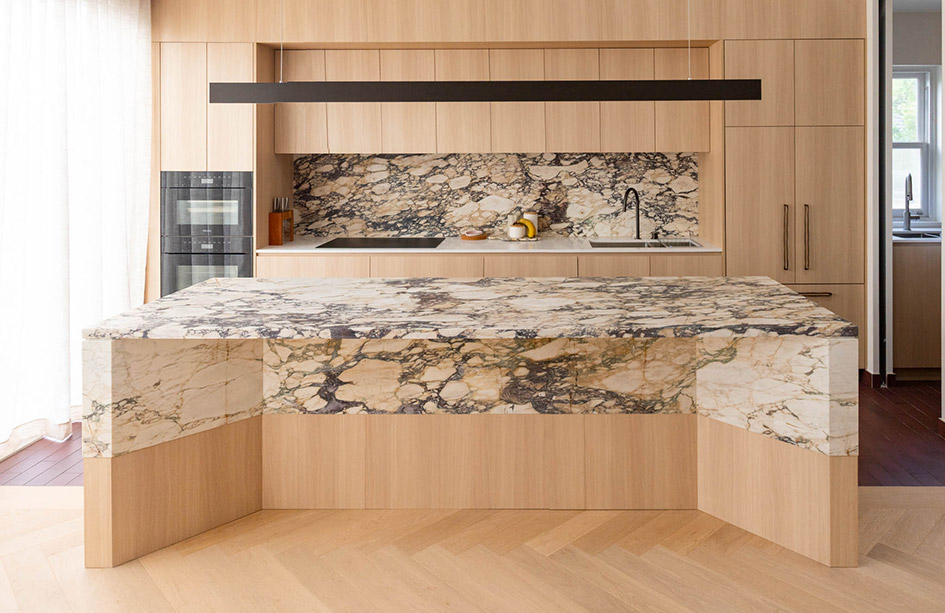
A bold stone like Calacatta Viola, Breccia, Patagonia or Negresco can carry a whole kitchen if everything else steps back. The rule is one hero: when the stone leads, the joinery, splashback, hardware and lighting support it. This guide covers where to put a bold stone, which joinery colours suit each of these four stones, how to manage visual weight, and why vein flow planning matters most with dramatic slabs.
How to Design a Calm Kitchen Around a Bold Stone
Stone Bathroom Walls and Showers: Full Slab, Porcelain or Tile
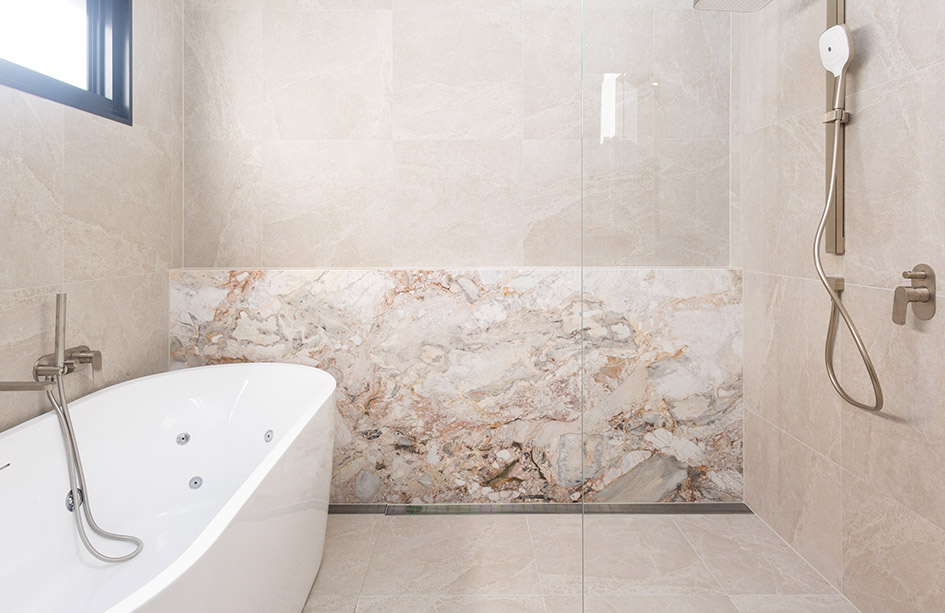
Stone on bathroom walls is what turns a tiled bathroom into a designed one. Full slab natural stone gives true vein flow and few joins, large-format porcelain is often the most practical choice inside a wet shower, and tile still suits complex shapes and tight budgets. Whatever you choose, stone is a finish, not waterproofing. This guide compares all three and covers marble in showers, joins, niches, floors and cost.
Stone Bathroom Walls and Showers: Full Slab, Porcelain or Tile

Granite Benchtops Are Back, and They Look Nothing Like the 90s
Granite sits mostly in darker and medium tones with a unique flowing pattern, and its dated reputation comes from what it was paired with in the 1990s, not the stone. With today's joinery, flooring and a honed finish, granite benchtops look timeless. It's hard, forgiving, resists etching and suits busy kitchens, outdoor areas and bathrooms. This guide covers pairing, finishes, real Marble Hub projects, granite vs quartzite, marble and dolomite, and how to choose a slab.
Granite Benchtops Are Back, and They Look Nothing Like the 90s
Let’s Get Started on Your Dream Space
Whether it’s a kitchen, bathroom, or laundry, Kitchen Hub is here to bring your vision to life.
