
Add slabs to your wishlist so we can give you custom quote.
Add productions from our slab collection so we create a quote for your next project!
If you're unsure of what you're after please reach out via our contact page.
Beyond the Benchtop: Where Natural Stone Takes a Home to Designer Level
Beyond the Benchtop: Where Natural Stone Takes a Home to Designer Level
TL;DR: The benchtop is where most people stop with natural stone. The designed homes don't. Carrying stone into fireplaces, niches, shower walls, window sills, sinks and even furniture is what separates a decorated home from a designed one. Done with restraint, it reads as considered, and it supports resale at the upper end of the market.

The short version
- The benchtop is now expected at the luxury end. The details around it are what set a home apart.
- Stone works hardest in fireplaces, wall niches, full shower walls, tub surrounds, built-in sinks, window sills and surrounds, door reveals, media units, and bespoke coffee and side tables.
- The design payoff is continuity. Carrying one material through a home reads as intentional.
- The resale payoff is perception. These details signal quality to buyers and valuers.
- The rule that matters most: don't stone everything. Pick hero moments.
A good benchtop used to be the statement. Now it's the baseline. Walk through the homes that feel designed rather than decorated and you'll notice the stone didn't stop at the island. It carried into the fireplace, the niche behind the bath, the windowsill catching morning light. That carry-through is the difference, and most of it costs less than people assume because it often uses the same slab.
Why use natural stone beyond the kitchen benchtop?
Short answer: It's what turns a collection of nice rooms into a home that reads as one considered design, and it lifts how the property is valued.
Two things happen when stone moves past the kitchen.
Design continuity. Repeating a material across a home creates rhythm. The eye recognises the same vein flow on the fireplace that it saw on the island, and the space feels connected rather than decorated room by room.
Perceived quality. Real stone in unexpected places reads as deliberate spend. Buyers and valuers register it as a quality home, which matters when yours is sitting next to comparable listings at the same price.
This is the difference between following a trend and making a decision that holds. We cover the resale side properly in our piece on stone and resale value.
Where does natural stone make the biggest design difference?
Short answer: In the living spaces, the bathroom, and a few bespoke furniture pieces.
Here's where each one earns its place.
The living spaces
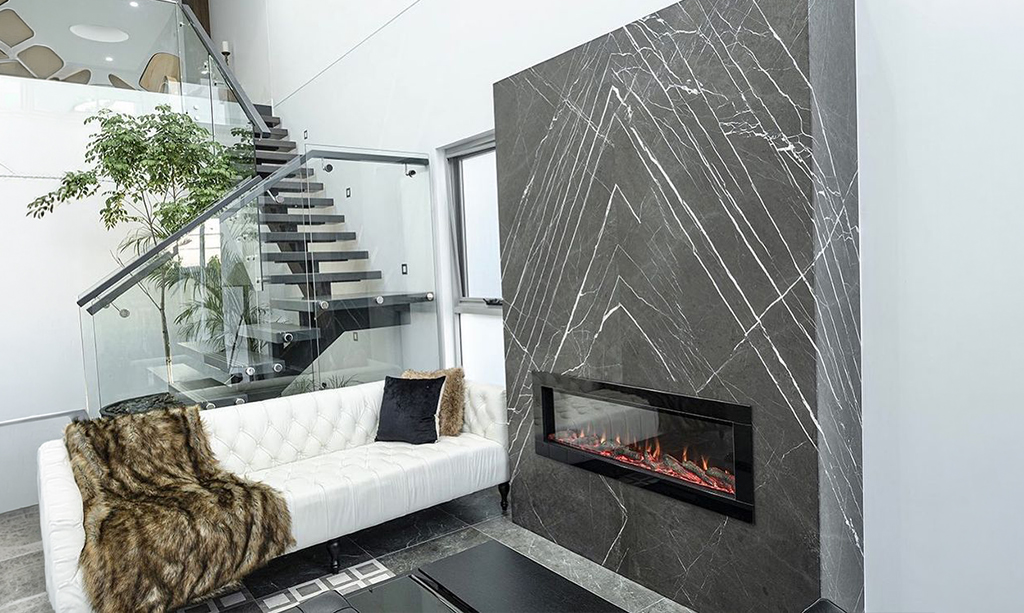
Fireplace surrounds. The fireplace is the one fixed focal point in most living rooms, so it rewards a real material. A full-slab surround in Calacatta Viola or Taj Mahal Quartzite, with the vein flow run to continue across the face, becomes the anchor the whole room sits around. Demand for stone fireplaces is strong and the luxury end is barely served, so this is also where a home stands out.
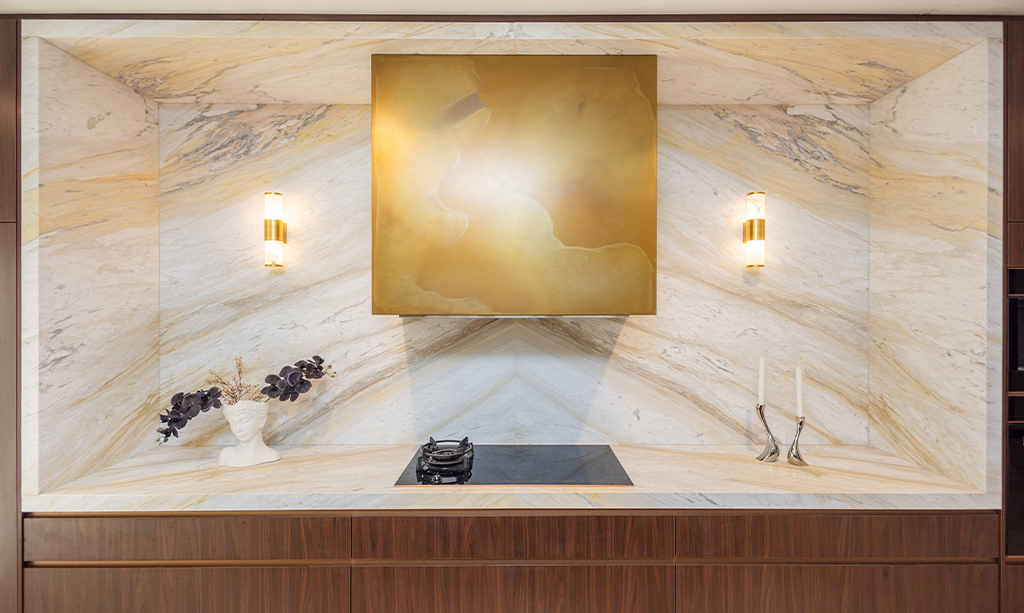
Wall niches. A niche is a small surface that gets looked at closely, in a hallway, behind a bath, framing a sculpture.Lining it in stone turns a recess into an intentional moment. Super White Dolomite works here when you want calm. A bolder slab works when you want the niche to be the feature.
Entertainment and media units. A stone-topped or stone-fronted media unit grounds a living room the way an island grounds a kitchen. It also solves a real problem: this is a high-use surface that takes heat from equipment and daily wear, and stone handles both.
Door architecture details. Stone reveals, jambs and thresholds are the quiet professional move. Most people won't consciously notice them. They'll just feel the home was built properly. This is the detail that makes designers trust a space.
Window sills and surrounds. A stone sill catches light beautifully and lasts where timber and paint wear. A full stone surround on a feature window frames the view like a picture. In wet or sunny rooms, it outperforms the alternatives for years.
The bathroom
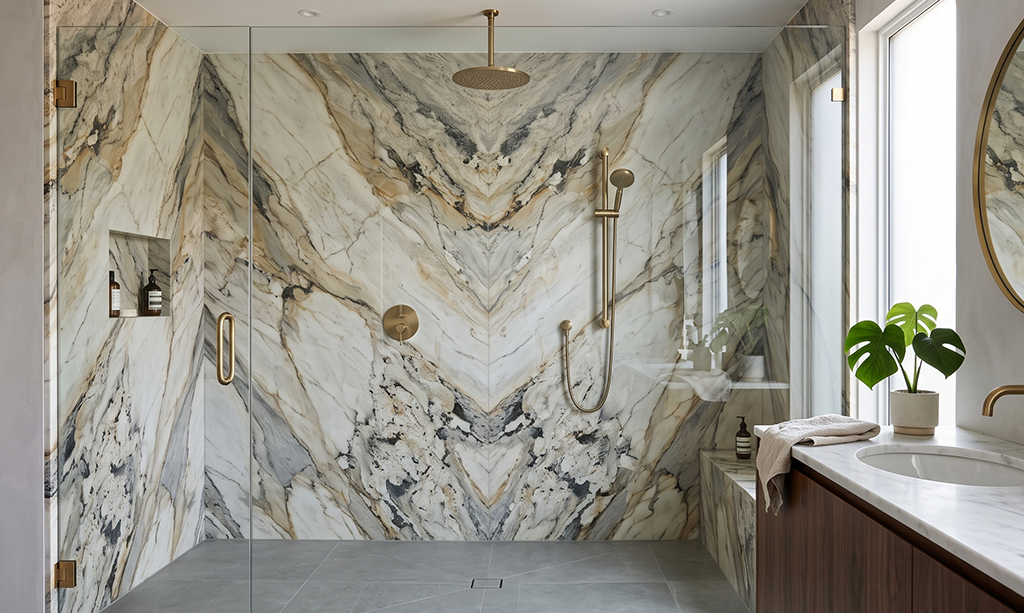
Full shower walls. Full-slab stone walls remove grout lines, which is the single biggest thing that makes a bathroom read as luxury rather than standard. The vein flow runs continuously across the wall. Quartzite and porcelain suit the wettest zones; marble suits a powder room or a bathroom you're happy to maintain.

Tub surrounds. A freestanding bath against a stone surround or a stone-clad plinth is one of the strongest images in a home. It's also one of the most photographed, which matters for listing and for Instagram.

A close-up shot of an integrated stone sink to clearly show the no-join fabrication detail
Built-in and integrated stone sinks. An integrated stone basin, cut and shaped from the same slab as the vanity, has no join and no separate bowl. It's a fabrication-led detail that reads as bespoke because it is. This is where in-house fabrication earns its keep.
Bespoke furniture
Coffee tables and side tables.

A solid stone coffee table is a sculptural piece that doubles as the most durable surface in the room. Side tables in a striking slab like Patagonia become small art objects. These are bespoke pieces, not budget offcuts, and they let a homeowner own a stone they loved but couldn't fit into the kitchen.
Does natural stone add resale value?
Short answer: At the upper end, yes, because these details read as quality and help a home stand out against its competition.
Stone in the right places signals that money was spent on the parts of a home that last. That perception does two things at resale:
- It positions the home as considered rather than builder-standard.
- It gives a buyer fewer reasons to negotiate down, because the finishes already read as premium.
The honest framing: if this is your forever home, do it because you'll live with it and love it. If resale is part of the decision, look at what comparable homes in your bracket are doing. Stone details keep you aligned with what those buyers expect, and a little ahead of the ones who stopped at the benchtop.
Should you use stone everywhere?
Short answer: No. The skill is restraint. Pick hero moments.
This is the part that separates a designed home from a showroom. Stone on every surface reads heavy and starts to feel commercial rather than like somewhere you live. The homes that work choose two or three moments to carry the material and let the rest breathe.
- Pick one hero per zone. A fireplace in the living room. A shower wall in the main bathroom. A coffee table in the lounge.
- Let quieter materials, timber, plaster, paint, sit around the stone so it has room to register.
- Continuity beats quantity. One slab carried thoughtfully across two rooms looks more intentional than five different stones competing.
How do you choose where to use it?
Short answer: Spend the stone where it gets seen, touched, and remembered.
- Start with the fixed focal points. Fireplaces, feature walls, the main bathroom. These are the surfaces people look at longest.
- Continue an existing slab. If you're already buying a kitchen slab, a fireplace or niche from the same stone adds the design payoff for a smaller jump in cost.
- Match the species to the use. Quartzite and porcelain for wet and high-traffic zones. Marble and dolomite where the look matters more than the wear. Durable stones for furniture that gets daily use.
- Leave the low-impact surfaces alone. A laundry or a guest room rarely repays a stone upgrade. Save the budget for the moments that count.
The practical side, honestly
Stone in these applications is heavier and more involved than a benchtop, so a few realities are worth knowing before you commit.
- Weight and support. Tub surrounds, full fireplaces and solid stone tables need proper substrate and structural support. This is a fabrication and install question, not a guess.
- Fabrication complexity. Continuing vein flow across a fireplace, mitring a waterfall edge on a coffee table, or shaping an integrated sink takes skill. It's where an in-house workshop matters, because the detail is in the cutting.
- Sealing in wet zones. Shower walls and tub surrounds need the right stone and the right sealing from the start.Choose well and they last. Choose marble in a high-use family shower and you've signed up for maintenance.
- Cost follows ambition. These details add to the budget. The way to control it is restraint and slab continuity, not cheaper stone.
None of this is a reason to avoid it. It's the reason to plan it early, with a fabricator in the room, rather than bolting it on at the end.
FAQ
Where should I use natural stone besides the kitchen benchtop?
The highest-impact places are fireplace surrounds, wall niches, full shower walls, tub surrounds, integrated stone sinks, window sills and surrounds, door reveals, media units, and bespoke coffee or side tables. Choose two or three hero moments rather than using stone everywhere.
Does using stone in more places add resale value?
At the upper end of the market, yes. Stone details read as quality to buyers and valuers, position a home as considered rather than builder-standard, and help it stand out against comparable listings in the same price bracket.
Can you use natural stone on shower walls and around a bath?
Yes, with the right stone and sealing. Quartzite and porcelain suit the wettest, highest-use zones. Marble suits powder rooms or bathrooms you're happy to maintain. Full-slab walls remove grout lines, which is the main thing that makes a bathroom read as luxury.
Is stone furniture worth it, or is it just offcuts?
A bespoke stone coffee or side table is a designed piece, cut and finished to sculptural proportions, not a budget leftover. It gives you the most durable surface in the room and lets you own a slab you loved but couldn't fit elsewhere.

Outdoor Stone Benchtops That Survive a Sydney Summer
An outdoor benchtop in Sydney has to handle sun, heat, salt air, dust, rain and BBQ fat on the same surface. Porcelain and sintered stone are our first pick, granite is the best natural stone outdoors, and quartzite works with regular sealing. Light-coloured marble is best avoided outside, and engineered stone belongs indoors only, as UV affects it and outdoor use voids the manufacturer's warranty. This guide also covers joins, BBQ heat and why butt joins or shadowlines often outlast mitres outdoors.
Outdoor Stone Benchtops That Survive a Sydney Summer

Engineered Stone vs Natural Stone Benchtops: Honest Comparison | Marble Hub
Natural stone is one of a kind, handles heat well and can be restored for decades, but it needs sealing. Crystalline-silica-free engineered stone is consistent and needs no sealing, but it can scorch and can't be rehoned the same way. We cut both every week and compare them honestly on looks, care, heat, repair and price. We recommend natural stone first, and engineered stone where consistency or easy care matters most.
Engineered Stone vs Natural Stone Benchtops: Honest Comparison | Marble Hub

Pink Cristallo Quartzite for a Northmead Kitchen
A Federation home in Northmead with a new-wing kitchen by designer Vagn Madsen, built by Dan Kitchens Australia, with a Pink Cristallo Quartzite island benchtop and splashback from our Strathfield South showroom. This piece looks at why a pink stone works: subtle white shaker joinery that steps in and out around the rangehood, a soft stone that adds warmth without competing, a curved island with a softened, stepped double bullnose edge, and stone used in just two places. It also covers choosing slabs in person, living with pink quartzite in a family kitchen, and Pink versus White Cristallo.
Pink Cristallo Quartzite for a Northmead Kitchen
Undermount vs Flush Mount vs Drop-In Sink for Stone Benchtops | Marble Hub
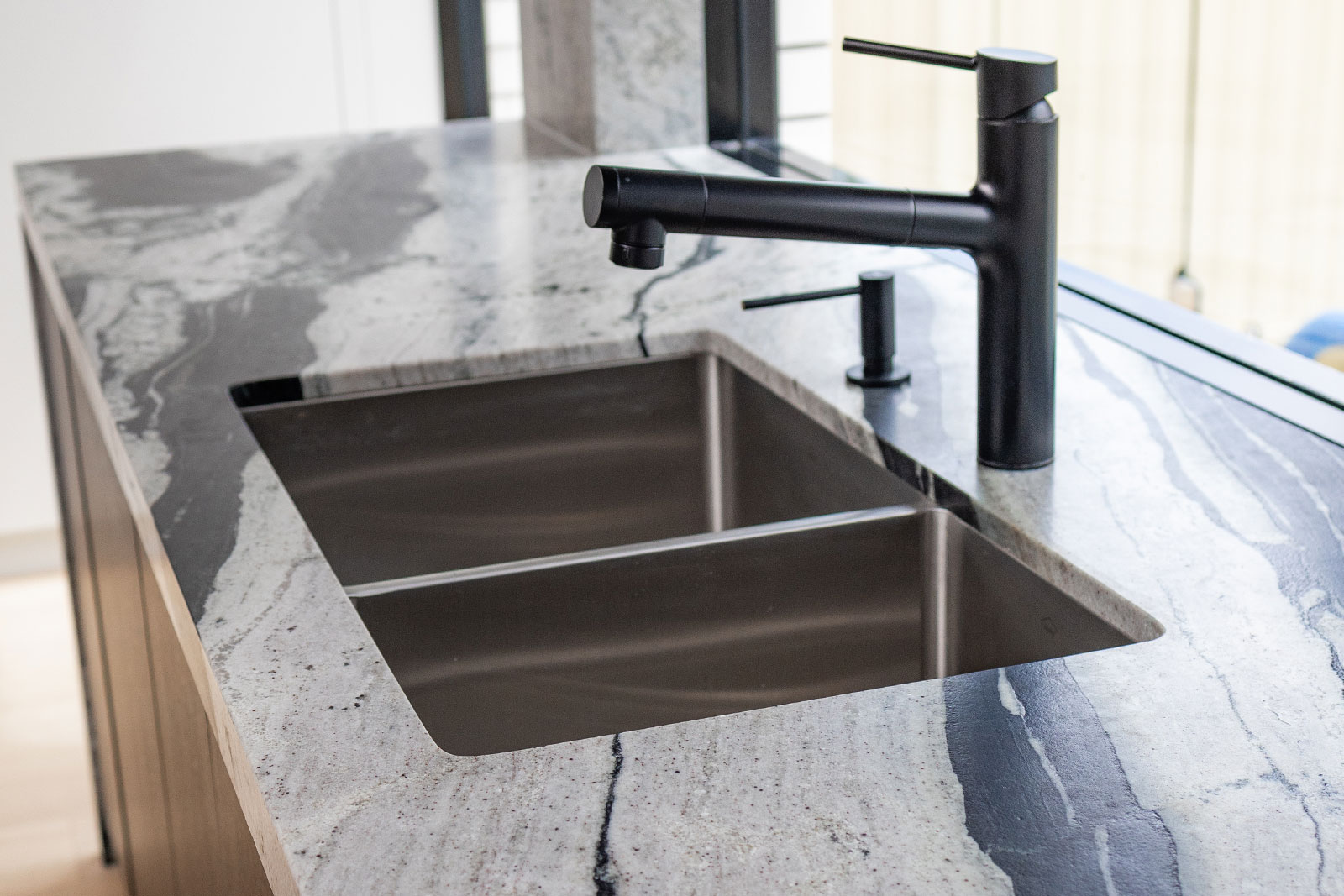
There's no wrong sink style for a stone benchtop, only the right one for how you'll use it. This guide explains the look, cost and maintenance of undermount, flush mount, drop-in and integrated stone sinks from a fabricator's point of view. Drop-in sinks work hard in busy kitchens, butler's pantries and utility laundries, while flush mount gives the sharpest look and needs the most planning. It also explains how Marble Hub reviews and supports every flush mount sink at the factory. Tags: undermount sink, flush mount sink, drop in sink, top mount sink, integrated stone sink, butler's pantry sink, laundry sink, sink cut-out, stone benchtop sink, kitchen sink styles, Sydney stone fabricator, Marble Hub
Undermount vs Flush Mount vs Drop-In Sink for Stone Benchtops | Marble Hub
Let’s Get Started on Your Dream Space
Whether it’s a kitchen, bathroom, or laundry, Kitchen Hub is here to bring your vision to life.
