
Add slabs to your wishlist so we can give you custom quote.
Add productions from our slab collection so we create a quote for your next project!
If you're unsure of what you're after please reach out via our contact page.
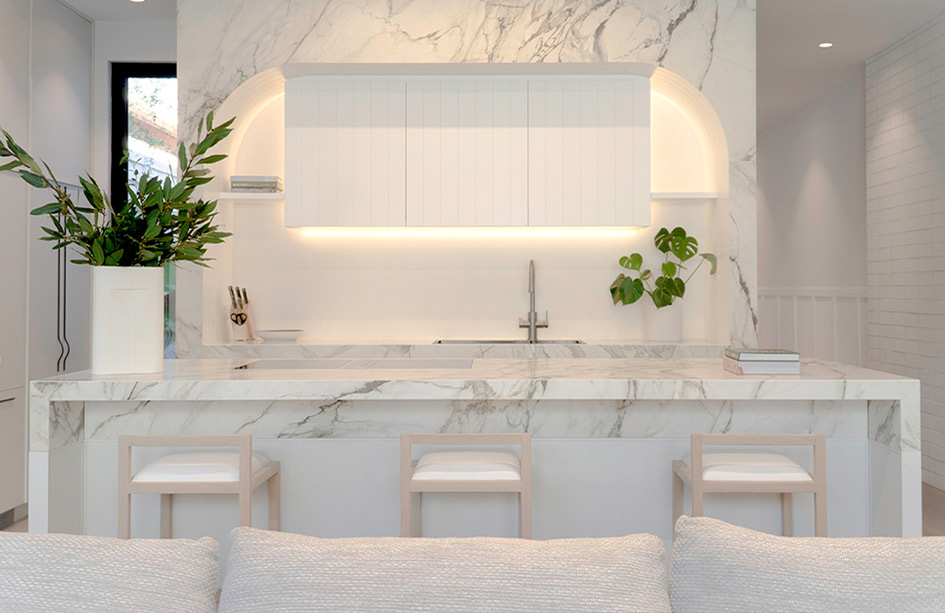
Porcelain and Sintered Stone: Both Are Excellent, and Here's What Actually Changes
Porcelain and Sintered Stone: Both Are Excellent, and Here's What Actually Changes
TL;DR
Both are excellent, and neither is a downgrade. Porcelain and sintered stone are close cousins that look almost identical on the face, are stain proof and heat proof to a very high level, which makes them ideal for BBQ areas and kitchens where you tend to put hot items straight on the bench. The difference is how they're made, and it shows up on the edge. Sintered stone carries colour through the body, so a slim 20mm edge shows a hint of it. Porcelain is a printed face on a solid-colour body, so a slim edge reads as one flat tone unless you build a 40mm mitred edge. Porcelain also does something no other material can: a 12mm slab gives a truly thin, minimal edge. Choose either with confidence. Start with the look you love, then the edge you want, and the right one falls out of that.
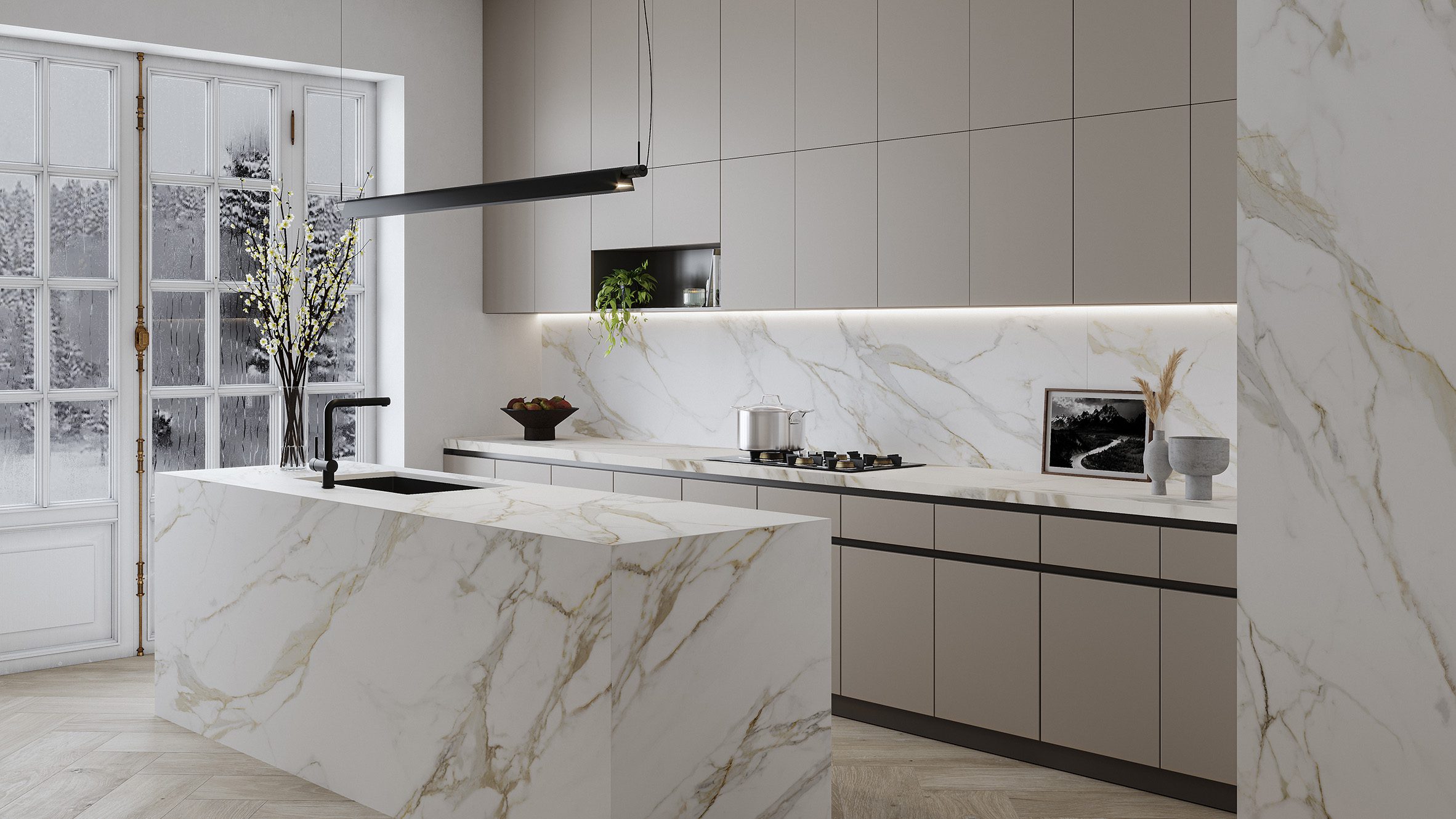
What's the actual difference between the two?
It comes down to how the slab is made, not how it looks in the brochure.
Sintered stone is mineral particles fused under heat and pressure, with the colour and pattern carried through the full body of the slab. Porcelain is also fired under heat, but the pattern you see is a printed decorated layer sitting on a solid-colour body underneath.
That single manufacturing difference decides everything you notice later. The edge, the cut-outs, the way a chip would show. People use "porcelain" and "sintered" as if they mean the same thing, and in casual conversation that's fine. On the fabrication bench, they don't behave the same.
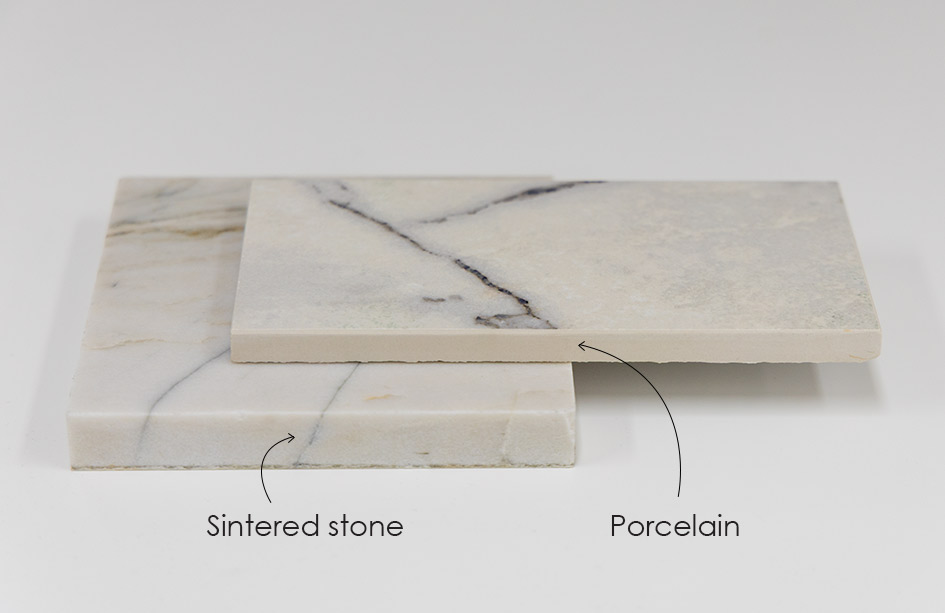
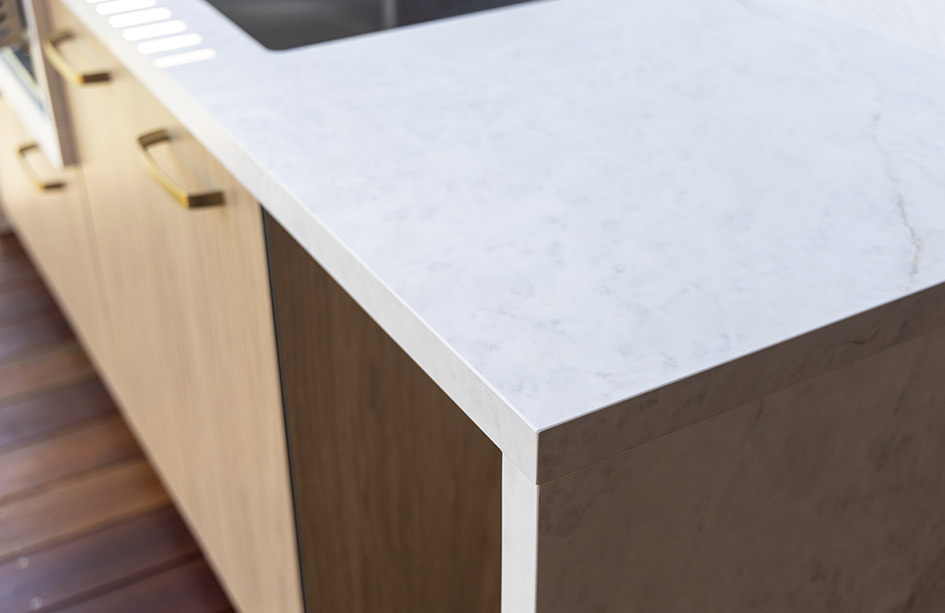
Visual comparison showing the manufacturing difference between sintered stone and porcelain benchtops. Sintered stone carries its pattern through the body edge, whereas porcelain features a printed face and a solid edg
Why does the edge look different?
Because one has colour running through it and the other doesn't.
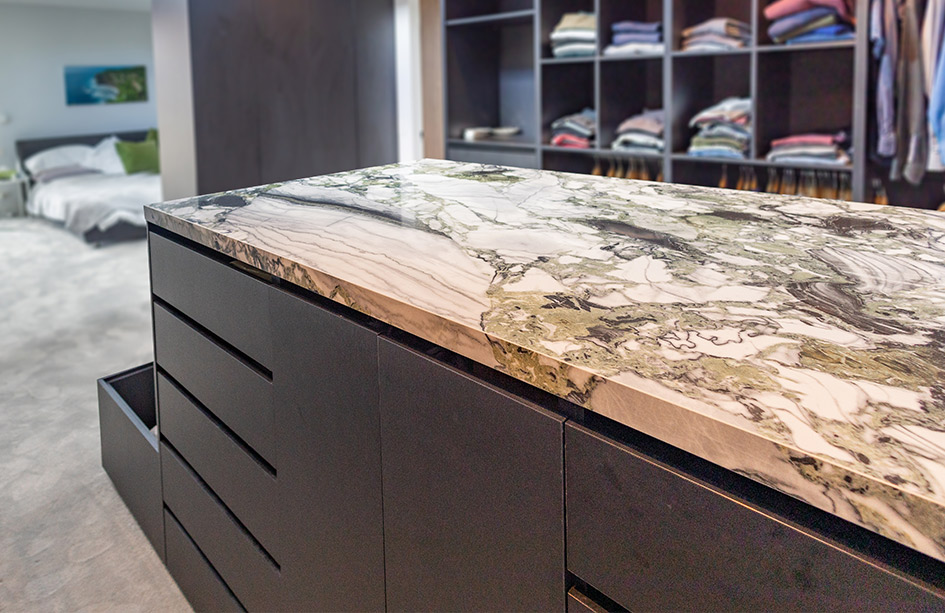
Take a 20mm slab and finish it with a simple pencil round edge. On sintered stone, you'll see a little of the stone's colour on that edge, so it reads as a solid piece. On a porcelain slab at 12mm or 20mm, that same edge shows one flat colour, usually the background tone of the slab. The veining or print lives on the face, not the edge.
If you want the pattern to carry around the edge on porcelain, you go to a 40mm or thicker mitred edge, where we fold the printed face down the side so the movement continues. That's the move when you want a porcelain benchtop to look like a solid block of stone rather than a thin sheet.
So what edge profiles can I get?
Fewer than you're used to with natural stone or engineered quartz. And that's the honest answer.
With porcelain and sintered stone, the profile is usually a mitred edge. Clean, squared off, architectural. It suits the material and it suits contemporary joinery, so most of the time that squared look is what people are after anyway.
Here's the upside almost no one mentions. Porcelain can be run as a 12mm slab, which gives an ultra-thin, minimal edge you cannot get in any other material. Marble or quartz at 12mm would be too fragile to survive, so they start at 20mm. If a razor-thin, minimal benchtop edge is the look you're chasing, porcelain is the only material that does it.
What you don't get is the full family of edges we can run on marble or quartz. No ogee, no double bullnose, none of the softer decorative profiles. If your heart is set on a fancy moulded edge, this isn't the material for it. If you want a crisp, modern, squared or ultra-slim benchtop, it's ideal.
So how do I pick between the two?
Start with the look, then the edge. In that order.
First, the look. The slab designs in the sintered range and the porcelain range aren't the same, so walk the showroom and see which patterns you actually like. You might fall for a sintered slab and not love the porcelain options, or the other way round. Pick the slab that stops you, not the material on paper.
Then the edge. If you want a thin 12mm edge, that's porcelain, run at 12mm or built up to a 40mm mitre. If a 20mm edge is fine and you like seeing a little colour on that edge, sintered gives you that. So the edge you want usually confirms which of the two you're on.
Most of the time the slab you love and the edge you want line up on their own. When they don't, the look wins. You'll see the benchtop every day, and you'll rarely think about the edge thickness once it's in.
Are there cut-out limitations?
Yes, a few, and they're worth knowing before you finalise the design.
You can't do shaped edge profiles, flush-mount cut-outs, or drain boards and drainer grooves in porcelain or sintered stone. The material is harder to cut than quartz, so fabrication takes longer, and that extra time lifts the fabrication cost.
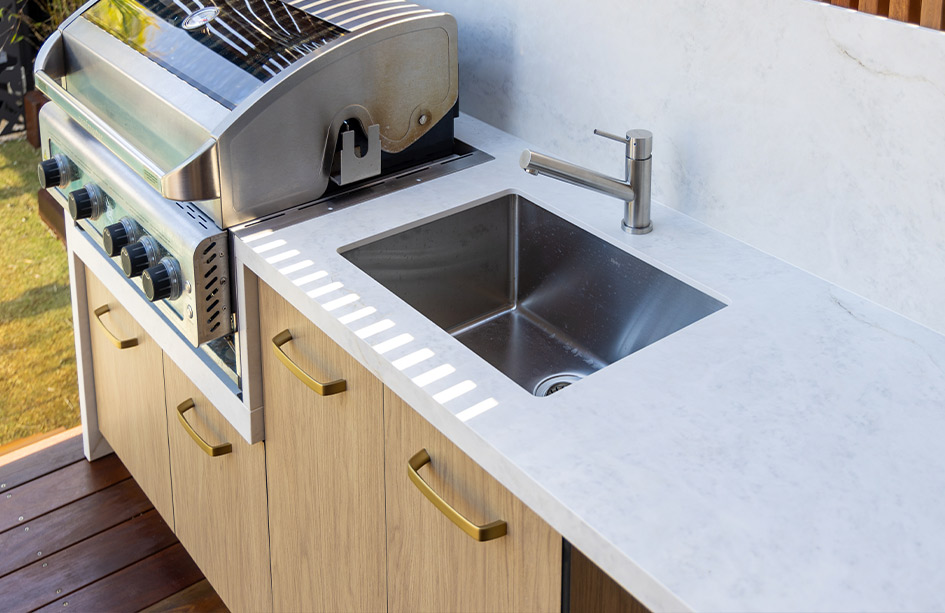
Undermount sinks work with both materials, so that option stays open. It's still worth walking through the pros and cons with our sales team when we quote, because the right sink and cut-out approach depends on the slab and the layout.
One more to flag. A curved or radius corner on a benchtop can only be done on a 12mm or 20mm edge, not on a mitred edge. So if you want a rounded corner and a chunky mitred profile, those two pull against each other, and it's a decision to make early.
Is porcelain really stain proof and heat proof?
Yes, and this is the whole reason the material exists.
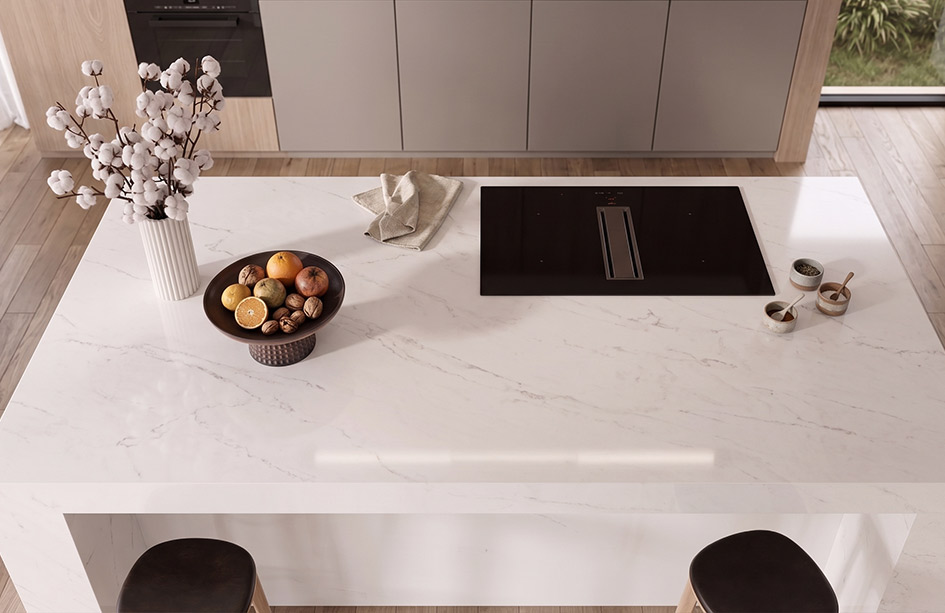
Porcelain and sintered stone are non-porous, so wine, oil, coffee, lemon juice, they sit on top and wipe away. No sealing, ever. Set a hot pan straight down and the surface won't scorch or mark. For a lot of households, that combination is the entire decision.
Compare that to marble, which etches when something acidic touches it, or engineered quartz, which can scorch under real heat. If the thing keeping you up at night is a stain or a heat ring, this material takes that worry off the table.
Can I use it outdoors, for a BBQ or alfresco?
This is one of the best uses for it.
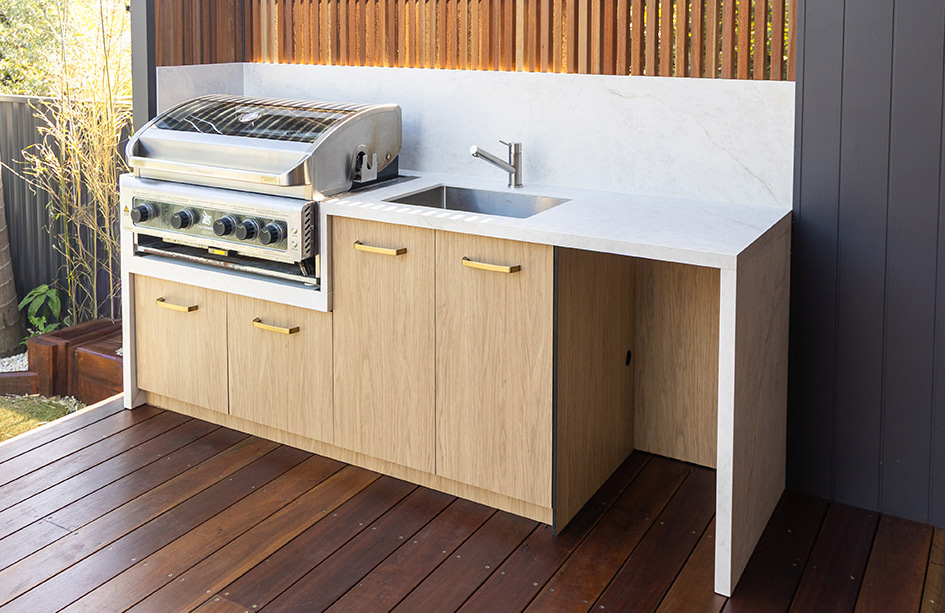
Porcelain and sintered stone are UV stable, so the colour holds under Sydney sun instead of fading. They handle heat, weather and spills, which is precisely what an outdoor kitchen throws at a benchtop. Our Smartstone Sintered range is built for exactly this, kitchens, barbecues, furniture and fireplaces.
If you're planning an alfresco BBQ zone, this is the material we'd point you to first. Natural stone outdoors can be beautiful but higher maintenance. Porcelain just gets on with it.
Does it work for a bathroom vanity?
Very well, especially in a wet, busy family bathroom.
A vanity sees toothpaste, cosmetics, cleaning products, all the things that mark porous surfaces over time. Porcelain shrugs them off. You can run a slim 12mm or 20mm top for a light, modern look, or build a thicker mitred edge if you want the vanity to feel like a solid block.
If you love marble in a bathroom, marble is still a lovely choice there because bathrooms are gentler than kitchens. But if you want zero maintenance and zero thinking, porcelain is the calmer path.
I love the marble look but I'm anxious about stains. Is this my answer?
Probably, yes.
This is the exact person porcelain and sintered stone were made for. You get the marble-look face, the veining, the soft white grounds, without the sealing, the etching or the held breath every time someone opens a bottle of red.
Here's the honest part. A trained eye can tell the difference up close. Natural marble has a depth and a randomness that a printed surface approximates rather than replicates, and you can't re-hone or repair porcelain the way you can marble. What you're trading is that last five percent of natural depth for total peace of mind. For a lot of people, that trade is an easy yes.
Porcelain vs natural stone vs engineered: how do I actually choose?
Start from what you care about most, because all three are strong choices. Choose porcelain or sintered stone if you want the marble look with no maintenance, an outdoor or BBQ benchtop, a clean squared edge, or the ultra-slim 12mm edge only porcelain can do, and you're happy the pattern is printed rather than natural.
Choose natural stone like marble or quartzite if you want genuine depth and a surface that can be repaired and re-honed over decades, and you accept a little care.
Choose silica-free engineered stone if you want a wide edge range, consistent colour and strong stain resistance, and heat isn't your main worry.
Design backward from what you actually care about most, and the material usually picks itself.
What are the honest downsides?
Three, and they're worth knowing before you commit.
Fewer edge profiles, so if you want a decorative moulded edge, look elsewhere. A thin edge shows one flat colour unless you go to a mitred 40mm. And while the surface is tough, a hard knock on a corner can chip it, because hardness and brittleness travel together.
Set against stain proof, heat proof, UV stable and zero sealing, most people decide the trade is well worth it. As with every stone decision, it comes down to how you actually want to live with it.

Pink Cristallo Quartzite for a Northmead Kitchen
A Federation home in Northmead with a new-wing kitchen by designer Vagn Madsen, built by Dan Kitchens Australia, with a Pink Cristallo Quartzite island benchtop and splashback from our Strathfield South showroom. This piece looks at why a pink stone works: subtle white shaker joinery that steps in and out around the rangehood, a soft stone that adds warmth without competing, a curved island with a softened, stepped double bullnose edge, and stone used in just two places. It also covers choosing slabs in person, living with pink quartzite in a family kitchen, and Pink versus White Cristallo.
Pink Cristallo Quartzite for a Northmead Kitchen
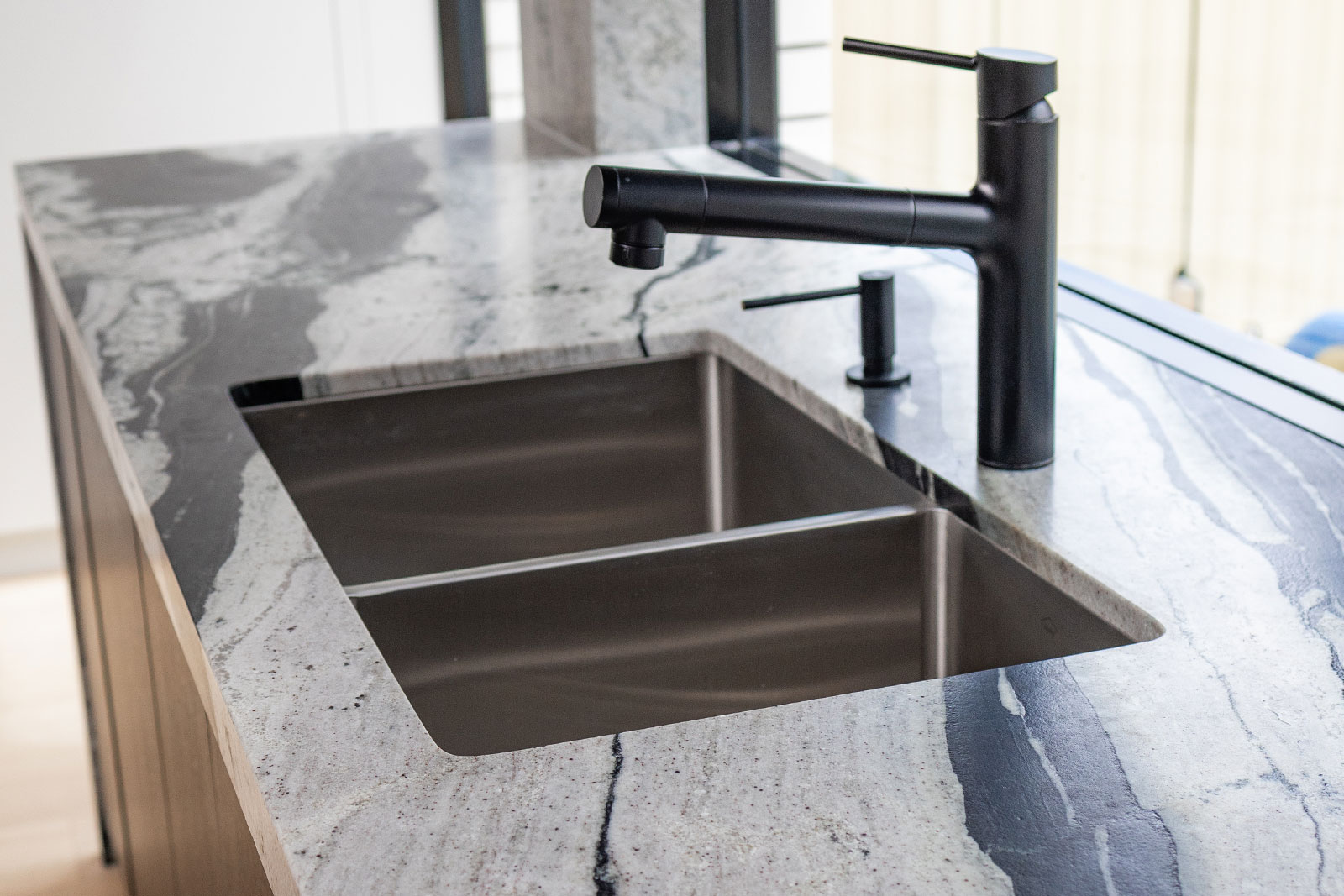
Undermount vs Flush Mount vs Drop-In Sink for Stone Benchtops | Marble Hub
There's no wrong sink style for a stone benchtop, only the right one for how you'll use it. This guide explains the look, cost and maintenance of undermount, flush mount, drop-in and integrated stone sinks from a fabricator's point of view. Drop-in sinks work hard in busy kitchens, butler's pantries and utility laundries, while flush mount gives the sharpest look and needs the most planning. It also explains how Marble Hub reviews and supports every flush mount sink at the factory. Tags: undermount sink, flush mount sink, drop in sink, top mount sink, integrated stone sink, butler's pantry sink, laundry sink, sink cut-out, stone benchtop sink, kitchen sink styles, Sydney stone fabricator, Marble Hub
Undermount vs Flush Mount vs Drop-In Sink for Stone Benchtops | Marble Hub
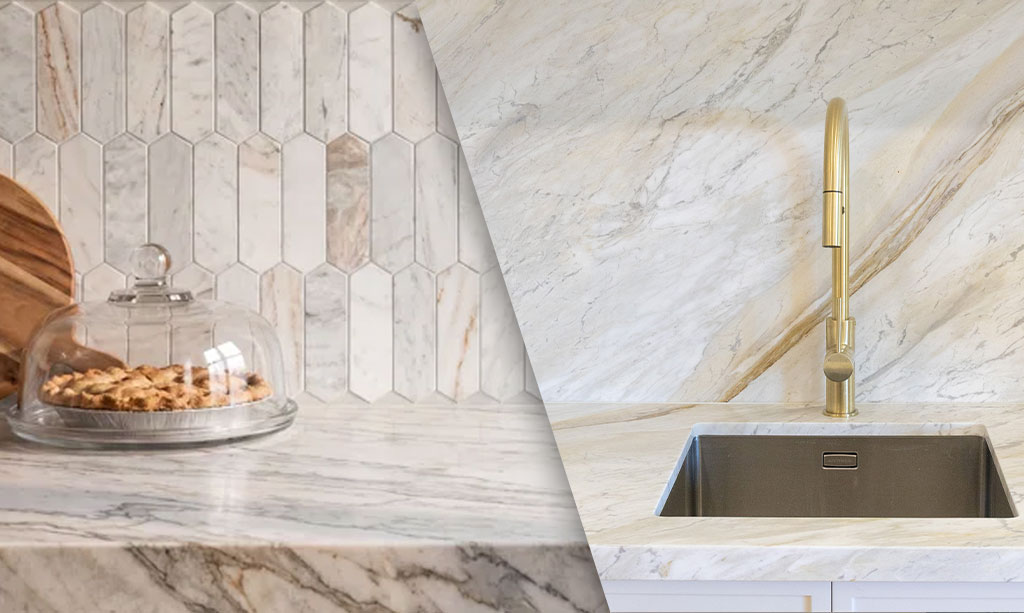
Stone Splashback vs Tiles: Full Slab Marble Splashbacks | Marble Hub Sydney
A full slab splashback takes the benchtop stone straight up the wall, so the design feels more cohesive and sleek, and the stone has more impact. This guide covers vein flow, windows and mitred sills, ledges, power points, and the clearances a splashback's thickness affects. It also explains the practical side: joins, slab count, and getting large pieces into your home. And it's honest about when tiles are the better call.
Stone Splashback vs Tiles: Full Slab Marble Splashbacks | Marble Hub Sydney
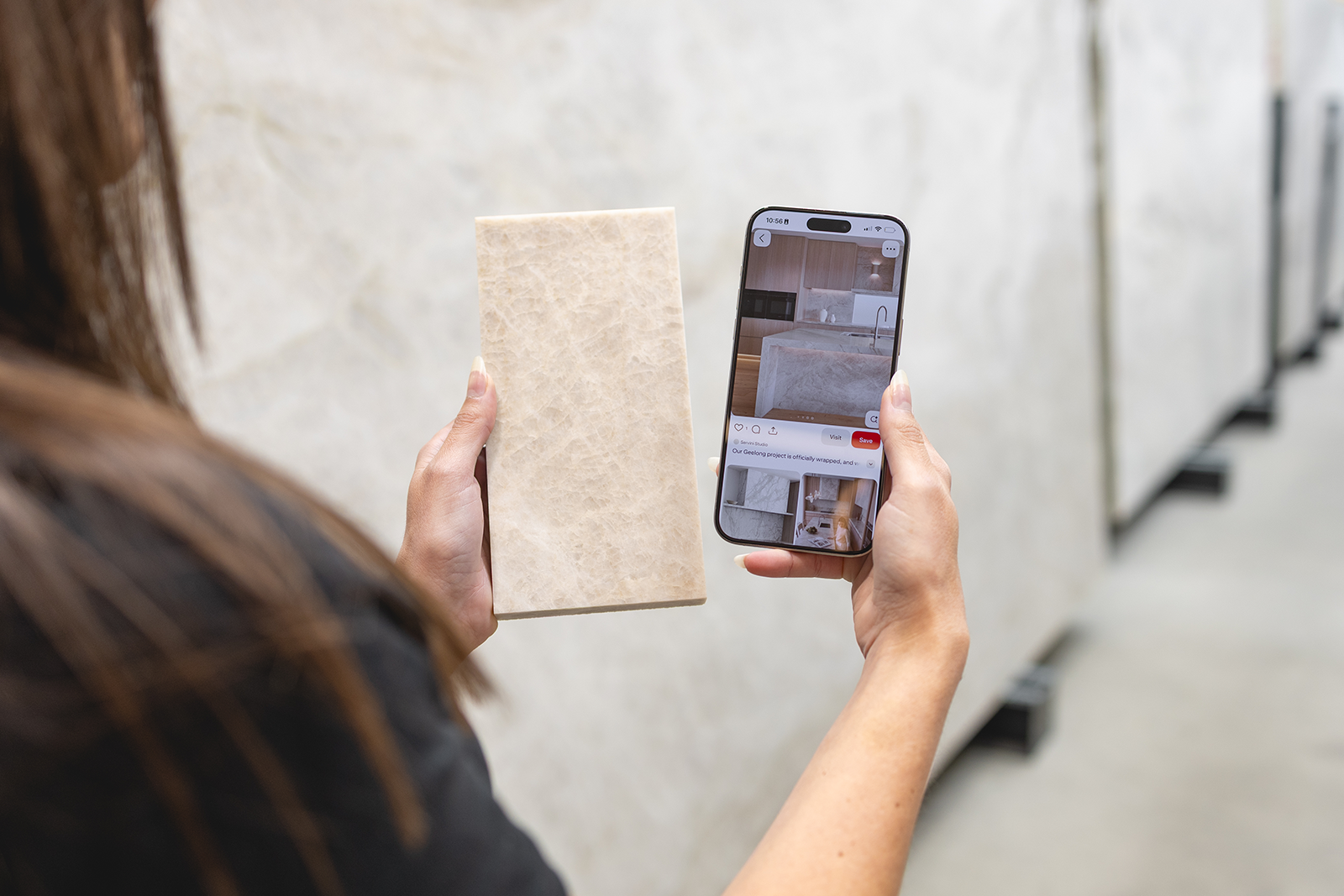
Where to Start When You Don't Know the Stone in Your Inspo Photos
For homeowners who don't know where to begin with stone. You don't need a stone name to start. Send your inspiration photos, tell us what you like and why you're drawn to it, and we'll identify the material and point you to the right slabs. Covers how your eye already picks matching tones, reading stone from a photo, which photos to trust online, and why picking stone is like picking art. Tags: how to choose stone, where to start, inspo photos, identify marble from photo, stone selection, Marble Hub Sydney.
Where to Start When You Don't Know the Stone in Your Inspo Photos
Let’s Get Started on Your Dream Space
Whether it’s a kitchen, bathroom, or laundry, Kitchen Hub is here to bring your vision to life.
