
Add slabs to your wishlist so we can give you custom quote.
Add productions from our slab collection so we create a quote for your next project!
If you're unsure of what you're after please reach out via our contact page.
Engineered Stone Didn't Go Away. It Just Lost the Silica
Engineered Stone Didn't Go Away. It Just Lost the Silica
Engineered Stone Didn't Go Away. It Just Lost the Silica is still here. The category was never banned. What changed is that the old high-silica version was phased out to protect the workers who cut it, and the new silica-free engineered stone replaced it. Same look, same low maintenance, without the part that was the problem. It's legal, it's safe, and it's a good choice for the right kitchen. We sell and recommend it, alongside natural stone and porcelain.
The short version
- Engineered stone is not banned. Only the old version with 1% or more crystalline silica was phased out.
- The new silica-free engineered stone is legal, safe, and widely available now.
- The change was about worker safety, the dust from cutting the old product, not any danger to you at home.
- The benchtop you already have is fine to keep.
- Your options today: natural stone, silica-free engineered, and porcelain. All three are good in the right kitchen.
There's a lot of fear floating around about engineered stone, and most of it is out of date. People hear "banned" and assume the whole category is gone or dangerous. It isn't. The industry had a real problem, fixed it, and the product that came out the other side does the same job without the risk. Here's what actually happened, and what it means for your kitchen.
Is engineered stone banned in Australia?
Short answer: No. The category isn't banned. Only engineered stone containing 1% or more crystalline silica was phased out, from 1 July 2024. The silica-free version is legal and what's sold today.
This is the part that gets lost in the headlines. "Engineered stone" still exists, still goes by the same name, and is still made and installed. What's gone is the old high-silica formulation. The new product sits under the 1% threshold, which keeps it on the right side of the rules and removes the thing that caused the harm. So when you walk into a showroom today and look at engineered stone, you're looking at the new silica-free version. Not the banned one.
What actually changed, and why?
Short answer: The old engineered stone was around 93% crystalline silica, and cutting it produced fine dust that was making stonemasons sick. The fix was to remove the silica.
This was a worker-safety issue, start to finish. The danger lived in the dust created when the material was cut and ground in a workshop, which led to a wave of silicosis among the people fabricating it. The response was to phase out the high-silica product and move the industry to formulations that don't carry the same risk.
For you as a homeowner, two things follow from that. The change was never about the finished surface in your kitchen being unsafe. And the new silica-free product gives you the same benchtop without the part that endangered the workers cutting it. The problem got solved, not avoided.
Is the new silica-free engineered stone safe?
Short answer: Yes. It's legal, it meets the new rules, and it removes the silica that was the issue in the first place.
The whole point of the new generation of engineered stone was to keep what people liked, a consistent look and an easy-care surface, while taking out the silica. That's what it does. It's a product designed around the safety problem rather than ignoring it.
Can I keep the engineered stone benchtop I already have?
Short answer: Yes. An installed benchtop is no risk to your household. There's no reason to remove it.
The danger was always in the dust from cutting and grinding, which is a workshop exposure, not something a finished, installed surface gives off. Your existing top is fine to live with.
The one thing to know: if you ever remove, repair or modify it, that work has specific safety requirements now and should be done by a licensed professional with proper dust controls. That's a job for someone set up to handle it, not a DIY afternoon.
Is silica-free engineered stone any good?
Short answer: Yes, and we recommend it for the right kitchen. It gives you a consistent, low-maintenance, non-porous surface, often at a friendlier price than premium natural stone. We sell silica-free engineered stone and we're happy to put it in a client's kitchen when it's the right fit.
What it offers:
- A consistent colour and pattern, so you know exactly what you're getting across the whole run.
- A non-porous surface that's easy to live with day to day.
- A more accessible price point than a lot of premium natural stone.
The honest trade-offs, so you're choosing with eyes open:
- It's a manufactured, repeating pattern. The one-of-a-kind look of natural stone isn't part of it.
- It can't be refinished. If the surface is damaged or dull down the track, the fix is replacement rather than renewal.
None of that makes it a lesser choice. It makes it a different one, and the right one for plenty of people.
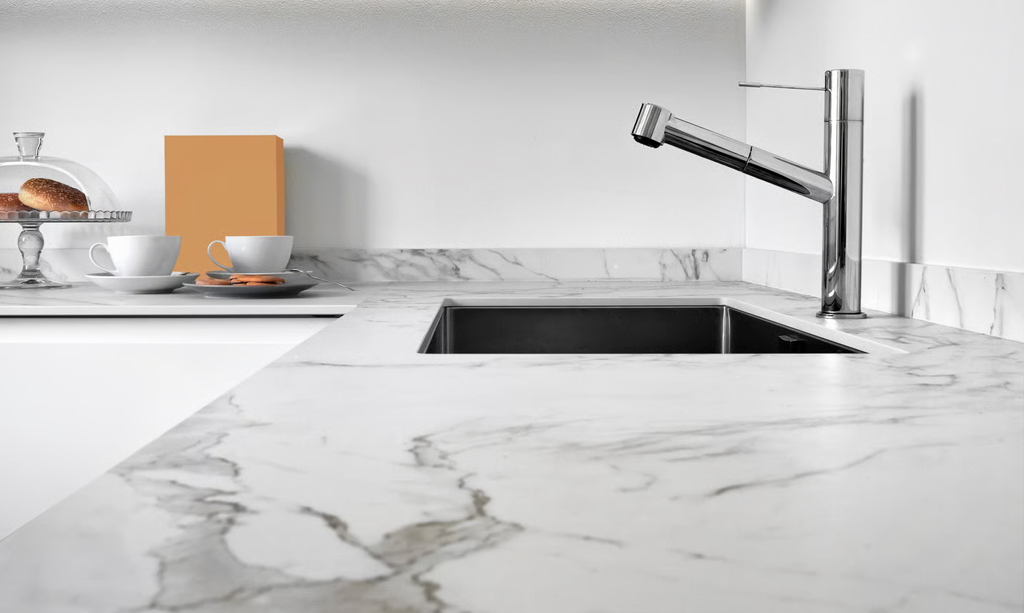
Engineered, natural or porcelain.
What should you choose?
Short answer: We lead with natural stone, because of what it does that the others can't. But silica-free engineered and porcelain are genuinely good in the right kitchen. It comes down to lifestyle and budget. Here's our honest take on all three.
Natural stone (marble, quartzite, granite, dolomite)
Our usual first recommendation. Every slab is one of a kind, with vein flow that exists nowhere else. It renews. Chips repair, etching re-hones, stains have specialists, so you maintain it over decades rather than replacing it. Designers specify it, and it holds value at the upper end. The trade: it costs more, and marble asks for care. Quartzite and dolomite give you natural stone with far less fuss. We walk through that in our marble vs quartzite guide.
Great for the right lifestyle and budget. Consistent, low-maintenance, non-porous, and more accessible on price. Best when you want a predictable surface and a one-of-a-kind look isn't the priority. The trade: a repeating manufactured pattern, and it can't be refinished.
Porcelain and sintered surfaces
The toughest, lowest-fuss option. Resists heat, scratching, staining and UV, and comes in large-format stone looks. Best when you cook hard and want to stop thinking about the benchtop. The trade: a manufactured look, edges can chip, and like engineered it can't be refinished.
How do you decide?
Short answer: Match the surface to how you live and what you want to spend.
- Choose natural stone if you want a one-of-a-kind surface you can renew over decades, you're building for the long term, and you'll either embrace marble's character or pick a hard-wearing quartzite or dolomite.
- Choose silica-free engineered if you want a consistent, low-maintenance surface at a friendlier price, and a unique look isn't your priority.
- Choose porcelain if you want the hardest-wearing, lowest-maintenance surface available and you're comfortable with a manufactured look.
There's no single right answer here, and we don't pretend there is. We'll usually point you toward natural stone first, then talk honestly about whether engineered or porcelain is the smarter call for your kitchen and your budget.
How much will it actually cost?
Short answer: It depends on the slab and the job, so the only real comparison comes from an actual quote. The price gap between these materials shifts depending on details a blog can't guess. The price of a material on its own tells you almost nothing.
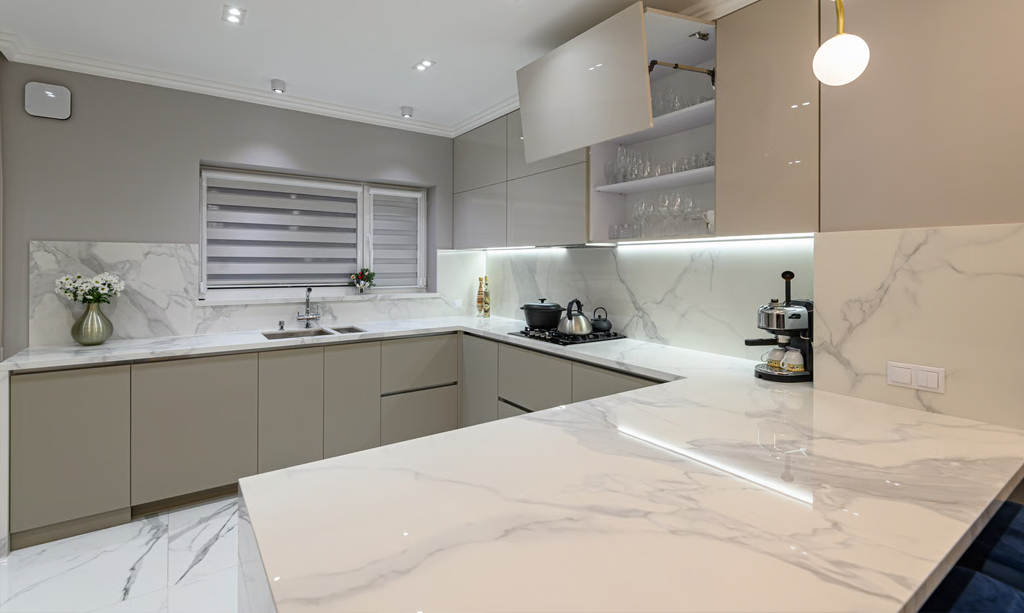
- How many slabs your job needs. A large island or a full-slab splashback uses more.
- Your location and how easy the site is to access for install.
- Edge details. A simple pencil round costs less than a mitred or Egyptian edge.
- Cut-outs for sinks, cooktops and tap holes.
- Install details like waterfall ends, joins and on-site complexity.
This is why the smartest move is to have the Marble Hub sales team quote a few options side by side. Once they price your actual job, you can see a good, better and best scenario across natural stone, silica-free engineered and porcelain, with real numbers instead of guesses. Sometimes the natural stone you assumed was out of reach is closer than you thought. Sometimes engineered frees up budget for a better edge profile or a full-slab splashback. You only see that once the quote is done on your kitchen.
If you're weighing these up, bring your measurements or your plans to the showroom and let the team put a few material options in front of you. It's the one part of this decision a blog can't do for you.
A note on the fear
A lot of what's online right now is built to frighten you. Keep it in perspective. The change to engineered stone was a worker-safety measure that removed the silica from the dust workshops were cutting. It doesn't mean engineered stone is gone, and it doesn't mean the surface in your home is a hazard. The new product fixed the problem. Choose based on how you want to live, not on a headline.
FAQ
Is engineered stone banned in Australia? No, the category isn't banned. Only engineered stone containing 1% or more crystalline silica was phased out, from 1 July 2024. The new silica-free version, under that threshold, is legal and is what's sold today.
Is the new silica-free engineered stone safe? Yes. It meets the new rules and removes the crystalline silica that was the problem. The original concern was the dust created when the old high-silica product was cut in a workshop, which is what the new formulation was designed to solve.
Can I keep my existing engineered stone benchtop? Yes. An installed benchtop poses no risk to your household, since the danger was in the dust from cutting, not the finished surface. If you ever remove or modify it, that work should be done by a licensed professional with proper dust controls.
Is silica-free engineered stone worth it? For the right kitchen, yes. It's consistent, low-maintenance and more accessible on price than premium natural stone. The trade-offs are that it's a repeating manufactured pattern and can't be refinished. We sell and recommend it where it suits the client's lifestyle and budget.
Should I choose engineered, natural or porcelain? We usually recommend natural stone first, because it's one of a kind and can be renewed over decades. Silica-free engineered suits people who want consistency and a friendlier price. Porcelain is the toughest, lowest-maintenance option. The right choice depends on your lifestyle and budget.
How much does a stone benchtop cost? There's no single figure, because it depends on the slab price, how many slabs your job needs, your location, and the edge, cut-out and install details. The best way to compare is to have the Marble Hub sales team quote a few materials side by side, giving you a good, better and best scenario with real numbers for your actual kitchen.
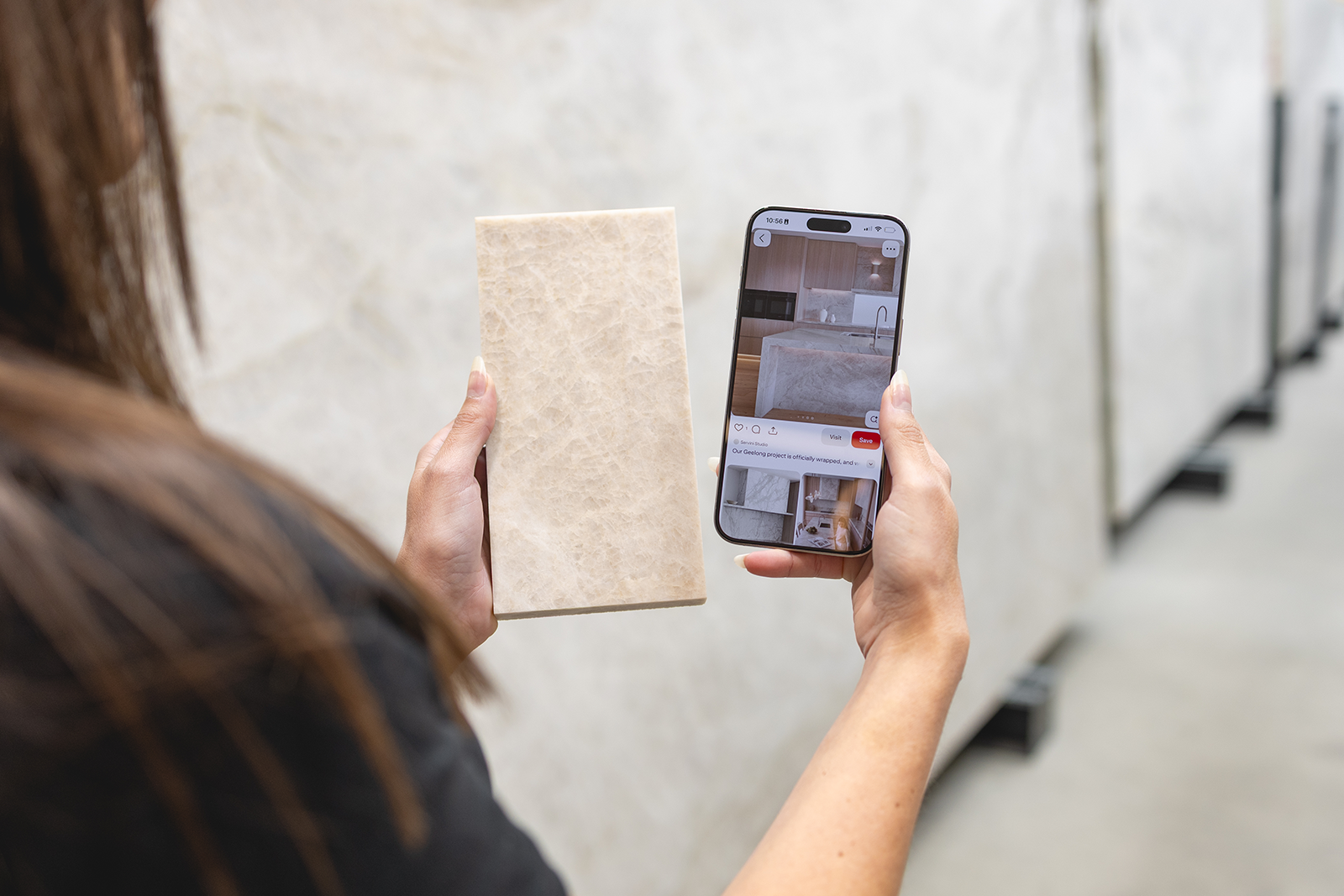
Where to Start When You Don't Know the Stone in Your Inspo Photos
For homeowners who don't know where to begin with stone. You don't need a stone name to start. Send your inspiration photos, tell us what you like and why you're drawn to it, and we'll identify the material and point you to the right slabs. Covers how your eye already picks matching tones, reading stone from a photo, which photos to trust online, and why picking stone is like picking art. Tags: how to choose stone, where to start, inspo photos, identify marble from photo, stone selection, Marble Hub Sydney.
Where to Start When You Don't Know the Stone in Your Inspo Photos
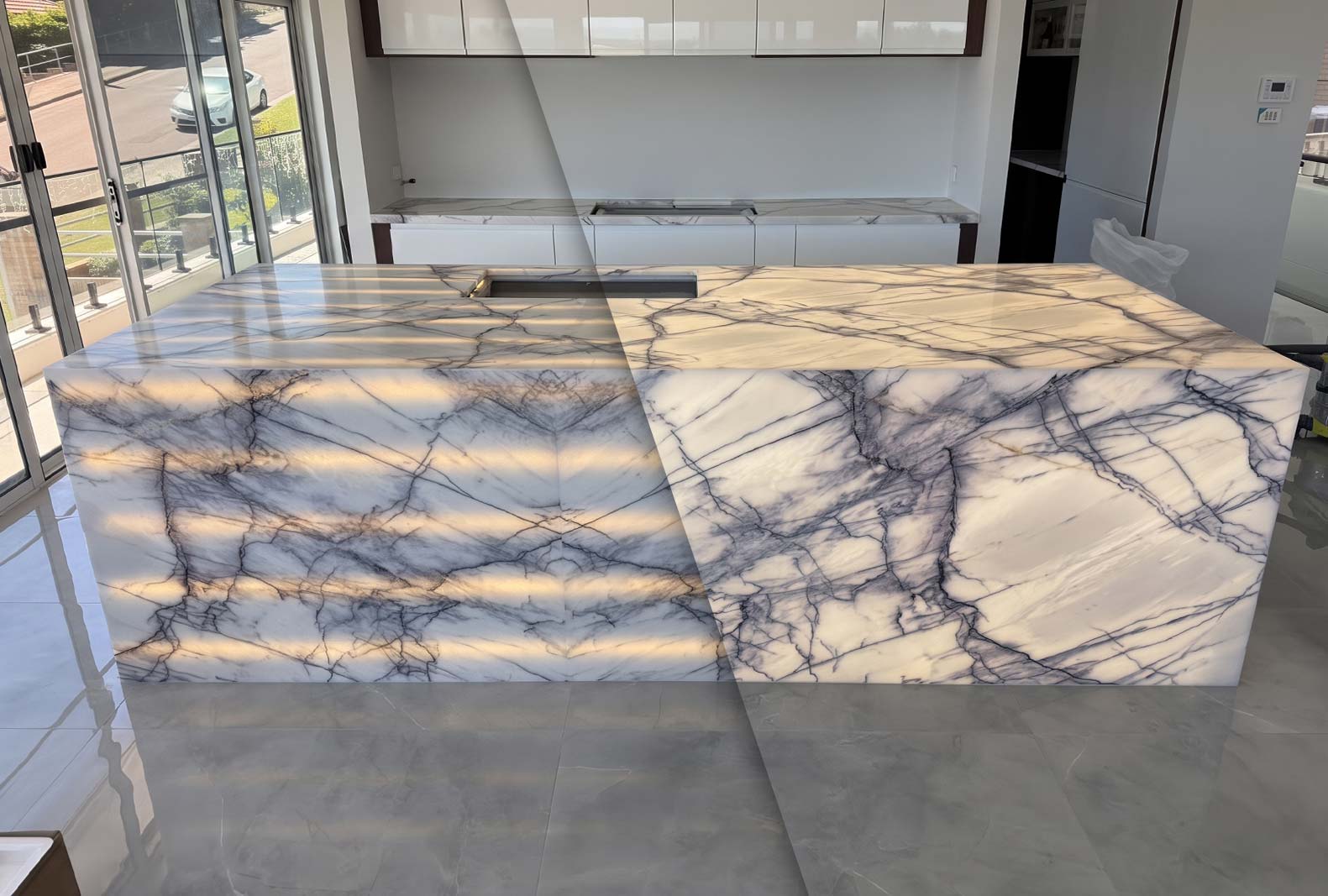
Backlit Stone and Why the LED You Choose Changes Everything
Backlit stone explained simply. The look changes a lot with the light behind the slab. LED strips give a striped, patterned glow; a full LED panel lights the whole slab evenly so it looks lit from within. Both are valid, so do what suits your budget, but plan it early with your electrician. Covers which stones are translucent and why the light install feeds into the check-measure. Tags: backlit stone, backlit marble, translucent stone, LED stone panel, backlit onyx, feature lighting, Marble Hub Sydney.
Backlit Stone and Why the LED You Choose Changes Everything
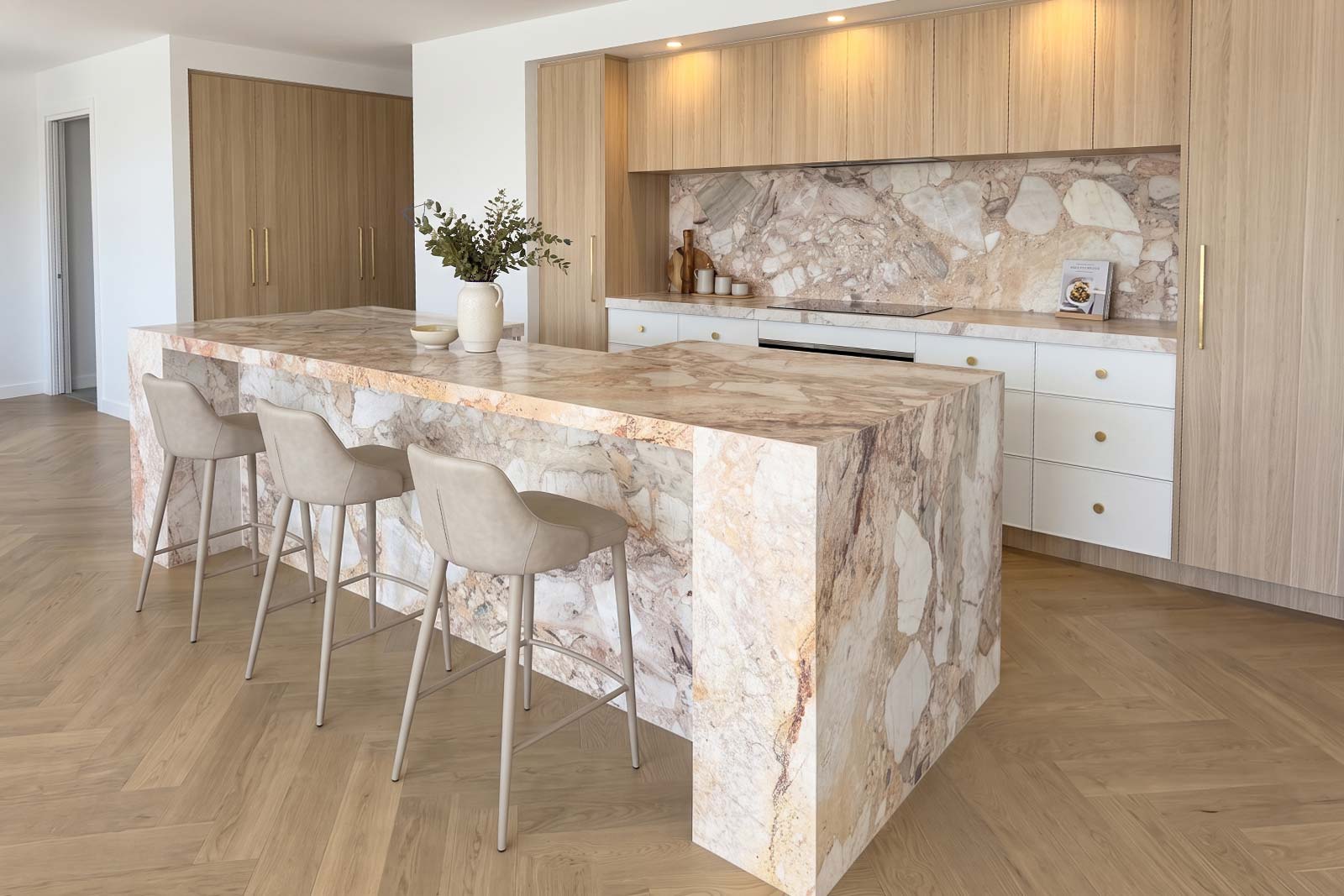
How We Plan Stone Across a Duplex Without Wasting a Slab
Planning stone across a duplex or dual-occupancy build. We work out real slab count, map every piece across the slabs, balance feature stone across both homes, and plan the stages so the check-measure and install land when each side is ready. Covers slab yield, offcut planning, mapping the cut to the stages, and getting every trade working to the same target dates. Tags: duplex stone benchtops, dual occupancy, slab count, stone yield, staged install, trade coordination, Marble Hub Strathfield South.
How We Plan Stone Across a Duplex Without Wasting a Slab
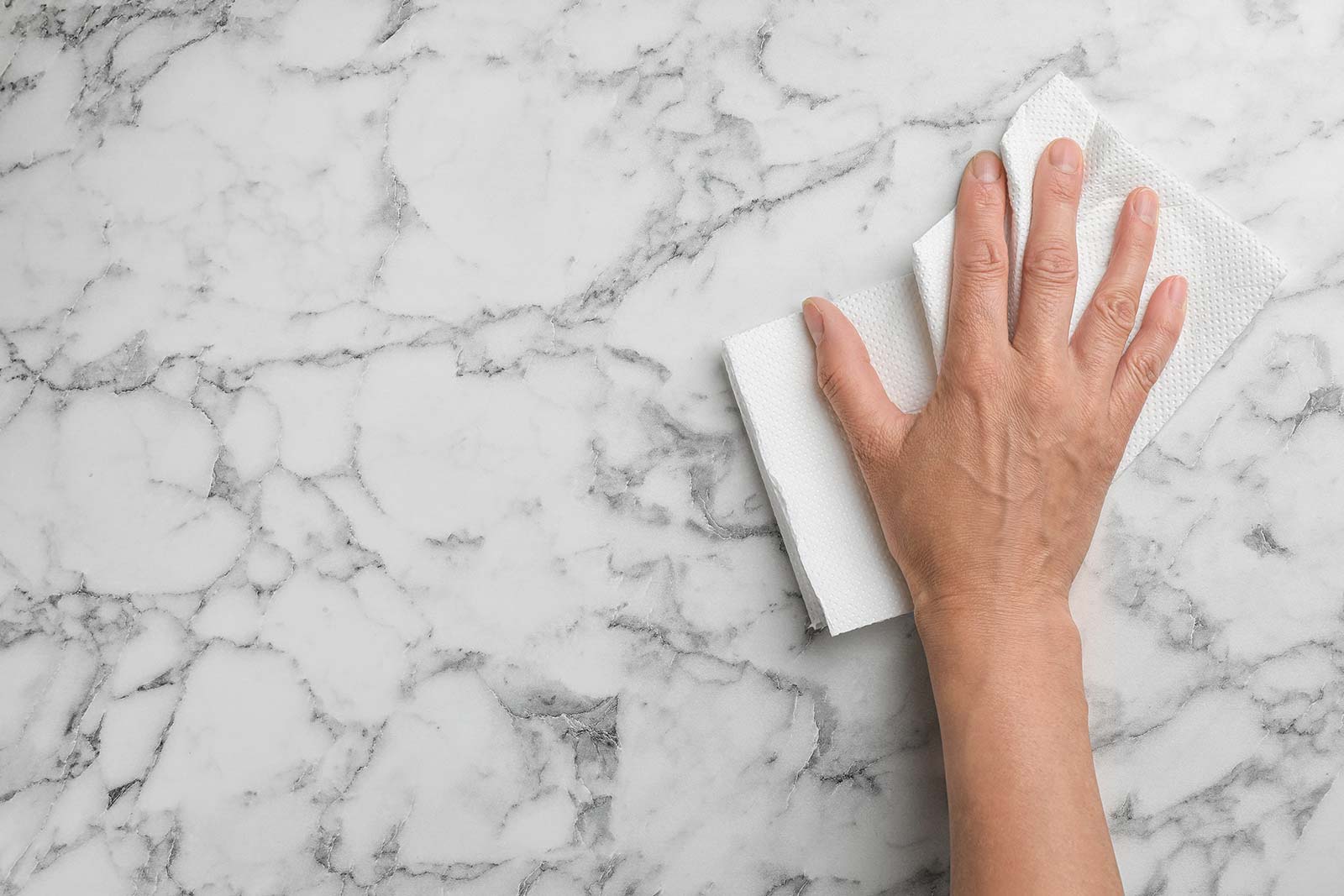
How to Clean and Care for a Marble Benchtop
How to clean and care for a marble benchtop, written for people who already own marble or are about to. Covers the daily routine, warm water and pH-neutral cleaner, wiping acidic spills fast, sealing with Lithofin MN Stain-Stop every 6 to 12 months, and the difference between a stain and an etch. Explains why heavy veining hides marks better than plain marble, and why a rehone and rebuff after 3 to 4 years brings a tired benchtop back. Honest about trade-offs. Marble is a relationship, not a set-and-forget surface. Written by Marble Hub, a Strathfield South stone factory and showroom.
How to Clean and Care for a Marble Benchtop
Let’s Get Started on Your Dream Space
Whether it’s a kitchen, bathroom, or laundry, Kitchen Hub is here to bring your vision to life.
