
Add slabs to your wishlist so we can give you custom quote.
Add productions from our slab collection so we create a quote for your next project!
If you're unsure of what you're after please reach out via our contact page.

It's Not "Should You Choose White." It's "Which White." Here's How to Get It Right.
It's Not "Should You Choose White." It's "Which White." Here's How to Get It Right.
TL;DR: White stone is one of the safest long-term choices in a kitchen, but "white" isn't one product. Biancatto and Elba White behave differently in veining, maintenance and how architectural they feel. White kitchens don't date because of the colour. They date when bright white gets paired with cold, high-gloss cabinetry and no warmth in the room.
Why "Just Go White" Is the Wrong Question
Every homeowner who walks into the showroom already knows white works. What they don't know yet is that Biancatto and Elba White are two genuinely different materials wearing the same colour. Choosing between them isn't a styling detail. It changes how the stone ages, how much maintenance it asks of you, and how the whole kitchen reads.
This is the conversation that actually matters, and it's the one most renovation guides skip in favour of "white is timeless, full stop." White is close to timeless. Which white you pick is what determines whether that holds up.
Here's the part most people skip past: none of these are flat white. What you're actually choosing between is a range of light tones, each carrying a faint pull toward warmth or coolness underneath a mostly white surface. Every one of them reads bright and light in a room. But hold a few slabs side by side and the differences show up, one leans toward cream, another toward grey, another sits perfectly neutral. That difference shows up again in direct sun. Some of these stones genuinely glisten, catching and scattering light rather than just reflecting it flat. That glisten factor is part of what makes a well-chosen white read as expensive rather than plain.
Why White Keeps Winning, Decade After Decade
Design magazines declare white kitchens over every few years. Then you walk into a well-designed home built in 2010, or 2016, or last year, and the white stone benchtop still looks right. That's restraint, not luck.
A white benchtop doesn't compete with your joinery, your floors, your art, or the light coming through the window. It sits underneath everything else and lets those things do the talking. That's the design principle at work: contrast is a decision you make once, and white stone keeps that decision available to you for the next twenty years. Repaint the walls, change the hardware, swap the bar stools. The benchtop never argues with any of it.
Compare that to a dramatic, high-veined stone like Breccia Roma. Beautiful, but it becomes the kitchen's entire design direction. Everything else gets built around it. White doesn't ask that of you, which is exactly why it keeps winning.
Not All Whites Are the Same, and That's All Part of Undertone
The real difference between these white stones is undertone. That's exactly where a description like "white with soft grey tones" can start to get confusing for a lot of people. Every one of these stones gets summarised with almost identical language, but that description is doing more work than it can really carry.
Grey runs warm, with a brown or taupe undertone sitting underneath it, or it runs cool, closer to a blue-grey with more depth. Which direction that grey leans decides whether it sits comfortably with the white around it or works against it.
This is why two stones that both get labelled "soft white with grey veining" can read completely differently once they're in your kitchen. A warm grey settles into timber and brass without any effort. A cooler grey can actually give a warmer palette the balance it needs without fighting the undertone, or it can be paired with a cooler colour palette instead for a more matched, consistent look. Both work. It depends on whether you want contrast or consistency. Get the undertone wrong either way and the room feels slightly off, even when you can't quite say why.
It's the same problem as white paint. Every "white" on a swatch card looks identical on a screen and completely different once it's on your wall in actual light. Stone works the same way, except you're not repainting it next year. Think of a slab viewing the way you'd think of holding up paint pots, except you're doing it once, for a surface that's staying for decades. See it in the room it's going into, in the light that room actually gets, before you decide.
The Two Whites Worth Actually Understanding
Biancatto is a quartzite, not a marble, and that's the whole point. Soft white background with grey veining so restrained it almost disappears, backed by quartzite's hardness rather than marble's softness. It gives you the calm, pared-back look people want from a classic white benchtop without the maintenance conversation that comes with natural marble.
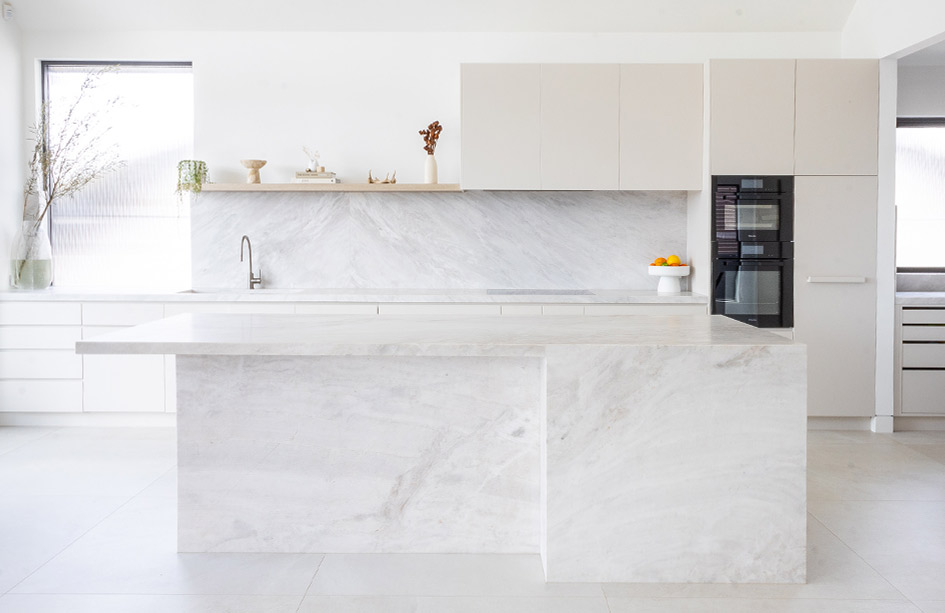
Elba White is the true marble of the two. Bright white ground with fine, tight grey veining, cleaner and more consistent than Carrara's classic movement. It's the material to choose if you want the specific character of a natural marble, the patina, the softness, the way it ages, and you're comfortable with what that asks of you day to day.
Neither of these is "more timeless" in the abstract. It depends on whether durability matters more than a natural marble's specific character (Biancatto) or you want that marble character even with its upkeep (Elba White).
More Whites in the Range
The two above are the ones we'd point most people toward first, but the range goes further.
Bianco Carrara and Calacatta Statuario are the classics everyone eventually circles back to, the forever-loved names that never really fall out of favour. Carrara carries soft, familiar grey veining and a quiet, restrained feel. Calacatta Statuario carries bolder, more graphic veining for a more architectural read of the same white family.
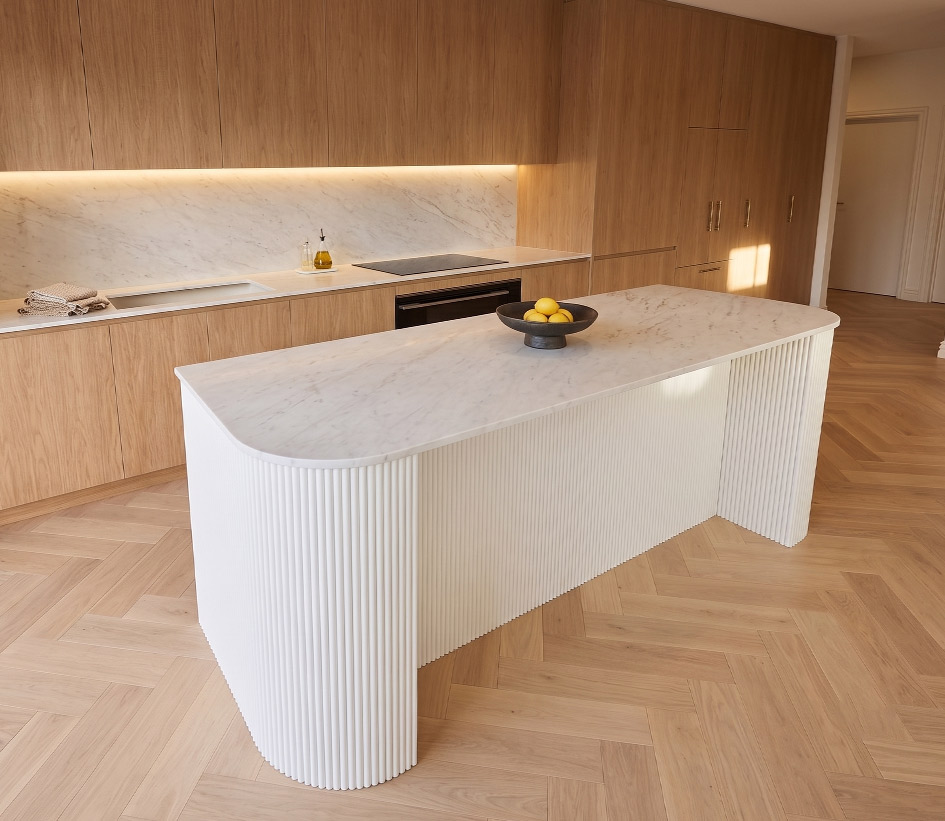
Lord White runs warmer and softer, with sparse veining. Leans classic and livable rather than architectural, closer in spirit to Carrara than to Calacatta Statuario.
Victoria White carries no bold veining at all. It's soft, tone-on-tone movement across whites and ivory rather than graphic contrast. Standing in front of the slab, it draws you in. In a photo or on a screen, that subtlety is easy to miss, which is the one white in this range worth seeing in person before you decide.
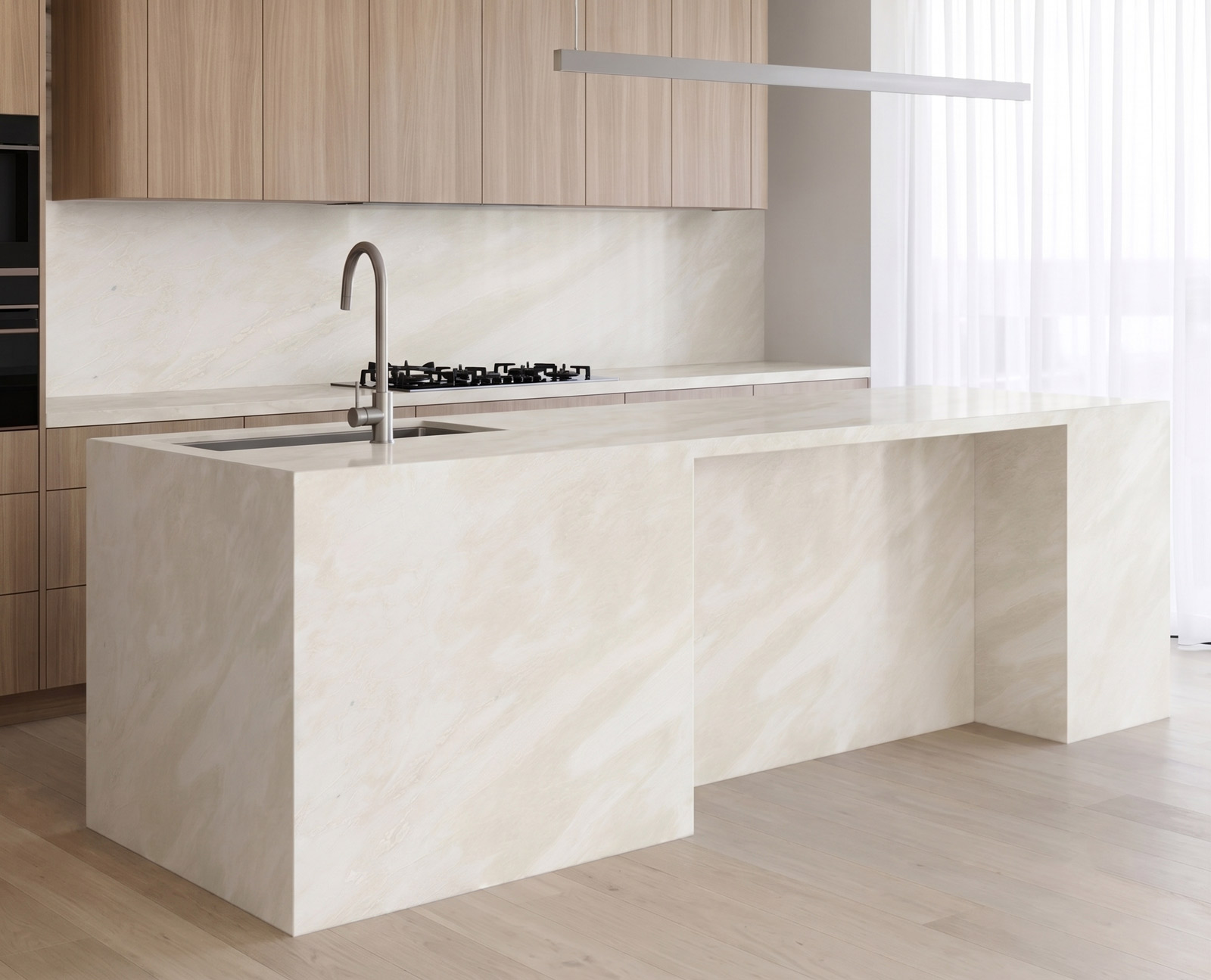
Vanilla Ice is the warmest of the group, an ivory-leaning white with a soft undertone that suits warm timber pairings particularly well.
Where White Kitchens Actually Go Wrong
Here's the part worth being direct about, because your own eye will confirm it the moment you see it: white kitchens don't date because of the stone. They date because of what surrounds it.
Bright white benchtop, high-gloss white cabinetry, cool downlights, no timber or texture anywhere in the room. It reads clinical rather than calm. It photographs fine in a showroom. It feels cold to actually cook in, and cold kitchens are the ones that start looking dated first, regardless of the stone underneath.
The fix isn't complicated. Warm timber joinery, a matte or honed finish rather than gloss everywhere, and at least one warm material in the room, brass hardware, timber shelving, a woven pendant light, is what keeps a white kitchen feeling like a home instead of a display case. Pair Biancatto or Elba White with Polytec's Natural Oak or Coastal Oak in a Shaker profile, and the white stops feeling stark. It starts feeling grounded.
Final Decision-Making Advice
Here's the honest part: most of the whites above will work. Biancatto, Elba White, Carrara, Calacatta Statuario, Lord White, Victoria White and Vanilla Ice can all be made to work with the right colour palette around them. So this isn't really about finding the one correct white. It's about which one you're actually drawn to.
Notice which pattern pulls at you, and whether you're drawn to warmth in the stone or a cooler, quieter base. Notice how it completes a soft, monochromatic palette rather than fighting it. That reaction, the one you have standing in front of the slab, tells you more than any spec sheet will.
Budget is part of this decision too. Some of these options sit at different price points, and the right choice for your kitchen is also the one that works for what you've budgeted to spend.
Have the team quote a few options side by side, and come into the showroom to see the slabs in person. The one you fall in love with in the room is usually the right answer.
FAQs
Does a white benchtop suit every kitchen style? Mostly, yes. White sits underneath everything else rather than competing with it, which is why it works across classic, contemporary and architectural kitchens alike. What actually determines the feel is the undertone and finish you pick, not the style of the kitchen itself. A warm-toned white suits a softer, more classic space. A cooler, more graphic white suits something more architectural.
Is white stone a dated choice in 2026? No, but a specific version of white can feel dated: bright white stone paired with high-gloss cabinetry and cold lighting. The stone itself isn't the problem. Restraint and warmth in the rest of the kitchen is what keeps a white benchtop feeling current for decades.
What's the difference between Biancatto and Elba White? Biancatto is a quartzite with a soft white background and grey veining so restrained it almost disappears. Elba White is a true marble, similarly bright and clean, with fine, tight veining and slightly softer, more organic movement. Both give you a calm, pared-back white. The difference comes down to whether you're drawn to a quartzite's crisp consistency or a natural marble's character.
Should I choose polished or honed for a white benchtop? Honed reduces glare and reads more grounded, which usually suits a warm, livable kitchen. Polished is more reflective and glamorous, catching light in a way honed doesn't. Neither is wrong. It depends on whether you want the surface to disappear into the room or catch the light.

Outdoor Stone Benchtops That Survive a Sydney Summer
An outdoor benchtop in Sydney has to handle sun, heat, salt air, dust, rain and BBQ fat on the same surface. Porcelain and sintered stone are our first pick, granite is the best natural stone outdoors, and quartzite works with regular sealing. Light-coloured marble is best avoided outside, and engineered stone belongs indoors only, as UV affects it and outdoor use voids the manufacturer's warranty. This guide also covers joins, BBQ heat and why butt joins or shadowlines often outlast mitres outdoors.
Outdoor Stone Benchtops That Survive a Sydney Summer

Engineered Stone vs Natural Stone Benchtops: Honest Comparison | Marble Hub
Natural stone is one of a kind, handles heat well and can be restored for decades, but it needs sealing. Crystalline-silica-free engineered stone is consistent and needs no sealing, but it can scorch and can't be rehoned the same way. We cut both every week and compare them honestly on looks, care, heat, repair and price. We recommend natural stone first, and engineered stone where consistency or easy care matters most.
Engineered Stone vs Natural Stone Benchtops: Honest Comparison | Marble Hub

Pink Cristallo Quartzite for a Northmead Kitchen
A Federation home in Northmead with a new-wing kitchen by designer Vagn Madsen, built by Dan Kitchens Australia, with a Pink Cristallo Quartzite island benchtop and splashback from our Strathfield South showroom. This piece looks at why a pink stone works: subtle white shaker joinery that steps in and out around the rangehood, a soft stone that adds warmth without competing, a curved island with a softened, stepped double bullnose edge, and stone used in just two places. It also covers choosing slabs in person, living with pink quartzite in a family kitchen, and Pink versus White Cristallo.
Pink Cristallo Quartzite for a Northmead Kitchen
Undermount vs Flush Mount vs Drop-In Sink for Stone Benchtops | Marble Hub
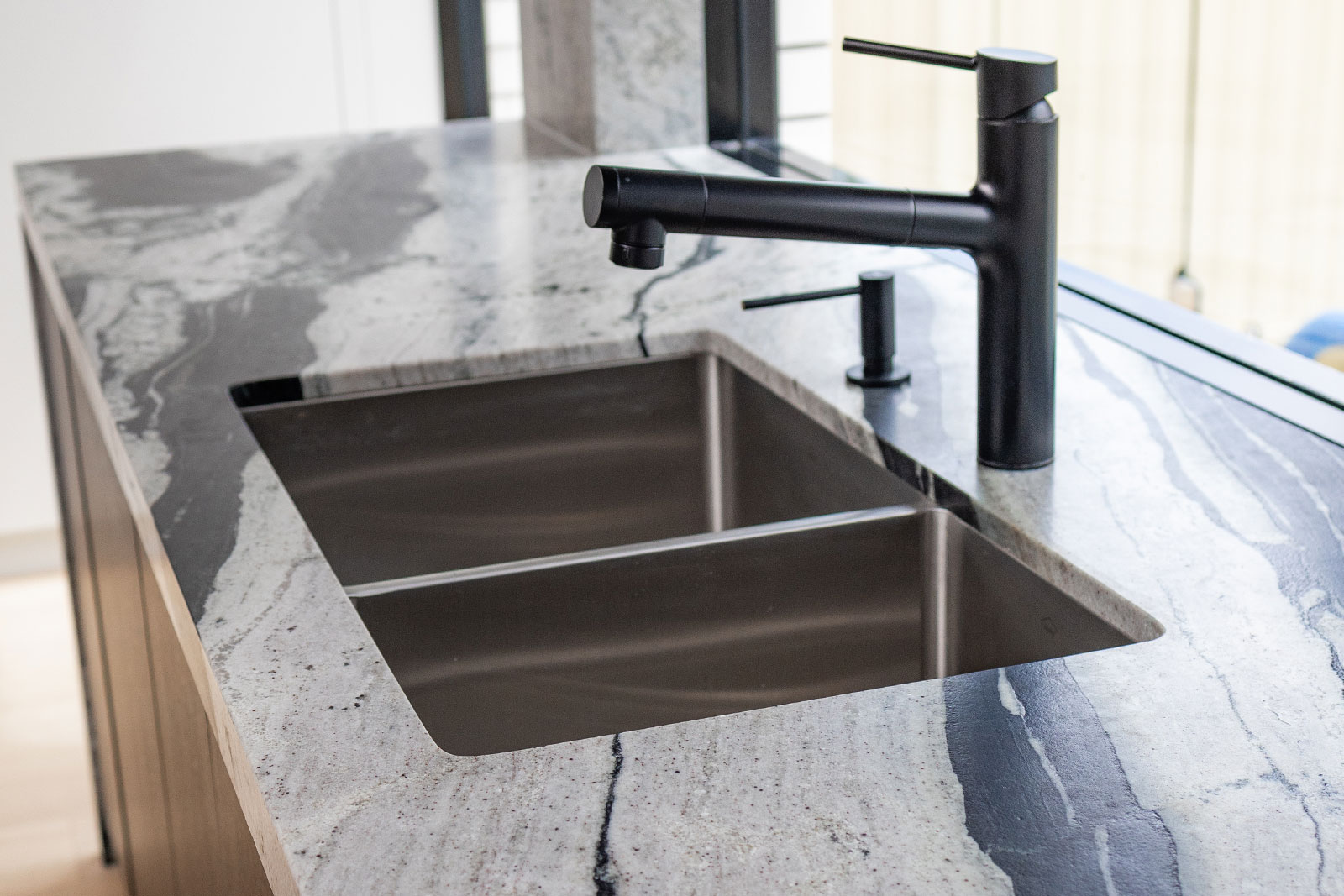
There's no wrong sink style for a stone benchtop, only the right one for how you'll use it. This guide explains the look, cost and maintenance of undermount, flush mount, drop-in and integrated stone sinks from a fabricator's point of view. Drop-in sinks work hard in busy kitchens, butler's pantries and utility laundries, while flush mount gives the sharpest look and needs the most planning. It also explains how Marble Hub reviews and supports every flush mount sink at the factory. Tags: undermount sink, flush mount sink, drop in sink, top mount sink, integrated stone sink, butler's pantry sink, laundry sink, sink cut-out, stone benchtop sink, kitchen sink styles, Sydney stone fabricator, Marble Hub
Undermount vs Flush Mount vs Drop-In Sink for Stone Benchtops | Marble Hub
Let’s Get Started on Your Dream Space
Whether it’s a kitchen, bathroom, or laundry, Kitchen Hub is here to bring your vision to life.
