
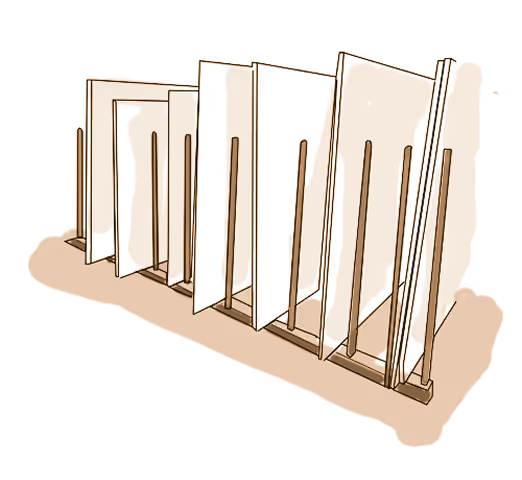
Add slabs to your wishlist so we can give you custom quote.
Add productions from our slab collection so we create a quote for your next project!
If you're unsure of what you're after please reach out via our contact page.

Natural Stone Myths: What's True, What's Not, and What You're Actually Signing Up For
Natural Stone Myths: What's True, What's Not, and What You're Actually Signing Up For
Most fears about natural stone are out of date, and a lot of them aren't even about new stone. They're about a slab someone inherited with a house and never understood. Marble etches. Stone can chip. But almost every problem people dread is fixable, and the worst stone stories usually start with someone else's stone, not one chosen for your life.
The short version
- Most bad stone experiences come from inherited stone, not stone chosen for you.
- Marble etches, but etching re-hones away. It isn't a permanent stain.
- Quartzite, granite and dolomite are tough enough for busy family kitchens.
- Every slab is one of a kind, and unlike engineered stone, natural stone can be renewed instead of replaced.
- It isn't for everyone, and that's fine. The trick is choosing the right stone and knowing how to live with it from day one.
Most people arrive at the showroom having half-talked themselves out of natural stone already. They fall for a slab of Calacatta Viola or Taj Mahal Quartzite, then someone warns them it'll stain, it'll chip, it's too precious for a real kitchen. Stone has been blamed for a lot of crimes it didn't commit. Let's clear its name.
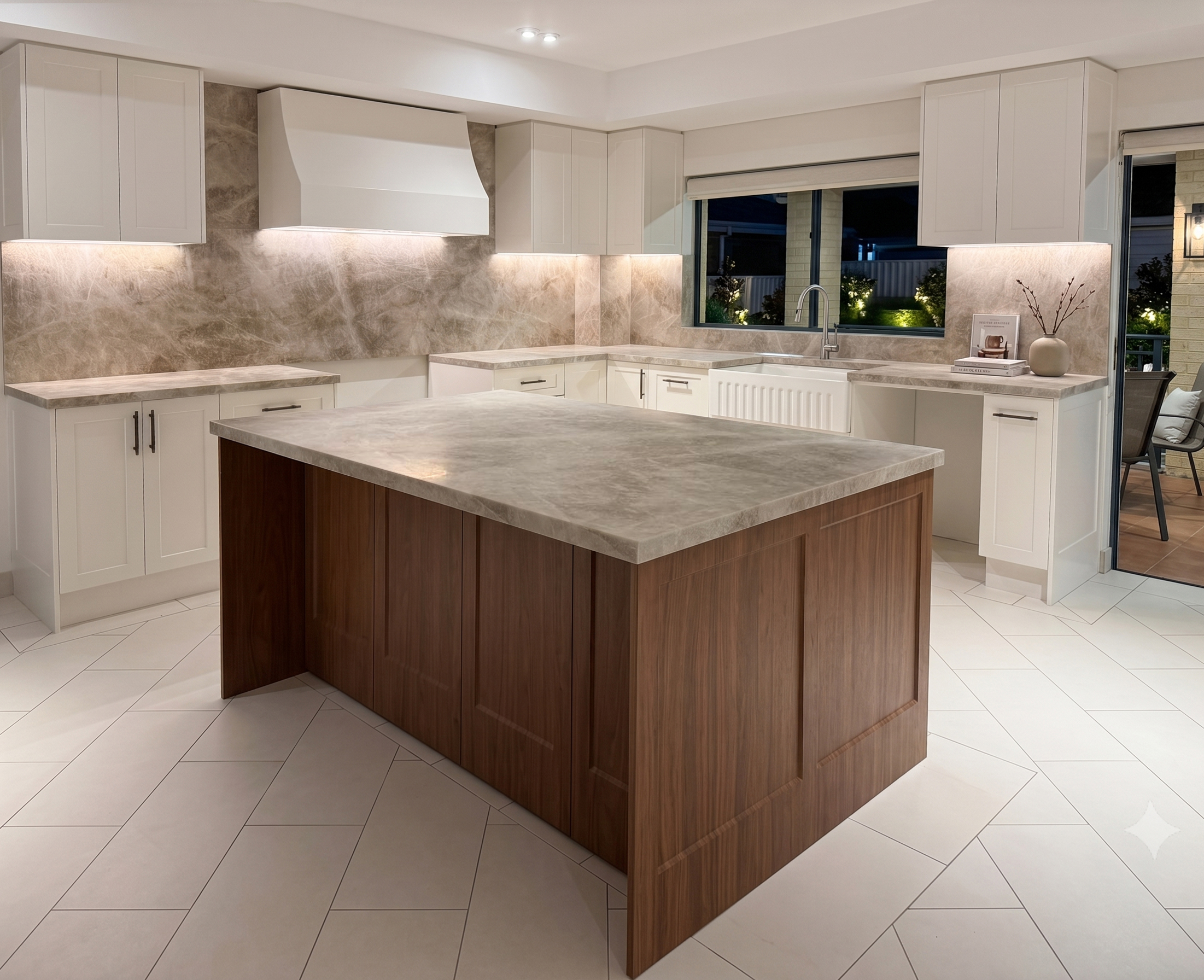
Why does natural stone have a bad reputation?
Short answer: Because most people meet it as inherited stone, not stone chosen for them.
A lot of people own natural stone for the first time in a house they bought. The benchtop came with the place. They've no idea what it is, how it was sealed, or what went on it for fifteen years before they moved in. It marks, and the material takes the blame for a history that was never theirs.
Think of it like a t-shirt:
- A brand new white tee you bought and cared for from day one is one thing.
- A second-hand white tee, with marks already set in and a backstory you can't see, is another.
Same shirt. Different story. Inherited stone is the second-hand tee. Stone chosen for your lifestyle, sealed from the start, with the maintenance tricks shown to you on day one, is the fresh one. Most people judging natural stone have only ever owned the second-hand version.
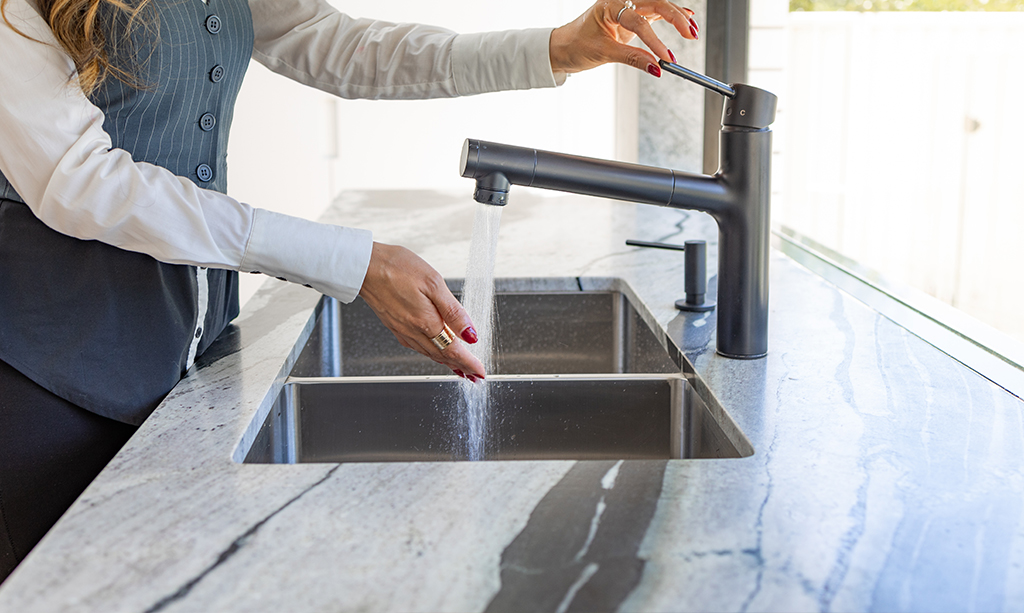
Isn't natural stone too risky for everyday life?
Short answer: It's a high-value surface, and people happily risk those, except stone gives you a safety net most don't.
Look at what people buy without a second thought:
- Pale leather car seats
- A light designer handbag
- Suede shoes
- A cream linen sofa
All in daily use. All easy to mark. All bought because the thing is worth it and the owner figures they'll learn to live with it. Natural stone sits in the same bracket, with one advantage over the handbag. You can renew it.
And here's the honest part. It still isn't for everyone. Some people wear white pants and just head out a little more mindful, still living their life. Others won't go near them, either the stress isn't worth it or they never learned the trick to lifting a mark. Both are reasonable. Stone is the same. The goal isn't to talk everyone into it. It's to help you choose with your eyes open.

Does natural stone stain permanently?
Short answer: Rarely. Most marks on marble are etching, and etching re-hones away.
Etching and staining are two different things, and mixing them up is where the fear comes from.
- Etching is a dull spot where acid (lemon, wine, vinegar) reacts with the calcium in marble. It sits on the surface. You fix it by re-honing, the same way you'd refinish a section of timber floor.
- Staining is something soaking in, usually oil. Even then it's often drawable. Stone specialists poultice the surface and pull stains back out more often than people expect.
Two honest caveats:
- Marble does etch. That's part of the deal if you choose it.
- Quartzite (Taj Mahal, Patagonia) and most granites aren't calcium-based and are far denser, so they shrug off the acids that mark marble.
The blanket fear that "stone stains" mostly belongs to marble, not the whole category.
Can you repair a chip in a stone benchtop?
Short answer: Yes. A chip is a repair, not a write-off.
A good fabricator fills and colour-matches a chip, and on a busy edge profile you'd struggle to find it again. Because the colour in natural stone runs through the whole material, repairs blend in. Engineered stone is harder to fix invisibly, since its colour sits in a printed or cast layer rather than going all the way through.
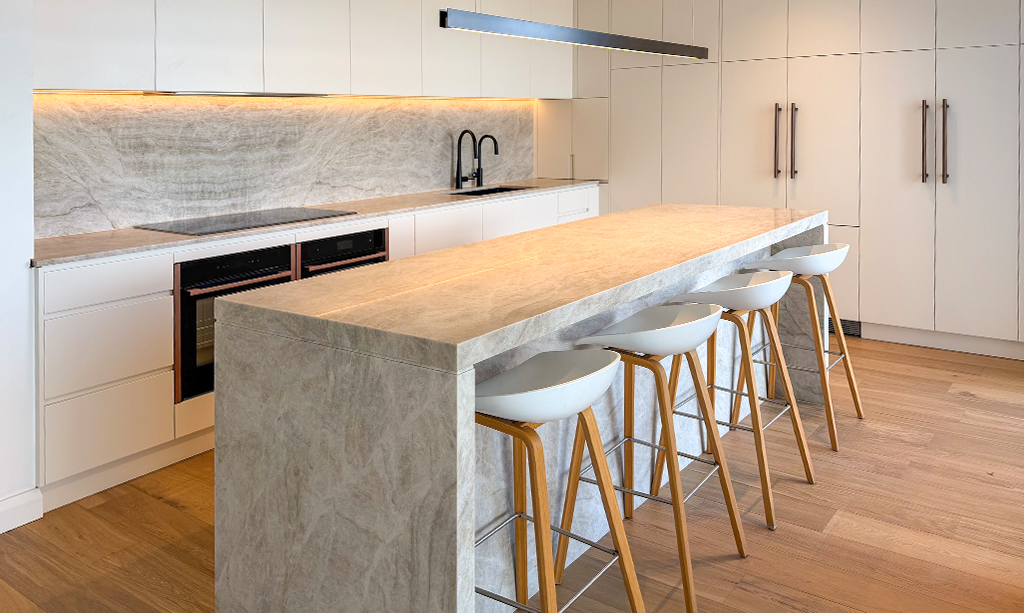
Is natural stone too delicate for a family kitchen?
Short answer: Depends entirely on the stone. Plenty of family kitchens run on it without drama.
- Marble asks for a relationship. It shows the life lived around it. Some families love that. Others realise within a month they'd rather not think about it while they cook.
- Quartzite is one of the hardest surfaces you can put in a kitchen, handling heat and daily use without flinching.
- Super White Dolomite sits in the middle: the calm marble look with far more resilience.
The practical family kitchen in natural stone absolutely exists. You match the stone to how you live, which is what our marble vs quartzite guide walks through.
Does natural stone go out of style?
Short answer: No. It's the opposite. Stone is what designers specify because it sits outside trends.
Trends date a kitchen. Stone predates them. Carrara has been in kitchens for centuries and still reads as considered. What actually makes a kitchen look tired is the cheaper finishes around the stone, the handles, the tapware, the laminate, not the slab.
And like a good timber floor, you can bring it back. Re-hone the surface and a benchtop that's lived a decade resets to fresh. A manufactured surface doesn't give you that. When it's worn, you replace it.
Is engineered stone just as good as natural stone?
Short answer: It has a place, but it can't do the two things that make natural stone worth it.
Since the engineered stone changes in Australia, silica-free engineered surfaces are legal, safe and a fair option for some kitchens. But two gaps remain:
- Every natural slab is one of a kind. The vein flow across an island, or run up a full-slab splashback so the pattern continues unbroken, is something a repeating printed pattern can't replicate.
- You can't refinish engineered stone. Damage it and the answer is replacement. Natural stone you renew, decade after decade.
That difference shows up at resale too, which we cover in our piece on stone and resale value.
What makes natural stone worth it?
Short answer: Once the myths are gone, five things are left.
- One of a kind. Your slab and its vein flow exist nowhere else.
- It renews. Chips repair, etching re-hones, stains have specialists. You aren't stuck with the surface you install.
- Designers specify it. That's a signal, not snobbery.
- It holds value. Real stone reads as quality in a home, and quality holds its standing.
- It lasts. Properly fabricated and looked after, it outlives most of what surrounds it.
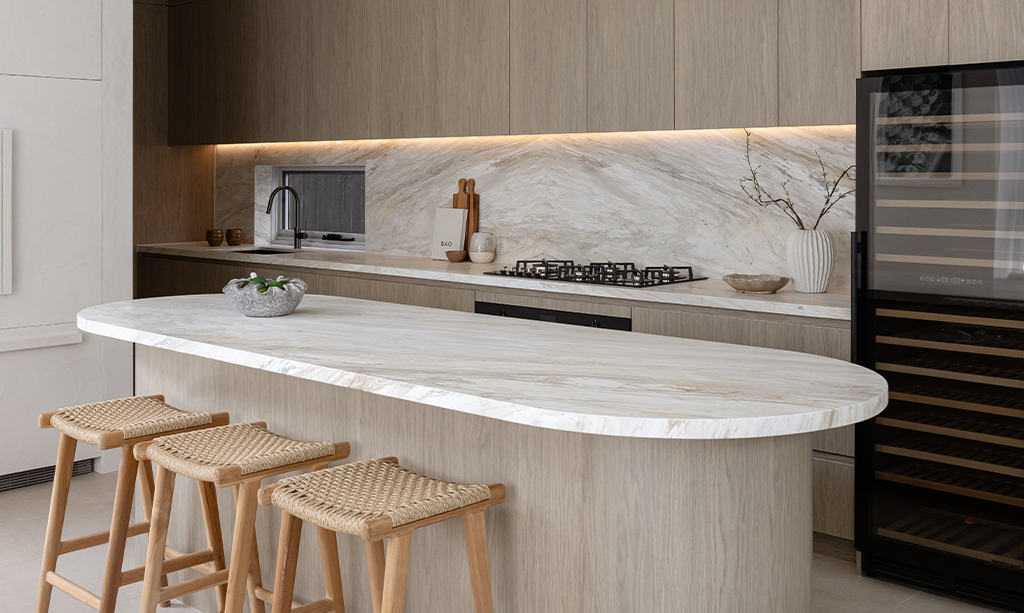
How do I know if natural stone is right for me?
Short answer: Match the stone to how you actually live.
Choose natural stone if:
- You want a surface that's one of a kind, not a repeating pattern.
- You're building a forever home or quality renovation and want it to last and hold value.
- You like a material you renew over time rather than replace.
Choose a harder-wearing species (quartzite, granite, dolomite) if:
- You want the natural stone look with less fuss day to day.
- It's a busy family kitchen and you'd rather not think about acids and spills.
Wear the white pants mindfully, or skip them, if:
- Any etching at all would bother you and you know you won't re-hone it. Marble may not be your stone, and that's a fair call. A harder-wearing slab gives you most of the look with far less to think about.
The honest trade-off
Choose marble and you're choosing a surface that shows life. It'll etch from lemon and wine. You'll seal it now and then and wipe acidic spills sooner rather than later. That's the trade. The safety net is that none of it is permanent. Etching re-hones, chips repair, stains have specialists. You aren't living with a mistake. You're living with a material that lets you reset it, which is more than you can say for most things people happily risk.
The difference between a good stone experience and a bad one usually isn't the stone. It's whether someone helped you pick the right one and showed you how to live with it from the start. That part we can fix.
FAQ
I had natural stone before and it marked badly. Why would this be different? Often because the stone wasn't chosen for you. Many people inherit stone with a house, with no idea what it is, how it was sealed, or how it was treated for years before they arrived. Choosing the right stone for your lifestyle, sealing it from day one, and knowing how to maintain it is a very different experience to living with someone else's surface.
Does natural stone stain permanently? Rarely. Most marks on marble are etching, a dull spot that re-hones away. Actual stains, usually oil, can often be drawn out by a stone specialist. Denser stones like quartzite and granite resist both, and sealing reduces the risk further.
Can you repair a chip in a stone benchtop? Yes. A fabricator fills and colour-matches it, and on a busy edge it's hard to find afterwards. Because the colour runs through natural stone rather than sitting in a printed layer, repairs blend better than they do on engineered surfaces.
Is natural stone good for a family kitchen? It can be excellent if you pick the right stone. Quartzite and dolomite handle heat and daily use without drama. Marble works too, but it shows life over time, so it suits families who like a surface with character rather than one that stays pristine.

Outdoor Stone Benchtops That Survive a Sydney Summer
An outdoor benchtop in Sydney has to handle sun, heat, salt air, dust, rain and BBQ fat on the same surface. Porcelain and sintered stone are our first pick, granite is the best natural stone outdoors, and quartzite works with regular sealing. Light-coloured marble is best avoided outside, and engineered stone belongs indoors only, as UV affects it and outdoor use voids the manufacturer's warranty. This guide also covers joins, BBQ heat and why butt joins or shadowlines often outlast mitres outdoors.
Outdoor Stone Benchtops That Survive a Sydney Summer

Engineered Stone vs Natural Stone Benchtops: Honest Comparison | Marble Hub
Natural stone is one of a kind, handles heat well and can be restored for decades, but it needs sealing. Crystalline-silica-free engineered stone is consistent and needs no sealing, but it can scorch and can't be rehoned the same way. We cut both every week and compare them honestly on looks, care, heat, repair and price. We recommend natural stone first, and engineered stone where consistency or easy care matters most.
Engineered Stone vs Natural Stone Benchtops: Honest Comparison | Marble Hub

Pink Cristallo Quartzite for a Northmead Kitchen
A Federation home in Northmead with a new-wing kitchen by designer Vagn Madsen, built by Dan Kitchens Australia, with a Pink Cristallo Quartzite island benchtop and splashback from our Strathfield South showroom. This piece looks at why a pink stone works: subtle white shaker joinery that steps in and out around the rangehood, a soft stone that adds warmth without competing, a curved island with a softened, stepped double bullnose edge, and stone used in just two places. It also covers choosing slabs in person, living with pink quartzite in a family kitchen, and Pink versus White Cristallo.
Pink Cristallo Quartzite for a Northmead Kitchen
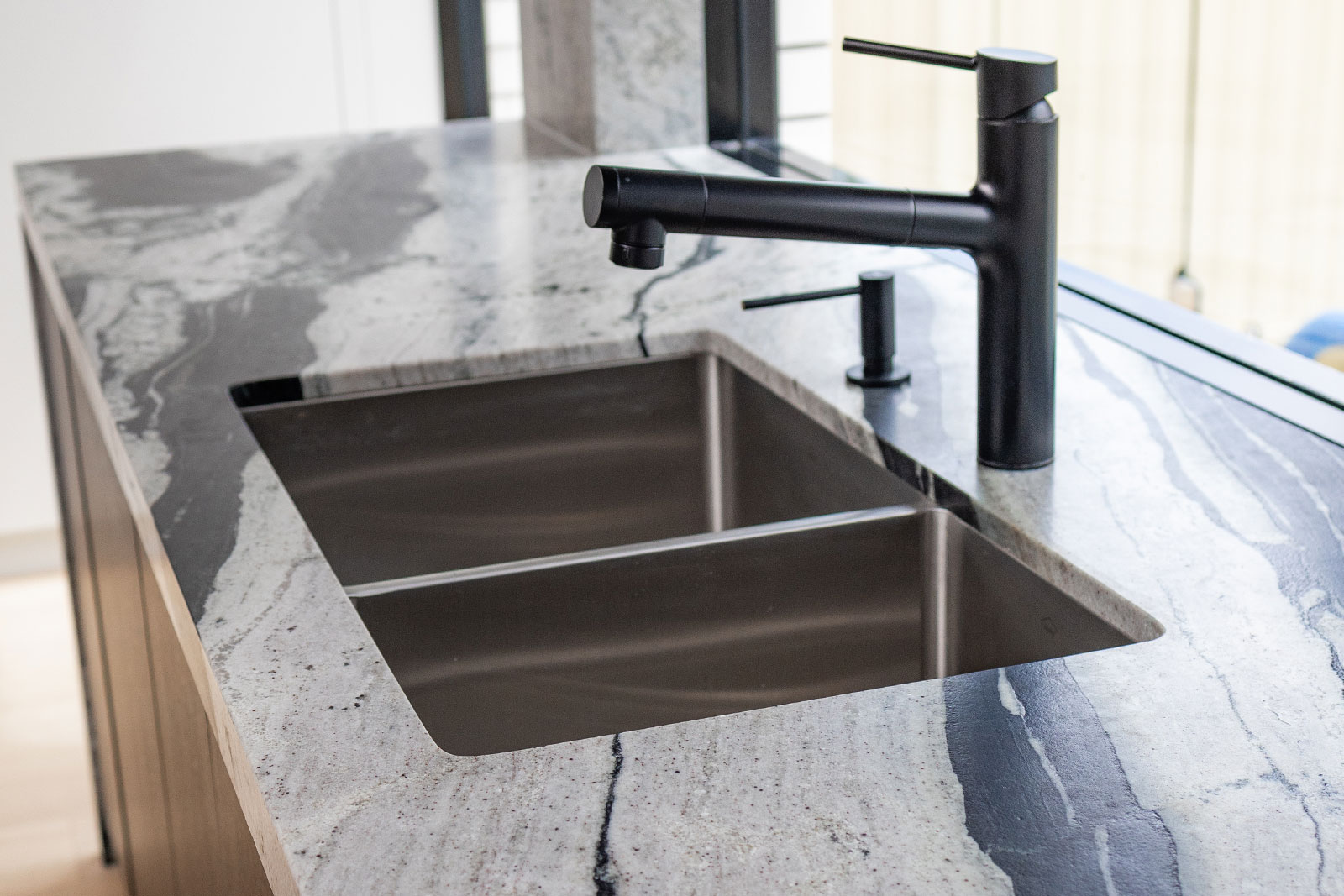
Undermount vs Flush Mount vs Drop-In Sink for Stone Benchtops | Marble Hub
There's no wrong sink style for a stone benchtop, only the right one for how you'll use it. This guide explains the look, cost and maintenance of undermount, flush mount, drop-in and integrated stone sinks from a fabricator's point of view. Drop-in sinks work hard in busy kitchens, butler's pantries and utility laundries, while flush mount gives the sharpest look and needs the most planning. It also explains how Marble Hub reviews and supports every flush mount sink at the factory. Tags: undermount sink, flush mount sink, drop in sink, top mount sink, integrated stone sink, butler's pantry sink, laundry sink, sink cut-out, stone benchtop sink, kitchen sink styles, Sydney stone fabricator, Marble Hub
Undermount vs Flush Mount vs Drop-In Sink for Stone Benchtops | Marble Hub
Let’s Get Started on Your Dream Space
Whether it’s a kitchen, bathroom, or laundry, Kitchen Hub is here to bring your vision to life.
