
Add slabs to your wishlist so we can give you custom quote.
Add productions from our slab collection so we create a quote for your next project!
If you're unsure of what you're after please reach out via our contact page.

Engineered Stone vs Natural Stone Benchtops: Honest Comparison | Marble Hub
Engineered Stone vs Natural Stone, Explained by the People Who Cut Both
Natural stone is quarried, one of a kind, and can be restored for decades. Engineered stone is manufactured, consistent and low maintenance, but it can scorch and can't be resurfaced the same way. In Australia, engineered stone is now crystalline-silica-free. We recommend natural stone first for most kitchens, and engineered stone when consistency or low maintenance is a priority for your family's lifestyle.
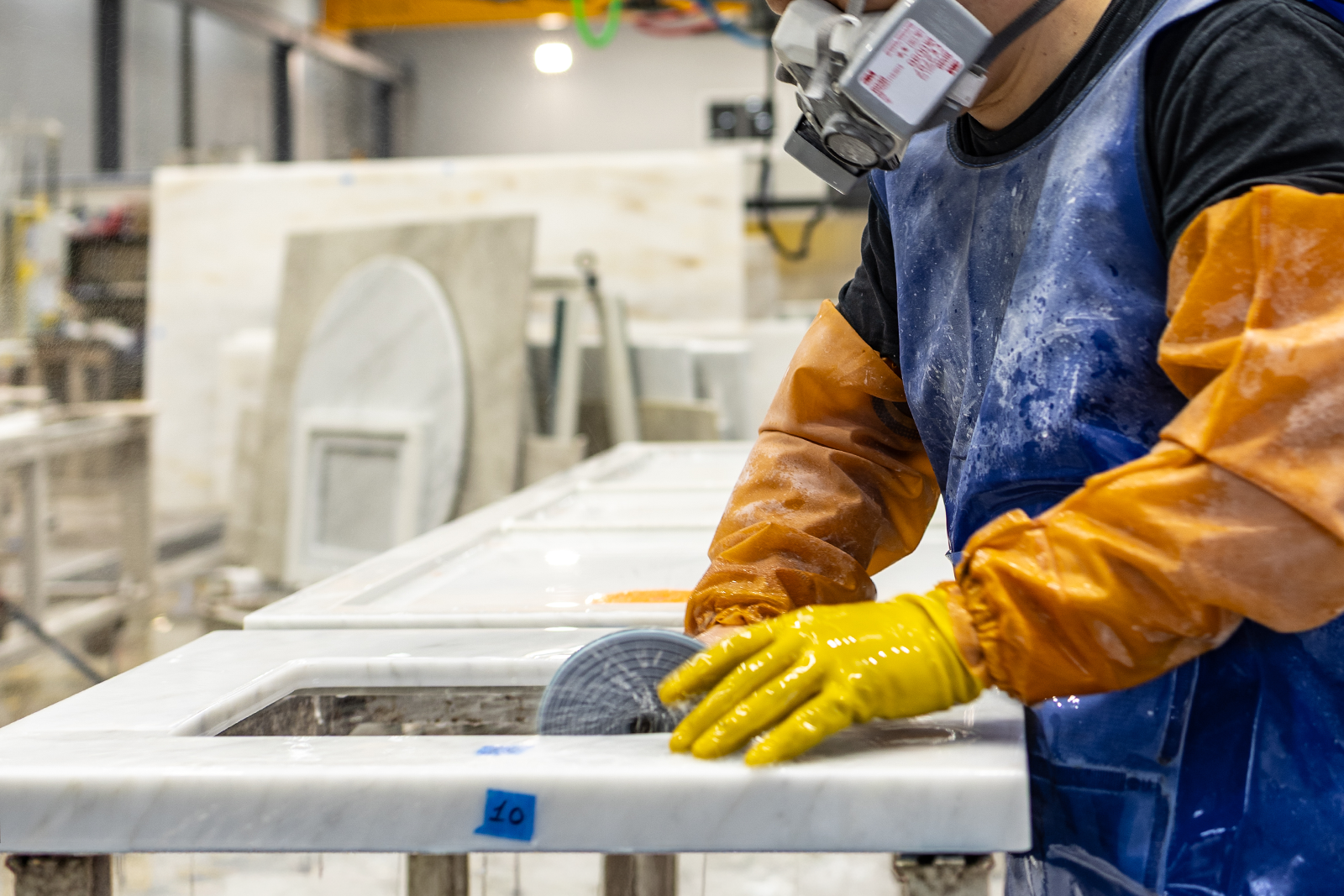
We cut both materials every week, in the same factory, on the same machines. That gives us a fairly unromantic view of each. Both make good kitchens. They suit different people.\
What changed in 2024
Australia banned engineered stone containing 1% or more crystalline silica from mid-2024. The category didn't disappear. Manufacturers reformulated, and crystalline-silica-free engineered stone is now legal, safe to fabricate and widely available.
We've covered this in engineered stone didn't go away. For this comparison, every engineered stone we mention is crystalline-silica-free.
The naming confusion
Engineered stone is often called quartz. Quartzite is a natural stone. They sound like the same thing and behave very differently. If you've been comparing "quartz" and "quartzite", our quartz vs quartzite guide untangles it.

What natural stone gives you
Natural stone covers marble, quartzite, granite and dolomite. Each slab is cut from a block that formed over a very long time, so no two are the same.
It's one of a kind. You choose the actual slab, not a sample of a pattern. The veining you fall for is the veining you get.
It handles heat well. Quartzite and granite tolerate heat better than most surfaces, and marble handles it too. We still always suggest a trivet or board under really hot pans and dishes, so the stone isn't affected.
It can be restored. This is the part most people don't know. Natural stone can be rehoned, polished and resealed years later. Etches, dull patches and fine scratches can be brought back. The surface you have in twenty years can look close to the day it went in.
The trade-off is care. Natural stone is porous to varying degrees, so it needs sealing. Marble etches with acids like lemon and wine. Quartzite and granite are far more forgiving. Our guide to natural stone myths separates the real risks from the exaggerated ones.
What engineered stone gives you
Crystalline-silica-free engineered stone is made from mineral fillers bound with resin, pressed into slabs. Ranges like Talostone MinQ Zero are good examples.
It's consistent. What you see in the showroom is what arrives. That suits large projects, long runs and anyone who finds natural variation stressful.
It's non-porous. No sealing, and it resists most everyday stains well.
It's predictable on price. Ranges are priced by colour tier, which makes budgeting simpler.
The trade-offs are heat, repair and light. The resin can scorch or discolour under direct heat from a pan, so trivets aren't optional. It can't be rehoned and restored the way natural stone can, so a deep scorch or chip is often harder to hide. Most engineered stone isn't designed for direct sunlight outdoors, because UV can discolour the resin over time.
Side by side
Look. Natural stone has depth and true variation. Engineered stone has consistency. Marble-look engineered stone has improved a lot, and from three metres it can be convincing. Up close, natural veining has a translucency and randomness that's hard to print.
Daily care. Engineered stone wins. Wipe and go. Quartzite and granite come close. Marble asks the most.
Heat. Natural stone wins clearly, particularly quartzite and granite. With either material, use a trivet under really hot pans and dishes.
Repair and longevity. Natural stone wins. It can be refinished. Engineered stone generally can't be resurfaced in the same way.
Outdoors. Natural stone, porcelain and sintered stone are the better choices. Most engineered stone isn't suited to direct sun.
When we'd recommend engineered stone
We recommend crystalline-silica-free engineered stone in a few clear situations.
For rentals and short-stay properties, where guests don't treat surfaces like owners do. Our Airbnb benchtop guide goes into this.
For long, continuous runs where you want every section to look identical.
For homeowners who know they'll never want to think about sealing, and would rather trade the one-off character of natural stone for peace of mind.
When we'd recommend natural stone
For a forever kitchen where the stone is part of why you're renovating.
For keen cooks. Quartzite and granite are the strongest picks for heat, though a trivet under really hot pans and dishes is still the best habit.

For homes in the premium market, where buyers expect real stone. Our piece on natural stone and resale explains why it protects value more than it adds it.
Slab size and joins
Natural stone slabs vary in size, because each one is cut from a different block. Some are large enough to run an island in a single piece. Others mean a join. We check slab dimensions against your plan before you commit, so you know where joins will fall.
Engineered stone comes in standard slab sizes, so joins are predictable from the start. On long runs, that predictability is useful. With natural stone, careful slab selection and vein flow planning make joins far less noticeable.
Price, without the numbers
Crystalline-silica-free engineered stone is a great budget option. It's priced by colour tier, easy to estimate, and it can look just as stunning in a well-designed kitchen. Natural stone varies widely: some quartzites and marbles cost more than most engineered stone, while some granites and large-format natural slabs price similarly.
The bigger cost driver is usually slab count and fabrication, not the category. Waterfalls, mitred edges and sink cut-outs cost the same work in either material.
Where natural stone pulls ahead is the added visual depth of a one-off slab and the added resale value it brings, particularly in the premium market. For many homeowners, that combination is hard to pass by, even when engineered stone fits the budget more comfortably.
What we see ten years on
We get called back to kitchens a decade after installation. The pattern is consistent.
Natural stone that has been sealed and cared for usually looks settled and lived in. Marble shows a soft patina. Quartzite and granite often look close to new. Where there's damage, rehoning and polishing bring most of it back.
Engineered stone usually looks very similar to the day it went in, which is its strength. When it is damaged, typically by a hot pan, the repair options are more limited, and the mark often stays.
Using both in one home
Many of the homes we work on use both. Natural stone where it's seen and loved: the kitchen island, the main bathroom vanity, a fireplace. Crystalline-silica-free engineered stone where consistency and easy care matter more: a laundry, a teenager's bathroom, a rental granny flat.
That isn't a compromise. It's putting each material where it does its best work. The Randwick home in one home, a different material in every room shows how that can feel deliberate rather than mismatched.
A simple decision framework
Choose natural stone if you want a one-off slab, a surface that can be restored rather than replaced, and you're comfortable with a little care. Choose quartzite or granite if you want natural stone with the least maintenance.
Choose crystalline-silica-free engineered stone if budget is a priority, consistency is an important requirement for your family's lifestyle, you want no sealing at all, and you'll be disciplined with trivets.
This is why we suggest quoting both. Seeing the real price difference next to the real visual difference makes the decision much clearer. Then stand in front of both. Walk through our natural stones and engineered stones online, then visit the showroom and look at full slabs side by side. Bring a cabinet sample if you can, because both materials change character beside timber or painted joinery.
Frequently Asked Questions
Is engineered stone better than natural stone?
Neither is better across the board. Engineered stone is consistent, non-porous and needs no sealing. Natural stone is one of a kind, handles heat better (though a trivet under really hot pans is still recommended), and can be rehoned and restored for decades. For most kitchens we recommend natural stone first, particularly quartzite or granite if you want low maintenance.
Is engineered stone still legal in Australia?
Yes. The 2024 ban applies to engineered stone containing 1% or more crystalline silica. Crystalline-silica-free engineered stone is legal, safe to fabricate and widely available, including ranges such as Talostone MinQ Zero.
Can engineered stone handle hot pans?
Use a trivet. The resin that binds engineered stone can scorch or discolour under direct heat. Natural stones such as quartzite and granite handle heat far better, but we still suggest a trivet under really hot pans and dishes for any benchtop.
Can engineered stone be repaired like natural stone?
Small chips can be filled. Engineered stone generally can't be rehoned and polished back to new the way natural stone can, so deep scorch marks or surface wear are harder to correct.
Is quartz the same as engineered stone?
In Australian kitchens, yes, "quartz" usually means engineered stone. Quartzite is different. It's a natural stone, harder than granite in many cases, and needs light sealing.
Which lasts longer, natural or engineered stone?
Both last decades with sensible care. The difference is how they age. Natural stone can be rehoned and polished to remove wear, so it can be renewed. Engineered stone stays consistent but is harder to restore if it scorches or chips.
Can I use natural stone and engineered stone in the same house?
Yes, and it often makes sense. Use natural stone where it's seen and loved, such as the kitchen island or main vanity, and crystalline-silica-free engineered stone in hard-working rooms like laundries or kids' bathrooms.

Outdoor Stone Benchtops That Survive a Sydney Summer
An outdoor benchtop in Sydney has to handle sun, heat, salt air, dust, rain and BBQ fat on the same surface. Porcelain and sintered stone are our first pick, granite is the best natural stone outdoors, and quartzite works with regular sealing. Light-coloured marble is best avoided outside, and engineered stone belongs indoors only, as UV affects it and outdoor use voids the manufacturer's warranty. This guide also covers joins, BBQ heat and why butt joins or shadowlines often outlast mitres outdoors.
Outdoor Stone Benchtops That Survive a Sydney Summer

Pink Cristallo Quartzite for a Northmead Kitchen
A Federation home in Northmead with a new-wing kitchen by designer Vagn Madsen, built by Dan Kitchens Australia, with a Pink Cristallo Quartzite island benchtop and splashback from our Strathfield South showroom. This piece looks at why a pink stone works: subtle white shaker joinery that steps in and out around the rangehood, a soft stone that adds warmth without competing, a curved island with a softened, stepped double bullnose edge, and stone used in just two places. It also covers choosing slabs in person, living with pink quartzite in a family kitchen, and Pink versus White Cristallo.
Pink Cristallo Quartzite for a Northmead Kitchen
Undermount vs Flush Mount vs Drop-In Sink for Stone Benchtops | Marble Hub
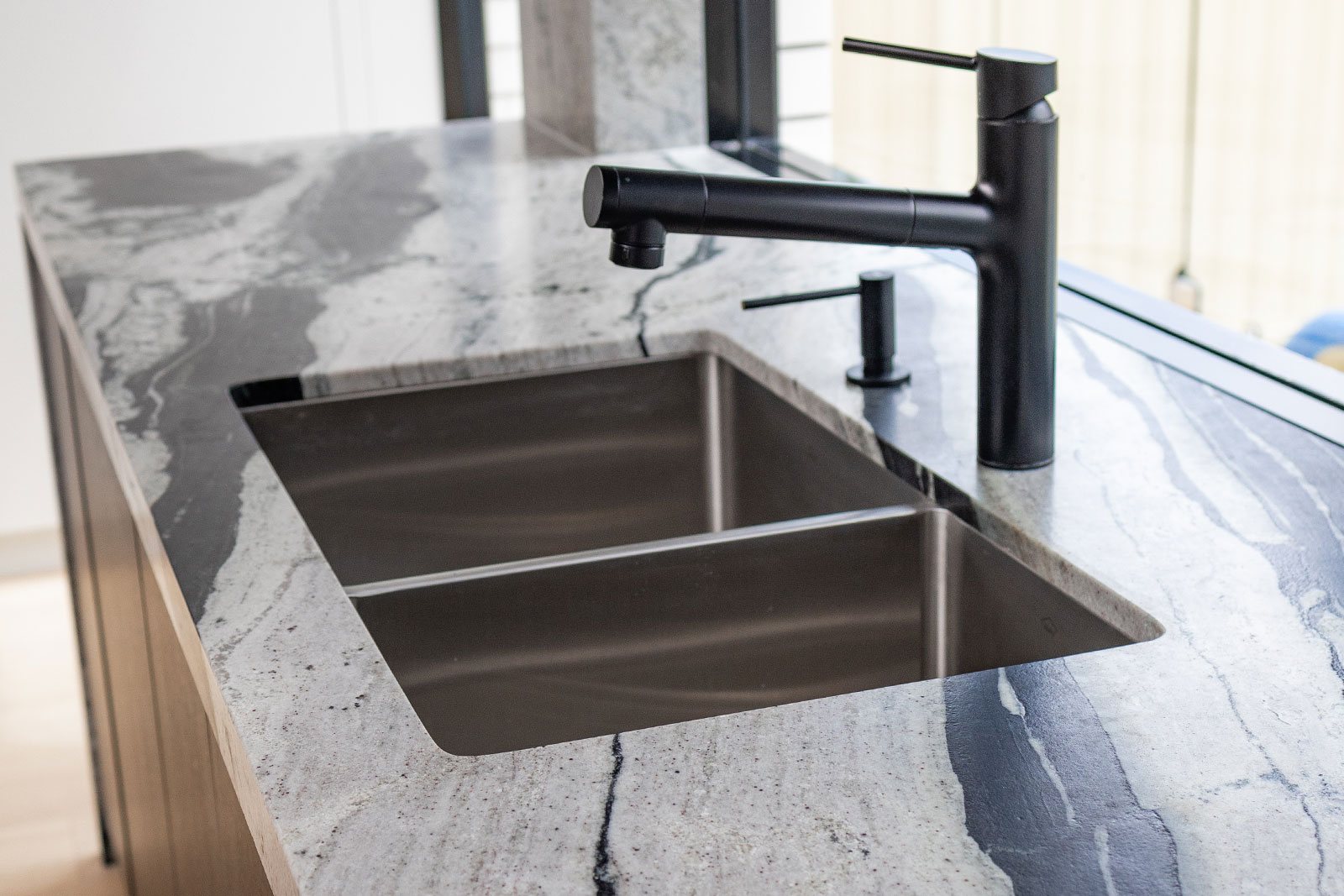
There's no wrong sink style for a stone benchtop, only the right one for how you'll use it. This guide explains the look, cost and maintenance of undermount, flush mount, drop-in and integrated stone sinks from a fabricator's point of view. Drop-in sinks work hard in busy kitchens, butler's pantries and utility laundries, while flush mount gives the sharpest look and needs the most planning. It also explains how Marble Hub reviews and supports every flush mount sink at the factory. Tags: undermount sink, flush mount sink, drop in sink, top mount sink, integrated stone sink, butler's pantry sink, laundry sink, sink cut-out, stone benchtop sink, kitchen sink styles, Sydney stone fabricator, Marble Hub
Undermount vs Flush Mount vs Drop-In Sink for Stone Benchtops | Marble Hub
Stone Splashback vs Tiles: Full Slab Marble Splashbacks | Marble Hub Sydney
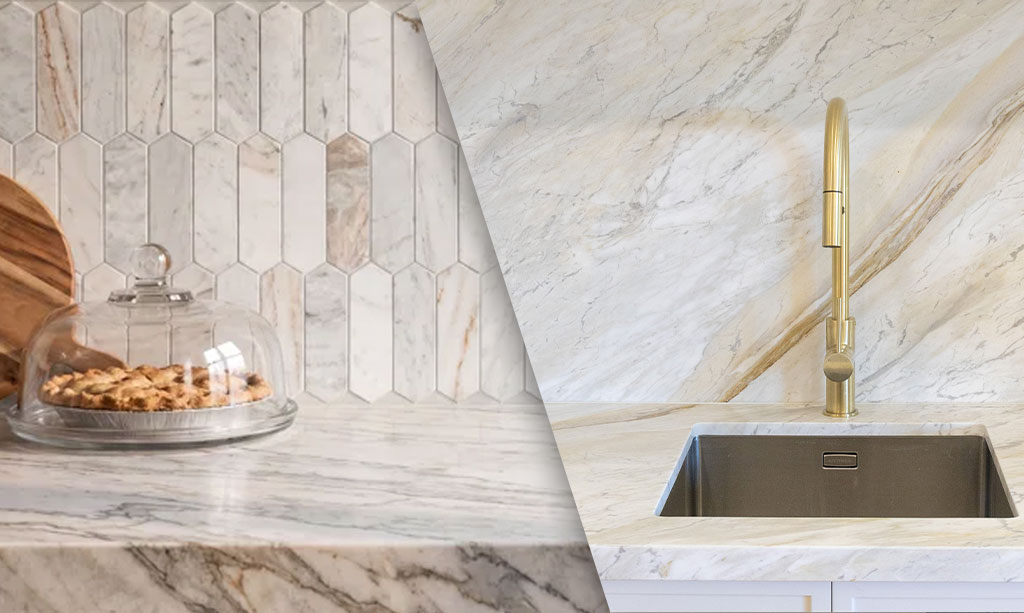
A full slab splashback takes the benchtop stone straight up the wall, so the design feels more cohesive and sleek, and the stone has more impact. This guide covers vein flow, windows and mitred sills, ledges, power points, and the clearances a splashback's thickness affects. It also explains the practical side: joins, slab count, and getting large pieces into your home. And it's honest about when tiles are the better call.
Stone Splashback vs Tiles: Full Slab Marble Splashbacks | Marble Hub Sydney
Let’s Get Started on Your Dream Space
Whether it’s a kitchen, bathroom, or laundry, Kitchen Hub is here to bring your vision to life.
