
Add slabs to your wishlist so we can give you custom quote.
Add productions from our slab collection so we create a quote for your next project!
If you're unsure of what you're after please reach out via our contact page.

Outdoor Stone Benchtops That Survive a Sydney Summer
Outdoor Stone Benchtops That Survive a Sydney Summer
For an outdoor kitchen in Sydney, porcelain or sintered stone is our first pick. Granite is the best natural stone outdoors. Quartzite works well with regular sealing. Light-coloured marble is best avoided outside. Engineered stone belongs indoors only, because UV affects it and outdoor use voids the manufacturer's warranty.

An outdoor benchtop has a harder life than any surface inside the house. Afternoon sun, summer heat, rain, dust, salt air if you're near the coast, and a BBQ throwing fat and heat at it. Then there's the citrus, the wine and the marinade. All on one surface, often uncovered.
The good news is that several materials handle it well. The trick is matching the material to how exposed the space really is.
Start with exposure, not the material
Before choosing a stone, answer one question honestly: how much weather does this benchtop see?
A fully covered alfresco area under a solid roof is the most protected. A partly covered deck with a pergola gets filtered sun and some rain. A BBQ area with no cover gets everything. Coastal homes in the eastern suburbs and northern beaches add salt air on top.
Whichever you have, covered alfresco, partly covered or no cover at all, review the material you're interested in with our sales team. Every stone has pros and cons outdoors, and they change with exposure. A five-minute conversation about your space saves a lot of second-guessing later.
Outdoor elements to be mindful of
Outdoor benchtops deal with things an indoor kitchen never sees. Dust and pollen settle on the surface. Salt water air drifts in on coastal homes. Birds and animals leave droppings, which can be acidic and mark some stones if they're left to sit.
None of this is a reason to avoid stone outside. It's a reason to choose the right stone, keep natural stone sealed, and give the benchtop a regular rinse and wipe. Salt air is also hard on metal, so choose marine-grade fixings and hardware.
The cabinetry underneath matters as much as the top. Outdoor joinery needs materials and hardware rated for weather. A beautiful stone top on cabinetry that swells after one winter isn't a good outcome.
Porcelain and sintered stone: the first pick outdoors
Porcelain and sintered stone are fired at very high temperatures. They're UV-stable, so colour doesn't fade in the sun. They handle heat well, they're very hard to stain, and they don't need sealing.
That combination makes them our first recommendation for outdoor kitchens. In a Randwick home we built, the deck BBQ uses Evert Sun Silk porcelain for exactly this reason. It sits next to natural stone inside, and nobody worries about it.
Be mindful at the edges, especially with heavy BBQ tools and trays moving around. We'll talk through the best edge and join detail for your space. Our guide to porcelain and sintered stone covers the differences between the two, and you can browse the full porcelain range.
Granite: the strongest natural stone outdoors
If you want natural stone outside, granite is the safest choice. It's dense, very hard, handles sun well, and has been used outdoors for centuries.

Modern granite looks very different from the speckled polished tops many people remember. Leathered and honed finishes and stones with more movement suit contemporary outdoor spaces well. Have a look through our granite range.
Seal it, and it will cope with the weather and the wine.
Quartzite: beautiful and capable, with sealing
Quartzite is hard and handles sun well. It brings a veined, marble-like look outdoors with far less worry than marble.

It does need sealing, and outdoors it needs it more often. Rain, fat, red wine and droppings will test any stone that isn't sealed. Browse the quartzite range for options.
Marble: avoid light colours outside
Light-coloured marble is the stone we'd steer you away from outdoors. It's the most likely to weather quickly, and it struggles in high-heat BBQ areas. Citrus, wine and droppings will etch it, and weather will soften and mark the surface faster than most people expect.
If you love the look of marble, keep it inside, or talk to our team about a harder stone with a similar feel for the outdoor area.
Engineered stone: indoors only
Engineered stone, including crystalline-silica-free ranges, is bound with resin. UV rays affect that resin and can discolour it over time. Installing engineered stone outdoors also voids the manufacturer's warranty. For both reasons, engineered stone should only be used inside.
There's more on the category in our piece on engineered stone.
Planning the BBQ zone
A built-in BBQ sits very close to the benchtop, and the heat around it is concentrated. High heat needs to be considered when choosing the stone for this zone, which is part of why porcelain, sintered stone and granite are the safest choices here.
Always follow the BBQ manufacturer's installation instructions. Many built-in units need an insulated jacket or specific clearances to adjacent materials, and that affects the cut-out we make. Give us the exact BBQ model before the check measure, the same way you would with a kitchen sink.
Leave landing space either side. A benchtop beside the BBQ for trays and tongs, and another for serving, makes the area far more usable than one long run with the BBQ in the middle.
Joins outdoors: butt joins and shadowlines
Outdoor benchtops often sit on structures that move more than an indoor kitchen. Timber decks, pavers and the ground beneath them shift with weather, moisture and seasons.
That movement limits mitred options. A mitred join is a precise 45-degree fold of stone, and it doesn't like movement underneath it. Outdoors, a butt join or a shadowline join is often the better long-term choice. A butt join meets square and is more forgiving. A shadowline leaves a deliberate, fine recessed gap that looks intentional and allows for small movement.
Our edge profile guide shows how these details compare.
Finish matters more outside
A polished finish outdoors creates glare in strong sun and can show water marks. Honed and leathered finishes are calmer to look at, hide water spots and dust better, and feel more natural in a garden setting.
Leathered granite is a particularly good outdoor finish. The texture hides wear and gives a slightly softer feel under the hand.
Sinks and taps outdoors
Outdoor sinks see leaves, sunscreen, fish scales and garden dirt. An undermount sink in porcelain or granite is easy to wipe clean. A drop-in sink is also a practical choice outdoors, and simpler to replace later.
Choose outdoor-rated tapware and make sure the plumbing can be drained or protected if you're in a cooler spot. Most of Sydney doesn't freeze, but Blue Mountains and Southern Highlands homes are a different story.
Pool areas and outdoor showers
Pool areas add chlorine or salt water, wet feet and bare skin. Porcelain and granite handle pool chemicals well. Honed or textured finishes give better grip around wet areas. Rinse stone near the pool with fresh water now and then, especially in summer.
A simple decision framework
Choose porcelain or sintered stone for any outdoor kitchen, especially an uncovered BBQ area near the coast, if you want minimal maintenance.
Choose granite if you want natural stone outdoors with the least worry.
Choose quartzite if you want a veined, natural look and you're happy to seal more often.
Avoid light-coloured marble outdoors, particularly near the BBQ.
Keep engineered stone inside.
Choose butt joins or shadowlines over mitres where the structure below may move.
If you're planning an outdoor kitchen this season, book a design consultation and bring photos of the space at midday. Review your shortlist with our sales team, and we'll talk you through the pros and cons for your exposure.
Frequently Asked Questions
What is the best benchtop for an outdoor BBQ in Sydney?
Porcelain or sintered stone. They're UV-stable, handle high BBQ heat well, are very hard to stain and need no sealing. If you want natural stone, granite is the strongest choice outdoors, followed by quartzite with regular sealing. Review your shortlist with our sales team for the pros and cons in your space.
Can you use engineered stone outdoors?
No. Engineered stone, including crystalline-silica-free ranges, should only be used inside. UV rays affect the resin that binds it, and installing it outdoors voids the manufacturer's warranty.
Can marble be used outdoors?
We'd avoid light-coloured marble outdoors. It's the most likely to weather quickly and struggles in high-heat BBQ areas. Citrus, wine and droppings will etch it. Porcelain, granite or quartzite are better outdoor choices.
Should outdoor stone benchtops have mitred or butt joins?
Butt joins or shadowline joins are often better outdoors. Timber decks, pavers and the ground beneath can move with weather and seasons, and a mitred join is less forgiving of that movement. A shadowline gives a deliberate, fine gap that allows for small movement.
Do outdoor stone benchtops need sealing?
Natural stone does, and outdoors it needs it more often than inside. Granite and quartzite should be sealed regularly, especially around the BBQ. Porcelain and sintered stone don't need sealing. Our stone care page covers the routine.
Do I need my BBQ on site for the measure?
You need the exact model and its installation instructions at minimum. The benchtop cut-out is made to that unit, and many built-in BBQs need an insulated jacket or specific clearances. Confirming the model before templating avoids recutting.

Engineered Stone vs Natural Stone Benchtops: Honest Comparison | Marble Hub
Natural stone is one of a kind, handles heat well and can be restored for decades, but it needs sealing. Crystalline-silica-free engineered stone is consistent and needs no sealing, but it can scorch and can't be rehoned the same way. We cut both every week and compare them honestly on looks, care, heat, repair and price. We recommend natural stone first, and engineered stone where consistency or easy care matters most.
Engineered Stone vs Natural Stone Benchtops: Honest Comparison | Marble Hub

Pink Cristallo Quartzite for a Northmead Kitchen
A Federation home in Northmead with a new-wing kitchen by designer Vagn Madsen, built by Dan Kitchens Australia, with a Pink Cristallo Quartzite island benchtop and splashback from our Strathfield South showroom. This piece looks at why a pink stone works: subtle white shaker joinery that steps in and out around the rangehood, a soft stone that adds warmth without competing, a curved island with a softened, stepped double bullnose edge, and stone used in just two places. It also covers choosing slabs in person, living with pink quartzite in a family kitchen, and Pink versus White Cristallo.
Pink Cristallo Quartzite for a Northmead Kitchen
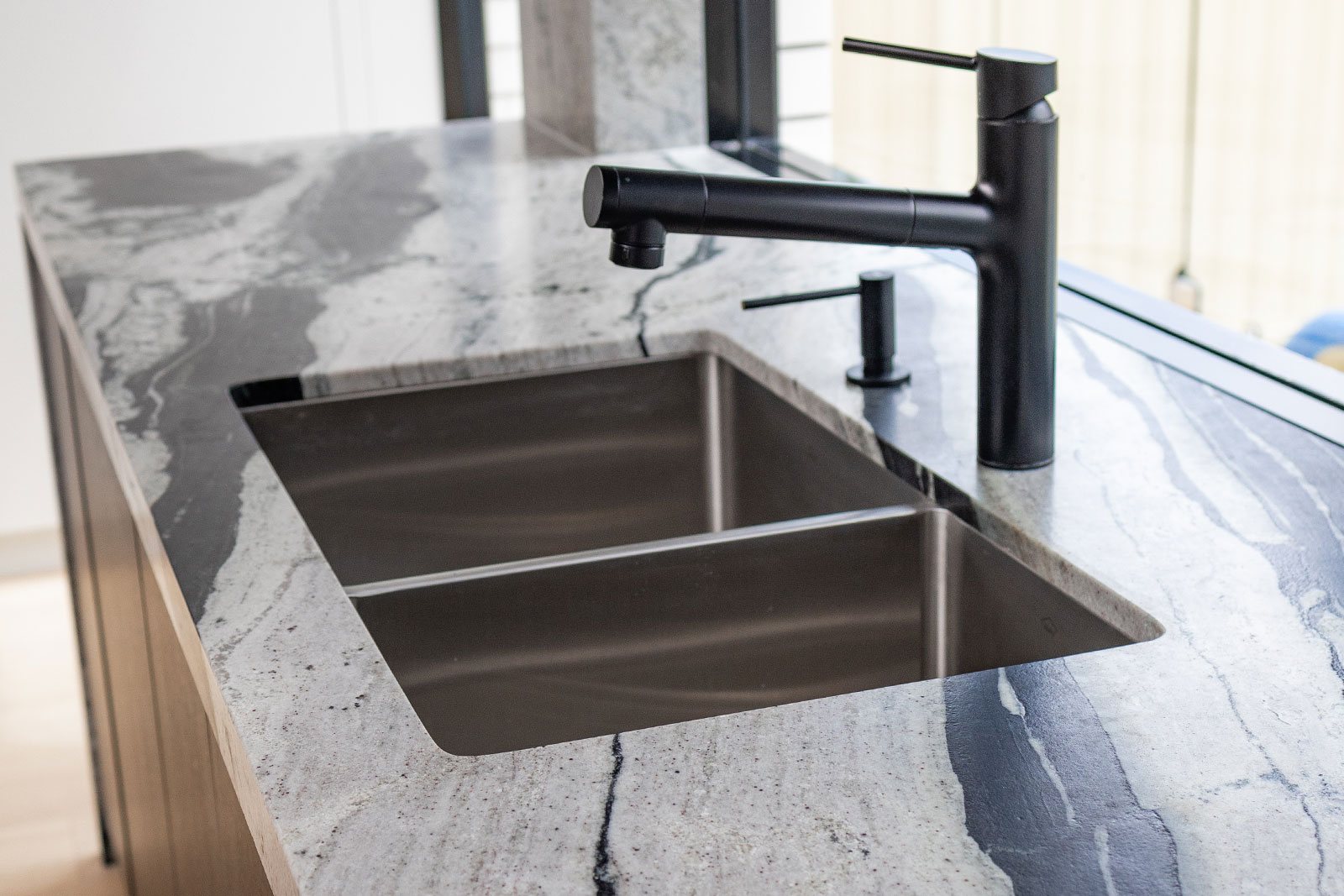
Undermount vs Flush Mount vs Drop-In Sink for Stone Benchtops | Marble Hub
There's no wrong sink style for a stone benchtop, only the right one for how you'll use it. This guide explains the look, cost and maintenance of undermount, flush mount, drop-in and integrated stone sinks from a fabricator's point of view. Drop-in sinks work hard in busy kitchens, butler's pantries and utility laundries, while flush mount gives the sharpest look and needs the most planning. It also explains how Marble Hub reviews and supports every flush mount sink at the factory. Tags: undermount sink, flush mount sink, drop in sink, top mount sink, integrated stone sink, butler's pantry sink, laundry sink, sink cut-out, stone benchtop sink, kitchen sink styles, Sydney stone fabricator, Marble Hub
Undermount vs Flush Mount vs Drop-In Sink for Stone Benchtops | Marble Hub
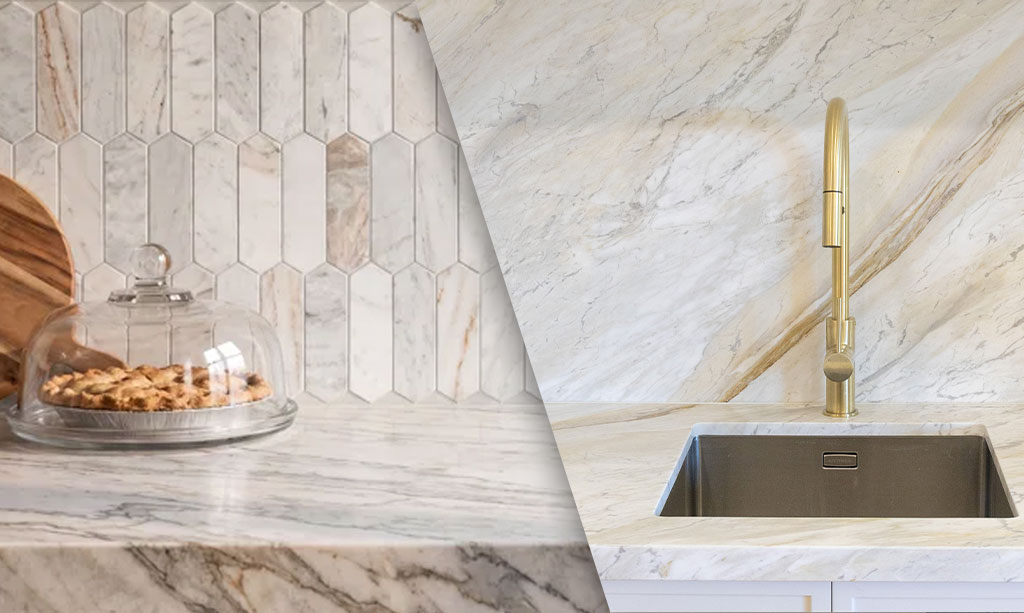
Stone Splashback vs Tiles: Full Slab Marble Splashbacks | Marble Hub Sydney
A full slab splashback takes the benchtop stone straight up the wall, so the design feels more cohesive and sleek, and the stone has more impact. This guide covers vein flow, windows and mitred sills, ledges, power points, and the clearances a splashback's thickness affects. It also explains the practical side: joins, slab count, and getting large pieces into your home. And it's honest about when tiles are the better call.
Stone Splashback vs Tiles: Full Slab Marble Splashbacks | Marble Hub Sydney
Let’s Get Started on Your Dream Space
Whether it’s a kitchen, bathroom, or laundry, Kitchen Hub is here to bring your vision to life.
