
Add slabs to your wishlist so we can give you custom quote.
Add productions from our slab collection so we create a quote for your next project!
If you're unsure of what you're after please reach out via our contact page.
Neolith: The Sydney Buyer's Guide
Neolith: The Sydney Buyer's Guide
TL;DR
Neolith is a porcelain surface, which means it is stain proof and heat proof to a very high level and never needs sealing. That makes it perfect for almost every area of the home, indoors and out, from kitchen benchtops where hot pans go straight down to outdoor and BBQ areas, because it is UV stable and holds its colour in the sun. Every Neolith slab in this range is 12mm, so you can run a thin, minimal edge that no other material does as well. The design sits on the face, so a 12mm finished edge shows the solid background tone, and you build a 40mm mitre when you want the pattern to carry around the edge. Its marble looks, from Calacatta to Cristallo and Statuario, are where it pulls ahead of other porcelain brands. If stains worry you more than chips, this is one of the calmest choices you can make.
What is Neolith?
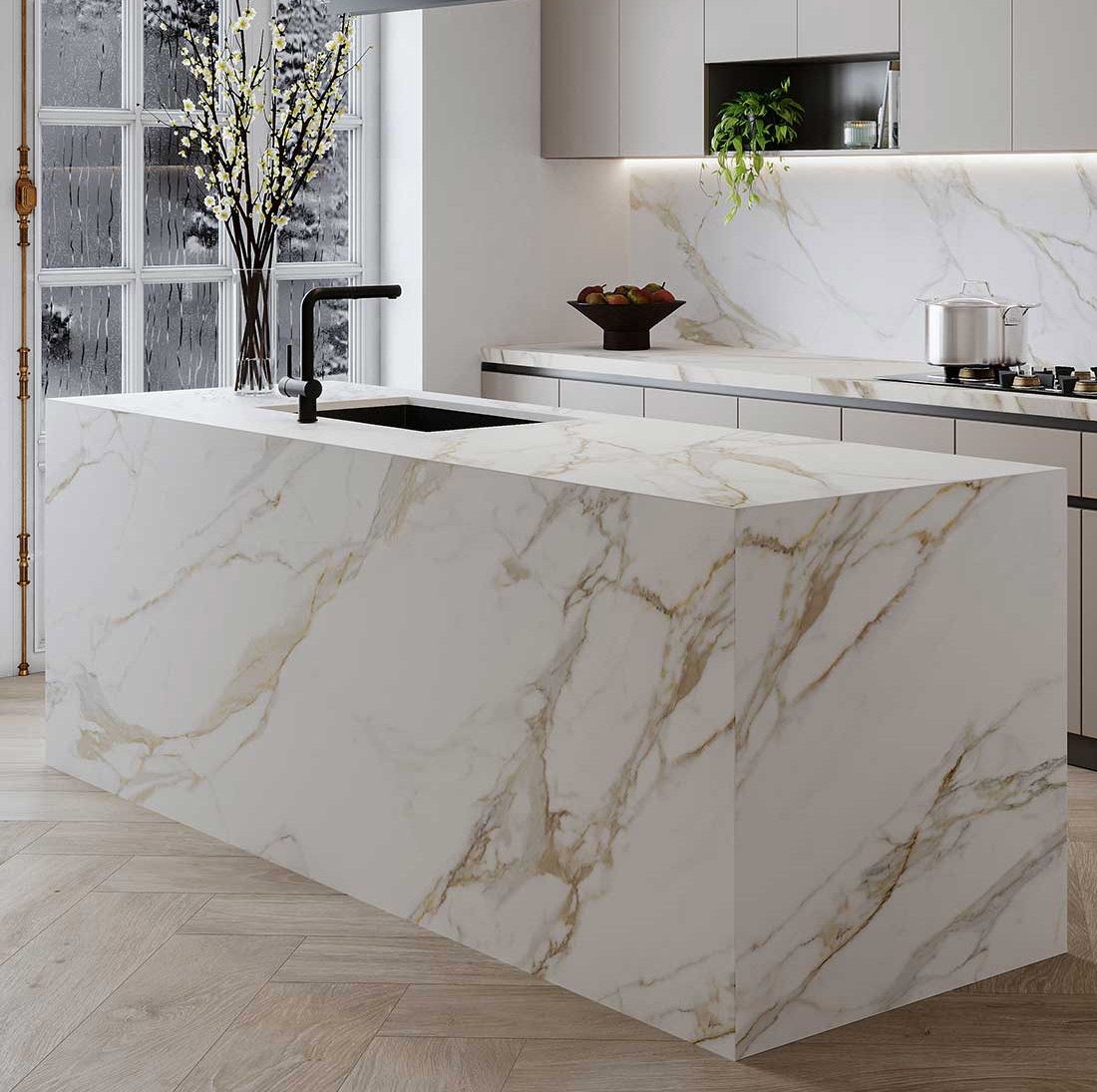
Neolith is a porcelain surface, one of the original large-format porcelain brands.
It's made in Spain from natural raw materials, clays, feldspar, silica and mineral oxides, pressed and fired at high temperature. The result is a dense, non-porous slab that behaves like the toughest version of natural stone, without the sealing or the worry.
It sits in our porcelain range, alongside brands like Dekton and Smartstone Sintered. The label matters less than how it behaves on your benchtop.
How is it made, and why does that matter?
Natural minerals are pressed and fired at high temperature into a dense, non-porous slab, with the design applied as a decorated face over a solid-colour body.
That matters in two ways. Because it's non-porous, nothing soaks in, so it doesn't stain, and heat doesn't mark it. And because the pattern lives on the face rather than through the body, a thin cut edge shows the solid background tone, not the veining. That's the reason edges get handled the way they do below.
It's also why you can't re-hone or repair it the way you can marble. The surface is set for life, for better and for worse.
Why pick Neolith over other brands?
The colours. That's the honest answer, and they're the main reason to start here.
The way Neolith recreates natural stone is exceptional. Its Calacatta, Cristallo, Mont Blanc, Travertine, Statuario and Calacatta Monet looks, among others, read with real depth and movement rather than the flat printed look you get from weaker ranges. Most porcelain brands carry similar colours, so they tend to blur together. Neolith stands out across a lot of them, which is almost a good problem, because it makes narrowing down harder.
The range runs from those soft marble looks through concrete and stone tones like Cement and Beton, to dark, dramatic slabs like Nero and Basalt Black.
Finishes on this range include Silk, a soft matte, along with Satin, Slate, Riverwashed and Natural Touch. Silk is where most people land for a kitchen. The matte surface reduces glare, so the benchtop feels grounded rather than clinical, which is usually what you want in a room you actually live in.
Pick Neolith when you want a specific marble look, a Calacatta or a Statuario say, done with real depth. That design range is a large part of why we often start a client's selection here, then compare against the rest.
Where does Neolith work best?
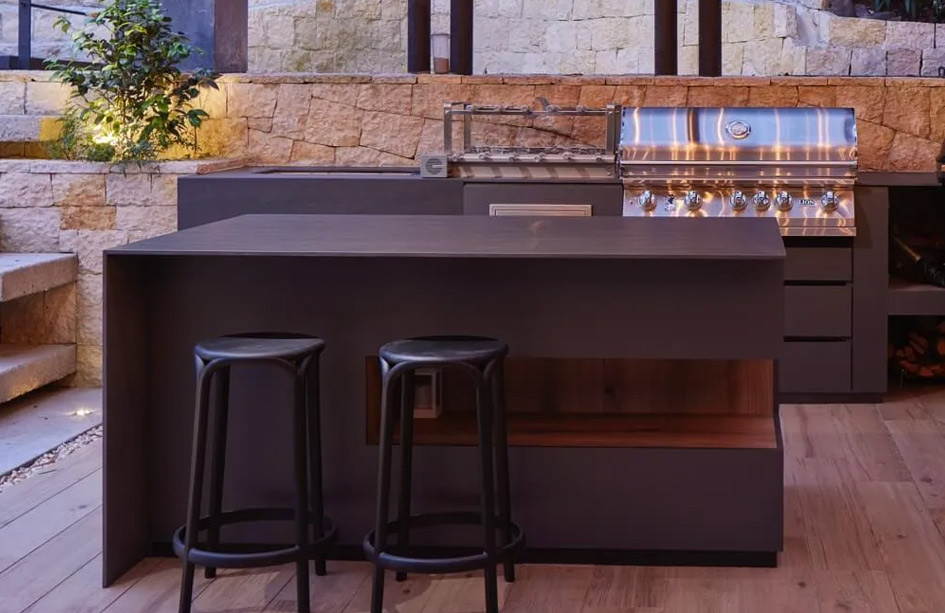
Almost every area of the home, indoors and out. Kitchen benchtops, full-slab splashbacks, vanities, fireplace surrounds and outdoor kitchens all suit it, which is a large part of why it is such a flexible choice.
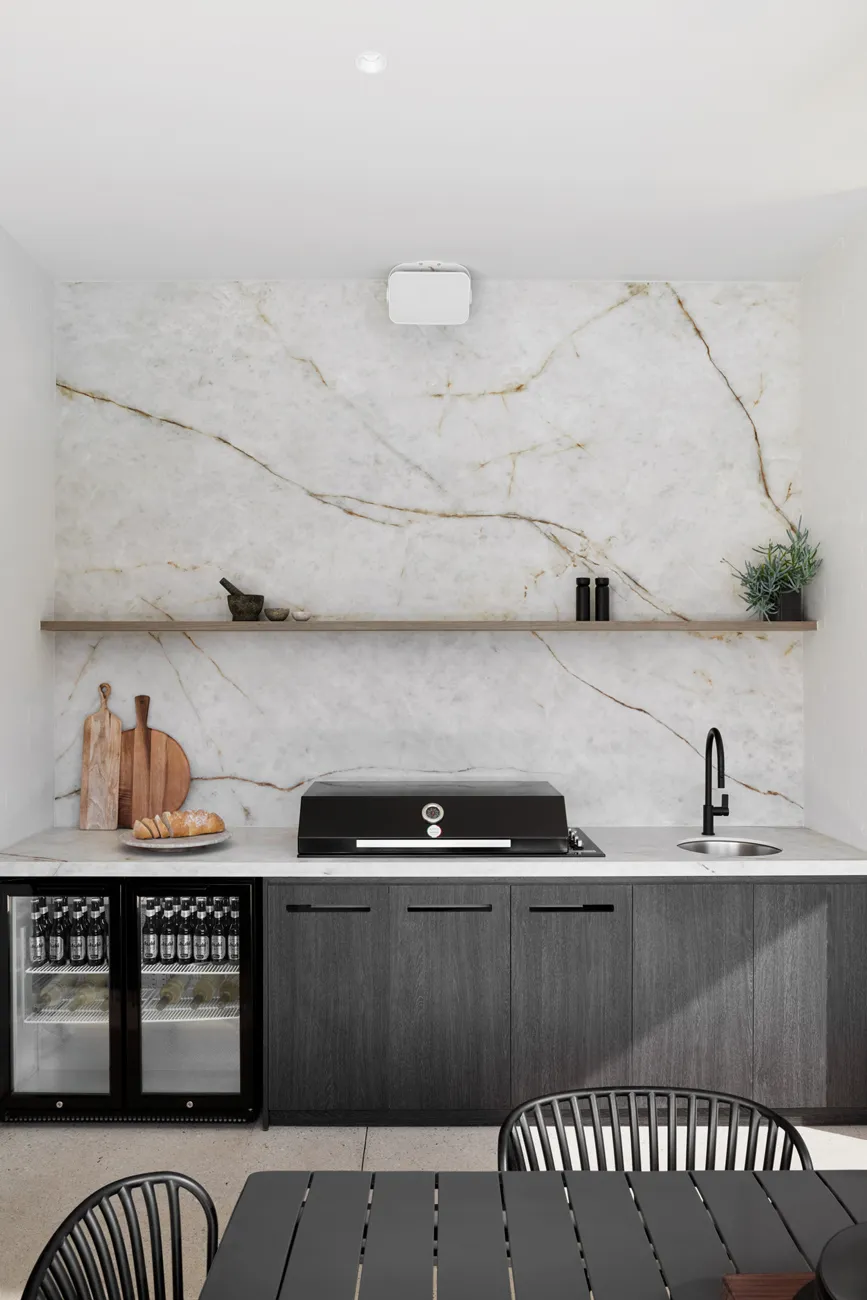
The outdoor case is the strongest one. Neolith is UV stable, weatherproof and heat proof, so an alfresco BBQ benchtop holds its colour and shrugs off the weather, where a lot of natural stone would need babying. Full-height splashbacks are a favourite too, because the large format means fewer joins across the wall.
The 12mm edge, and what it means for the look
Every slab in this range is 12mm, and that's a real advantage.
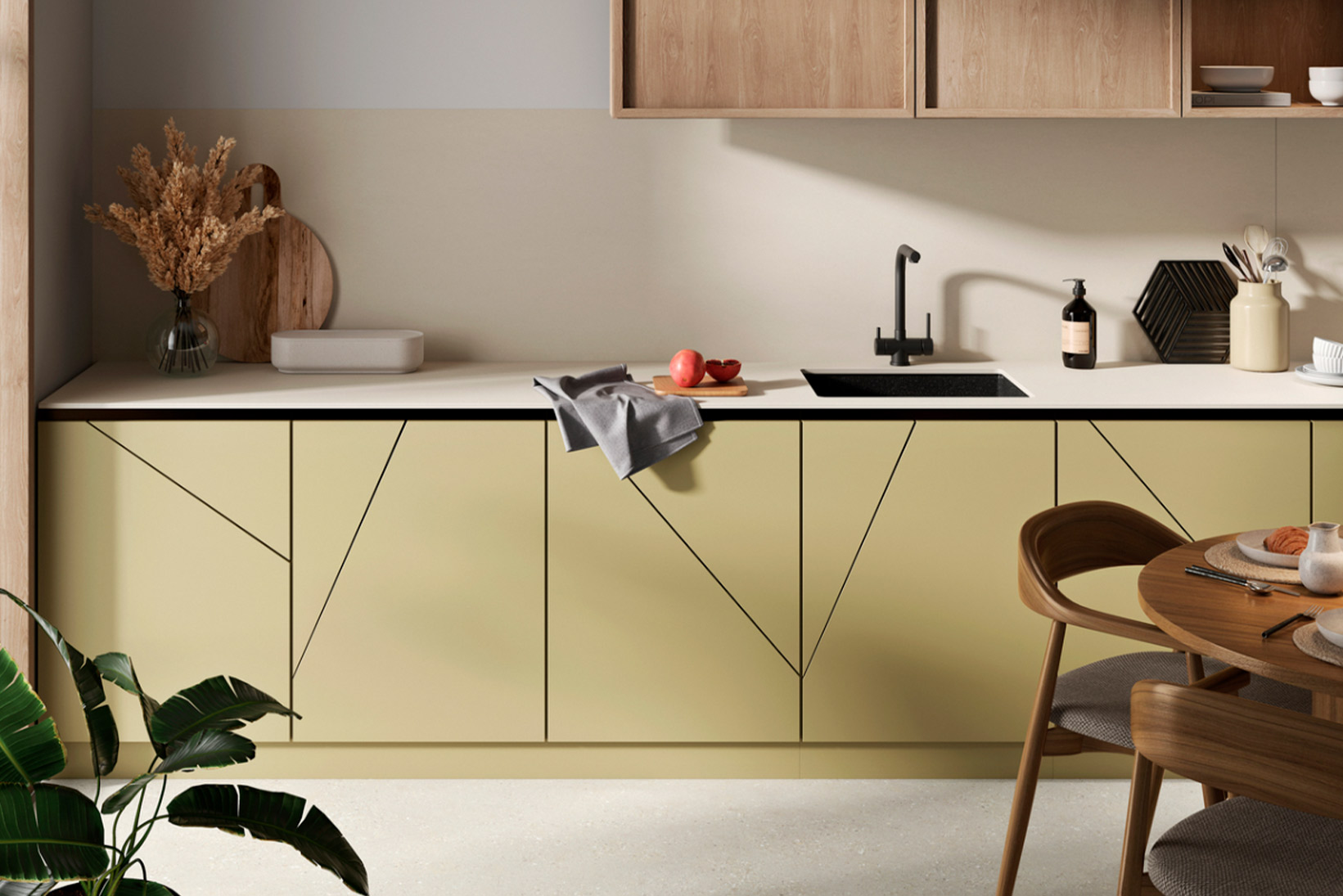
A 12mm slab gives an ultra-thin, minimal edge that marble or quartz can't, because they'd be too fragile that thin. If a razor-slim benchtop is the look you're after, this is the material for it.
Because the design sits on the face, a 12mm finished edge shows the solid background tone of the slab rather than the veining. When you want the pattern to carry around the edge, or a thicker solid-block look, we mitre the slab to 40mm or more, folding the face down the side so the design continues. Profiles here are squared and clean rather than decorative, which suits Neolith and suits contemporary joinery. If you want an ornate moulded edge, that's a job for marble or quartz.
If you'd prefer a slightly chunkier edge without going to a full mitre, a 20mm thickness gives you that. The edge looks the same as the 12mm, you'll still see the solid background tone rather than the veining, just on a thicker profile. It does change the fabrication cost, but if a 20mm squared edge is the look you're after, it's an easy thing to achieve.
What are the real things you gain?
Start with what you gain, because it's the whole point. Neolith is stain proof, and it gives you a real marble look with no maintenance. That combination comes first, and it's the important part. If those are the things you care about most, this material works.
Everything else is secondary, but worth knowing. Edge options are limited to clean squared and mitred profiles, so decorative edges are out, and a 12mm finished edge shows the background tone rather than the veining unless you mitre it. If a shaped edge profile or a radius corner is a priority for you, this clearly isn't the best fit, and it's better to know that now than later.
The one to think hardest about is chipping. The surface is very hard, but hard and brittle travel together, so a sharp knock on a corner can chip it. Here's the honest way to weigh it. If stains from the people in your household worry you more than chipping, this is the right material, because stains are the thing it takes off your plate. If you already know you have chipped a few surfaces over the years, it is worth a good think before you commit.
Chips can be repaired. There are specialists who come out and fix a small chip, though the outcome varies depending on who does the work, so it is not always completely invisible. Worth knowing, rather than a dealbreaker.
Set against a stain proof, real marble look with zero maintenance, and a material that suits almost every area of the home, most people find the give-ups easy. It comes down to which of these matters most to you.
How do I care for a Neolith benchtop?
There's almost nothing to it, which is half the appeal.
No sealing, ever. Warm water and a soft cloth handle daily cleaning, and a non-abrasive cleaner deals with anything stubborn. The main thing to avoid is dropping something heavy on an unsupported edge. That's the whole routine.
Neolith vs the alternatives
Against marble, Neolith trades natural depth for total peace of mind. Against engineered quartz, it wins on heat and outdoor use but gives you fewer edge options.
So the real choice usually isn't Neolith versus another porcelain brand, it's Neolith versus the material you're weighing it against. Start with the look you love, then the edge you want, and the right one usually picks itself.
Neolith is perfect for almost every area of the home, indoors and out. The fastest way to feel sure is to stand in front of the slabs. Bring your joinery colours, tell us how you cook and where the benchtop is going, and we'll show you what the finish and the edge will actually look like in your space.

Outdoor Stone Benchtops That Survive a Sydney Summer
An outdoor benchtop in Sydney has to handle sun, heat, salt air, dust, rain and BBQ fat on the same surface. Porcelain and sintered stone are our first pick, granite is the best natural stone outdoors, and quartzite works with regular sealing. Light-coloured marble is best avoided outside, and engineered stone belongs indoors only, as UV affects it and outdoor use voids the manufacturer's warranty. This guide also covers joins, BBQ heat and why butt joins or shadowlines often outlast mitres outdoors.
Outdoor Stone Benchtops That Survive a Sydney Summer

Engineered Stone vs Natural Stone Benchtops: Honest Comparison | Marble Hub
Natural stone is one of a kind, handles heat well and can be restored for decades, but it needs sealing. Crystalline-silica-free engineered stone is consistent and needs no sealing, but it can scorch and can't be rehoned the same way. We cut both every week and compare them honestly on looks, care, heat, repair and price. We recommend natural stone first, and engineered stone where consistency or easy care matters most.
Engineered Stone vs Natural Stone Benchtops: Honest Comparison | Marble Hub

Pink Cristallo Quartzite for a Northmead Kitchen
A Federation home in Northmead with a new-wing kitchen by designer Vagn Madsen, built by Dan Kitchens Australia, with a Pink Cristallo Quartzite island benchtop and splashback from our Strathfield South showroom. This piece looks at why a pink stone works: subtle white shaker joinery that steps in and out around the rangehood, a soft stone that adds warmth without competing, a curved island with a softened, stepped double bullnose edge, and stone used in just two places. It also covers choosing slabs in person, living with pink quartzite in a family kitchen, and Pink versus White Cristallo.
Pink Cristallo Quartzite for a Northmead Kitchen
Undermount vs Flush Mount vs Drop-In Sink for Stone Benchtops | Marble Hub
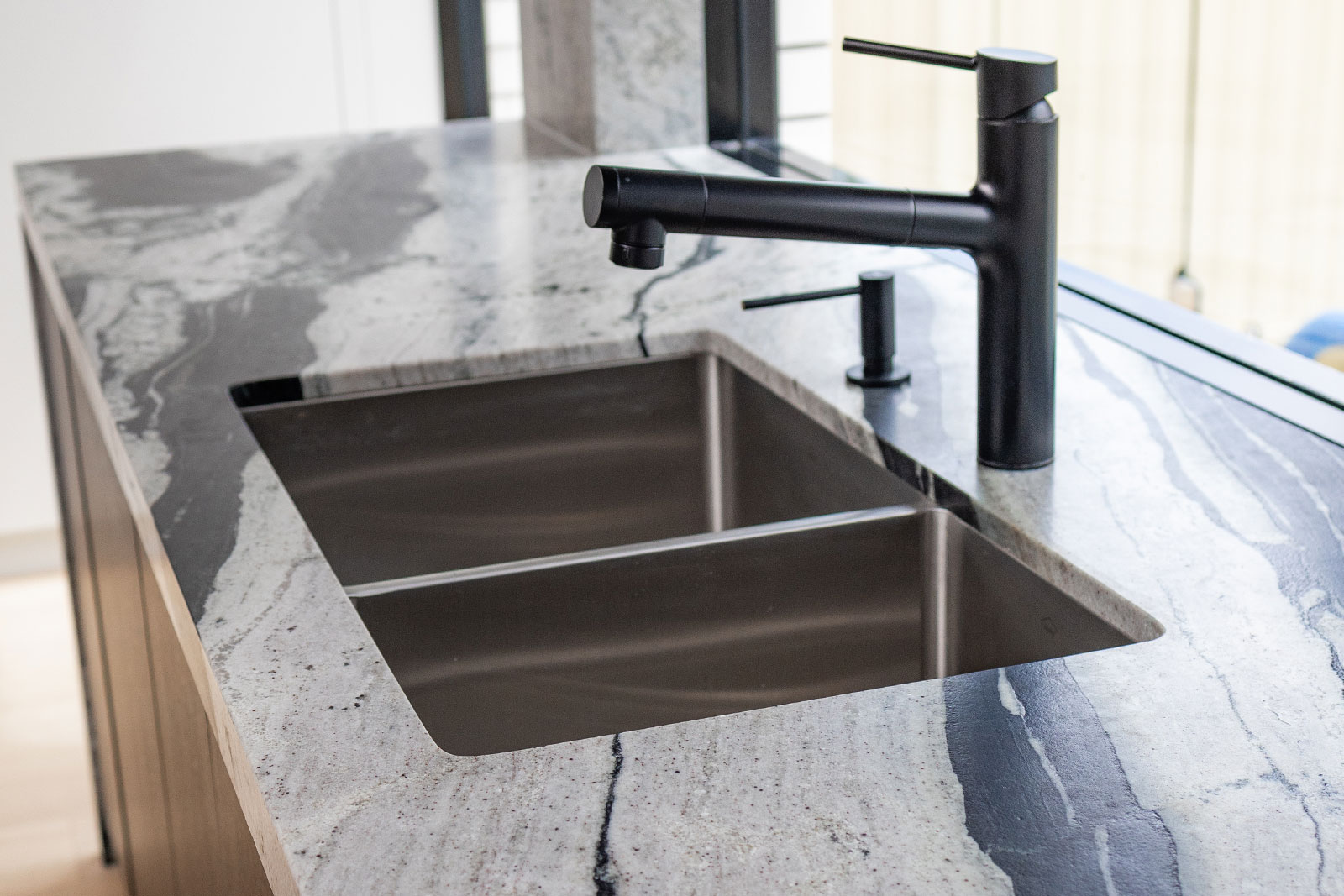
There's no wrong sink style for a stone benchtop, only the right one for how you'll use it. This guide explains the look, cost and maintenance of undermount, flush mount, drop-in and integrated stone sinks from a fabricator's point of view. Drop-in sinks work hard in busy kitchens, butler's pantries and utility laundries, while flush mount gives the sharpest look and needs the most planning. It also explains how Marble Hub reviews and supports every flush mount sink at the factory. Tags: undermount sink, flush mount sink, drop in sink, top mount sink, integrated stone sink, butler's pantry sink, laundry sink, sink cut-out, stone benchtop sink, kitchen sink styles, Sydney stone fabricator, Marble Hub
Undermount vs Flush Mount vs Drop-In Sink for Stone Benchtops | Marble Hub
Let’s Get Started on Your Dream Space
Whether it’s a kitchen, bathroom, or laundry, Kitchen Hub is here to bring your vision to life.
