
Add slabs to your wishlist so we can give you custom quote.
Add productions from our slab collection so we create a quote for your next project!
If you're unsure of what you're after please reach out via our contact page.
Which Taj Mahal Quartzite Slab Is Right For You
Which Taj Mahal Quartzite Slab Is Right For You
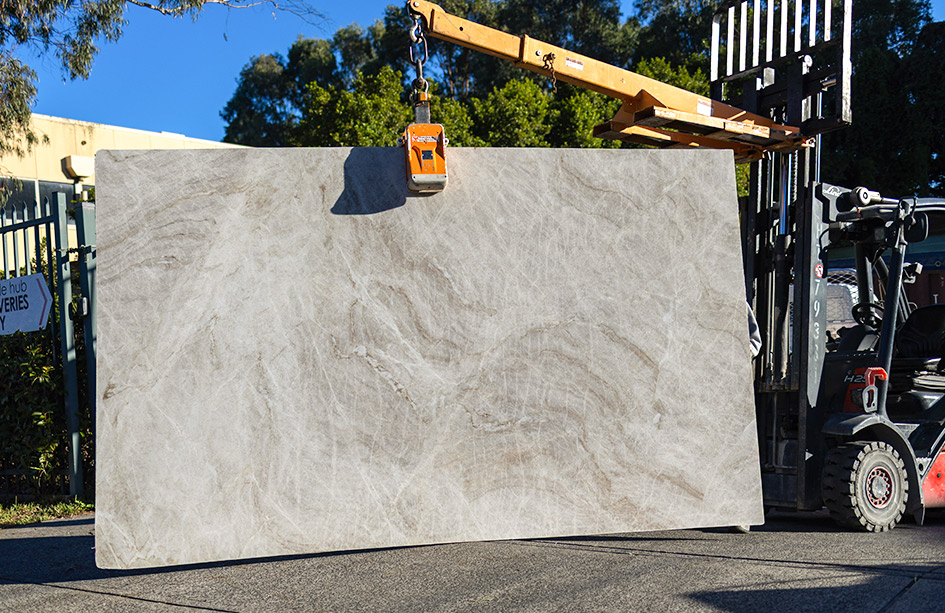
Taj Mahal Quartzite isn't one look. It comes from different quarry blocks, and each one carries its own undertone, vein direction, and movement. Choosing the right slab means matching one of these to how you want your kitchen to feel, not picking from a name.
Why the same name looks different every time
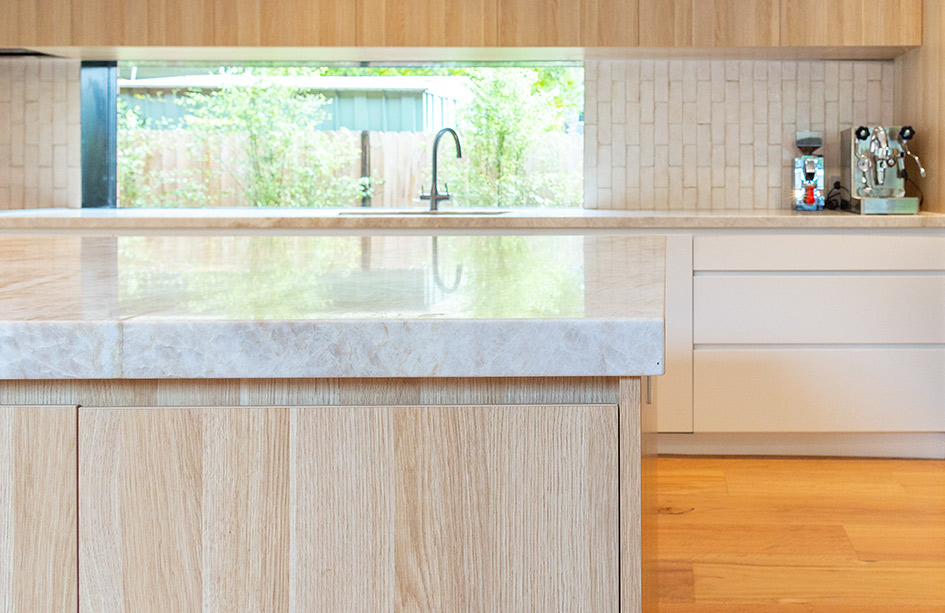
Quartzite comes out of the ground as individual blocks, not a repeatable formula. Two slabs both labelled Taj Mahal can carry completely different undertones and movement. That's not a fault in the naming. It's the trade you make choosing natural stone over anything engineered stone can promise.
If you've spent time comparing quartzite against marble already, you'll know natural stone's biggest strength is also its biggest decision point: no two pieces are identical. Taj Mahal is where that shows up most, because the range within one named stone is wider than most people expect walking in.
Most Taj Mahal blocks we see do lean warm, that honeyed, caramel base is what's made this stone a go-to for kitchens that want marble's elegance with quartzite's performance. But not every block follows that rule exactly, undertone and movement genuinely shift from one to the next. Knowing that upfront means you won't assume any two slabs will match just because the name is familiar.
Six slabs, six different stories
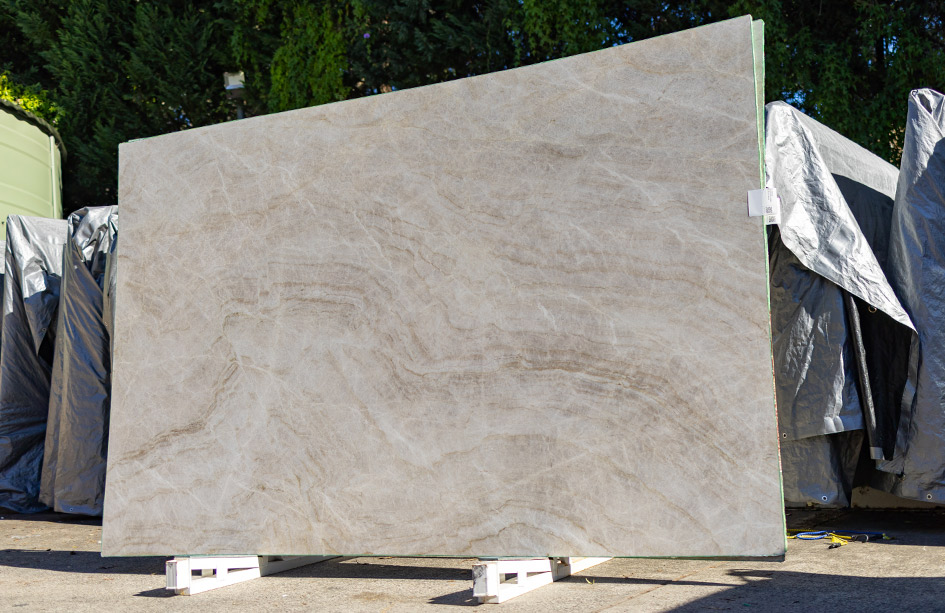
The Bold One. Warm caramel and tan running through the base, with strong diagonal veining that sweeps across the whole slab in one confident direction. This is Taj Mahal at its most graphic. If you want the stone to do the talking on a big kitchen island or a waterfall end, this is the one.
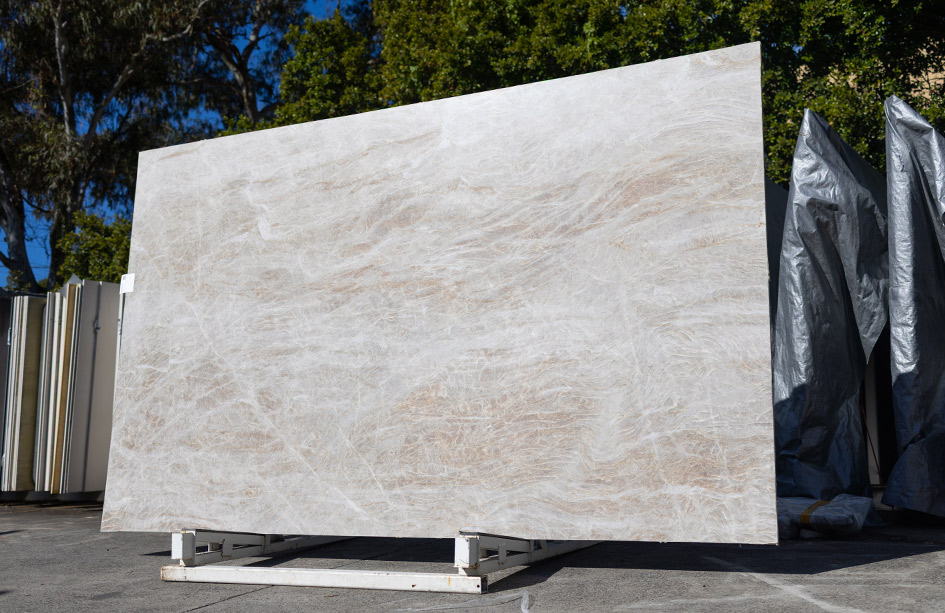
The Confident One. Another bold diagonal slab, but its own version of it, warm tones with strong sweeping movement that reads slightly differently to the Bold One. Proof that even within “bold and diagonal,” no two blocks repeat themselves.
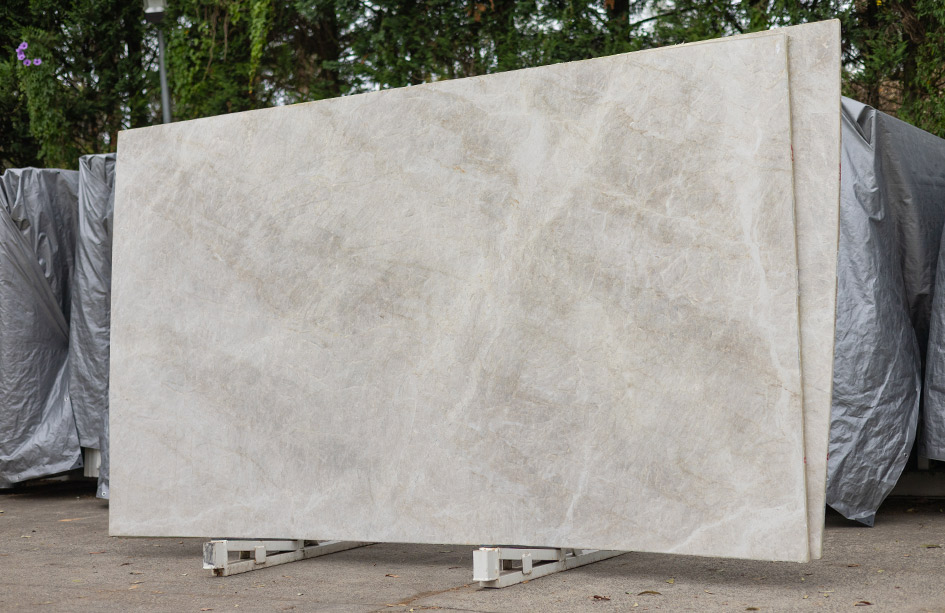
The Warm Diagonal. Golden tan undertone, similar warmth to the Bold One, but with parallel diagonal veining that feels a touch more measured. Moderate movement rather than full drama. A middle ground between statement and restraint.
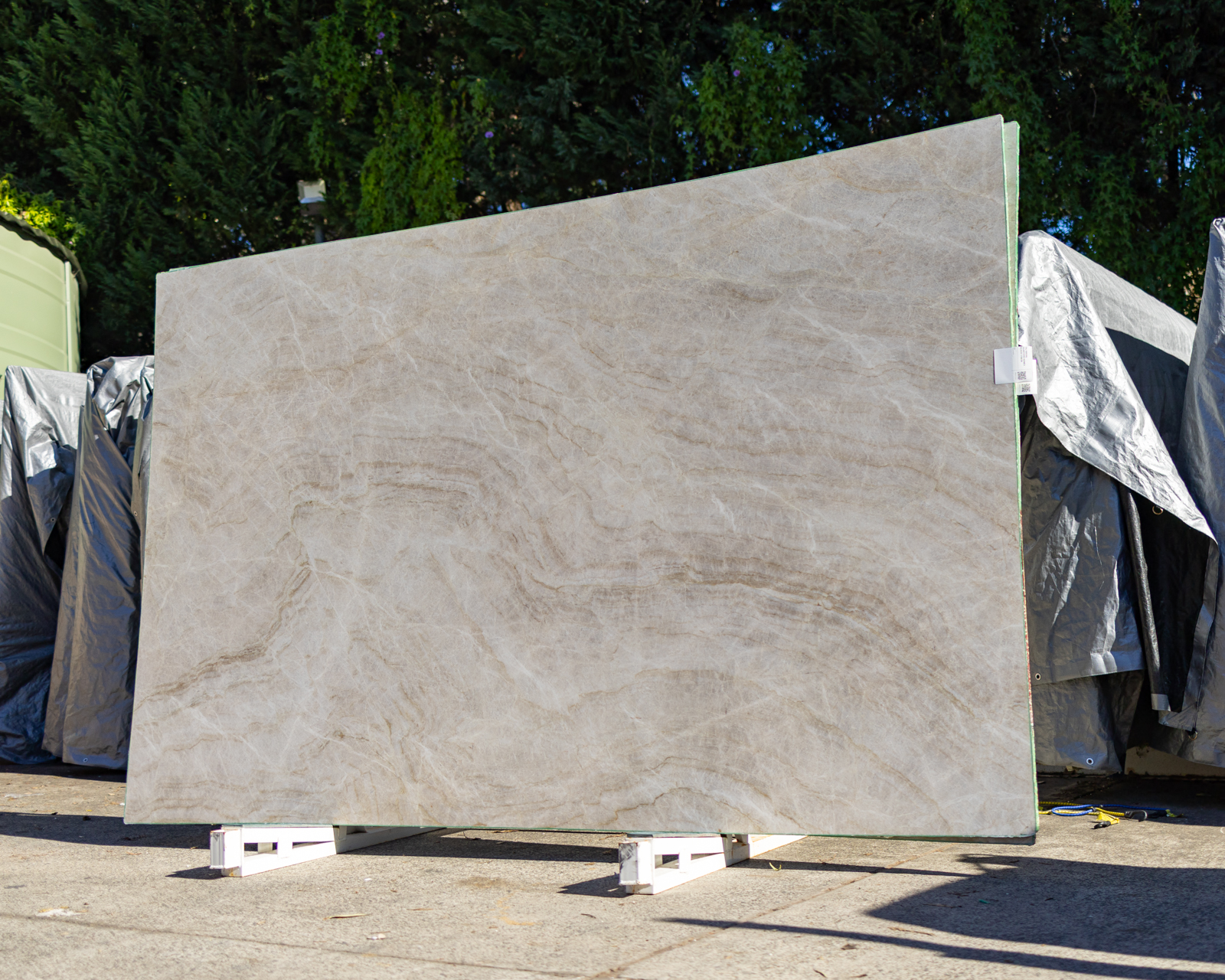
The Feathered One. Warm cream with golden-brown veining that softens into a horizontal drift rather than a sweep. Grounded and gentle. This is the version that reads as timeless rather than dramatic.
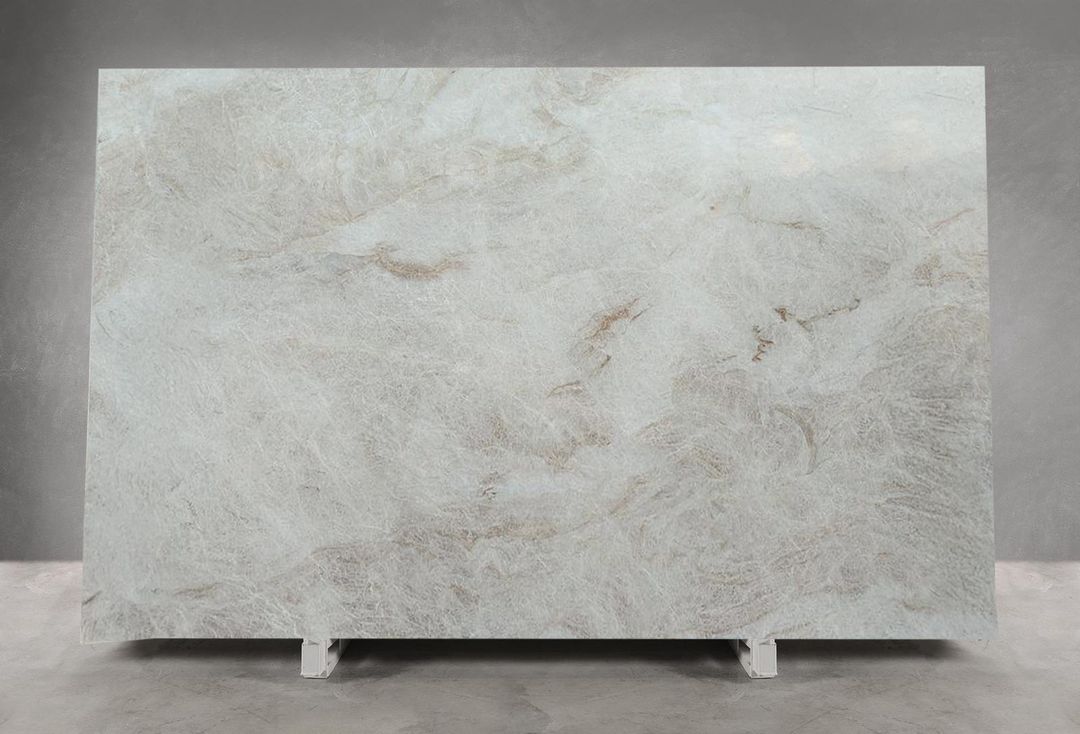
The Minimal One. Also warm cream with soft brown veining, but here it fans out rather than drifts, a quieter, more feathered spread across the surface. Close in spirit to the Feathered One, just with less structure to the movement. If you want warmth with almost no visual noise, this is it.
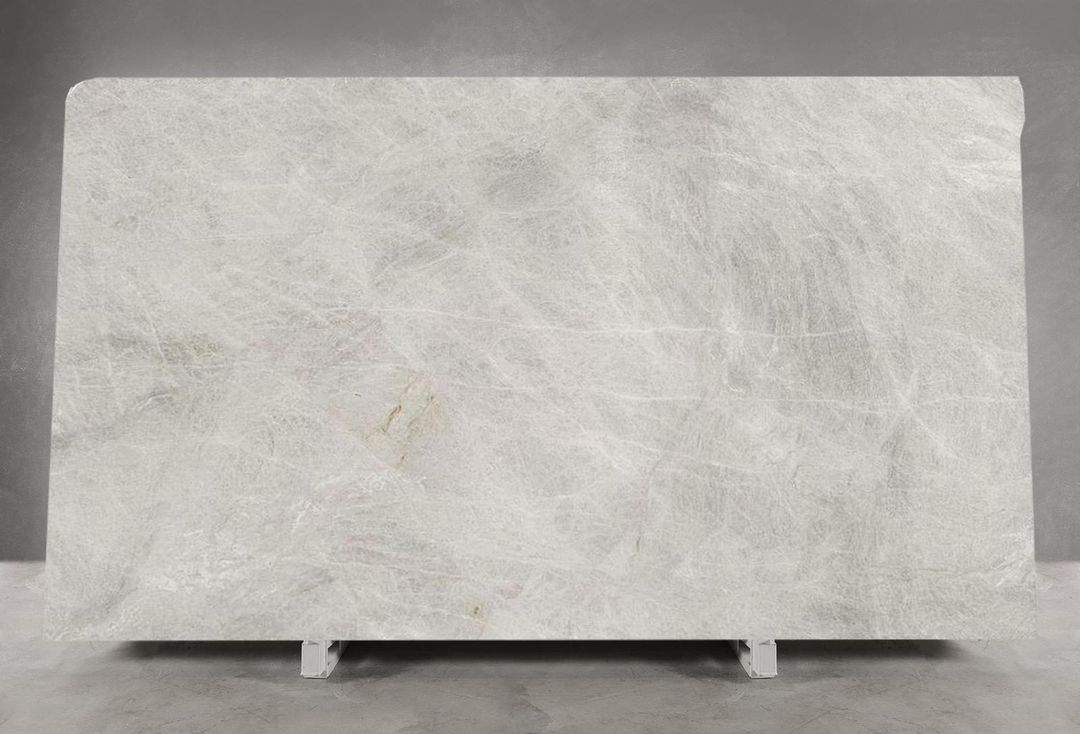
The Palest One. The lightest of the group, closer to soft white with just a whisper of pale gold. Faint diagonal drift, the quietest movement of the six. If you want Taj Mahal's warmth without any of it competing with your joinery, this is it.
The three things that actually differ
Undertone. This is the detail most people underestimate. Some slabs carry a genuine warmth, honeyed and caramel through the base. Others sit cool, closer to grey-silver, with none of that warmth at all. This is what decides how the stone sits against your joinery, and it only shows properly at full slab size, in your own light.
Vein direction. Some slabs carry strong diagonal movement, the veins sweep across in one confident direction. Others run closer to horizontal or linear, calmer and more settled. Neither is better. It depends on whether you want the stone to feel like it's moving or holding still.
Movement intensity. Some blocks are close to monochromatic, quiet and restrained. Others carry bold, graphic movement that becomes the feature in its own right.
If you're also weighing up honed versus polished finish, know that finish changes how all three of these read. A honed surface softens vein contrast and mutes undertone slightly, which is part of why we finish our Taj Mahal range honed as standard.
What that means for your choice
If you want the stone to be the feature, the Bold One or the Confident One deliver that. If you want something calmer and quieter, the Palest One, the Feathered One, or the Minimal One get you there without losing the depth that makes quartzite worth choosing over an engineered slab. The Warm Diagonal sits in between, present but measured.
How to actually choose
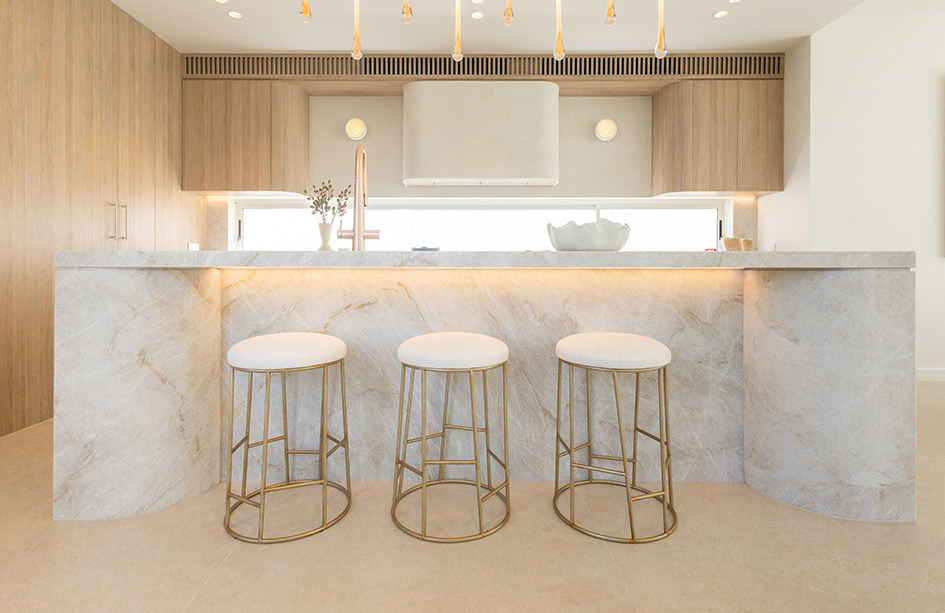
Don't decide from a screen. Undertone shifts depending on the light and what's sitting next to it. Book a design consultation or visit the showroom and stand the slab next to your timber, your tapware, your cabinetry sample, in daylight if you can. That's the only comparison that tells you anything real.
The honest bit
If you're standing between two or three of these and can't call it, that's a good sign. It means you've stopped asking “which is prettiest” and started asking “which matches how I want the room to feel.” Every one of these slabs carries the depth that makes Taj Mahal worth choosing in the first place. There's no wrong slab here, just the one that's most yours.
FAQ
Is every Taj Mahal Quartzite slab the same?
No. Taj Mahal is a stone family sourced from different quarry blocks, and each block carries its own undertone, vein direction, and movement. Some run warm and caramel-toned with bold diagonal veining. Others sit cooler and closer to monochromatic. Seeing the actual slab in person is the only way to know which you're getting.
Should I choose a warm or cool toned Taj Mahal slab?
That depends on your joinery and the light in your kitchen. Warmer, caramel-toned slabs ground a space and pair naturally with timber cabinetry. Cooler, grey-silver slabs read more architectural and work well against white or pale grey joinery. They can also be the better choice in a space carrying both strong warm tones and grey tones, where that cool undertone helps balance the two rather than picking a side, and can become a genuine feature within an otherwise monochromatic palette rather than disappearing into it. Bring your samples in and compare both against the actual slab before deciding.
Does vein direction matter for a large island or waterfall end?
Yes. A slab with strong diagonal veining will carry that movement dramatically across a big surface, which is striking on an island but demands confident design around it. A slab with quieter, more horizontal movement gives you a calmer result that's easier to live with long term.
Can I request a specific Taj Mahal slab for my project?
Yes. Because slabs vary block to block, we recommend selecting your exact slab in person or through a design consultation, rather than ordering by stone name alone. This is the only way to guarantee the undertone and veining you've chosen is the slab that ends up in your kitchen. The best first step is coming in to see each block and get a feel for which one you're drawn to. From there we can work through your quote, and once a deposit is placed, that specific slab is locked in and selected for your project.
Where to Start When You Don't Know the Stone in Your Inspo Photos
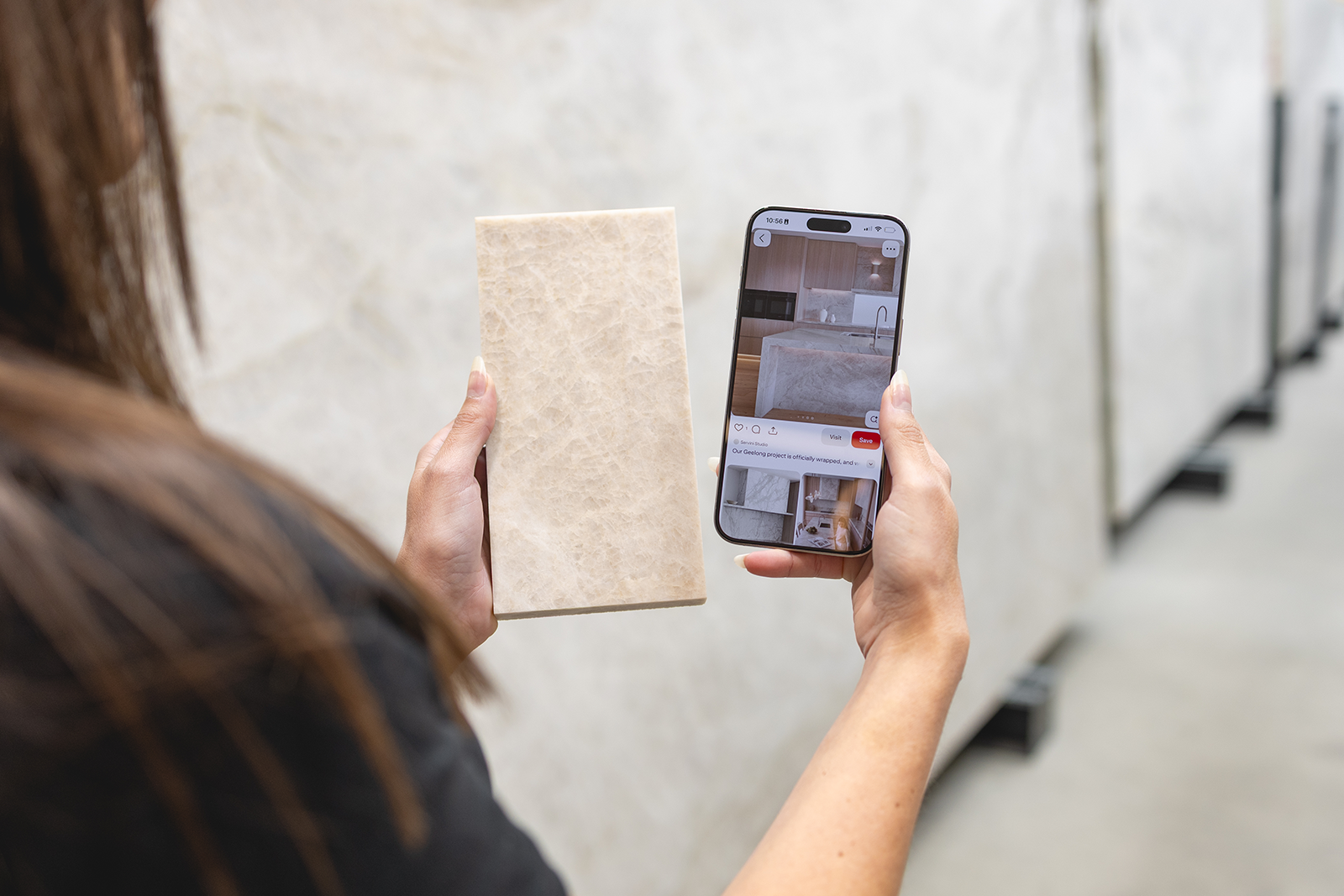
For homeowners who don't know where to begin with stone. You don't need a stone name to start. Send your inspiration photos, tell us what you like and why you're drawn to it, and we'll identify the material and point you to the right slabs. Covers how your eye already picks matching tones, reading stone from a photo, which photos to trust online, and why picking stone is like picking art. Tags: how to choose stone, where to start, inspo photos, identify marble from photo, stone selection, Marble Hub Sydney.
Where to Start When You Don't Know the Stone in Your Inspo Photos
Backlit Stone and Why the LED You Choose Changes Everything
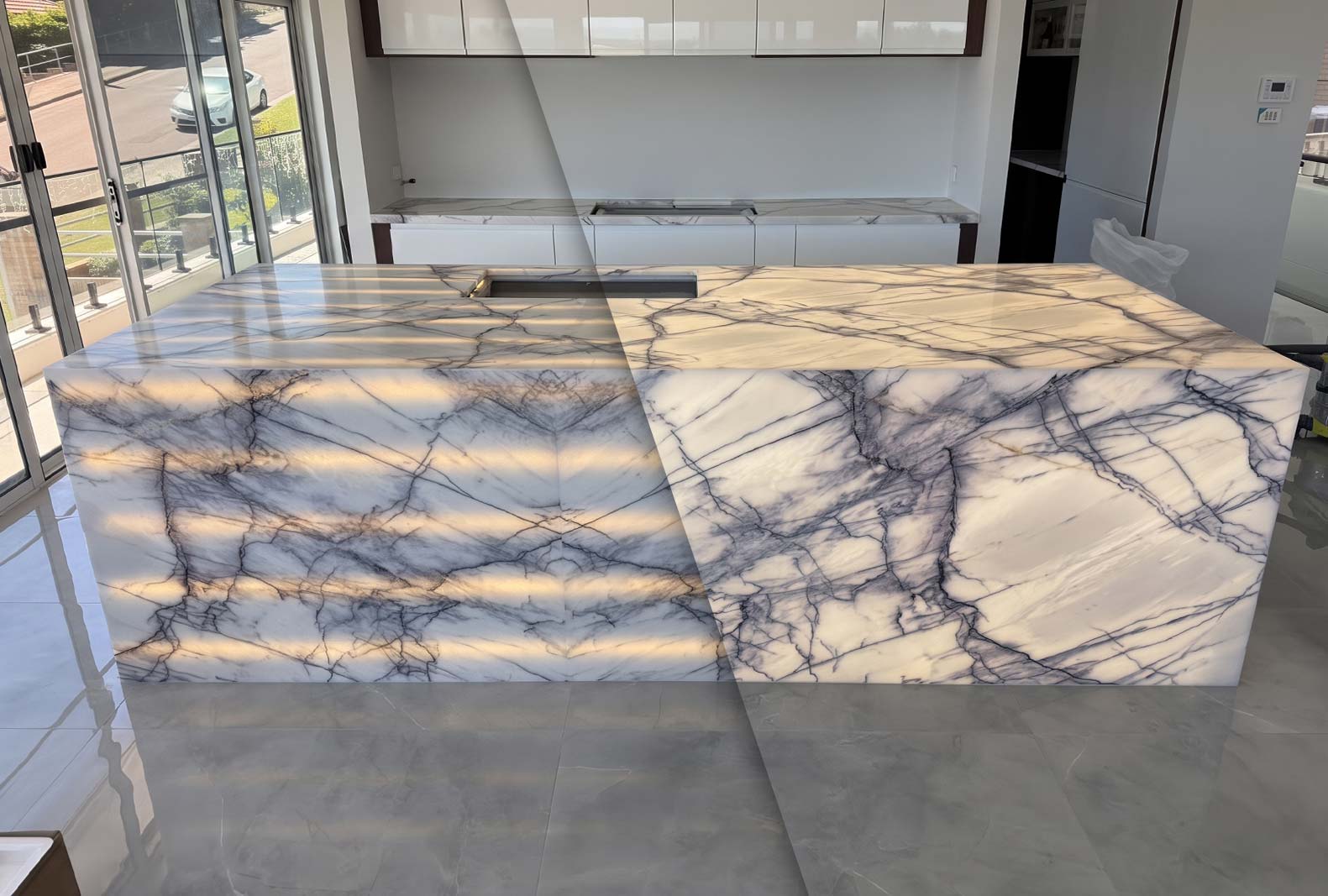
Backlit stone explained simply. The look changes a lot with the light behind the slab. LED strips give a striped, patterned glow; a full LED panel lights the whole slab evenly so it looks lit from within. Both are valid, so do what suits your budget, but plan it early with your electrician. Covers which stones are translucent and why the light install feeds into the check-measure. Tags: backlit stone, backlit marble, translucent stone, LED stone panel, backlit onyx, feature lighting, Marble Hub Sydney.
Backlit Stone and Why the LED You Choose Changes Everything
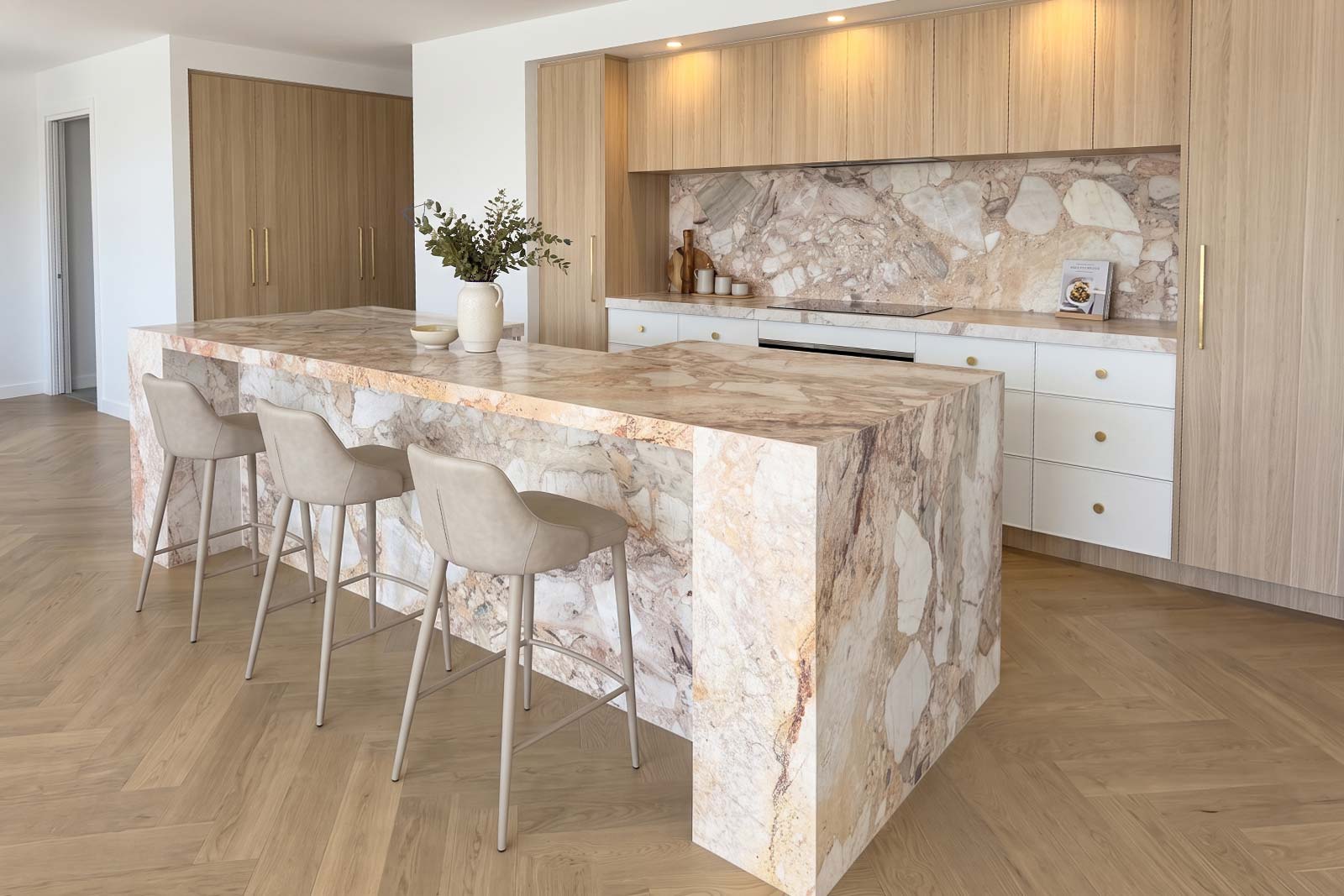
How We Plan Stone Across a Duplex Without Wasting a Slab
Planning stone across a duplex or dual-occupancy build. We work out real slab count, map every piece across the slabs, balance feature stone across both homes, and plan the stages so the check-measure and install land when each side is ready. Covers slab yield, offcut planning, mapping the cut to the stages, and getting every trade working to the same target dates. Tags: duplex stone benchtops, dual occupancy, slab count, stone yield, staged install, trade coordination, Marble Hub Strathfield South.
How We Plan Stone Across a Duplex Without Wasting a Slab
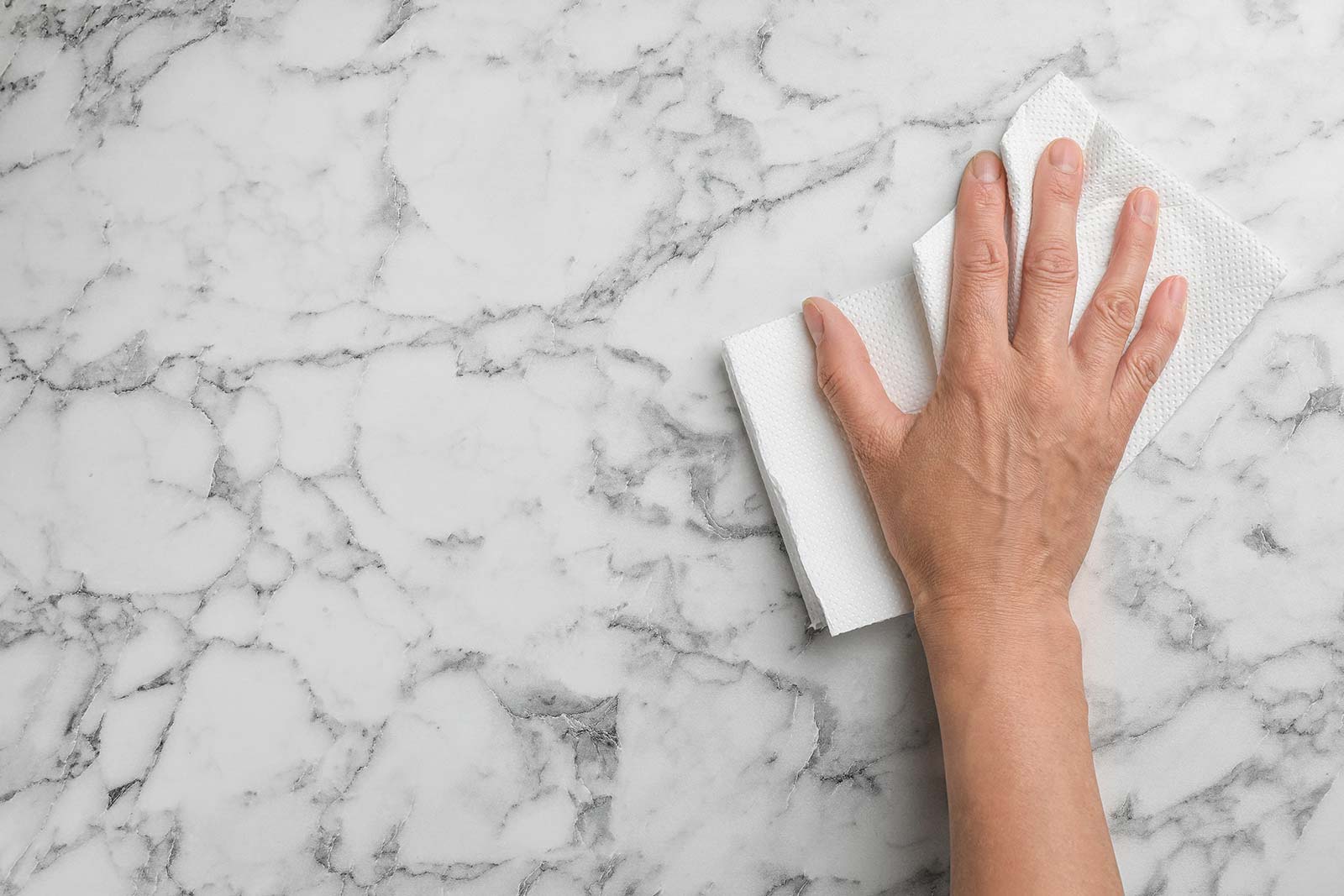
How to Clean and Care for a Marble Benchtop
How to clean and care for a marble benchtop, written for people who already own marble or are about to. Covers the daily routine, warm water and pH-neutral cleaner, wiping acidic spills fast, sealing with Lithofin MN Stain-Stop every 6 to 12 months, and the difference between a stain and an etch. Explains why heavy veining hides marks better than plain marble, and why a rehone and rebuff after 3 to 4 years brings a tired benchtop back. Honest about trade-offs. Marble is a relationship, not a set-and-forget surface. Written by Marble Hub, a Strathfield South stone factory and showroom.
How to Clean and Care for a Marble Benchtop
Let’s Get Started on Your Dream Space
Whether it’s a kitchen, bathroom, or laundry, Kitchen Hub is here to bring your vision to life.
