
Add slabs to your wishlist so we can give you custom quote.
Add productions from our slab collection so we create a quote for your next project!
If you're unsure of what you're after please reach out via our contact page.
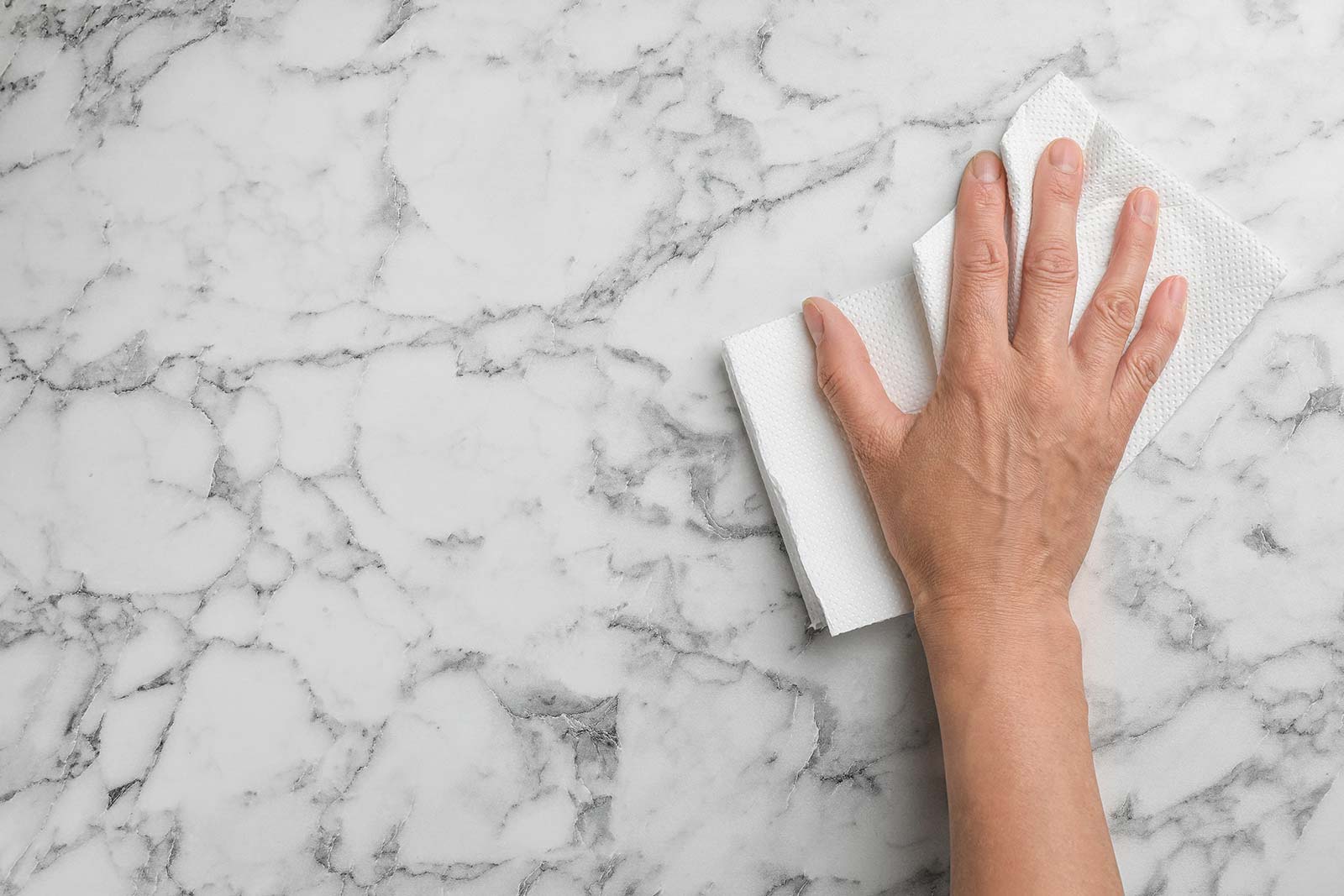
How to Clean and Care for a Marble Benchtop
How to Clean and Care for a Marble Benchtop
The Short Answer
Clean marble with warm water and a soft cloth, and a drop of pH-neutral cleaner when you want more than water. Wipe acidic spills the moment they happen: lemon, wine, vinegar, tomato, anything citrus. Seal it every 6 to 12 months depending on how hard you use the kitchen. That's the whole routine. Everything else is understanding what marble is doing and why.
The part nobody tells you: staining and etching are two different problems. A stain is something soaking in, and sealing helps with that. An etch is acid eating into the surface, a dull mark where the polish used to be, and sealing does nothing to stop it. Once you understand which one you're looking at, marble stops being mysterious.
Clean It Like This Every Day
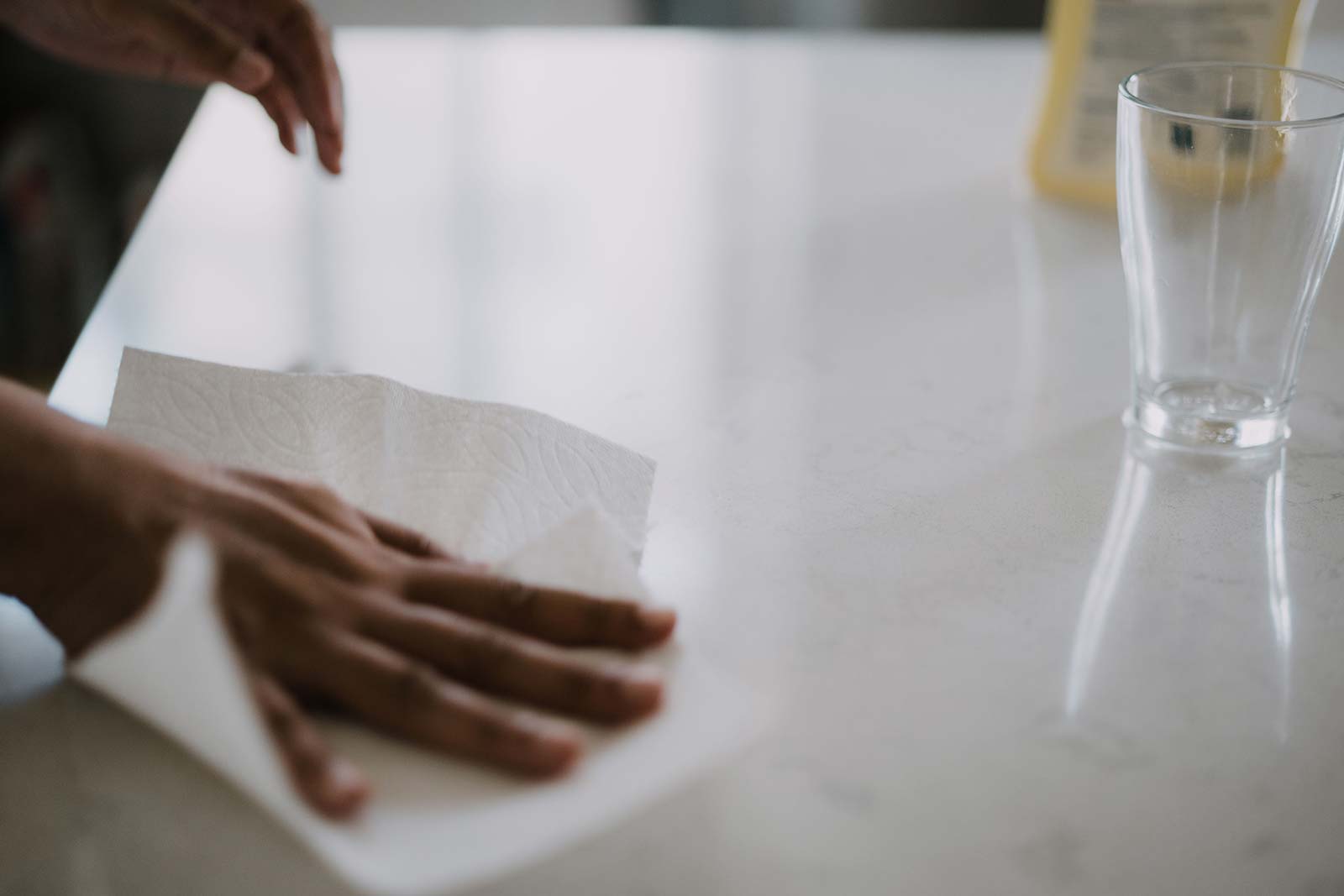
Warm water and a soft microfibre cloth handle most days. For anything greasy or sticky, add a pH-neutral cleaner made for stone. Wipe, then dry with a clean cloth so you don't leave water sitting.
That's the routine. It's genuinely that simple, and the simplicity is the point. Marble doesn't want to be scrubbed or treated with anything harsh. It wants to be wiped often and gently.
The habit that matters most is speed on spills. Acidic liquids left sitting are what cause etching, so the faster you wipe, the less the stone has to deal with. Keep a cloth within reach and this becomes automatic within a week.
What to Keep Away From Your Marble
Anything acidic or abrasive is the enemy of a polished surface. That means no vinegar-based sprays, no citrus cleaners, no bleach, no bicarb scrubbing, and none of the general kitchen sprays most people keep under the sink. They're formulated for laminate and tile, and on marble they either etch the surface or strip the sealer.
The list of things that mark marble is shorter than people fear, but worth knowing: lemon and lime, wine, coffee, vinegar, tomato, and some cleaning products. In the bathroom, add anything with acid in it and certain cosmetics. None of these will ruin a benchtop from a single contact wiped up quickly. Left overnight is a different story.
Skip scouring pads and abrasive powders entirely. A soft cloth does everything you need, and it won't dull the finish over time the way an abrasive will.
Sealing: How Often and Why It Matters
Seal your marble every 6 to 12 months. Where you land in that range depends on your stone and how hard you cook. A busy family kitchen that gets used three meals a day sits at the 6-month end. A quieter kitchen, or a bathroom vanity, can stretch closer to 12.
Sealing does one job. It slows down absorption, so when something spills you have more time to wipe it before it soaks in. It buys you minutes, and minutes are usually all you need. What sealing does not do is make marble bulletproof. It won't stop etching, because etching is a chemical reaction with the surface, not a stain soaking in.
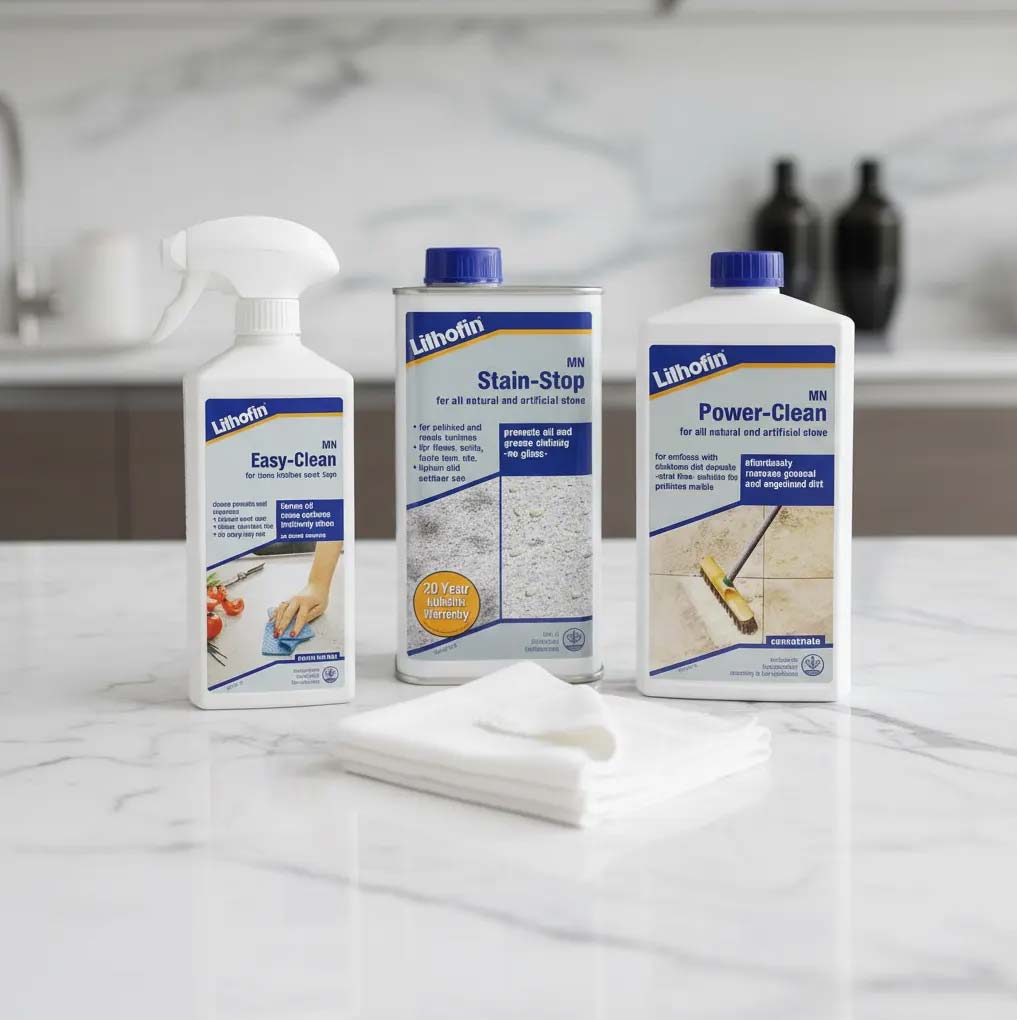
We recommend Lithofin MN Stain-Stop. It's a quality penetrating sealer that does the job without changing the look of the stone. Applying it is straightforward: clean the surface, let it dry, apply the sealer evenly, let it sit for the time on the tin, then buff off the excess. Fifteen minutes of work, twice a year.
There's a simple test to know if it's time. Drip a little water on the benchtop and wait a few minutes. If it beads, your seal is working. If it soaks in and leaves a dark patch that fades as it dries, it's time to reseal.
The water test
Drop water on the surface and wait. Beads up, you're sealed. Soaks in and darkens, reseal. Takes two minutes and tells you exactly where you stand.
Stains vs Etches: Know What You're Looking At
This is the distinction that makes everything else make sense. A stain and an etch look different, come from different causes, and need different fixes.
A stain is a discolouration. Something coloured soaked into the stone and left a mark. Oil, coffee, wine, a bit of turmeric. Because it's absorption, sealing helps prevent it, and most stains can be drawn back out.
An etch is different. It's a dull spot where acid has eaten microscopically into the polish. The colour is usually fine. What's changed is the shine. You'll see it as a matte patch on a polished surface, most obvious when light hits it at an angle. Sealing won't prevent an etch, because it's happening on top of the stone, not inside it.
Here's the practical upshot. If you choose a honed marble instead of a polished one, etching becomes far less of an issue. A honed finish is already matte, so an acid mark has almost no shine to remove. That's one reason we often steer kitchen clients toward honed. It changes how the stone lives, not just how it looks.
How to Deal With a Stain
Most stains lift with patience and a poultice. A poultice is a paste that sits on the stain, draws it up out of the stone as it dries, and takes the discolouration with it. You can buy stone poultice ready-made, and for an oil-based mark a paste of bicarb and water works too, kept off the surrounding polished surface.
Spread the paste over the stain, cover it, and leave it to dry fully, which can take a day. As it dries it pulls the stain up. Wipe it away and check. A stubborn stain might need a second round. This is slow, but it works, and it beats scrubbing, which only spreads the problem.
If a stain won't shift after a couple of attempts, that's the point to call a stone specialist rather than reaching for something harsh. Most everyday marks are fixable, and a specialist has options a household doesn't.
How to Deal With an Etch
A light etch on polished marble can sometimes be buffed back with a marble polishing compound, which restores shine to that spot. This works for small, shallow etches. It's fiddly, and getting an invisible result across a large mark is harder than it looks, especially on a busy veined pattern.
For anything beyond a minor mark, a stone specialist is the answer. They can rehone or repolish the affected area and blend it back in. On a solid colour that blending is straightforward. On a heavily veined marble it takes more skill, because the repair has to disappear into the pattern.
Worth saying plainly: a repair is a patch, not a full resurface. A good specialist makes a patch you can't find. But if your whole benchtop has aged and you want it uniform again, that's a rehone of the entire surface, which is a bigger job and a genuine option after a few years.
The Patina Question
At some point you'll have to decide how you feel about marble ageing. Because it will. Even with good care, a marble benchtop in a real kitchen develops a soft, lived-in quality over years. A slight matting here, a faint mark there. This is patina, and it's the single biggest fork in how people feel about their stone.
Some people love it. They see the marks as history, the record of a kitchen that gets used, the same way a timber table earns character. To them, a flawless benchtop would feel sterile. Marble that has softened into itself is exactly the point.
Others want it pristine, and that's just as valid. If a perfect surface is what makes you happy, marble asks more of you, and you'll want to be honest about that before you commit. Neither view is wrong. It comes down to what you value, and it's worth knowing which camp you're in before the first mark appears rather than after.
Bringing a Tired Benchtop Back
After 3 to 4 years of real use, marble that's looking tired isn't finished. A stone specialist can rehone and rebuff the whole surface, taking off the accumulated etching and marks and bringing back an even finish across the benchtop. It's like resetting the clock.
Or you leave it, and lean into the patina. Both are legitimate. The point is that a worn marble benchtop is never a dead end. You always have the choice to refresh it or to enjoy where it's got to. That optionality is part of what you're buying with natural stone, and it's something engineered surfaces don't offer in the same way.
A Quick Word on Heat
Use a trivet. Marble handles warmth better than most people expect, but a very hot pan straight from the stove or a tray out of the oven can thermally shock the stone. It's not worth the risk when a trivet costs nothing and lives on the bench.
If you'd like, ask us to cut a matching trivet from your offcut when we fabricate your benchtop. Same stone, made to sit under hot pots, so the thing protecting your marble is a piece of the marble itself.
The Honest Summary
Marble care comes down to three habits. Wipe often with warm water and something pH-neutral. Move fast on acidic spills. Seal every 6 to 12 months. Do those three things and marble is far less demanding than its reputation suggests.
The mindset matters more than any product. Marble is a relationship, not a set-and-forget surface. If that appeals to you, you'll love it, and our guide to living with natural stone walks through what year one actually feels like. If it doesn't, a honed marble makes life easier, and there are engineered and porcelain options that ask almost nothing of you. We're happy to talk any of it through.
If you want to see how different finishes behave in person, come into the showroom and put your hand on a few slabs. It's the fastest way to know what you're signing up for. You can also read our full stone care guide for care notes across marble, quartzite and porcelain.
The three habits that keep marble looking right
Wipe often, warm water and pH-neutral cleaner.
Move fast on lemon, wine, vinegar and citrus.
Seal every 6 to 12 months, more if the kitchen works hard.
Frequently Asked Questions
How do you clean a marble benchtop day to day?
Warm water and a soft microfibre cloth, with a pH-neutral stone cleaner when you need more than water. Wipe, then dry so you're not leaving water to sit. That's the whole daily routine. The only rule that really matters is speed on acidic spills. Lemon, wine, vinegar and tomato left sitting are what cause etching, so a quick wipe is worth more than any product. Keep a cloth within reach and it becomes automatic.
What should you never use on marble?
Anything acidic or abrasive. That rules out vinegar sprays, citrus cleaners, bleach, bicarb scrubbing, and most general kitchen sprays, which are made for laminate and tile, not stone. They either etch the polish or strip the sealer. Skip scouring pads too. A soft cloth and a pH-neutral cleaner do everything marble needs, and they won't dull the finish over time.
How often should you seal a marble benchtop?
Every 6 to 12 months. A busy family kitchen sits at the 6-month end, a quieter kitchen or a bathroom vanity can stretch closer to 12. There's an easy test: drip water on the surface and wait a few minutes. If it beads, your seal is holding. If it soaks in and darkens, reseal. We recommend Lithofin MN Stain-Stop. Sealing slows absorption so you have more time to wipe spills. It won't stop etching, which is a separate issue.
What's the difference between a stain and an etch on marble?
A stain is a discolouration from something soaking in, like oil, coffee or wine. Because it's absorption, sealing helps prevent it and a poultice can usually draw it back out. An etch is a dull, matte spot where acid has eaten into the polish. The colour is fine, the shine is gone. Sealing won't prevent an etch. Choosing a honed finish instead of polished makes etching far less noticeable, because a honed surface is already matte.
Can you remove a stain from marble yourself?
Usually, yes, with a poultice. It's a paste that sits on the stain, dries, and draws the discolouration up out of the stone. You can buy stone poultice ready-made, and for oil marks a bicarb-and-water paste works too. Spread it on, cover it, and let it dry fully, which can take a day. Wipe away and check. A stubborn stain might need a second round. If it won't shift after a couple of goes, call a stone specialist rather than reaching for something harsh.
Can a scratched or etched marble benchtop be repaired?
Yes. A light etch on polished marble can often be buffed back with a marble polishing compound. For anything more, a stone specialist can rehone or repolish the area and blend it into the surrounding stone. On a solid colour that's straightforward. On heavily veined marble it takes more skill to make the repair disappear into the pattern. A repair is a patch, not a full resurface, but a good one is invisible. Most everyday damage is fixable.
Does marble need to be resealed forever, or can it be restored?
Both. You reseal every 6 to 12 months for ongoing protection. Separately, after 3 to 4 years of real use, a stone specialist can rehone and rebuff the entire surface to remove accumulated etching and marks and bring back an even finish. Or you can leave it and enjoy the natural patina. A worn marble benchtop is never a dead end. You always have the choice to refresh it or to lean into how it's aged.
Is a honed or polished marble benchtop easier to look after?
Honed, generally. A honed finish is already matte, so acid etching has almost no shine to remove and marks are far harder to see. A polished finish looks more reflective and dramatic, but every etch shows as a dull spot against the gloss. If you want marble in a hard-working kitchen and low fuss matters to you, honed is usually the better call. Polished suits people who love the shine and don't mind the upkeep.

Outdoor Stone Benchtops That Survive a Sydney Summer
An outdoor benchtop in Sydney has to handle sun, heat, salt air, dust, rain and BBQ fat on the same surface. Porcelain and sintered stone are our first pick, granite is the best natural stone outdoors, and quartzite works with regular sealing. Light-coloured marble is best avoided outside, and engineered stone belongs indoors only, as UV affects it and outdoor use voids the manufacturer's warranty. This guide also covers joins, BBQ heat and why butt joins or shadowlines often outlast mitres outdoors.
Outdoor Stone Benchtops That Survive a Sydney Summer

Engineered Stone vs Natural Stone Benchtops: Honest Comparison | Marble Hub
Natural stone is one of a kind, handles heat well and can be restored for decades, but it needs sealing. Crystalline-silica-free engineered stone is consistent and needs no sealing, but it can scorch and can't be rehoned the same way. We cut both every week and compare them honestly on looks, care, heat, repair and price. We recommend natural stone first, and engineered stone where consistency or easy care matters most.
Engineered Stone vs Natural Stone Benchtops: Honest Comparison | Marble Hub

Pink Cristallo Quartzite for a Northmead Kitchen
A Federation home in Northmead with a new-wing kitchen by designer Vagn Madsen, built by Dan Kitchens Australia, with a Pink Cristallo Quartzite island benchtop and splashback from our Strathfield South showroom. This piece looks at why a pink stone works: subtle white shaker joinery that steps in and out around the rangehood, a soft stone that adds warmth without competing, a curved island with a softened, stepped double bullnose edge, and stone used in just two places. It also covers choosing slabs in person, living with pink quartzite in a family kitchen, and Pink versus White Cristallo.
Pink Cristallo Quartzite for a Northmead Kitchen
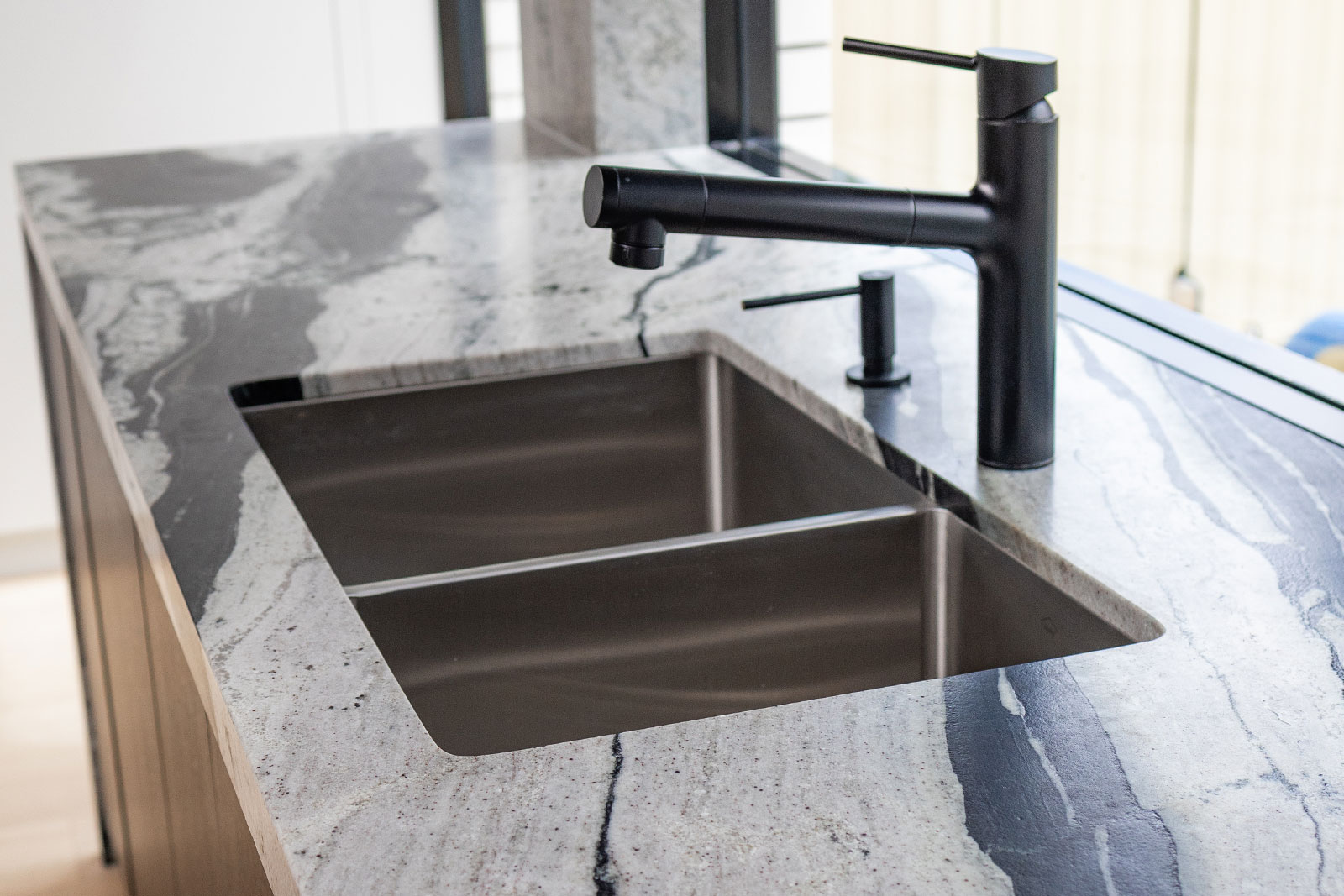
Undermount vs Flush Mount vs Drop-In Sink for Stone Benchtops | Marble Hub
There's no wrong sink style for a stone benchtop, only the right one for how you'll use it. This guide explains the look, cost and maintenance of undermount, flush mount, drop-in and integrated stone sinks from a fabricator's point of view. Drop-in sinks work hard in busy kitchens, butler's pantries and utility laundries, while flush mount gives the sharpest look and needs the most planning. It also explains how Marble Hub reviews and supports every flush mount sink at the factory. Tags: undermount sink, flush mount sink, drop in sink, top mount sink, integrated stone sink, butler's pantry sink, laundry sink, sink cut-out, stone benchtop sink, kitchen sink styles, Sydney stone fabricator, Marble Hub
Undermount vs Flush Mount vs Drop-In Sink for Stone Benchtops | Marble Hub
Let’s Get Started on Your Dream Space
Whether it’s a kitchen, bathroom, or laundry, Kitchen Hub is here to bring your vision to life.
