
Add slabs to your wishlist so we can give you custom quote.
Add productions from our slab collection so we create a quote for your next project!
If you're unsure of what you're after please reach out via our contact page.
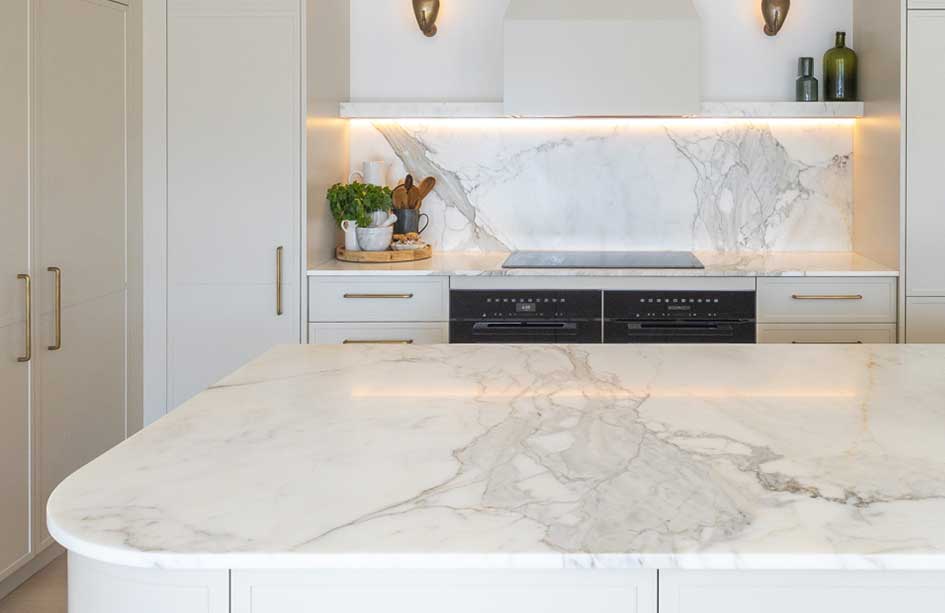
Living With Natural Stone: What Year One Is Really Like | Marble Hub
Living With Natural Stone: What Year One Is Really Like
TL;DR. Natural stone has a worse reputation than it deserves. If it were as fragile as people say, it would not be sitting in hotels, restaurants, offices, and homes at every price point around the world, and it would not sell as dining tables, coffee tables, and side tables the way it does. Most of the fear comes from people who inherited stone they were never taught to look after. Year one is where you learn your stone, form two small habits, and settle how you feel about patina. That is the whole thing.
People worry about stone care more than almost any part of the decision, and then find, a few months in, that it was never the burden they feared.
The truth is most of it comes down to two habits, one honest understanding, and one decision about how you want your stone to age.
Where the bad reputation comes from
Almost everyone with something bad to say about natural stone is describing the same situation. They bought a home that already had stone in it. They have no idea what the previous owner used on it, whether it was ever sealed, or how long it had been neglected. Then on moving-in day they spill something, it marks, and the conclusion writes itself. The stone is the problem.
The stone is rarely the problem. A neglected benchtop that has not seen sealer in years behaves nothing like one that has been looked after. Judging natural stone by an inherited, uncared-for surface is like judging timber floors by a rental that has not been re-coated since the nineties.
The other half of the reputation comes from the kitchen itself, and who else uses it. A cleaner who was never told which product to use. A mother-in-law who insists on helping and reaches for the bathroom spray. One bottle of the wrong thing, used with the best intentions, and a surface that would have been fine for decades picks up a mark. That is not the stone failing. That is a household that was never briefed.
Step back and the evidence is everywhere. Marble and natural stone run through the lobbies of the world's best hotels, the counters of restaurants that serve hundreds of covers a night, and the desks of law firms and boardrooms. It holds up in homes at the very top of the market and in modest ones. It sells as dining tables, coffee tables, and side tables that people use every day. An industry of stone fabricators has existed for centuries and still does. If the material were as delicate as the horror stories suggest, none of that would be true.
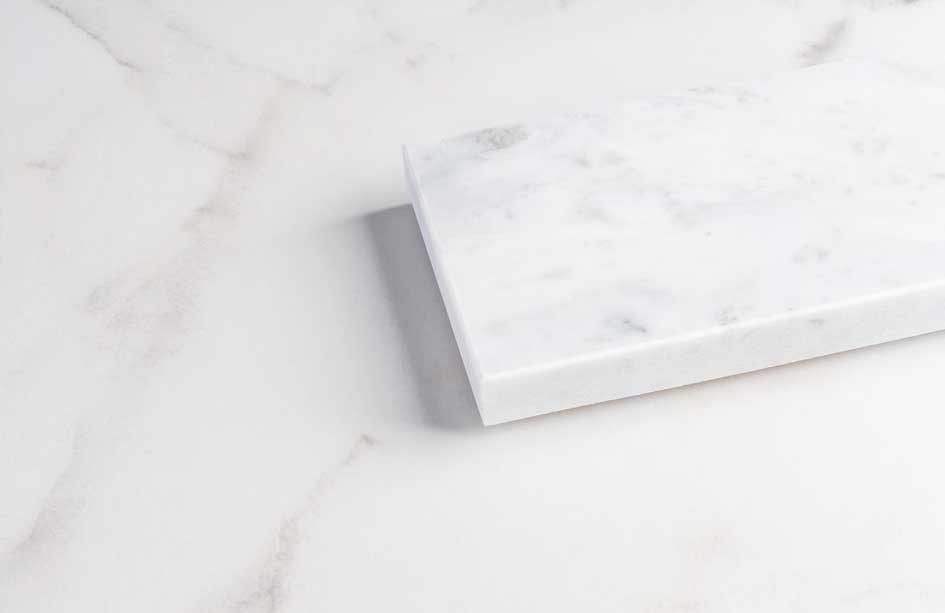
Natural stone changes your habits, and that is the point
Here is the part nobody explains before you buy. Owning natural stone shifts your mindset, and the shift is quiet and automatic.
It is the same thing that happens when you put on a good pair of shoes, or drive a car you are proud of, or wear white pants to lunch. You do not consciously decide to be careful. You just are. You wipe the bench because you like the bench. You reach for the right cleaner because the surface is worth it to you. The care does not feel like a chore because it comes from the same place the purchase did.
This is why the people who chose their stone rarely complain about maintaining it, and the people who inherited it often do. When you love the thing, the habits arrive on their own. When it was already there and you never wanted it, every wipe feels like an imposition. Same stone. Different relationship.
The first month
The first few weeks are the adjustment. You are learning what your stone wants, how quickly to wipe a spill, which cleaner lives under the sink now. It feels like a lot because it is new, not because it is hard. By month two it is muscle memory.
The people who struggle are usually the ones who expected zero maintenance from a natural material. Stone is natural. It has moods. Meet it halfway in the first month and it stops asking for attention.
The two things that actually matter
Strip away the noise and stone care is two habits. Use a neutral pH cleaner, which most kitchen dish soaps already are, and avoid harsh or abrasive products that dull the surface over time. Wipe spills reasonably promptly, especially anything acidic. That is the core of it.
The rest is occasional. Re-sealing comes up every so often rather than every week, and it is a small job, not a weekend. Here is when to actually bother.
Re-sealing, and when to actually do it
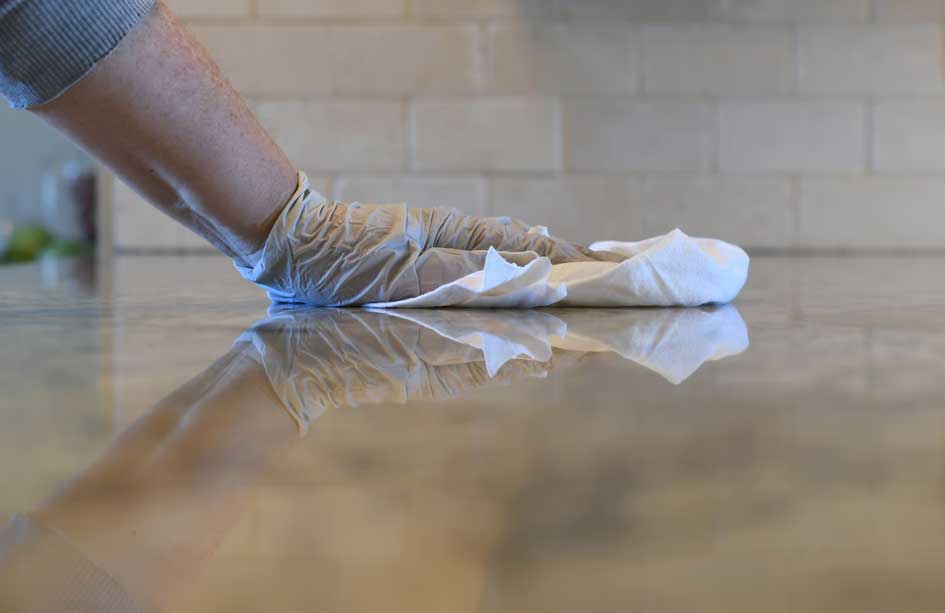
Give it the first six months before you think about re-sealing. Live with the bench, watch how it behaves, notice whether water still beads on top or starts to sink in a little slower than it did on day one. That tells you where you stand. If it still looks and behaves the way it did at the start, you can wait. If it feels like it wants a top-up, that is your answer.
When you do it, use a trusted high-end sealer and read the instructions before you start. They vary slightly by product and the instructions are there for a reason. Most are a clear liquid you wipe on, leave for the stated time, and buff off. It adds a fresh layer of protection and buys back the time a spill needs before it can soak in.
If the idea of doing it yourself makes you nervous, hand it to a specialist. It is a small job for someone who does it often, and there is no prize for doing it the hard way. Either route gets you the same result. A protected surface, ready for the next stretch.
Stain versus etch, and why the difference matters
This is the one worth understanding, because people use the words interchangeably and they are not the same. A stain is discolouration from something soaking in. An etch is a dull mark where acid reacts with the surface. Sealed stone rarely stains if you wipe spills promptly, because the sealer buys you time. Etching is the trickier one, because no sealer stops acid from reacting with the stone.
Here is the honest part. A stain is usually preventable. An etch, on marble especially, is part of the deal. If that bothers you, it is a sign to lean toward a harder stone. If a soft, lived-in surface appeals to you, marble will give you exactly that. If the kitchen is what worries you, a bathroom is far kinder to marble, and marble on a vanity is one of the easiest places to live with it.
Like timber floors, you can always bring it back to life
The best thing about a timber floor is not that it never gets scratched. It is that you can sand it back. Years of life come off in an afternoon and the boards look new again. Natural stone works the same way, and this is the fact that changes how the whole decision feels.
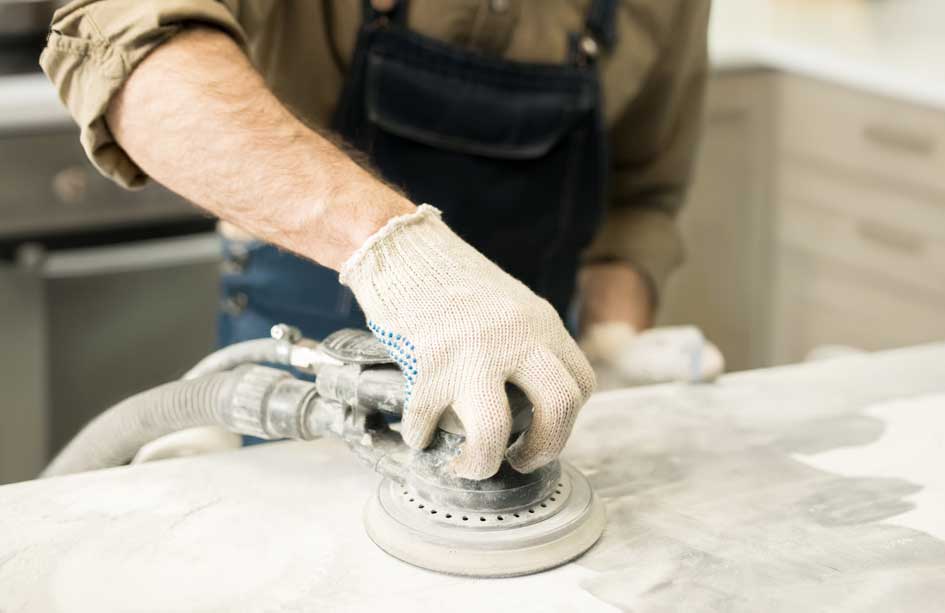
If the lived-in marks get too much for you a few years in, a specialist can re-hone the surface and take the etching back out. If a chip appears somewhere along the way, it can be filled and repaired rather than replaced. Nothing about natural stone is permanent damage, because it is a natural material that can be brought back to life. That is a very different proposition from a manufactured surface, where a mark is usually a mark forever.
So the honest framing is this. You are not choosing between a perfect surface and a ruined one. You are choosing a material that records the life of your kitchen and can be reset whenever you decide you want it reset. Most people never bother, because by then they have grown fond of the patina. The option is simply there.
The patina question
This is where the decision really sits. Some people love the patina marble develops, the way it softens and records the life of the kitchen. Others see the same surface and feel like something is wrong. Neither reaction is incorrect. It is temperament.
Here is a quick way to read yours. Some people see age on a surface as character; others see it as damage. Some are fine with a few marks that record how a kitchen was lived in; others want pristine. For some, low maintenance is what brings peace; others love caring for beautiful things and would miss the ritual. Some deal with a spill later; some wipe it the second it lands. Where you sit across those four tells you which stone suits you before you ever look at a slab.
Work out which one you are before you buy, not after. If a few years of etching would nag at you every time you saw it, that is useful to know now, and it points you toward a harder stone or a re-hone every few years. If it would not, marble will reward you for decades. Either way, because it can be brought back, no choice you make here locks you in forever.
Setting the household up
One practical thing people forget, and it is the single biggest cause of the horror stories. Everyone who touches the kitchen needs to know the rules, not just you. The cleaner, the family, the in-laws who insist on helping. One spray bottle of the wrong product undoes the habit. Put the right cleaner where it is obvious and tell whoever cooks and whoever cleans. Two minutes of briefing prevents almost every problem people blame on the stone.
If you would rather not think about it
If none of this appeals, that is a legitimate answer, and porcelain is the reply. It is close to maintenance-free, stain-proof and heat-proof, and you can use almost anything on it. You give up some of the depth of natural stone and you gain peace of mind. For some people that trade is exactly right.
Where to get the quick answers
This guide is about the experience. For the specifics, the exact cleaner and sealer we recommend, the resealing schedule, and whether heat is a risk, our FAQ and our stone care page have them. And if any of the old fears are still nagging, natural stone myths separates what is true from what is not.
Two habits, a household that knows the rules, and the quiet knowledge that anything can be brought back. That is living with stone. It is far less than people fear and it lasts far longer than they expect.
The cleaners and sealers we trust are on our basin page when you need them.

Outdoor Stone Benchtops That Survive a Sydney Summer
An outdoor benchtop in Sydney has to handle sun, heat, salt air, dust, rain and BBQ fat on the same surface. Porcelain and sintered stone are our first pick, granite is the best natural stone outdoors, and quartzite works with regular sealing. Light-coloured marble is best avoided outside, and engineered stone belongs indoors only, as UV affects it and outdoor use voids the manufacturer's warranty. This guide also covers joins, BBQ heat and why butt joins or shadowlines often outlast mitres outdoors.
Outdoor Stone Benchtops That Survive a Sydney Summer

Engineered Stone vs Natural Stone Benchtops: Honest Comparison | Marble Hub
Natural stone is one of a kind, handles heat well and can be restored for decades, but it needs sealing. Crystalline-silica-free engineered stone is consistent and needs no sealing, but it can scorch and can't be rehoned the same way. We cut both every week and compare them honestly on looks, care, heat, repair and price. We recommend natural stone first, and engineered stone where consistency or easy care matters most.
Engineered Stone vs Natural Stone Benchtops: Honest Comparison | Marble Hub

Pink Cristallo Quartzite for a Northmead Kitchen
A Federation home in Northmead with a new-wing kitchen by designer Vagn Madsen, built by Dan Kitchens Australia, with a Pink Cristallo Quartzite island benchtop and splashback from our Strathfield South showroom. This piece looks at why a pink stone works: subtle white shaker joinery that steps in and out around the rangehood, a soft stone that adds warmth without competing, a curved island with a softened, stepped double bullnose edge, and stone used in just two places. It also covers choosing slabs in person, living with pink quartzite in a family kitchen, and Pink versus White Cristallo.
Pink Cristallo Quartzite for a Northmead Kitchen
Undermount vs Flush Mount vs Drop-In Sink for Stone Benchtops | Marble Hub
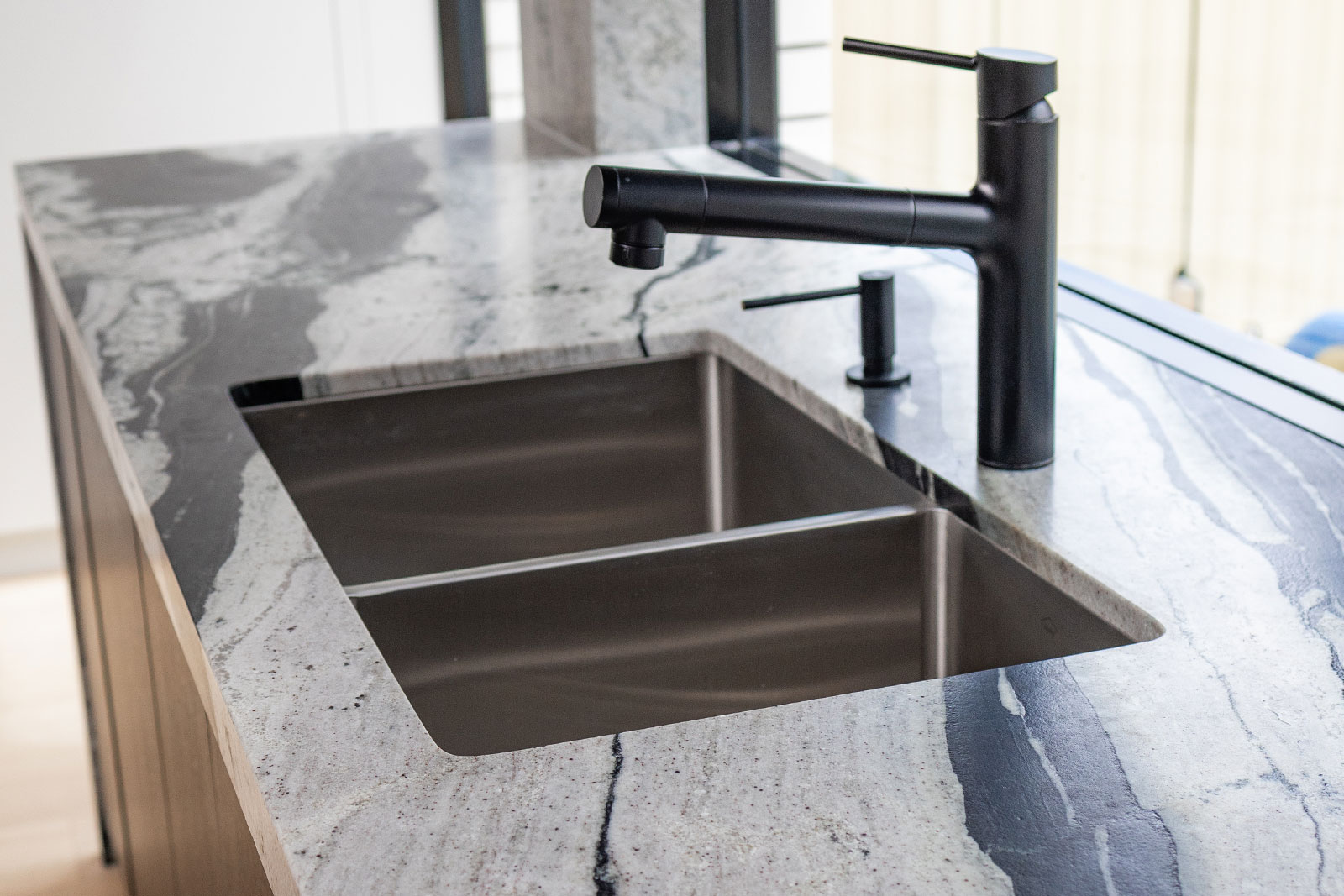
There's no wrong sink style for a stone benchtop, only the right one for how you'll use it. This guide explains the look, cost and maintenance of undermount, flush mount, drop-in and integrated stone sinks from a fabricator's point of view. Drop-in sinks work hard in busy kitchens, butler's pantries and utility laundries, while flush mount gives the sharpest look and needs the most planning. It also explains how Marble Hub reviews and supports every flush mount sink at the factory. Tags: undermount sink, flush mount sink, drop in sink, top mount sink, integrated stone sink, butler's pantry sink, laundry sink, sink cut-out, stone benchtop sink, kitchen sink styles, Sydney stone fabricator, Marble Hub
Undermount vs Flush Mount vs Drop-In Sink for Stone Benchtops | Marble Hub
Let’s Get Started on Your Dream Space
Whether it’s a kitchen, bathroom, or laundry, Kitchen Hub is here to bring your vision to life.
