
Add slabs to your wishlist so we can give you custom quote.
Add productions from our slab collection so we create a quote for your next project!
If you're unsure of what you're after please reach out via our contact page.
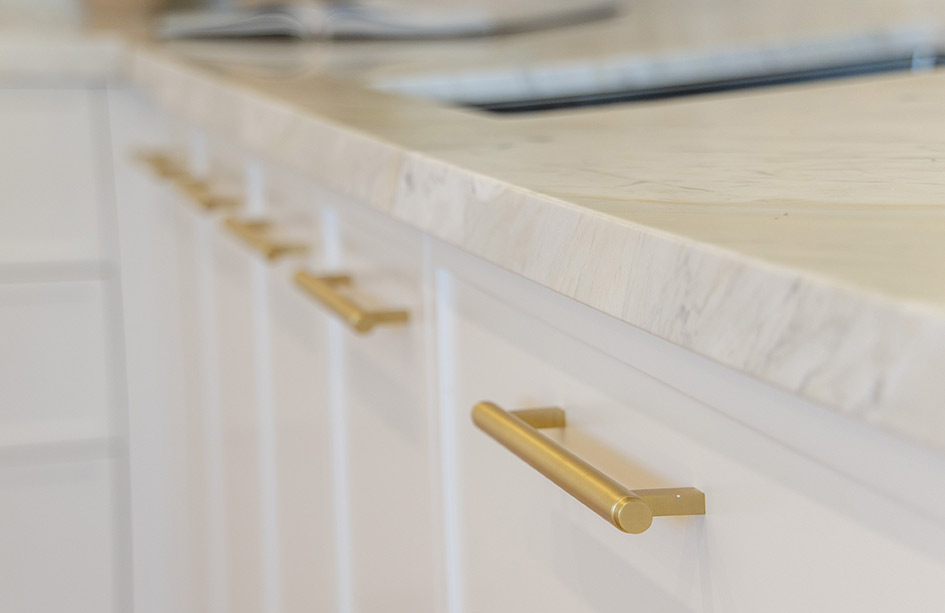
Edge Profiles That Work for Both Your Countertop and Your Benchtop
Edge Profiles That Work for Both Your Countertop and Your Benchtop
TL;DR: Australians say benchtop, Americans say countertop, and it's the exact same piece of stone. The word won't change your kitchen. The edge profile will. For contemporary luxury, a pencil edge or a mitred edge does almost all the work.
Countertop or benchtop? Depends which side of the world you're on. Americans say countertop, we say benchtop, and it's the same stone surface either way, the worktop where your stone goes.
Call it whatever you want. Just don't call it laminate.
The word is the least interesting decision you'll make about this stone. The edge profile is the one worth arguing about.
The word doesn't matter. The edge does.
Whatever you call the surface, the edge is the detail your hand touches every day and your eye reads first. It decides whether the kitchen feels contemporary or traditional, fine or chunky, architectural or busy.
Take two identical slabs of marble. Give one a crisp pencil edge and the other a rounded ogee. They now look like two different kitchens in two different decades. The stone didn't change. The edge did all the talking.
Most people spend weeks agonising over the slab and about four seconds on the edge. That's backwards, and this is the fix.
The edge profiles worth knowing
We cut around a dozen edge profiles for natural and engineered stone. Rather than list them like a menu, here's how to think about them, grouped by the look they give you. Get the group right and the profile follows.
The clean, modern edges
Pencil edge (20mm). The contemporary default, and the one we recommend for most modern kitchens. It's a straight edge with a small, even round taken off the top and bottom, enough to lose the hard line without softening the whole look.
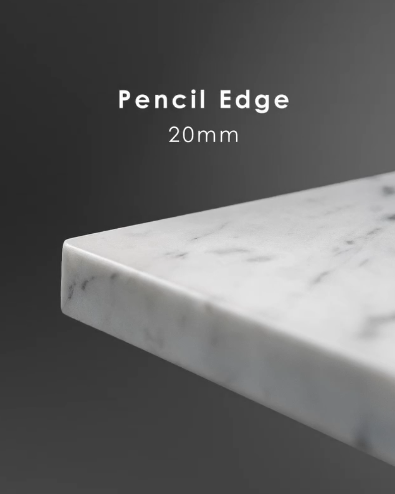
It works because of restraint. A pencil edge gets out of the way and lets the stone be the hero. If you've chosen a marble with real movement, or a quartzite you fell for on the showroom floor, the pencil edge keeps the focus on the stone instead of the trim.
This is the sweet spot for taste and value. Simple to fabricate, and it reads architectural. One note on names. A lot of American guides call this a straight edge. We call it a pencil edge. Same idea, different word.
Mitred edge (40mm and up). The one that gives you the chunky, solid-slab look. A 40mm or thicker benchtop that looks carved from a single block.
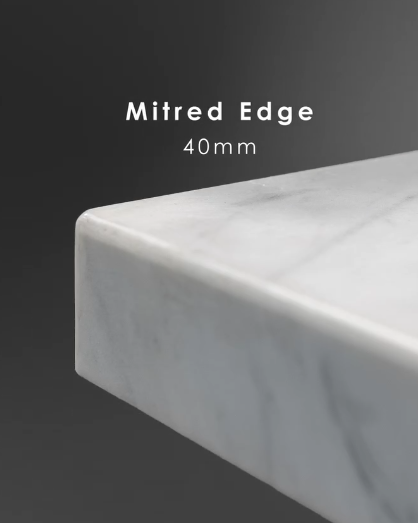
Here's the trick. Slabs come around 20mm thick. To get that thick look, the fabricator joins a return piece underneath at a 45-degree angle, so the seam sits at the corner and nearly disappears. Done well, you can't see the join and the veining runs continuously down the face.
The mitred edge is also how waterfall ends are built, where the stone folds over the side of the island and drops to the floor. If you want that gallery-piece look, this is the profile doing the work behind it.
It costs more. More stone, more precision, more time at the bench. For a hero island, it's usually worth it.
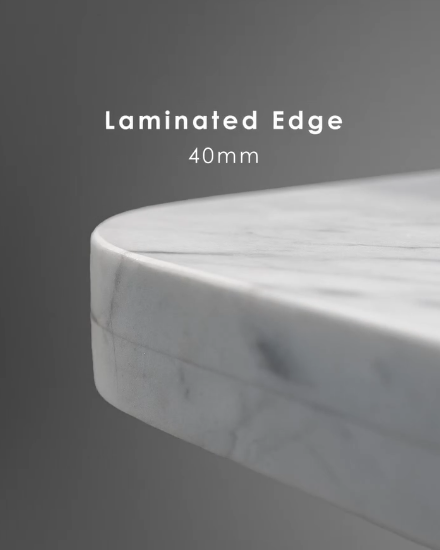
Laminated edge (40mm). The other way to reach a thick edge. Instead of a 45-degree mitre, a strip is built up under the front and the face is then rounded, usually with a pencil or bullnose profile. You get the visual weight of a thick benchtop with a softer front, and a little less fabrication than a full mitre. Choose it when you want thickness without the sharp corner of a mitre.
The soft, forgiving edges
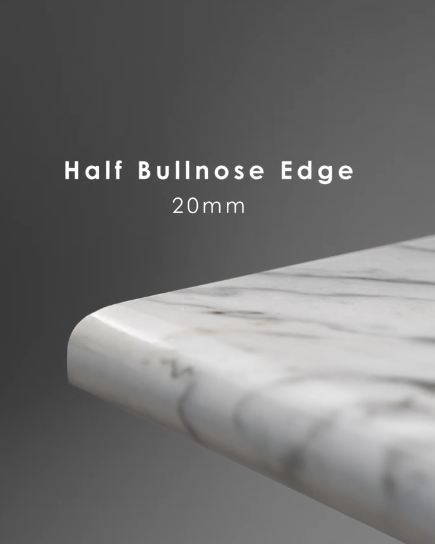
Half bullnose (20mm). Top rounded, bottom left square. Gentler and more forgiving, which is why it suits family kitchens and homes leaning classic-contemporary. If you've got young kids at bench height, a rounded top has an obvious logic.
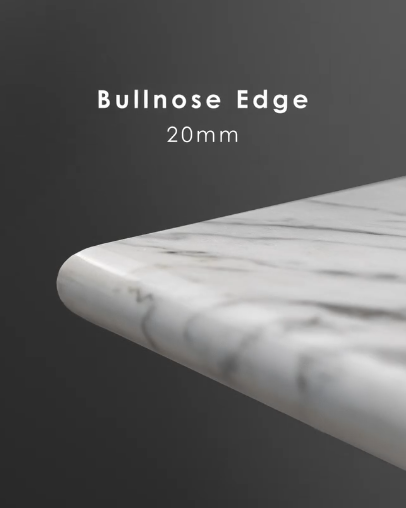
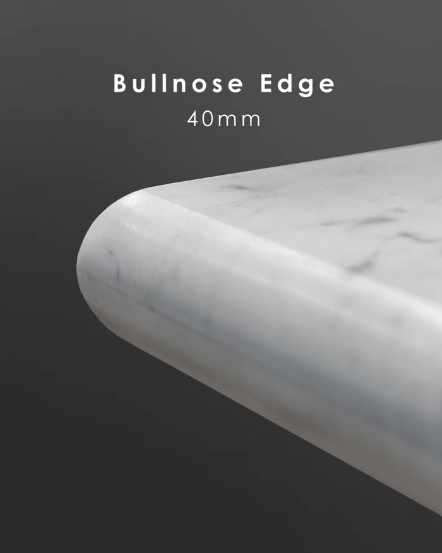
Bullnose (20mm or 40mm). The top rounded into a full semicircle. Softer again, and a step more traditional. The 40mm version reads heavier and more solid.
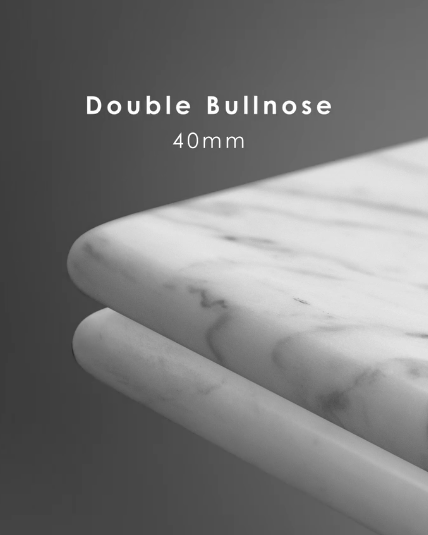
Double bullnose (40mm). Two rounded profiles stacked on a thick edge. More decorative, more of a statement, and it wants a room that can carry it.
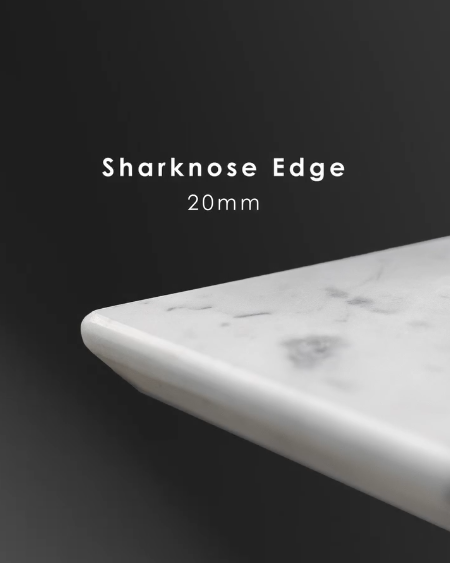
Sharknose (20mm). An angled undercut that cuts a crisp shadow line beneath the top. One distinctive detail for a kitchen sitting between modern and classic.
The traditional, decorative edges
Ogee (40mm). An ornate S-curve, the classic decorative profile. Cove Dupont (40mm). A cove scooped under a rounded top, layered and formal. Royal edge (60mm). A tall, layered profile with a reveal you can customise, the biggest statement of the group.
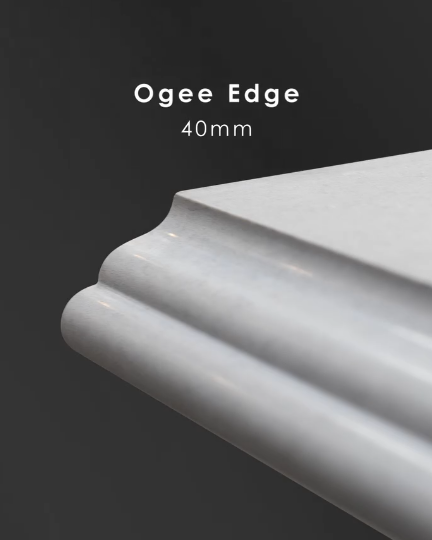
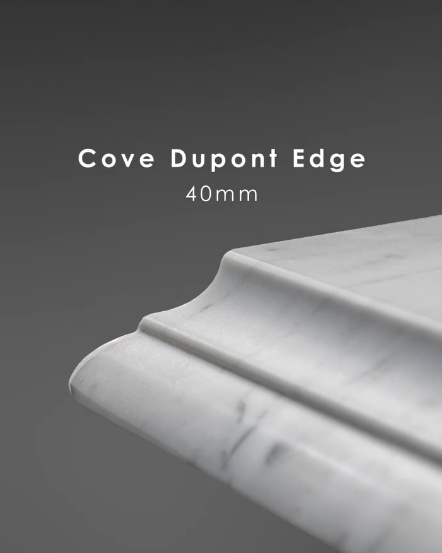
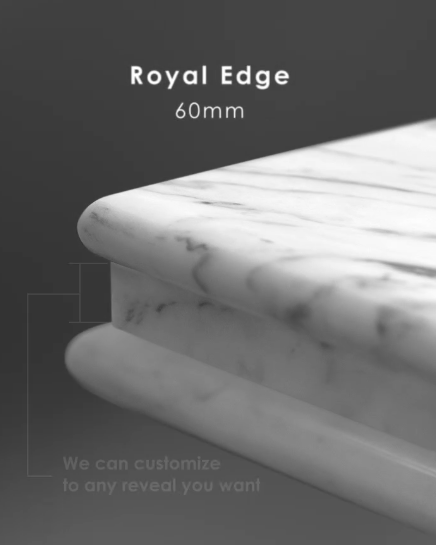
Honest take: these can date a contemporary kitchen faster than the stone ever will. They belong in properly traditional rooms, a Hamptons kitchen, a classic period home where the whole space supports the detail. Drop one into a minimalist kitchen and it fights everything around it.
The ogee is the most involved of these to cut. We broke down how an ogee edge is actually made if you want the detail. If your heart is set on one, make sure the rest of the room is speaking the same language.
One caveat on material. These profiles are for natural and engineered stone. Porcelain and sintered stone are more limited and stay in pencil or mitred territory, so the decorative edges aren't on the table there.
Why half the online advice doesn't fit an Australian kitchen
Here's where the countertop-versus-benchtop thing stops being a joke and starts costing people.
A lot of the edge-profile advice online is written for American kitchens. Their traditional-kitchen market leans harder on decorative edges, so ogee and bullnose show up far more often in US content than they do in good contemporary Australian work. Their standard slab conventions differ too, and what they call a straight edge is our pencil edge.
So a design-conscious homeowner in Sydney reads an American “countertop edge profiles” guide, sees ogee treated as a default, and assumes that's the premium move. In a modern Australian kitchen, it's usually the opposite.
Read the American content for inspiration. Just translate it. Their default isn't ours.
Which edge profile should you actually choose?
Choose a pencil edge if you want a contemporary kitchen and you want the stone to be the hero. This is the right answer most of the time.
Choose a mitred edge if you want a chunky, solid-slab look, or you're doing a waterfall island. Budget for it. It earns its keep.
Choose a laminated edge if you want a thick edge with a softer front and a little less cost than a mitre.
Choose a half bullnose or bullnose if you want a softer, family-friendly feel, or you're leaning classic-contemporary.
Choose a sharknose if you want a modern edge with one distinctive detail.
Skip the ogee, cove Dupont and royal edge unless you're building a properly traditional or Hamptons kitchen and the whole room is committed to that look.
One honest trade-off before you decide
The edge is not the place to save money by accident, and it's not the place to overspend on decoration either.
A pencil edge gives you taste and value in the same move. A mitred edge costs more but buys you a look nothing else delivers. A decorative edge costs more and, in a modern kitchen, can work against you.
Spend on the profile that matches how you want the kitchen to feel. Then stop thinking about it, because a good edge is one you never notice again.
If you want to run your hand along the difference before you commit, that's what the showroom is for. Bring your slab shortlist and see the profiles on real stone.
So call it a benchtop, call it a countertop. Doesn't matter. Get the edge right and it looks considered whichever word you use.
FAQ
What's the difference between a benchtop and a countertop?
Nothing. Benchtop is the Australian word, countertop is the American one. Same surface, same stone, same everything. If you've been reading US design content and got confused, that's the whole story. The terminology changes across the Pacific. The stone doesn't.
What edge profile is best for a modern kitchen?
A pencil edge. It's clean, it reads architectural, and it lets the stone do the talking instead of the trim. If you want a chunky, solid look, a mitred edge is the modern alternative. Both suit contemporary kitchens. Decorative profiles like ogee usually don't.
What is a mitred edge?
It's how you get a thick benchtop from a thinner slab. The fabricator joins a return piece underneath at 45 degrees so the seam hides in the corner and the top looks like a solid block. It's the profile behind chunky 40mm-plus benchtops and waterfall ends. It costs more because it uses more stone and more precise fabrication.
What's the difference between a mitred edge and a laminated edge?
Both give you a thick benchtop from a 20mm slab. A mitred edge joins two pieces at 45 degrees, so the corner is sharp and the veining runs continuously over it. A laminated edge builds a strip up under the front, then rounds the face with a pencil or bullnose profile. Mitred reads sharper and more architectural. Laminated reads a touch softer and usually costs a little less.
Do edge profiles change the price?
Yes. A pencil edge is the most economical. Mitred and laminated edges cost more because of the extra stone and the build-up. Decorative edges like ogee take more fabrication time too. The profile is a real line in your quote, so it's worth deciding early rather than at the end.
Is a waterfall edge an edge profile?
Sort of, but not quite. A waterfall is where the stone folds over the end of the island and runs to the floor. It's built using mitred joins at the corner. So it's an application rather than a profile, but the two go together. If you want a waterfall island, you're choosing a mitred edge by default.

Waterfall Benchtops: Where They Add the Most to Your Kitchen
A waterfall benchtop takes the stone down the side of the island to the floor, so the island reads as a solid, sculptural piece of stone. This guide covers what a waterfall adds, how it compares with a standard island end, how many waterfalls to have, and the three corner finishes: mitred, shadowline and butt join. On timber floors we always suggest a shadowline. It also covers vein flow and what adds to the cost.
Waterfall Benchtops: Where They Add the Most to Your Kitchen

Granite Benchtops Are Back, and They Look Nothing Like the 90s
Granite sits mostly in darker and medium tones with a unique flowing pattern, and its dated reputation comes from what it was paired with in the 1990s, not the stone. With today's joinery, flooring and a honed finish, granite benchtops look timeless. It's hard, forgiving, resists etching and suits busy kitchens, outdoor areas and bathrooms. This guide covers pairing, finishes, real Marble Hub projects, granite vs quartzite, marble and dolomite, and how to choose a slab.
Granite Benchtops Are Back, and They Look Nothing Like the 90s

Outdoor Stone Benchtops That Survive a Sydney Summer
An outdoor benchtop in Sydney has to handle sun, heat, salt air, dust, rain and BBQ fat on the same surface. Porcelain and sintered stone are our first pick, granite is the best natural stone outdoors, and quartzite works with regular sealing. Light-coloured marble is best avoided outside, and engineered stone belongs indoors only, as UV affects it and outdoor use voids the manufacturer's warranty. This guide also covers joins, BBQ heat and why butt joins or shadowlines often outlast mitres outdoors.
Outdoor Stone Benchtops That Survive a Sydney Summer

Engineered Stone vs Natural Stone Benchtops: Honest Comparison | Marble Hub
Natural stone is one of a kind, handles heat well and can be restored for decades, but it needs sealing. Crystalline-silica-free engineered stone is consistent and needs no sealing, but it can scorch and can't be rehoned the same way. We cut both every week and compare them honestly on looks, care, heat, repair and price. We recommend natural stone first, and engineered stone where consistency or easy care matters most.
Engineered Stone vs Natural Stone Benchtops: Honest Comparison | Marble Hub
Let’s Get Started on Your Dream Space
Whether it’s a kitchen, bathroom, or laundry, Kitchen Hub is here to bring your vision to life.
