
Add slabs to your wishlist so we can give you custom quote.
Add productions from our slab collection so we create a quote for your next project!
If you're unsure of what you're after please reach out via our contact page.
Quartz vs Quartzite: What's the Difference? | Marble Hub Sydney
Quartz vs Quartzite: They Sound the Same, They're Not
The Short Answer
Quartz is engineered stone. Quartzite is natural stone. One is made in a factory, the other is cut out of the ground. That single fact drives every other difference: how they look, how they wear, how you care for them, and where each one belongs in your home.The names are the problem. They share four letters and a mineral, so people assume they're versions of the same thing. They're not, and treating them as interchangeable is how buyers end up with the wrong surface for how they actually live. Here's how to tell them apart, and how to know which belongs in your kitchen.
What Quartz Actually Is
Quartz, in benchtop language, means engineered stone. It's a slab made by grinding up minerals, mixing them with a binder and pigment, then pressing and curing the result into a consistent sheet. Brands like Caesarstone made this category what it is.
Because it's manufactured, quartz is uniform. The colour and pattern you see on the sample is the colour and pattern you get across every slab, with no surprises. That consistency is the whole appeal for a lot of people. You can plan a kitchen down to the millimetre and know exactly what turns up. It's non-porous, so it never needs sealing, and it wipes down without a second thought.
Worth clearing up for an Australian audience: the engineered stone available now is silica-free. The 2024 ban applied to engineered stone containing crystalline silica, which caused serious lung disease among the tradespeople cutting it. New-generation silica-free engineered stone is a legal, safe, current product, and it's what we and the rest of the industry supply. When someone says quartz today, they mean this newer, safer material, not the banned kind. We told that whole story in engineered stone didn't go away, it just lost the silica.
What Quartzite Actually Is
Quartzite is natural stone. It starts as sandstone and, under heat and pressure over a very long time, turns into one of the hardest surfaces you can put in a kitchen. Harder than granite. It's quarried in blocks, sliced into slabs, and every one is different.
That natural origin gives quartzite two things quartz can't fake. Real depth, because the veining runs through the stone rather than being printed on a surface, and genuine hardness, because it formed that way in the earth. A good quartzite shrugs off scratches and takes heat far better than engineered stone.
The trade-off is variation. Because each slab is unique, you choose the actual piece, and you accept that natural stone has movement and character that won't match a sample perfectly. For most quartzite buyers that's the point, not a problem. Taj Mahal, Super White and Patagonia are all quartzites, and each block carries its own undertone and movement. Because it's natural, quartzite is porous, so it gets sealed. That's a light job, not a burden, and we'll get to what it actually involves.
Why the Names Get Mixed Up
The names collide because the marketing does. Quartz borrowed its name from the natural mineral it's partly made of. Quartzite is named for the same mineral because it's mostly made of it. Both point at the word quartz, and shoppers reasonably assume they're one family.
They're related the way a timber floor and a laminate floor are related. Both reference wood. Only one is the real thing. Neither is wrong to choose. They behave differently, they cost differently, and confusing them is how people end up disappointed.

How They Wear: The Real Difference
Here's where the factory-versus-quarry split shows up in daily life.
Heat. Quartzite handles heat well, because it's natural stone formed under heat in the first place. Engineered quartz does not. The binder that holds quartz together can scorch or discolour under a hot pan, so you're always reaching for a trivet. With quartzite you have more margin, though a trivet is still smart practice for any stone.
Scratching. A quality quartzite is extremely hard and resists scratching from knives and cookware. Quartz is durable too and resists everyday wear well, but the very hardest quartzites out-perform it on raw scratch resistance. Neither is a chopping board. Use one.
Staining and sealing. Quartz is non-porous, so it doesn't need sealing and resists staining out of the box. Quartzite is natural stone, so it's sealed like marble or granite and benefits from a wipe-fast habit on spills. A sealed quartzite handles daily spills fine as long as you wipe them up rather than leave them overnight. This is where honesty matters. Quartz asks less of you here. If zero maintenance is your priority, that's a real point for quartz. If you don't mind sealing a couple of times a year, quartzite rewards you with heat tolerance quartz can't match.
How They Look

Quartz gives you control. If you want a specific white with a specific soft grey vein, repeated exactly, quartz delivers it every time. The marble-look quartz ranges have got genuinely convincing, and on the right product the vein flow sits on a good neutral base rather than looking printed.
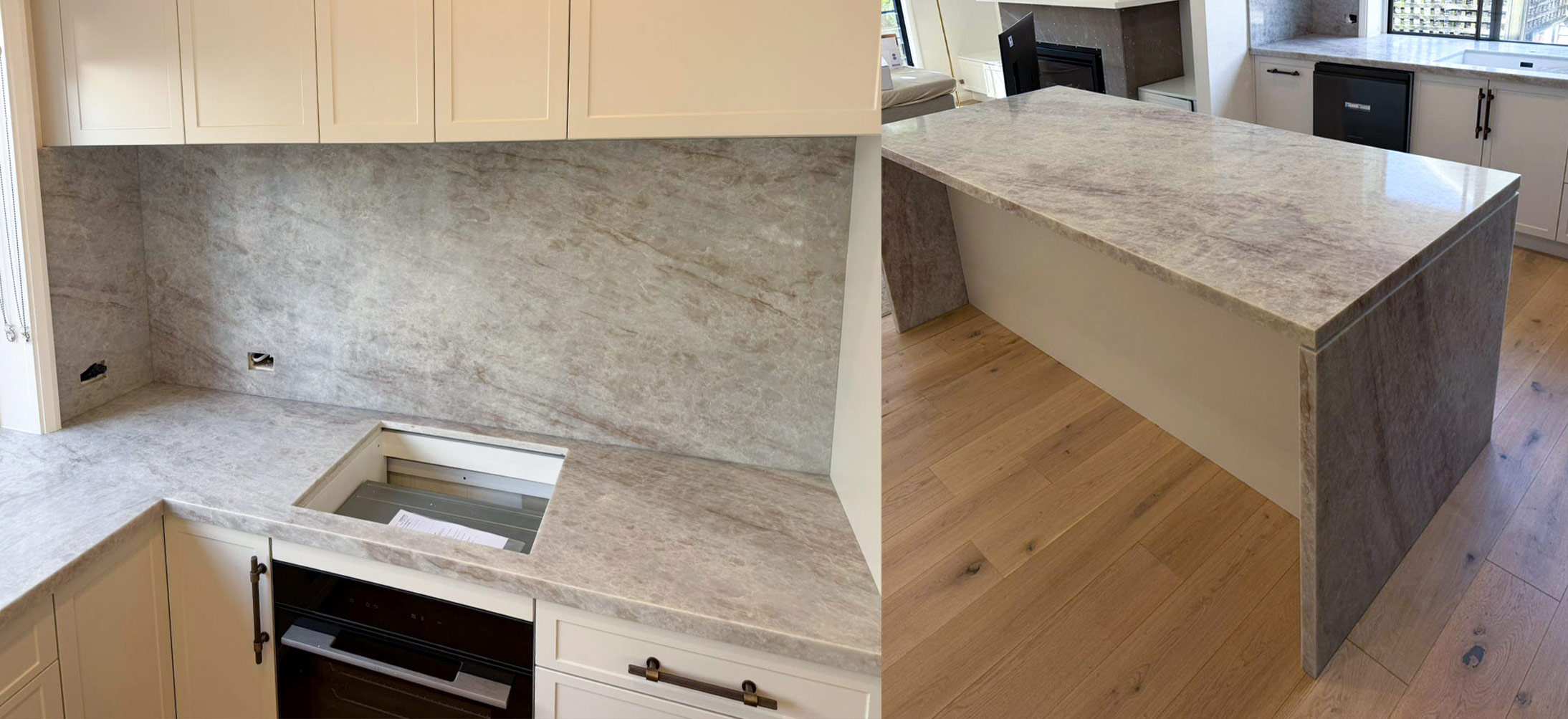
Quartzite gives you depth. Natural veining has a three-dimensional quality, movement that runs through the stone and catches light differently as you move around it. No two slabs are alike, so a quartzite benchtop is genuinely one piece of the earth, not a pattern you'll see in a hundred other kitchens.
Which look is right depends on what you value. Certainty and repeatability point to quartz. Character and uniqueness point to quartzite. Both can be beautiful. They're just beautiful in different ways.
The Super White Confusion
A specific mix-up worth naming, because it catches people out. Some pale, softly veined natural stones sold as quartzite are actually dolomite, and some are closer to marble. Super White is the classic example, a stone that gets labelled quartzite when it often behaves more like a dolomite or marble.
This matters because it changes how the stone lives. A true quartzite is very hard and acid-resistant. A dolomite or marble mislabelled as quartzite is softer and will etch with acid, so if you bought it expecting quartzite toughness, you'll be surprised the first time lemon juice leaves a mark.
The fix is simple. Ask what the stone actually is, and buy from someone who tells you straight. When you're choosing in our showroom, we'll tell you whether a slab is a true quartzite, a dolomite, or a marble, and how it'll behave. That's the difference between a happy kitchen and a surprised one.
So Which One Should You Choose?
Choose quartz (engineered stone) if you want consistency, a predictable look, and the lowest maintenance. No sealing, strong stain resistance, and exactly the pattern you picked. The trade-off is heat sensitivity and a look that, however good, is manufactured. It also can't be refinished. If it dulls or is damaged down the track, the fix is replacement, not repair. It's a strong choice for a busy family kitchen where low fuss wins.
Choose quartzite (natural stone) if you want genuine natural character, real hardness, and better heat tolerance, and you don't mind sealing a couple of times a year. You're buying a unique piece of stone with depth engineered surfaces can't replicate. It suits people who want the real thing and will look after it.
There's no wrong answer. There's the answer that matches how you actually live. If you're now wondering how both compare to marble, that's the next question worth answering, and we've written quartzite vs marble for exactly that.
How to Actually Decide
Don't decide from a screen or a small chip. Quartz reads flat and even, so it's easy to judge small. Quartzite shifts with the light and with whatever sits next to it, so a sample tells you almost nothing. Stand a full slab next to your joinery and tapware in daylight before you commit.
Bring your plans or your finishes in and we'll put both in front of you. Seeing quartz consistency next to quartzite movement, in person, usually makes the decision for you in about a minute. Book a design consultation or visit the showroom.
Frequently Asked Questions
Is quartz the same as quartzite?
No, and it's the most common mix-up in stone. Quartz means engineered stone, a manmade slab of ground minerals, binder and pigment, pressed into a consistent sheet. Quartzite is natural stone, quarried from the earth, harder than granite, with unique veining in every slab. They share a name and a mineral, but one is manufactured and one is natural, and that difference drives how each looks, wears and gets cared for.
Which is more durable, quartz or quartzite?
It depends what you mean by durable. Quartzite is harder and far more heat-tolerant, because it's natural stone formed under heat, so it resists scratching and handles hot pans better. Quartz is very durable against everyday wear and, being non-porous, resists staining without sealing. The very hardest quartzites beat quartz on raw scratch and heat resistance. Quartz wins on stain resistance and needing no sealing. Match the strength to how you use your kitchen.
Does quartzite need sealing and quartz doesn't?
That's right. Quartzite is natural stone, so it's porous and gets sealed like marble or granite, usually a couple of times a year, plus a habit of wiping spills promptly. Quartz is engineered and non-porous, so it needs no sealing and resists stains out of the box. If zero maintenance is your top priority, that's a real point in quartz's favour. If you don't mind sealing twice a year, quartzite gives you heat tolerance and natural character in return.
Can you put a hot pan on quartz?
Better not to. The resin that binds quartz can scorch or discolour, so use a trivet. Quartzite tolerates heat far better, since it's natural stone formed under heat, though a trivet is still smart practice on any stone.
Is engineered stone (quartz) still legal in Australia?
Yes, in its silica-free form. The 2024 ban applied only to engineered stone containing crystalline silica, which caused serious lung disease in the tradespeople cutting it. New-generation silica-free engineered stone is legal, safe and widely available, and it's what the industry supplies now. So when someone talks about a quartz or engineered stone benchtop today, they mean this safer material, not the banned kind.
Why is some quartzite actually dolomite or marble?
Because pale, softly veined natural stones get labelled loosely in the market. Some stones sold as quartzite, Super White being the classic case, are really dolomite or closer to marble. It matters because a true quartzite is very hard and acid-resistant, while a dolomite or marble is softer and will etch with acid. If you bought it expecting quartzite toughness, the first lemon spill is a nasty surprise. Always ask a supplier what the stone actually is before you commit.
Which looks more like marble, quartz or quartzite?
Both can, in different ways. Marble-look quartz has got genuinely convincing, and its advantage is consistency: you get the exact vein you chose, repeated across every slab. Quartzite gives natural depth, veining that runs through the stone and catches light in three dimensions, so it reads as real because it is. If you want a controlled, repeatable marble look, quartz. If you want authentic natural movement, a marble-look quartzite or actual marble.
Is quartz or quartzite better for a kitchen benchtop?
Neither is better in the abstract. Quartz suits a busy kitchen where low maintenance and a predictable look matter most: no sealing, strong stain resistance, exactly the pattern you picked. Quartzite suits someone who wants genuine natural character and better heat and scratch resistance, and doesn't mind sealing twice a year. Decide based on how you cook and how much upkeep you'll genuinely do. Seeing both in person makes the choice much clearer.

Outdoor Stone Benchtops That Survive a Sydney Summer
An outdoor benchtop in Sydney has to handle sun, heat, salt air, dust, rain and BBQ fat on the same surface. Porcelain and sintered stone are our first pick, granite is the best natural stone outdoors, and quartzite works with regular sealing. Light-coloured marble is best avoided outside, and engineered stone belongs indoors only, as UV affects it and outdoor use voids the manufacturer's warranty. This guide also covers joins, BBQ heat and why butt joins or shadowlines often outlast mitres outdoors.
Outdoor Stone Benchtops That Survive a Sydney Summer

Engineered Stone vs Natural Stone Benchtops: Honest Comparison | Marble Hub
Natural stone is one of a kind, handles heat well and can be restored for decades, but it needs sealing. Crystalline-silica-free engineered stone is consistent and needs no sealing, but it can scorch and can't be rehoned the same way. We cut both every week and compare them honestly on looks, care, heat, repair and price. We recommend natural stone first, and engineered stone where consistency or easy care matters most.
Engineered Stone vs Natural Stone Benchtops: Honest Comparison | Marble Hub

Pink Cristallo Quartzite for a Northmead Kitchen
A Federation home in Northmead with a new-wing kitchen by designer Vagn Madsen, built by Dan Kitchens Australia, with a Pink Cristallo Quartzite island benchtop and splashback from our Strathfield South showroom. This piece looks at why a pink stone works: subtle white shaker joinery that steps in and out around the rangehood, a soft stone that adds warmth without competing, a curved island with a softened, stepped double bullnose edge, and stone used in just two places. It also covers choosing slabs in person, living with pink quartzite in a family kitchen, and Pink versus White Cristallo.
Pink Cristallo Quartzite for a Northmead Kitchen
Undermount vs Flush Mount vs Drop-In Sink for Stone Benchtops | Marble Hub
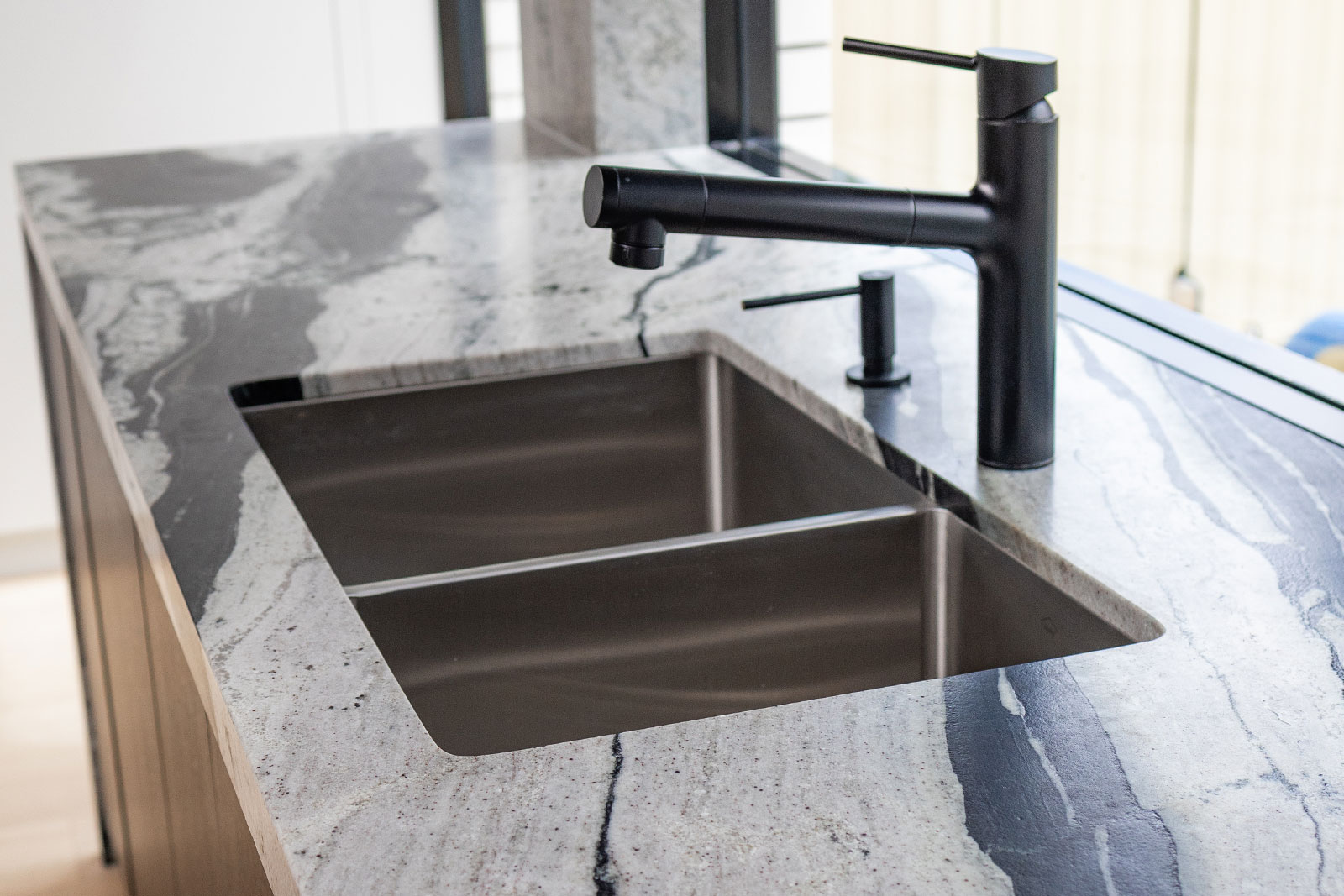
There's no wrong sink style for a stone benchtop, only the right one for how you'll use it. This guide explains the look, cost and maintenance of undermount, flush mount, drop-in and integrated stone sinks from a fabricator's point of view. Drop-in sinks work hard in busy kitchens, butler's pantries and utility laundries, while flush mount gives the sharpest look and needs the most planning. It also explains how Marble Hub reviews and supports every flush mount sink at the factory. Tags: undermount sink, flush mount sink, drop in sink, top mount sink, integrated stone sink, butler's pantry sink, laundry sink, sink cut-out, stone benchtop sink, kitchen sink styles, Sydney stone fabricator, Marble Hub
Undermount vs Flush Mount vs Drop-In Sink for Stone Benchtops | Marble Hub
Let’s Get Started on Your Dream Space
Whether it’s a kitchen, bathroom, or laundry, Kitchen Hub is here to bring your vision to life.
