
Add slabs to your wishlist so we can give you custom quote.
Add productions from our slab collection so we create a quote for your next project!
If you're unsure of what you're after please reach out via our contact page.

Taj Mahal Quartzite: Is It Good? Price, Care & Buying Guide
Taj Mahal Quartzite: An Honest Buyer's Guide
TL;DR: Taj Mahal is a warm, honey-toned quartzite that gives you the calm of marble with the toughness of one of the hardest stones you can buy. It resists etching and staining better than marble, handles a busy kitchen, and needs only light sealing. It costs more than engineered stone and varies block to block. If you've been eyeing marble but worrying about it, this is usually the stone that solves the problem.
Taj Mahal quartzite gives you the warm, calm look of marble with the toughness of a stone formed under heat and pressure. It's natural, honey-toned, and far more forgiving than marble in a working kitchen. It resists etching and staining, needs only light sealing, and holds up to daily use. Here's the honest rundown before you buy.
What Taj Mahal actually is
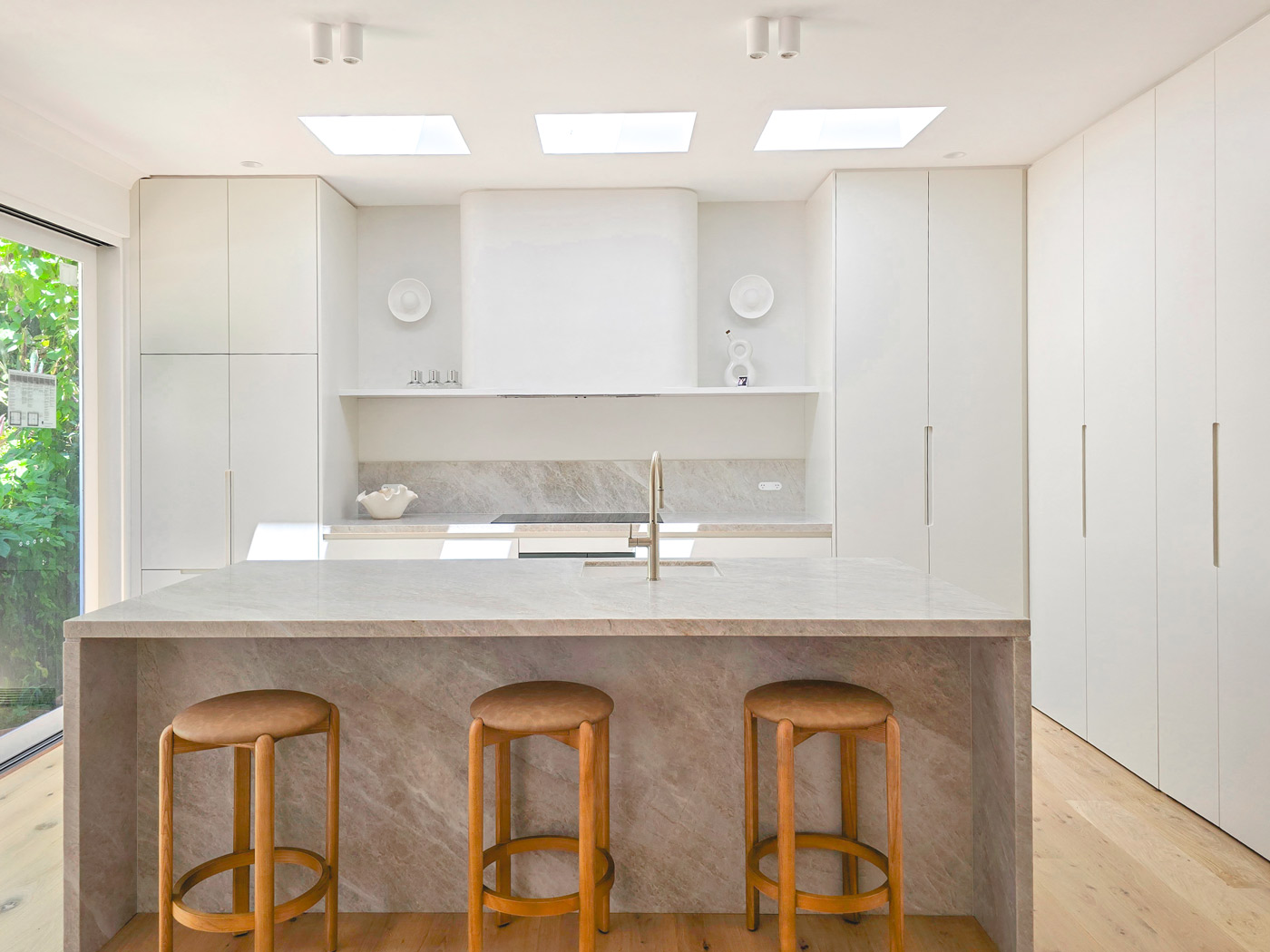
Taj Mahal is a quartzite, natural stone quarried in blocks, not manufactured. Its signature is warmth, a honeyed, caramel base that most blocks carry, with soft veining running through. That warmth is why it's become one of the most-requested stones for kitchens that want marble's elegance without marble's anxiety.
Because it's quartzite, it's hard. Harder than granite, formed under heat and pressure over a long time. That hardness is what lets it look soft and behave tough at the same time, which is a rare combination in stone.
The depth that's hard to put into words
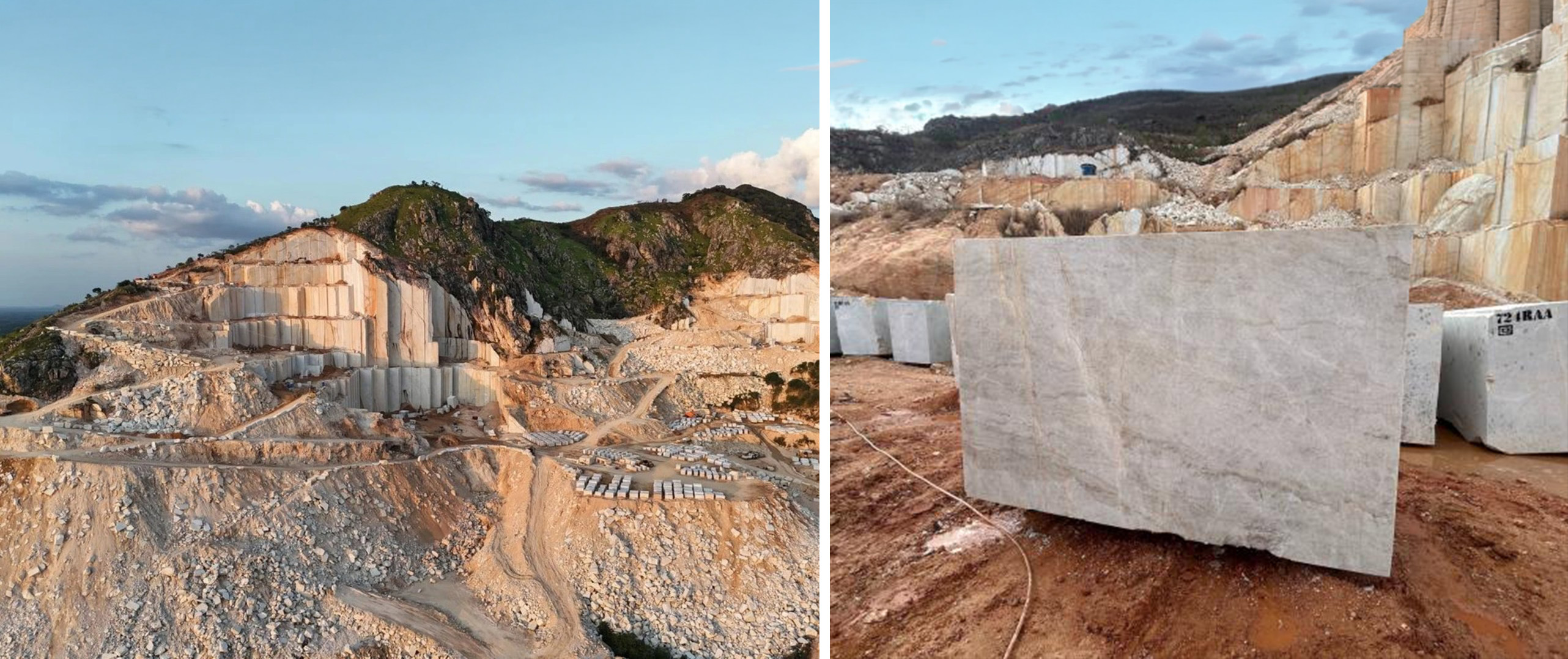
There's a quality to Taj Mahal that doesn't photograph and doesn't reduce to a spec sheet. Stand in front of a full slab and the tone keeps moving. Warm honey and caramel in one light, cooler taupe and greige as the light shifts through the day. It never settles into one flat colour, and that shifting depth is what people are responding to when they can't quite say why they love it.
That movement is also why it works against so many different palettes. A stone with a single fixed tone commits you to one direction. Taj Mahal reads warm next to timber and brass, and cooler next to greys and blacks, so it sits comfortably in a home built around either. The same slab can pull toward the warmth in a room that wants warmth, and hold back toward the taupe in a room that wants calm. Few stones do that.
Here's the part that matters for how the finished room reads. Because it carries that range, Taj Mahal never looks like the safe default. It looks chosen. A pale, flat stone can read as the thing someone reached for to avoid a decision. Taj Mahal reads like a designer stood in the space, understood the palette, and picked it on purpose. That's the difference between a benchtop that fills a gap and one that looks planned.
This is why it holds up over time, and why architects and designers keep specifying it. A stone that adapts to the light and to the palette around it doesn't date the way a trend colour does. It was never chasing a moment, so a moment can't leave it behind. Choose Taj Mahal and, years on, it still reads as considered rather than of its year.


Is Taj Mahal actually any good
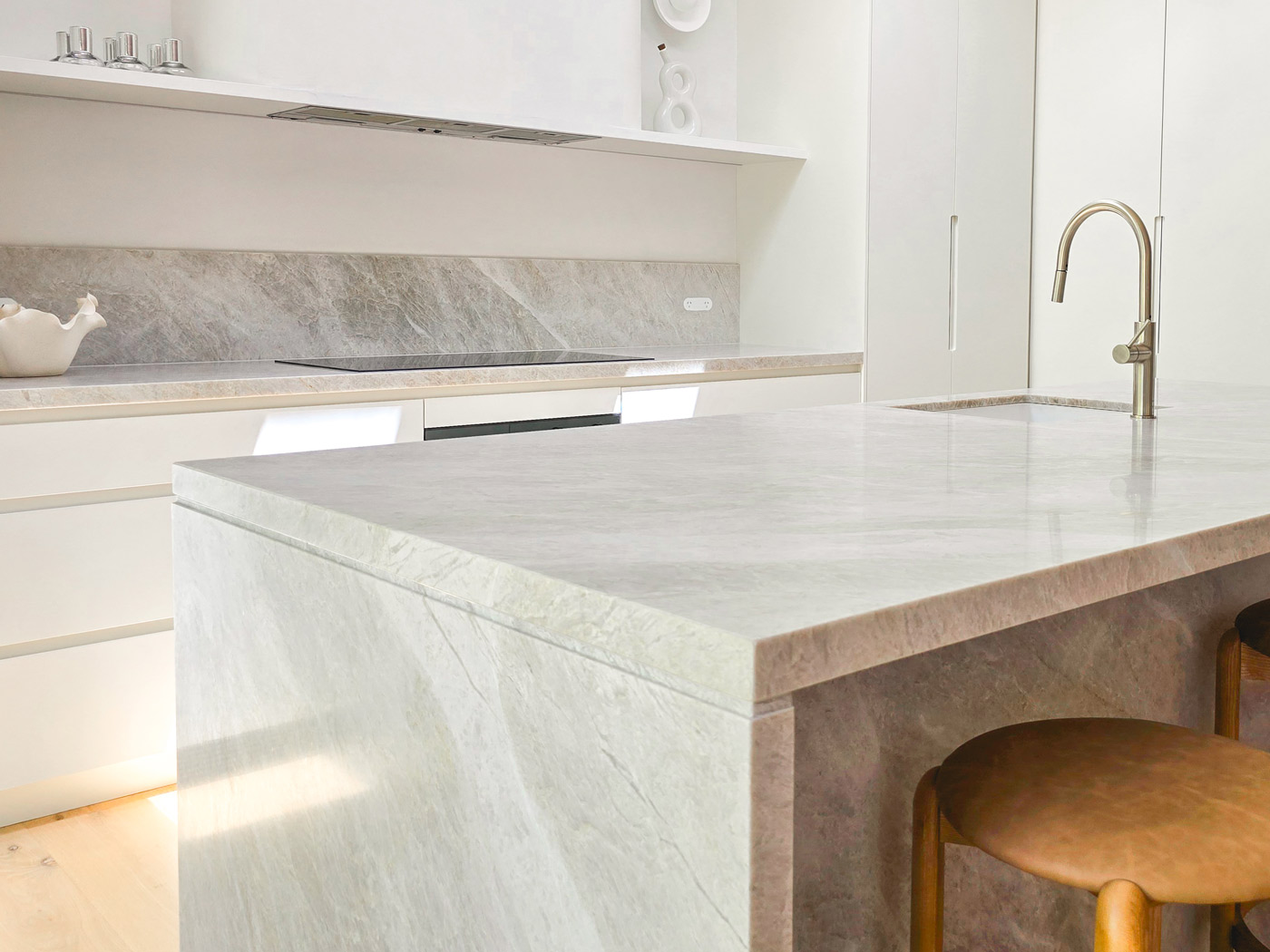
Yes, and it's one of the stones we recommend most often. It gives you three things at once: a warm, natural look, serious hardness, and real forgiveness in daily use.
It resists scratching well because of that hardness. It tolerates heat because it's natural stone formed under heat. And sealed, it handles the daily life of a kitchen, wine, oil, coffee, without the constant vigilance marble demands.
The honest limits. It's porous, so it gets sealed, a light job on install and occasionally after. And like all natural stone, it varies block to block, so the slab you choose is the slab you get. That's a feature if you select in person, a risk if you order by name alone.
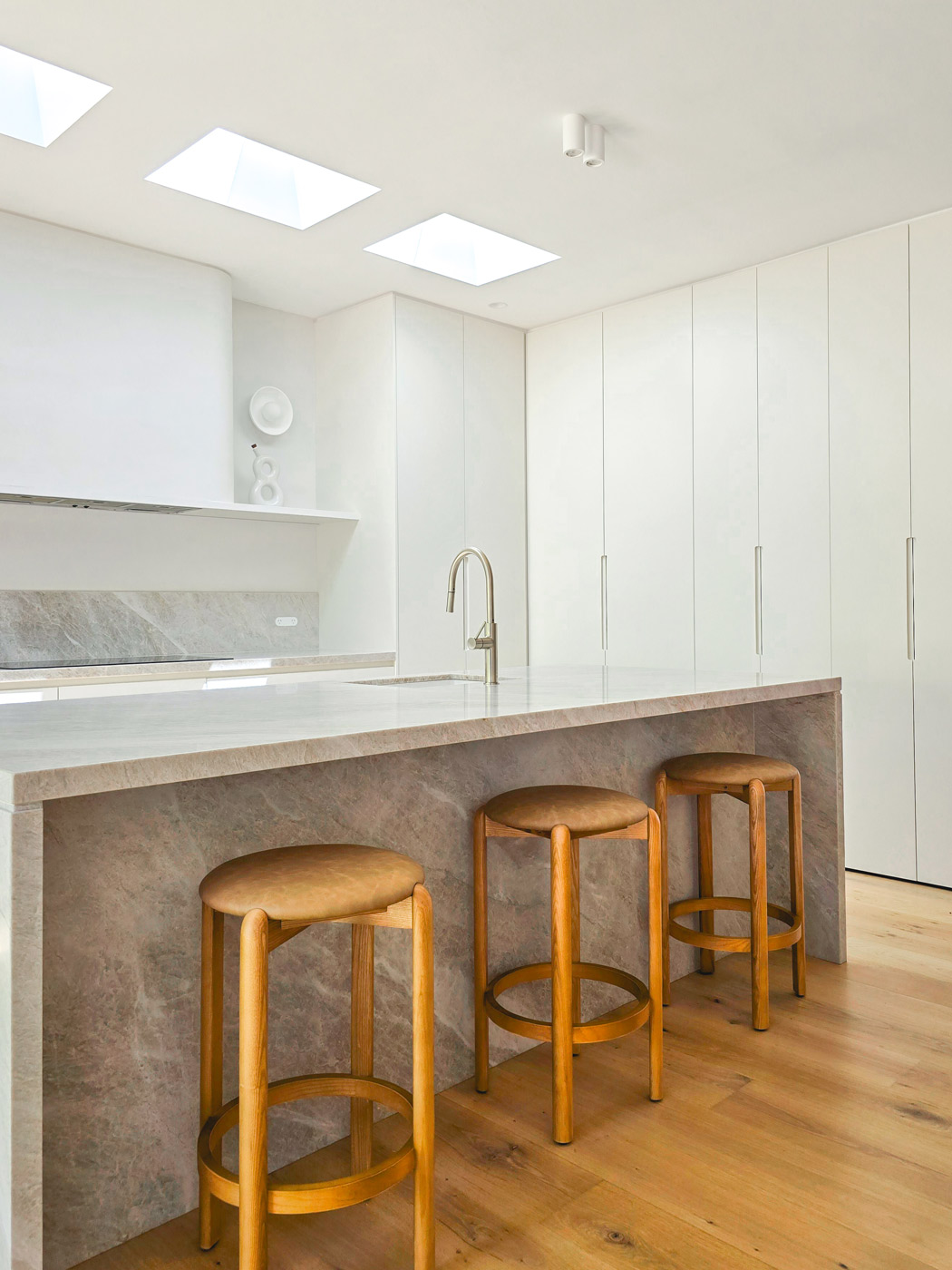
Taj Mahal vs marble
This is the comparison most people are really making. They love marble, they're nervous about it, and Taj Mahal is the stone that resolves it.
Marble is softer, etches when acid touches it, and asks for careful living. Taj Mahal gives you a similar warm, pale, veined look but resists etching and staining far better and takes daily use in its stride.
The trade. Marble has a particular softness to its veining that some people prefer, and marble is often the more affordable of the two. Taj Mahal costs more in most cases, but it buys you a surface you don't have to think about as much. Want the look of marble and the life of quartzite, Taj Mahal is the answer. Specifically love marble's softness and you'll embrace its care, stay with marble. We compare the two families in quartzite vs marble.
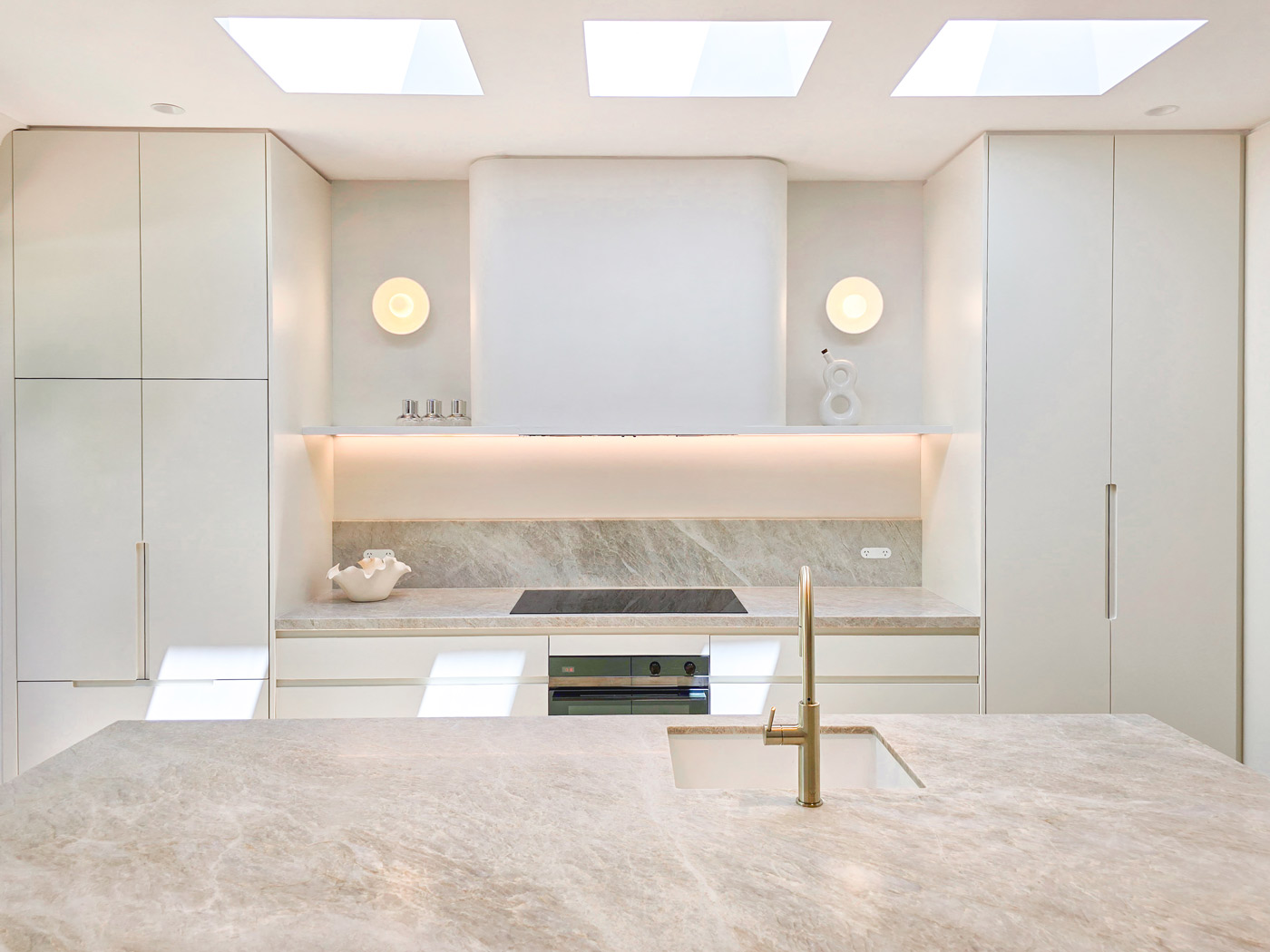
What drives the price
Taj Mahal sits above engineered stone and above some marbles on price, and a few things decide where your job lands.
The slab itself. Bolder, more graphic blocks and larger, cleaner slabs cost more than quieter ones.
How many slabs your job needs. A big island or a full-slab splashback uses more material.
Fabrication detail. A mitred edge, waterfall ends, and cut-outs for sinks and cooktops all add to a simple job.
The honest truth is a material price on its own tells you almost nothing. The only real number comes from a quote on your actual kitchen. Sometimes Taj Mahal is closer to reach than people assume. Request a quote and we'll price your job properly.
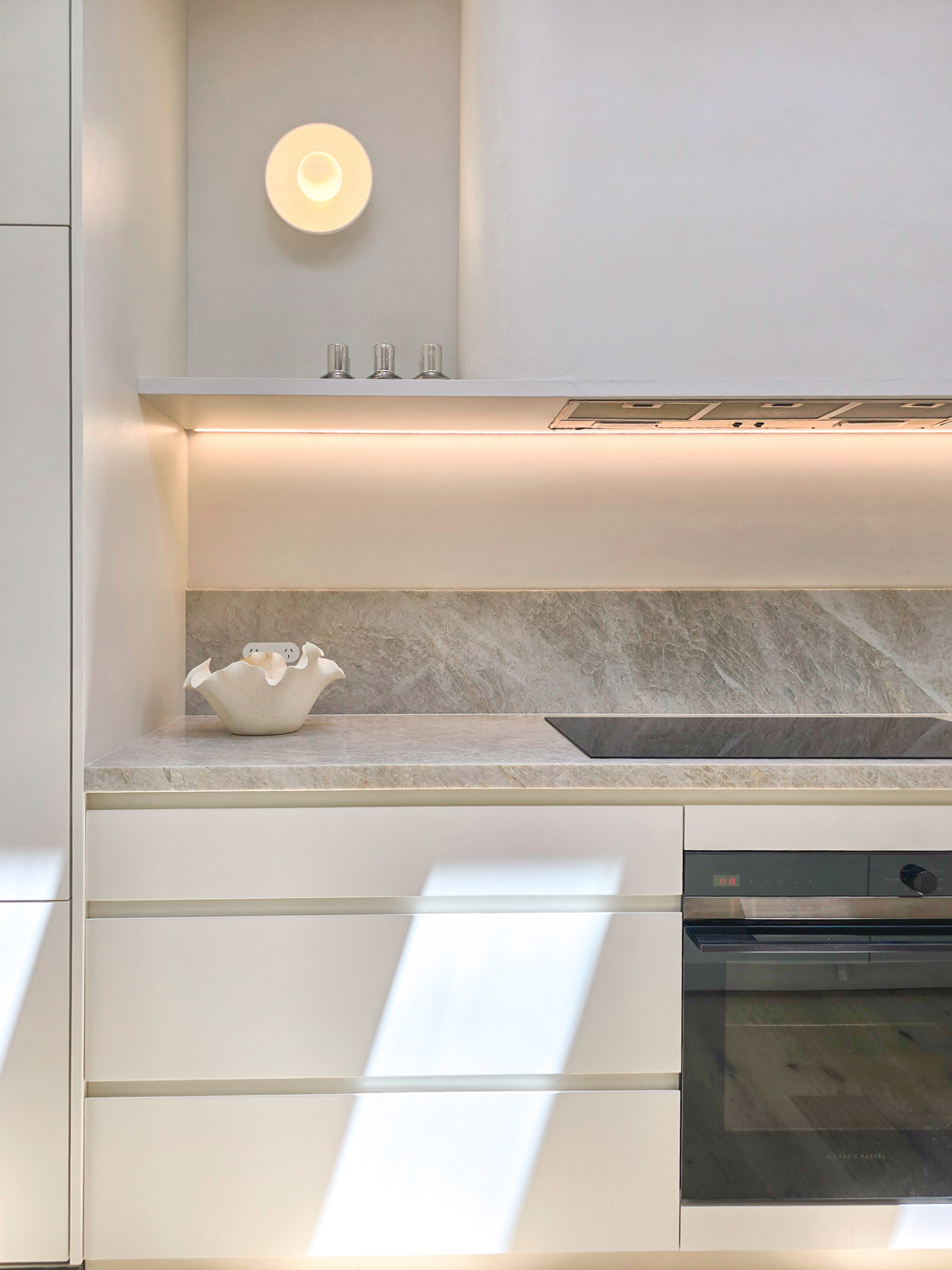
Does Taj Mahal stain or etch
Sealed, it handles daily spills well. It's more resistant to both staining and etching than marble, which is much of its appeal. That said, it's natural stone, so the sensible habits apply: wipe up spills rather than leaving them overnight, and use a pH-neutral cleaner. Do that and it stays as it was for decades. Our stone care guide has the full routine, though with Taj Mahal it's a short one.
Honed or polished
We finish our Taj Mahal honed as standard, and there's a reason. A honed surface is matte, which softens the vein contrast and mutes the shine, so the stone reads calm and grounded rather than glossy. It suits the warm, understated look most people are after with this stone.
Polished brings up more contrast and shine, which some people want for a brighter, more reflective kitchen. Both are valid. Honed is the quieter, more contemporary call, and it hides day-to-day marks a little better.
Every Taj Mahal slab is different
This is the part that catches people out. Taj Mahal isn't one look. It comes from different quarry blocks, and each carries its own undertone, vein direction and movement. Some run bold and graphic with strong diagonal veining. Others are pale and quiet, close to a soft white. Two slabs with the same name can look genuinely different side by side.
That's why you don't order Taj Mahal by name. You choose your actual slab. We walk through the range we currently hold, block by block, in which Taj Mahal quartzite slab is right for you, so you can see how wide that variation really goes.
How to choose your Taj Mahal
See it in person, next to your own finishes. Undertone shifts with the light and with whatever joinery and tapware sit beside it, and a photo or small sample won't tell you the truth. Stand the full slab next to your timber, your cabinetry sample and your tapware, in daylight if you can.
Bring your plans in and we'll put the current blocks in front of you. Book a design consultation or visit the showroom. Once you've chosen your slab and placed a deposit, that specific slab is locked to your project, so the one you fell for is the one that gets installed.
Frequently Asked Questions
Is Taj Mahal quartzite good for kitchens?
Yes. It's hard, heat-tolerant and, sealed, resistant to staining and etching. It gives you a warm, marble-like look with far more forgiveness, which makes it one of the best natural stones for a working kitchen.
Is Taj Mahal marble or quartzite?
Quartzite. It's often mistaken for marble because of its warm, veined look, but it's much harder and more forgiving than marble, and it doesn't etch the way marble does.
Does Taj Mahal quartzite stain?
Sealed, it resists staining well, better than marble. Wipe up spills rather than leaving them overnight and use a pH-neutral cleaner, and it stays as it was for decades.
Does Taj Mahal need sealing?
Yes, lightly. It's sealed on install and re-sealed occasionally after that. It's a quick wipe-on job, not an ongoing chore.
Why does Taj Mahal cost more than engineered stone?
It's natural stone, quarried and cut, one of a kind, and harder to work. You're paying for a surface that exists nowhere else and lasts decades, rather than a manufactured, repeating pattern.
Are all Taj Mahal slabs the same?
No. Each comes from a different quarry block with its own undertone, vein direction and movement. Some are bold and graphic, others pale and quiet. Choose your actual slab in person rather than ordering by name.

Outdoor Stone Benchtops That Survive a Sydney Summer
An outdoor benchtop in Sydney has to handle sun, heat, salt air, dust, rain and BBQ fat on the same surface. Porcelain and sintered stone are our first pick, granite is the best natural stone outdoors, and quartzite works with regular sealing. Light-coloured marble is best avoided outside, and engineered stone belongs indoors only, as UV affects it and outdoor use voids the manufacturer's warranty. This guide also covers joins, BBQ heat and why butt joins or shadowlines often outlast mitres outdoors.
Outdoor Stone Benchtops That Survive a Sydney Summer

Engineered Stone vs Natural Stone Benchtops: Honest Comparison | Marble Hub
Natural stone is one of a kind, handles heat well and can be restored for decades, but it needs sealing. Crystalline-silica-free engineered stone is consistent and needs no sealing, but it can scorch and can't be rehoned the same way. We cut both every week and compare them honestly on looks, care, heat, repair and price. We recommend natural stone first, and engineered stone where consistency or easy care matters most.
Engineered Stone vs Natural Stone Benchtops: Honest Comparison | Marble Hub

Pink Cristallo Quartzite for a Northmead Kitchen
A Federation home in Northmead with a new-wing kitchen by designer Vagn Madsen, built by Dan Kitchens Australia, with a Pink Cristallo Quartzite island benchtop and splashback from our Strathfield South showroom. This piece looks at why a pink stone works: subtle white shaker joinery that steps in and out around the rangehood, a soft stone that adds warmth without competing, a curved island with a softened, stepped double bullnose edge, and stone used in just two places. It also covers choosing slabs in person, living with pink quartzite in a family kitchen, and Pink versus White Cristallo.
Pink Cristallo Quartzite for a Northmead Kitchen
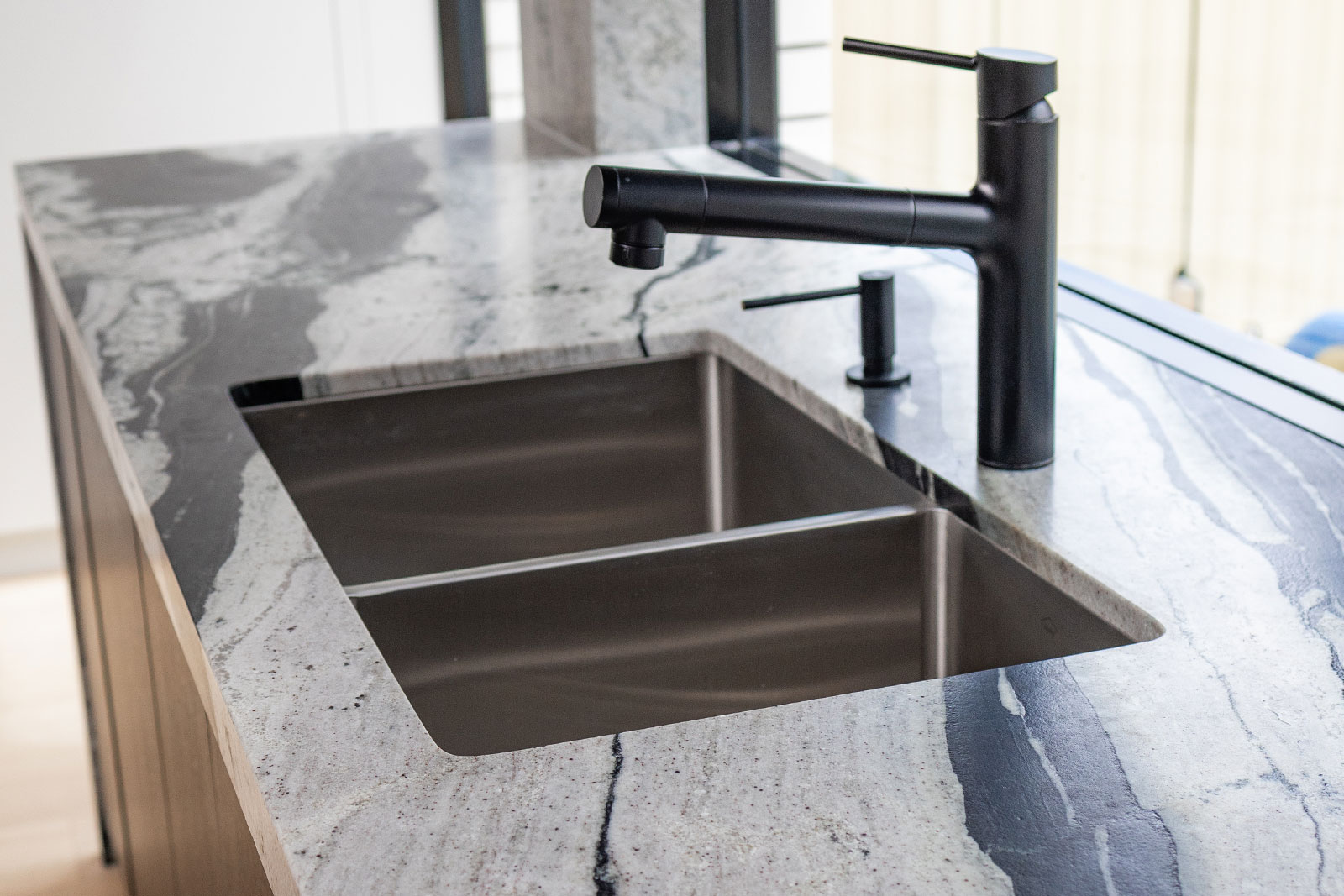
Undermount vs Flush Mount vs Drop-In Sink for Stone Benchtops | Marble Hub
There's no wrong sink style for a stone benchtop, only the right one for how you'll use it. This guide explains the look, cost and maintenance of undermount, flush mount, drop-in and integrated stone sinks from a fabricator's point of view. Drop-in sinks work hard in busy kitchens, butler's pantries and utility laundries, while flush mount gives the sharpest look and needs the most planning. It also explains how Marble Hub reviews and supports every flush mount sink at the factory. Tags: undermount sink, flush mount sink, drop in sink, top mount sink, integrated stone sink, butler's pantry sink, laundry sink, sink cut-out, stone benchtop sink, kitchen sink styles, Sydney stone fabricator, Marble Hub
Undermount vs Flush Mount vs Drop-In Sink for Stone Benchtops | Marble Hub
Let’s Get Started on Your Dream Space
Whether it’s a kitchen, bathroom, or laundry, Kitchen Hub is here to bring your vision to life.
