
Add slabs to your wishlist so we can give you custom quote.
Add productions from our slab collection so we create a quote for your next project!
If you're unsure of what you're after please reach out via our contact page.
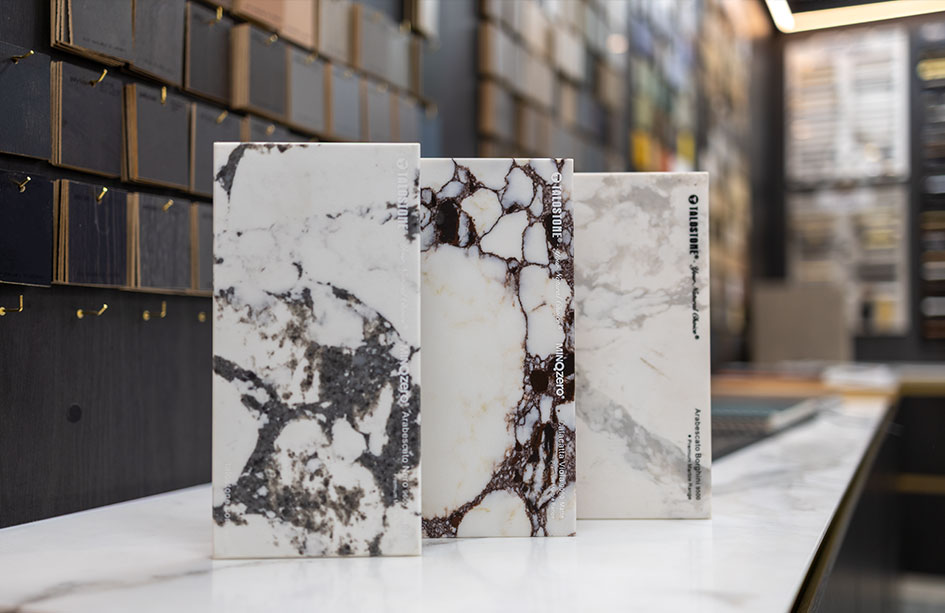
Talostone: The Marble-Look Surface That Went Silica-Free
Talostone: The Marble-Look Surface That Went Silica-Free
TL;DR: Talostone is an Australian engineered surface brand, and its current range, MinQ Zero, is completely crystalline-silica-free. It gives you the low-maintenance, non-porous, consistent qualities of engineered stone, with a focus on marble looks, minus the silica that got the old generation of engineered stone phased out. If you want an engineered surface that's safe, current and marble-inspired, Talostone is one to know.
You have probably landed here because Talostone turned up on a quote, a showroom board, or a designer's spec, and you want to know two things. Is it any good, and is it one of the safe ones after the silica change. Short version, yes on both, with trade-offs worth understanding before you commit. Here is what Talostone is and where it earns its place.
What Talostone actually is
Talostone is an engineered surface, made by binding minerals with pigment and resin and pressing the result into slabs, the same broad category as other engineered stones. It's Australian, it's been going since 2013, and it built its name on mineral surfaces designed to look and feel like marble.
Being engineered, it's consistent. A given Talostone colour looks the same slab to slab, so what you choose is what you get, with none of the block-to-block variation of natural stone.
MinQ Zero, the silica-free part
This is the reason Talostone matters right now. Its current range, MinQ Zero, is completely free of crystalline silica, and it has replaced all of Talostone's earlier products.
The short context: from 1 July 2024, Australia phased out engineered stone containing 1% or more crystalline silica, on worker-safety grounds. MinQ Zero is the legal, safe answer to that change, not a workaround. If you want the full story on what the change did and didn't cover, we explain it in engineered stone didn't go away, it just lost the silica. For Talostone, the takeaway is simple. It's one of the brands built for the world after the change.
What Talostone is good at
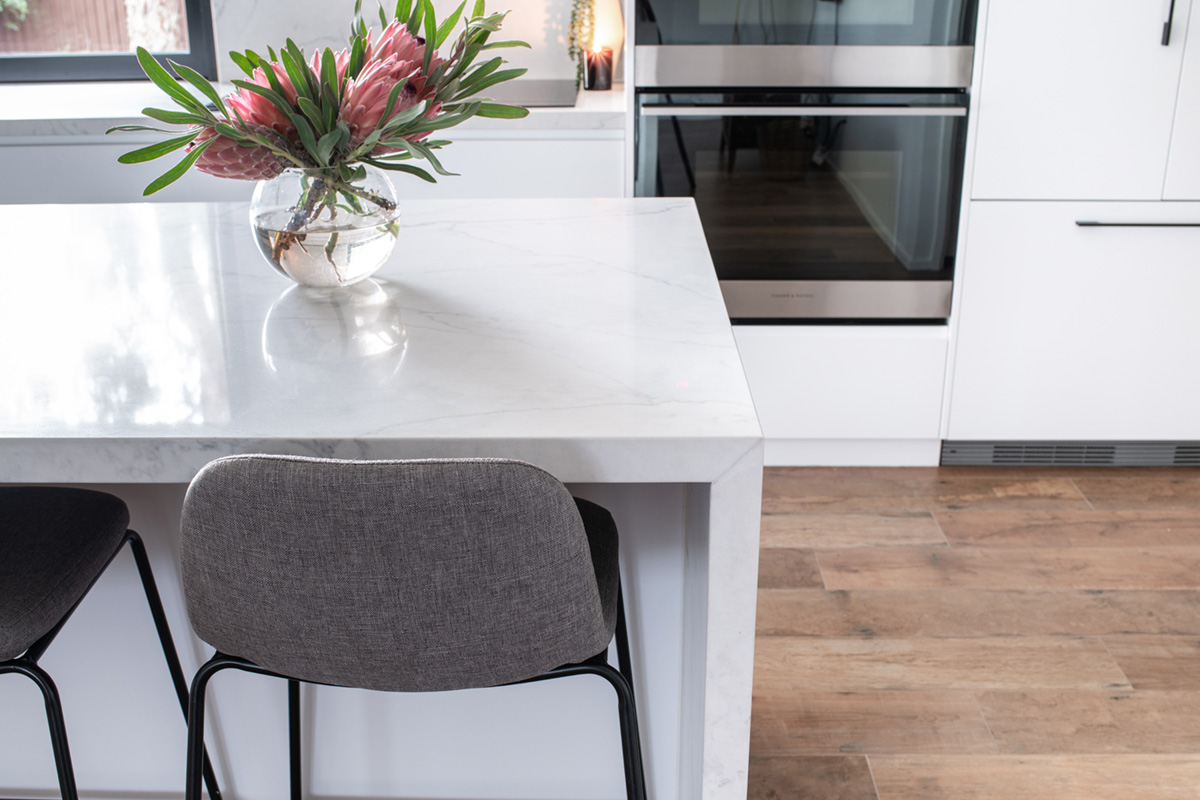
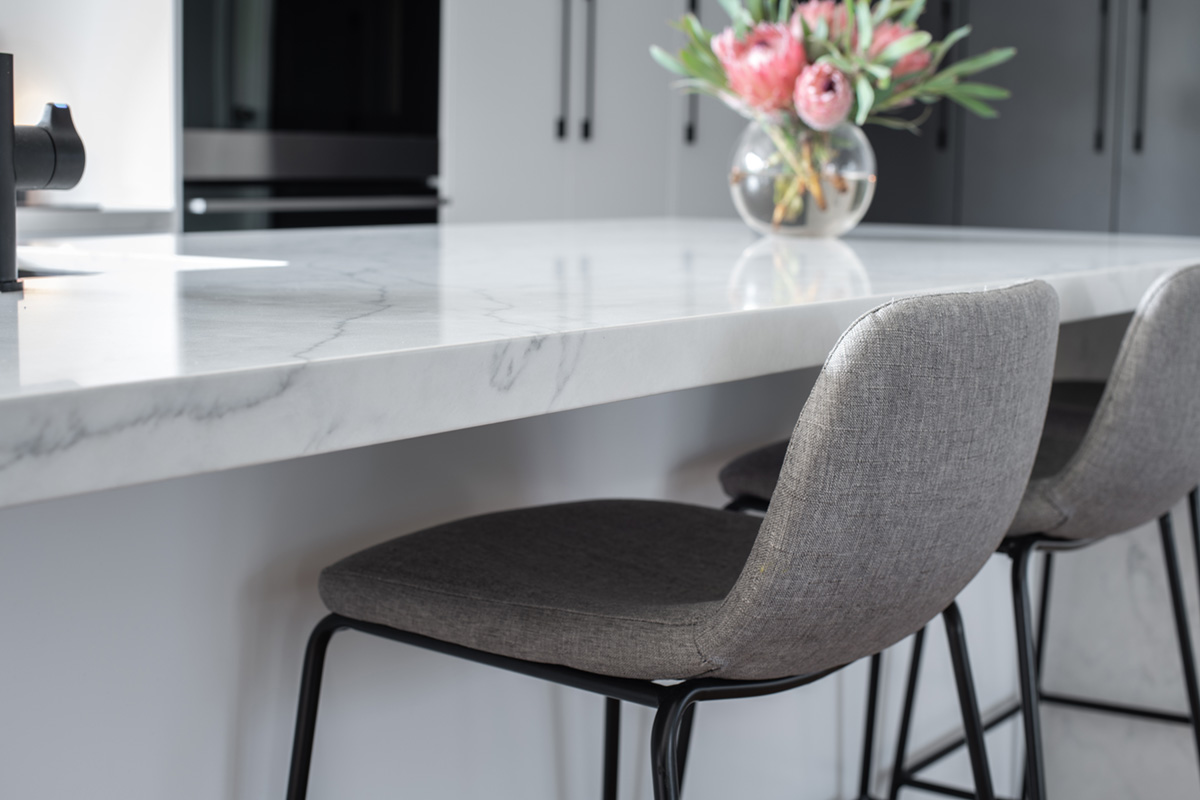
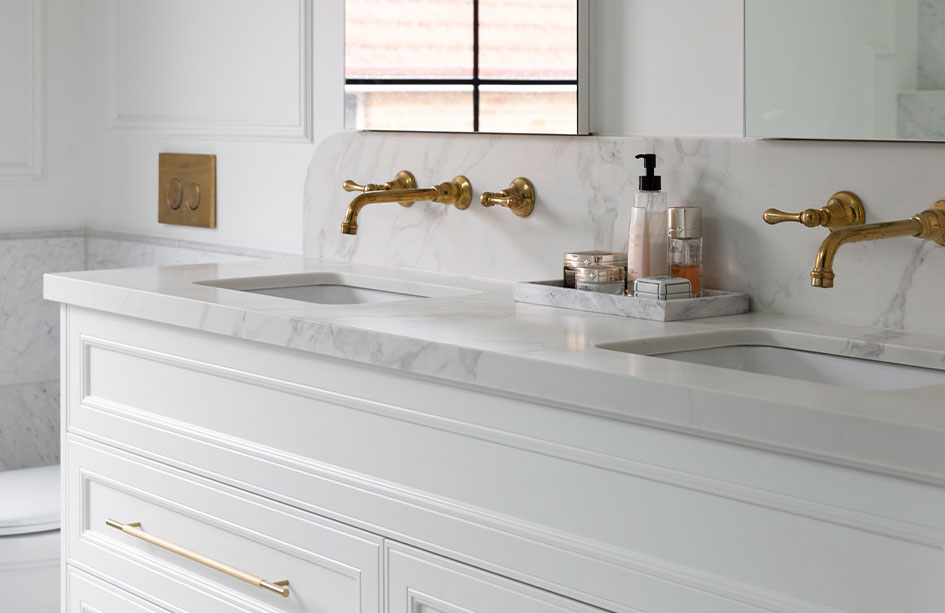
The engineered strengths apply. It's non-porous, so it never needs sealing and it resists staining from wine, oil and coffee. It's consistent, so you can plan a look with confidence. And Talostone's focus on marble-look designs means you can get soft, veined, pale surfaces that hold their appearance without marble's care.For someone who loves the look of marble but wants a surface that asks nothing of them, that combination is the appeal.
What makes Talostone different
Here's the part that doesn't show up on a spec sheet. On certain colours, Talostone gets the marble look closer than other brands manage. Two engineered brands can offer what reads as the same white marble on paper, then you put the slabs side by side and they don't look alike at all. It comes down to the vein flow sitting on the right base tone, a background white that lands neutral rather than too grey or too warm, so the veining looks like it belongs in the stone instead of printed on top.
That's the real reason to compare actual slabs, not brand names or website swatches. For a given palette, one brand's take on a look will sit better in your kitchen than another's. Both can be good. Depending on the whites and timbers you're building around, one works better and one works best. Talostone earns its place on the colours where its base tone and vein flow land right.
The honest trade-offs
Engineered stone has real limits, and Talostone shares them.
Heat. Like all resin-based engineered surfaces, it can scorch if you put a hot pan straight on it. Use a trivet. This is the main practical difference from natural stone or porcelain.
Repair. This depends on the damage. Natural stone can be sanded back and resealed across the whole surface. Engineered stone works differently, but the right stone specialist can repair most everyday wear and tear, chips, scratches and knocks, with colour-matched fillers. The honest catch is that a repair is a patch rather than a full resurface, and matching a busy marble-look pattern takes more skill than a solid colour. So most damage is fixable. It just wants the right person doing it.
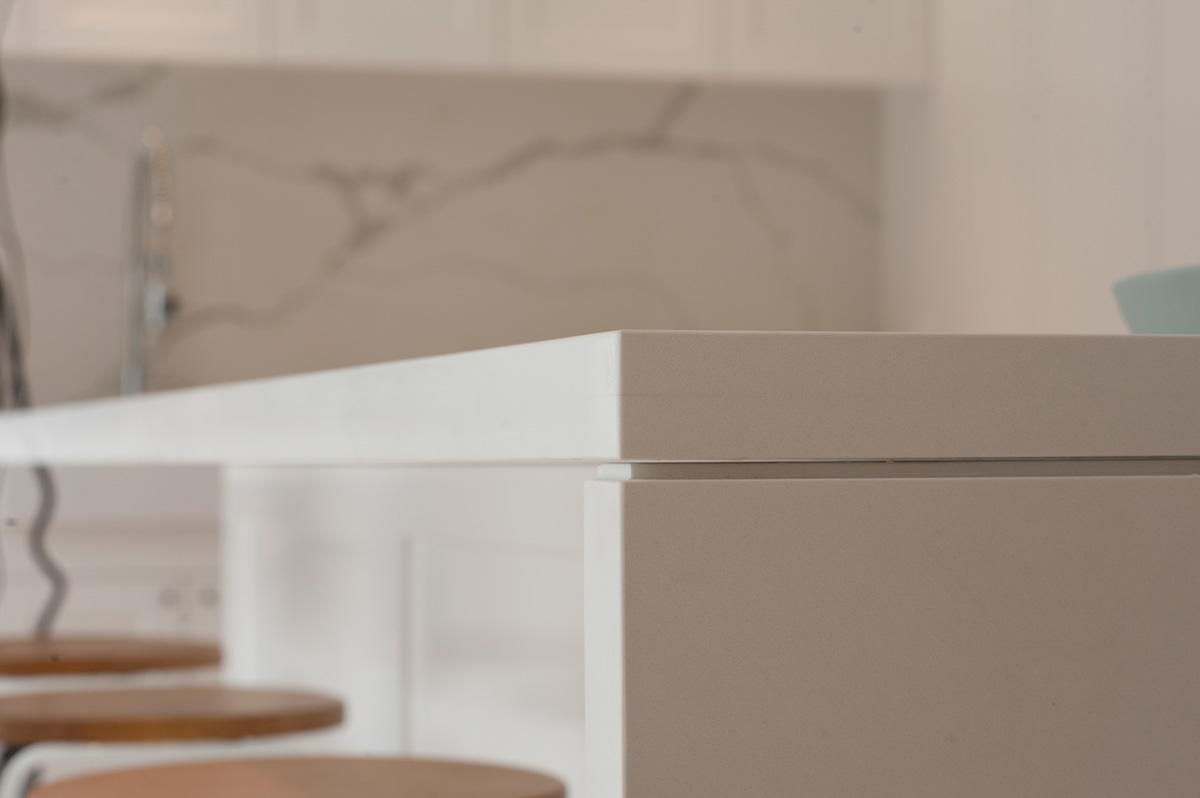
The look. However good marble-look engineered stone gets, it's a printed, repeating design rather than one-of-a-kind natural movement. Up close, and especially on a thin edge, it reads as manufactured. For some people that consistency is the point. For others, only natural stone will do.
Where Talostone sits on cost
Talostone sits in the middle. It's generally more affordable than natural marble or quartzite, and priced in line with other silica-free engineered surfaces. That's part of the appeal for a busy kitchen or an investment property, where you want a clean, consistent surface without a natural-stone budget.
The real number depends on your job, slab count, edge details and the install, so a material's price on its own tells you almost nothing. The only honest comparison comes from a quote on your actual kitchen. Ask the Marble Hub team to price a few materials side by side, good, better and best, and you'll see where Talostone lands against natural stone and porcelain rather than guessing from a headline figure.
Where Talostone fits
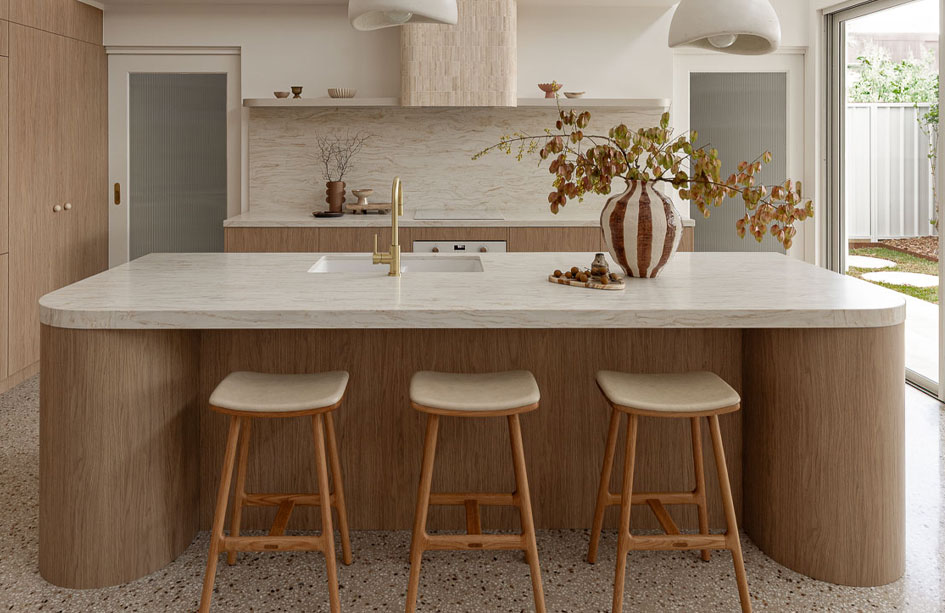
Talostone suits the person who wants marble's look with engineered stone's easy life. A busy family kitchen where the bench takes daily use and nobody wants to think about sealing. A rental or investment property where low maintenance matters. A laundry or butler's pantry where you want a clean, consistent surface without a natural-stone budget.
If you want genuine natural movement, or you cook in a way that punishes surfaces with heat, weigh it against quartzite or porcelain first. We compare the natural side in quartzite vs marble, and the porcelain side in porcelain and sintered stone.
Talostone against the alternatives
Against natural marble, Talostone wins on maintenance and consistency, and loses on genuine one-of-a-kind character and heat tolerance.
Against porcelain, Talostone is easier to fabricate into certain edge details but can't match porcelain's heat resistance, since porcelain shrugs off a hot pan and engineered stone doesn't.
Against the other silica-free engineered options, Quantum Zero and Caesarstone's silica-free range, the safety question is settled either way, so it comes down to design and finish. Talostone leans hardest into marble looks, and on some colours its base tone and vein flow read more like real stone than the alternatives. If a specific marble-look design is what you're after, compare the actual slabs side by side rather than the brand names. That's where the difference shows.
Against the old high-silica engineered stone people remember, Talostone's MinQ Zero gives the same kind of look and finish without the silica, which is the whole reason it exists.
Living with Talostone
About as low-effort as a surface gets. No sealing, ever. Wipe it down with a pH-neutral cleaner. Use a trivet for hot pans and a board for chopping, and it holds its look for years. The one thing to remember is heat, because that's the limit engineered stone doesn't forgive.
Choose Talostone if
Choose Talostone if you want a marble look with no maintenance, you value a consistent, predictable surface, and you want the reassurance of a current silica-free product. Busy kitchens, investment properties, laundries and pantries are its natural home.
Look elsewhere if you want genuine natural stone character, or if you put hot pans straight down and won't reach for a trivet. Quartzite or porcelain suits that better.
Frequently Asked Questions
Is Talostone silica-free?
Yes. Talostone's current range, MinQ Zero, is completely free of crystalline silica and has replaced all earlier Talostone products. It's a legal, safe engineered surface for the period after the 2024 ban.
Is Talostone any good?
Yes, for the right job. Talostone gives you a marble look with none of the upkeep, a consistent surface slab to slab, and the reassurance of a current silica-free product. It earns its place in busy kitchens, laundries and investment properties. Where it gives ground is heat and genuine one-off character. Put a hot pan straight on it and it can scorch, and up close it reads as a printed design rather than natural movement. Good surface, clear trade-offs.
Is Talostone engineered stone or natural stone?
Engineered. It's a mineral surface made by binding minerals with pigment and resin, designed to look like marble, with the consistency and low maintenance of engineered stone.
What makes Talostone different from other engineered stone?
On certain colours, Talostone gets the marble look closer than other brands do. The difference is the vein flow sitting on the right base tone, a neutral white ground that reads like real stone rather than a printed pattern. Other brands offer similar looks, and some are excellent, but for a given palette one version will sit better in your kitchen than another. Compare the actual slabs, not the brand names. Depending on the whites and timbers you're working with, one works better and one works best.
What colours does Talostone come in?
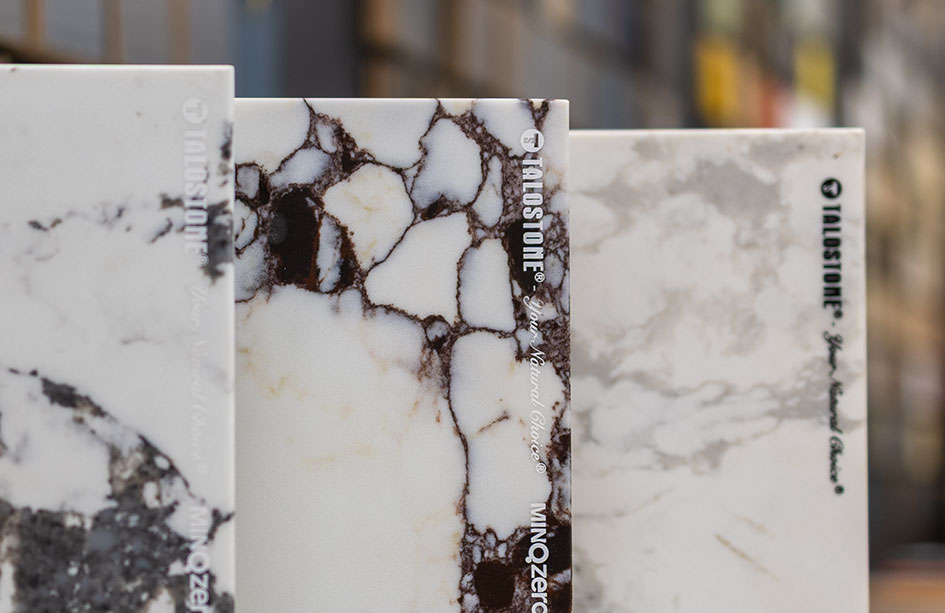
Talostone's MinQ Zero range focuses on marble-look designs, soft, veined, pale surfaces built to read like natural stone. Colours and finishes shift as the range updates, so the current stocked options are worth confirming before you commit. You can see what's available on our Talostone range page.
Does Talostone need sealing?
No. It's non-porous, so it never needs sealing and resists staining from everyday spills. Wipe it with a pH-neutral cleaner and it holds its look.
Can you put a hot pan on Talostone?
Better not to. Like all resin-based engineered stone, it can scorch, so use a trivet. Heat is the main limit engineered surfaces don't forgive.
Is Talostone expensive?
Talostone sits in the middle, generally more affordable than natural marble or quartzite, and in line with other silica-free engineered surfaces. The real number depends on slab count, edge details and the install, which is why the only honest comparison comes from a quote on your actual kitchen. Ask the Marble Hub team to price a few materials side by side, good, better and best, and you'll see where Talostone lands against natural stone and porcelain rather than guessing from a headline figure.
Is Talostone affected by the engineered stone ban?
No. The ban applies to engineered stone with 1% or more crystalline silica. Talostone's MinQ Zero range is silica-free, so it's legal and safe to buy and fabricate.
Talostone or Caesarstone?
Both are silica-free engineered surfaces now, so the safety question is settled either way. Talostone leans hardest into marble looks. Caesarstone's silica-free range spreads across a wider set of colours and finishes. If a particular marble-look design is what you're chasing, compare the actual slabs side by side rather than the brand names. That's where the real difference sits.
Talostone or natural marble?
Talostone for a marble look with no maintenance and full consistency. Natural marble for genuine one-of-a-kind character, if you'll accept sealing and careful living. Different priorities, both valid.
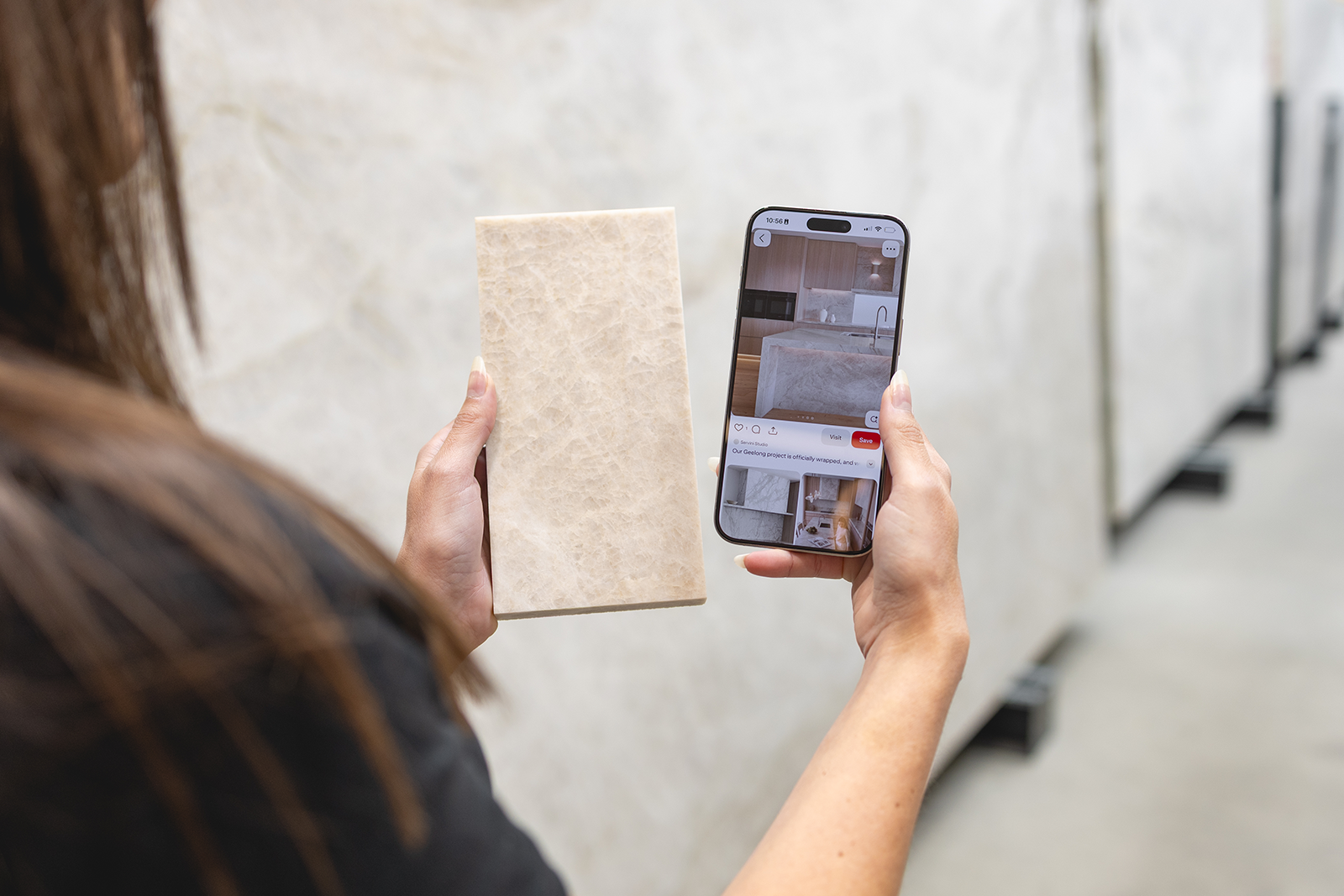
Where to Start When You Don't Know the Stone in Your Inspo Photos
For homeowners who don't know where to begin with stone. You don't need a stone name to start. Send your inspiration photos, tell us what you like and why you're drawn to it, and we'll identify the material and point you to the right slabs. Covers how your eye already picks matching tones, reading stone from a photo, which photos to trust online, and why picking stone is like picking art. Tags: how to choose stone, where to start, inspo photos, identify marble from photo, stone selection, Marble Hub Sydney.
Where to Start When You Don't Know the Stone in Your Inspo Photos
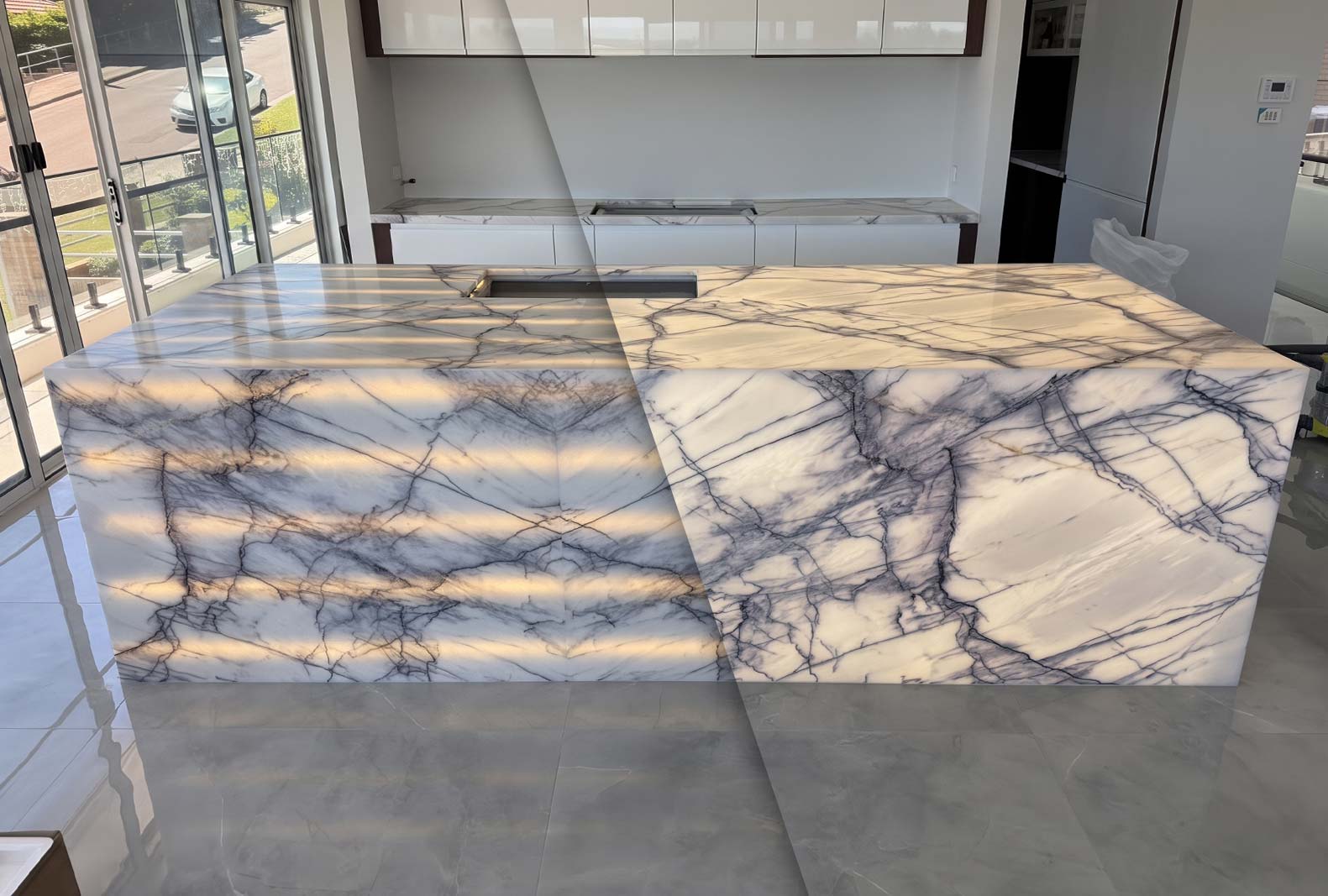
Backlit Stone and Why the LED You Choose Changes Everything
Backlit stone explained simply. The look changes a lot with the light behind the slab. LED strips give a striped, patterned glow; a full LED panel lights the whole slab evenly so it looks lit from within. Both are valid, so do what suits your budget, but plan it early with your electrician. Covers which stones are translucent and why the light install feeds into the check-measure. Tags: backlit stone, backlit marble, translucent stone, LED stone panel, backlit onyx, feature lighting, Marble Hub Sydney.
Backlit Stone and Why the LED You Choose Changes Everything
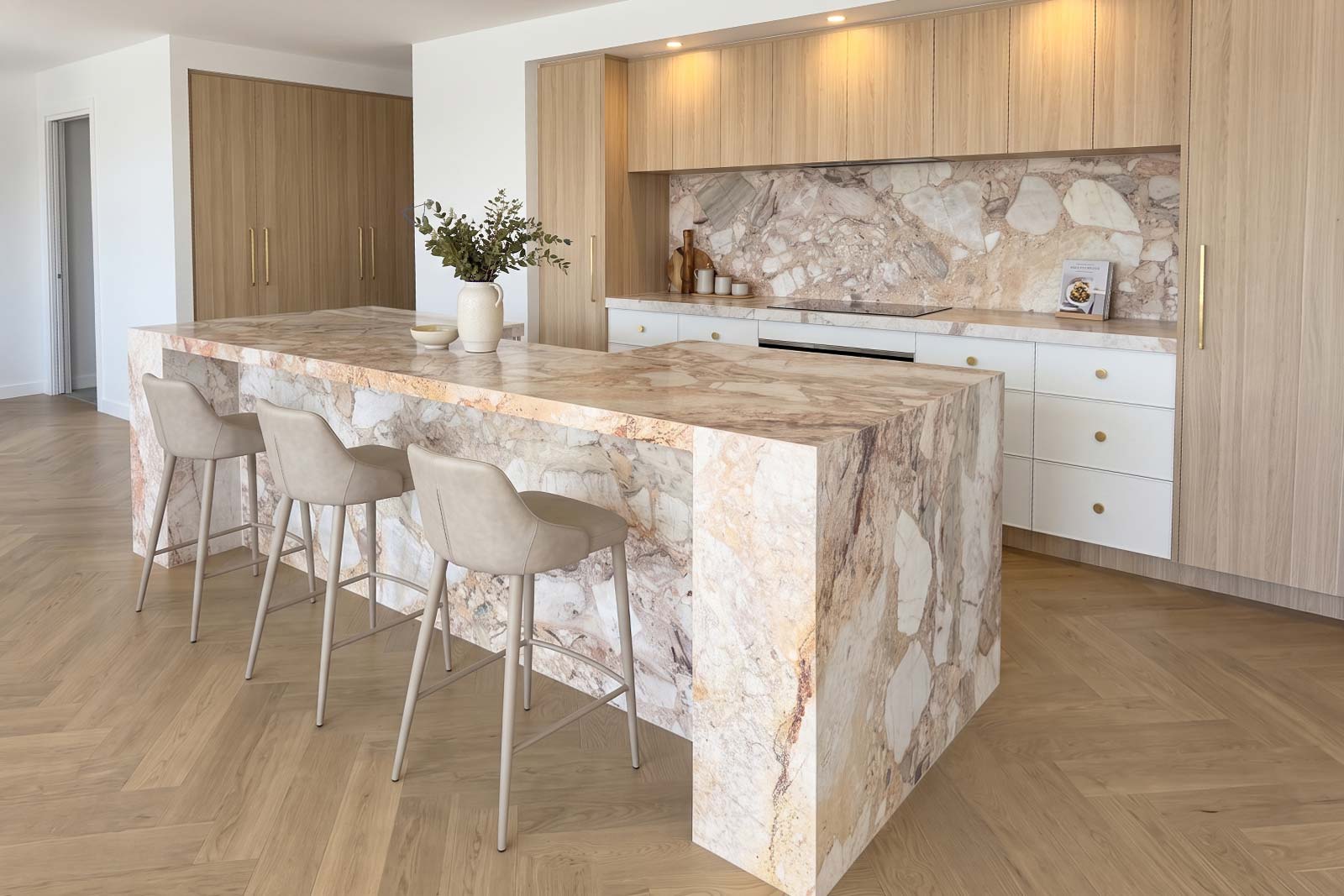
How We Plan Stone Across a Duplex Without Wasting a Slab
Planning stone across a duplex or dual-occupancy build. We work out real slab count, map every piece across the slabs, balance feature stone across both homes, and plan the stages so the check-measure and install land when each side is ready. Covers slab yield, offcut planning, mapping the cut to the stages, and getting every trade working to the same target dates. Tags: duplex stone benchtops, dual occupancy, slab count, stone yield, staged install, trade coordination, Marble Hub Strathfield South.
How We Plan Stone Across a Duplex Without Wasting a Slab
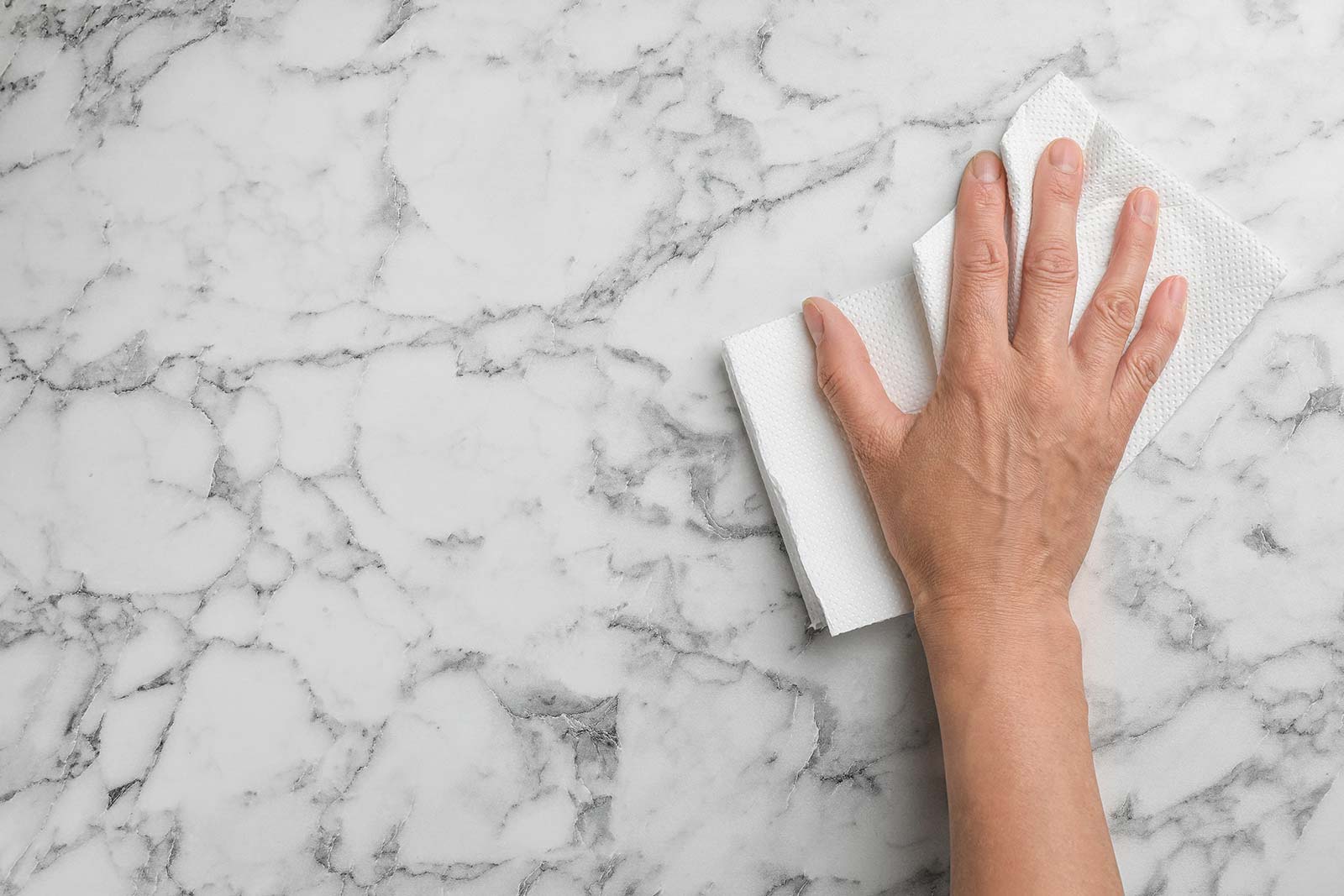
How to Clean and Care for a Marble Benchtop
How to clean and care for a marble benchtop, written for people who already own marble or are about to. Covers the daily routine, warm water and pH-neutral cleaner, wiping acidic spills fast, sealing with Lithofin MN Stain-Stop every 6 to 12 months, and the difference between a stain and an etch. Explains why heavy veining hides marks better than plain marble, and why a rehone and rebuff after 3 to 4 years brings a tired benchtop back. Honest about trade-offs. Marble is a relationship, not a set-and-forget surface. Written by Marble Hub, a Strathfield South stone factory and showroom.
How to Clean and Care for a Marble Benchtop
Let’s Get Started on Your Dream Space
Whether it’s a kitchen, bathroom, or laundry, Kitchen Hub is here to bring your vision to life.
