
Add slabs to your wishlist so we can give you custom quote.
Add productions from our slab collection so we create a quote for your next project!
If you're unsure of what you're after please reach out via our contact page.
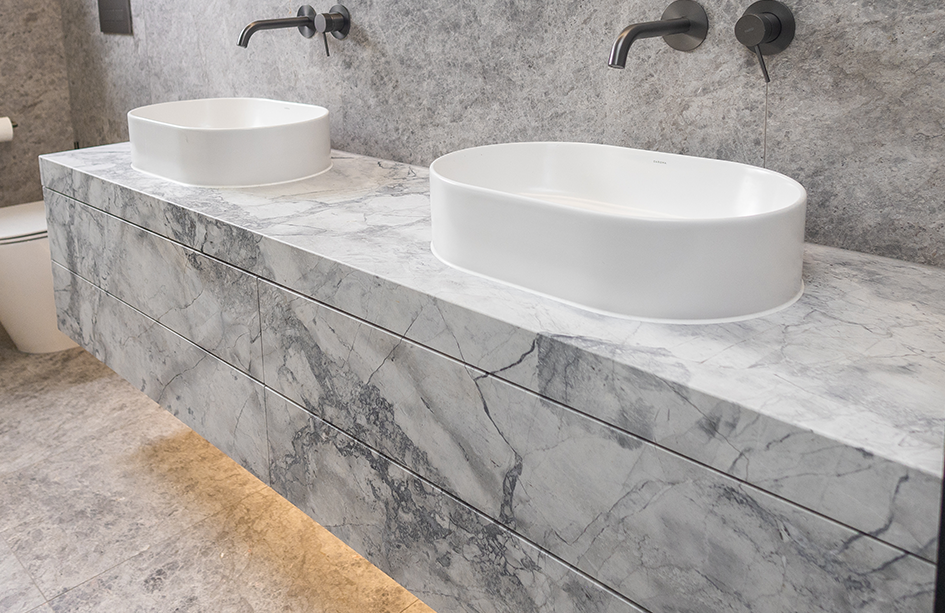
Stone Vanity Tops: Marble, Quartzite & Porcelain | Sydney
Stone Vanity Tops: The Complete Guide
TL;DR: Stone belongs in a bathroom, and a vanity is one of the kindest places to use it. Marble, quartzite, dolomite and porcelain all work, with different trade-offs. The three decisions that matter: which stone, how you detail the front edge, and whether the basin sits on top, under, or is cut from the same stone.
A bathroom is one of the best rooms in the house for stone, and most people don't realise it. No lemon juice, no hot pans, no olive oil, and a fraction of a kitchen's traffic. The surface that makes people nervous in a kitchen behaves beautifully in a bathroom. The real decisions aren't whether to use stone. They're which stone, how you finish the front edge, and how the basin meets the top. Here's the whole picture.
Why a bathroom is kind to stone
The fear people carry about stone comes from the kitchen. Marble etches when acid touches it, and a kitchen is full of acid. A bathroom isn't. The worst a vanity usually meets is toothpaste, soap, and the odd splash of perfume or cleaning product. Wipe those up and the surface stays as it was.
Traffic matters too. A vanity gets used, but it doesn't take the daily hammering a kitchen benchtop does. That's why we happily put marble on a vanity for people we'd talk out of it in a kitchen. We wrote a whole piece on exactly this in can you use marble in a vanity.
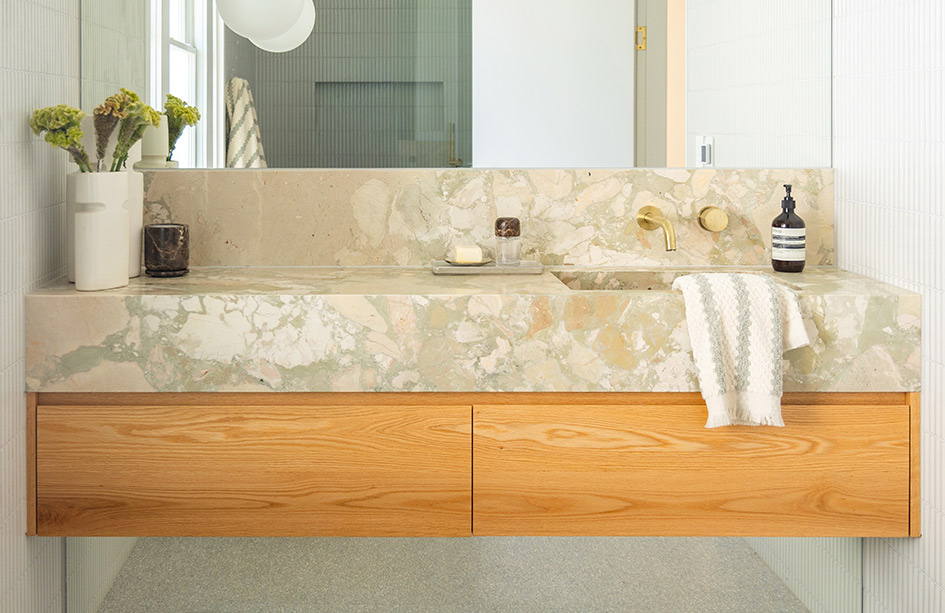
Which stone belongs on your vanity
Marble. The one people want and the one they're nervous about. In a bathroom that nervousness is mostly unfounded. Marble gives you soft veining and a calm, considered look that reads high-end on sight. It's porous and it etches, so it wants sealing a couple of times a year and prompt wiping of anything acidic. In a low-traffic bathroom, that's an easy deal. Calacatta and Carrara are the classic choices.
Quartzite. Natural stone with far less worry. Quartzite is harder than marble and more resistant to etching and staining, so it gives you natural movement with more forgiveness. If you love the look of marble but want the surface to ask less of you, quartzite is the honest answer. Taj Mahal and Super White are go-to whites.
Dolomite. The middle ground. Super White dolomite sits between marble and quartzite in both look and hardness, softer than quartzite, tougher than marble. A good call when you want that pale, marble-like calm with a bit more resilience than true marble.
Porcelain. The no-fuss option. Porcelain and sintered surfaces resist staining, scratching and water completely, and come in convincing stone looks at large format. Best when you want a vanity you never think about. The trade is a manufactured look and edges that can chip if knocked. Neolith is the one people ask for, and we covered it in the Neolith buyer's guide.
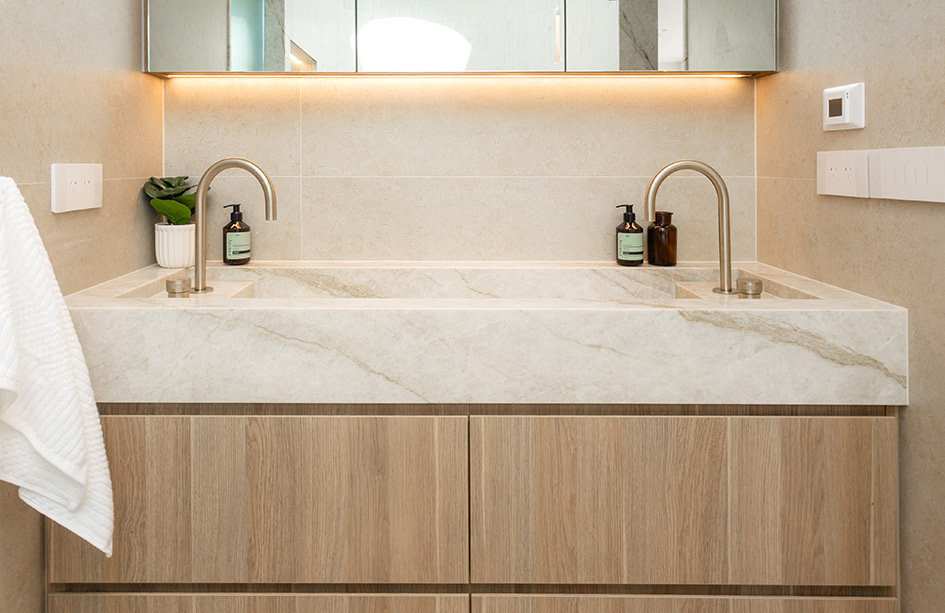
The front edge changes everything
The edge profile does more for how a vanity reads than almost any other detail. Three routes cover most bathrooms.
A mitred edge builds a thick, chunky front by folding the stone at the corner, so a 20mm slab reads as a solid 40mm or more. It looks architectural and substantial. This is the contemporary luxury move.
A slim edge keeps the stone thin and light, which suits porcelain and a minimal, modern bathroom. Understated and clean.
A pencil edge is a simple, softly rounded front. Classic, quiet, easy to live with. It never looks wrong.
Want the vanity to feel like a considered piece of furniture, go mitred. Want it to recede, go slim or pencil. We break the profiles down fully in edge profiles that work for both your countertop and your benchtop.
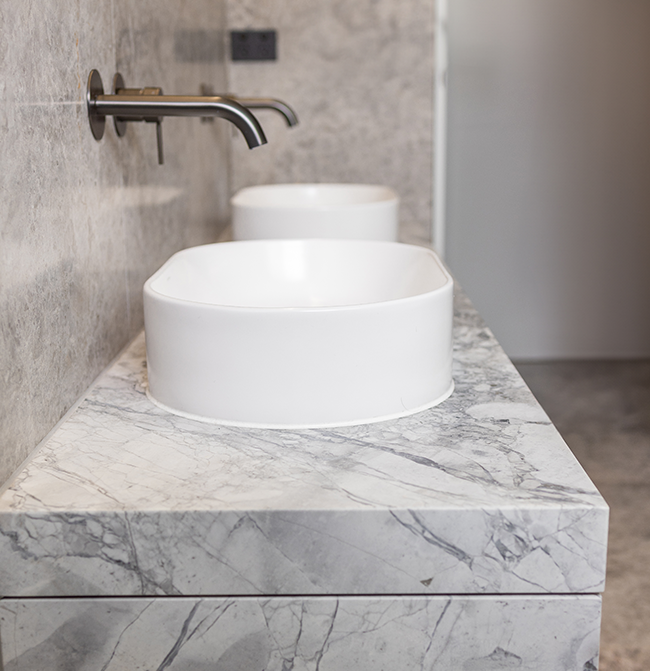
How the basin meets the stone
Three ways to handle the basin, and each changes the whole feel.
An undermount basin sits below the stone, so the top is one clean surface with the bowl beneath. Easy to wipe, nothing sitting proud, and it lets the stone stay the feature. Our usual recommendation for a stone vanity.
An above-counter basin sits on top like a bowl on a table. It's a design statement and it shows off the basin, but it interrupts the run of stone. Good when the basin itself is the hero.
An integrated stone basin is cut and shaped from stone so the bowl and top read as one piece. The most refined option, and the most involved to fabricate. When it's right, the vanity becomes a single sculpted object. We explore that in when the stone is right, the vanity becomes the feature. For ready-made basin and vanity options, our basin and vanity site has a full range.
Living with a stone vanity
Less than you'd think. Seal a marble or quartzite vanity on install, then a couple of times a year after, a wipe-on job that takes minutes. Quartzite and dolomite need it less often than marble. Porcelain needs nothing.
Day to day, wipe up toothpaste, cosmetics and cleaning products when you see them rather than leaving them to sit. Use a pH-neutral cleaner, not something acidic or abrasive. That's the whole routine. Our stone care guide has the detail if you want it.
Choose this if
Choose marble if you want the softest, most considered look and you're happy with light sealing in a low-traffic bathroom.
Choose quartzite or dolomite if you want a natural, marble-like surface with more resilience and less worry.
Choose porcelain if you want a surface you never think about and you're comfortable with a manufactured look.
For the edge, go mitred for presence, slim or pencil to keep it quiet. For the basin, undermount for clean and practical, integrated stone for the most refined result.
How to decide
See the stone before you commit. Undertone and movement shift with the light and with whatever joinery and tapware sit around them, and a small sample won't tell you the truth. Bring your finishes in and stand the slab next to them. Book a design consultation or browse the slab collection to start.
Frequently Asked Questions
What's the best stone for a bathroom vanity?
It depends on your priority. Marble for the softest, most considered look. Quartzite or dolomite for a natural, marble-like surface with more resilience. Porcelain for a vanity you never have to think about. All four work well in a bathroom.
Is marble ok for a bathroom vanity?
Yes. A bathroom is actually kinder to marble than a kitchen, with no lemon juice, no hot pans and far less traffic. Seal it a couple of times a year and wipe acidic things up promptly, and a marble vanity looks considered for decades.
Do stone vanity tops need sealing?
Marble, quartzite and dolomite do, lightly, a couple of times a year. It's a quick wipe-on job. Porcelain needs no sealing at all.
What edge profile looks best on a vanity?
A mitred edge builds a thick, architectural front that reads like a solid slab. A slim or pencil edge keeps it minimal and quiet. Mitred for presence, slim or pencil to let the vanity recede.
Undermount or above-counter basin?
Undermount gives you a clean, practical, one-surface top and lets the stone stay the feature, which is our usual recommendation. Above-counter suits when the basin is the design statement. An integrated stone basin, cut from the same slab, is the most refined result.
How thick should a stone vanity top be?
Standard slabs are around 20mm. A mitred edge can make the front read as 40mm or more for a chunkier, more substantial look, without the weight of a genuinely solid slab.
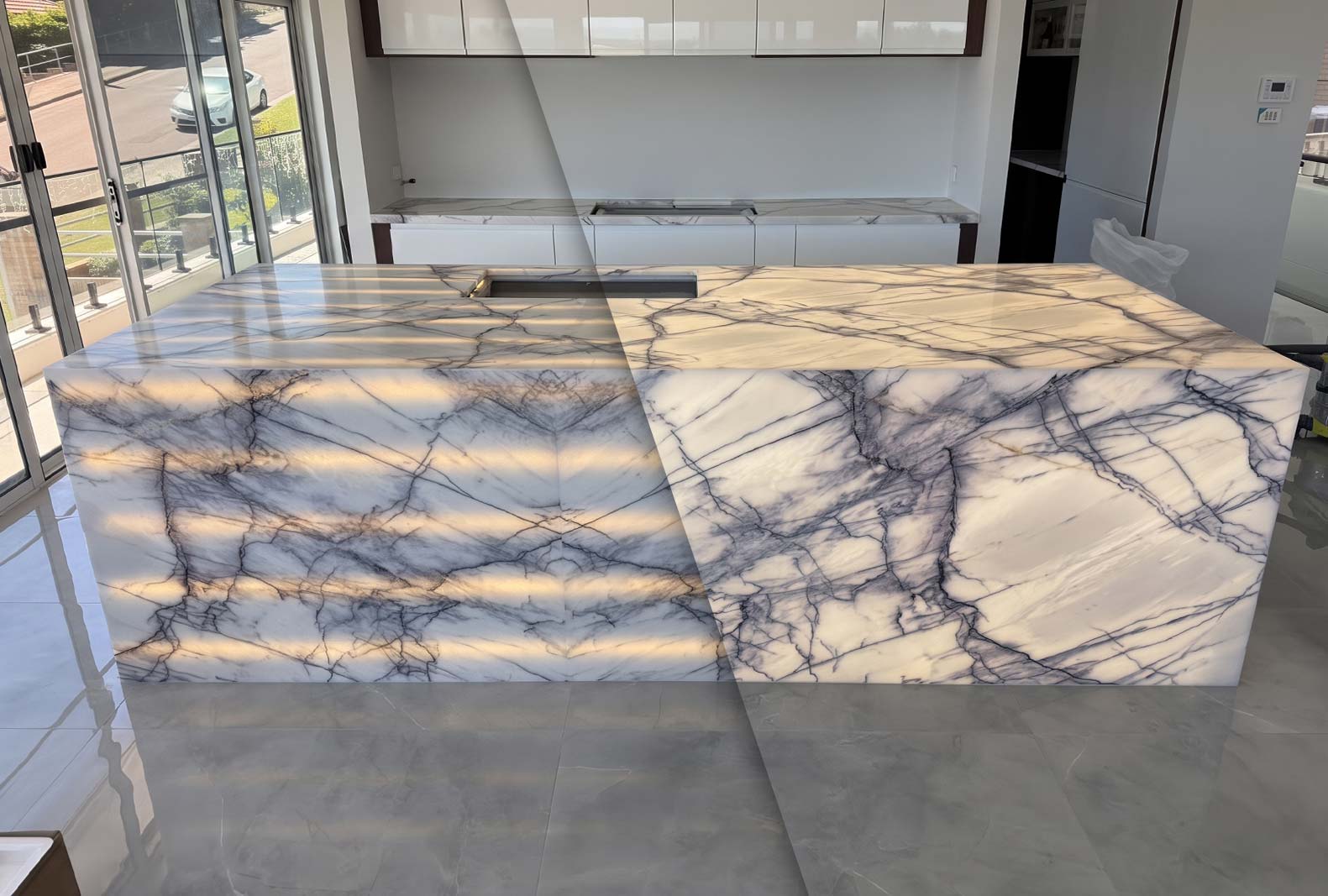
Backlit Stone and Why the LED You Choose Changes Everything
Backlit stone explained simply. The look changes a lot with the light behind the slab. LED strips give a striped, patterned glow; a full LED panel lights the whole slab evenly so it looks lit from within. Both are valid, so do what suits your budget, but plan it early with your electrician. Covers which stones are translucent and why the light install feeds into the check-measure. Tags: backlit stone, backlit marble, translucent stone, LED stone panel, backlit onyx, feature lighting, Marble Hub Sydney.
Backlit Stone and Why the LED You Choose Changes Everything
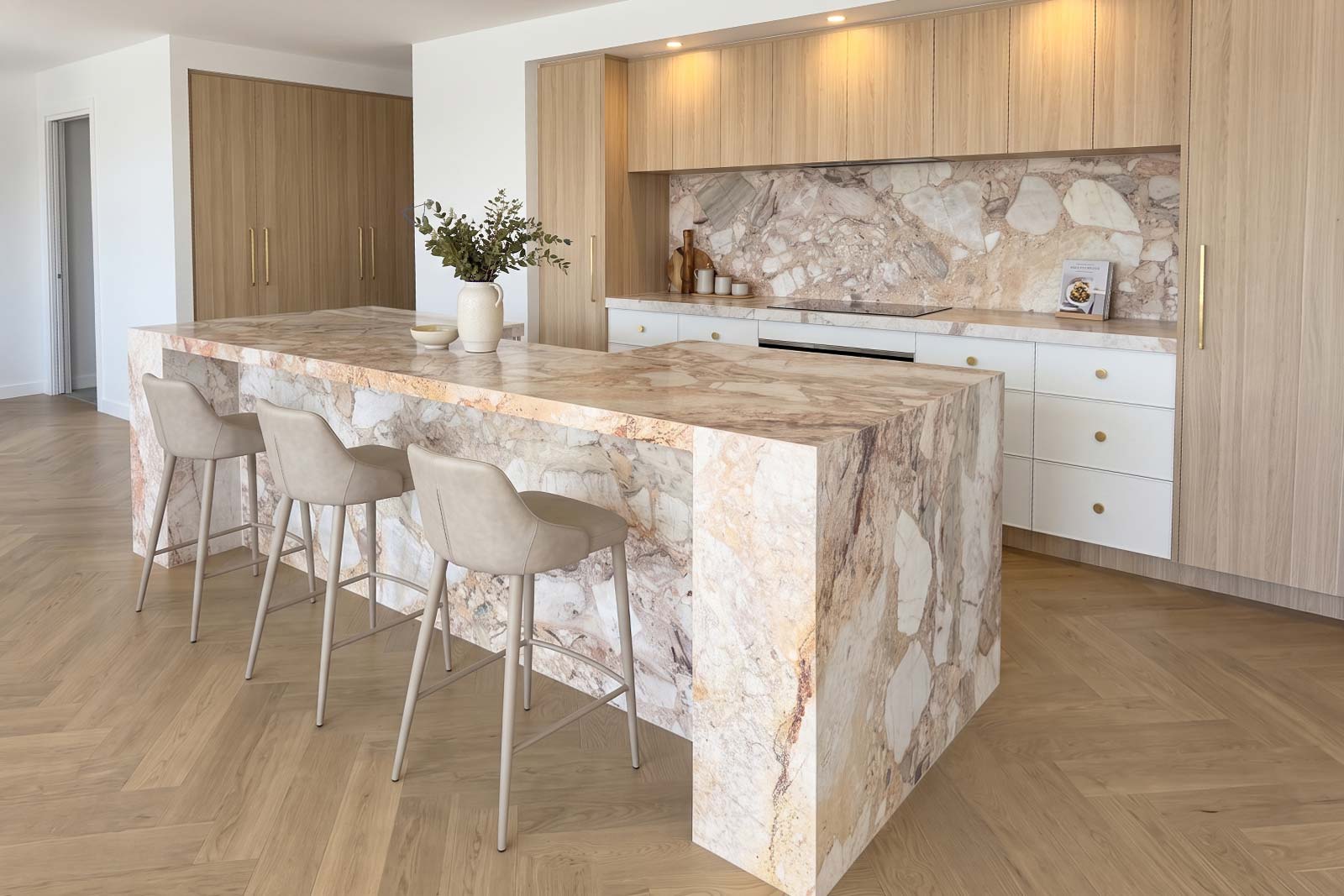
How We Plan Stone Across a Duplex Without Wasting a Slab
Planning stone across a duplex or dual-occupancy build. We work out real slab count, map every piece across the slabs, balance feature stone across both homes, and plan the stages so the check-measure and install land when each side is ready. Covers slab yield, offcut planning, mapping the cut to the stages, and getting every trade working to the same target dates. Tags: duplex stone benchtops, dual occupancy, slab count, stone yield, staged install, trade coordination, Marble Hub Strathfield South.
How We Plan Stone Across a Duplex Without Wasting a Slab
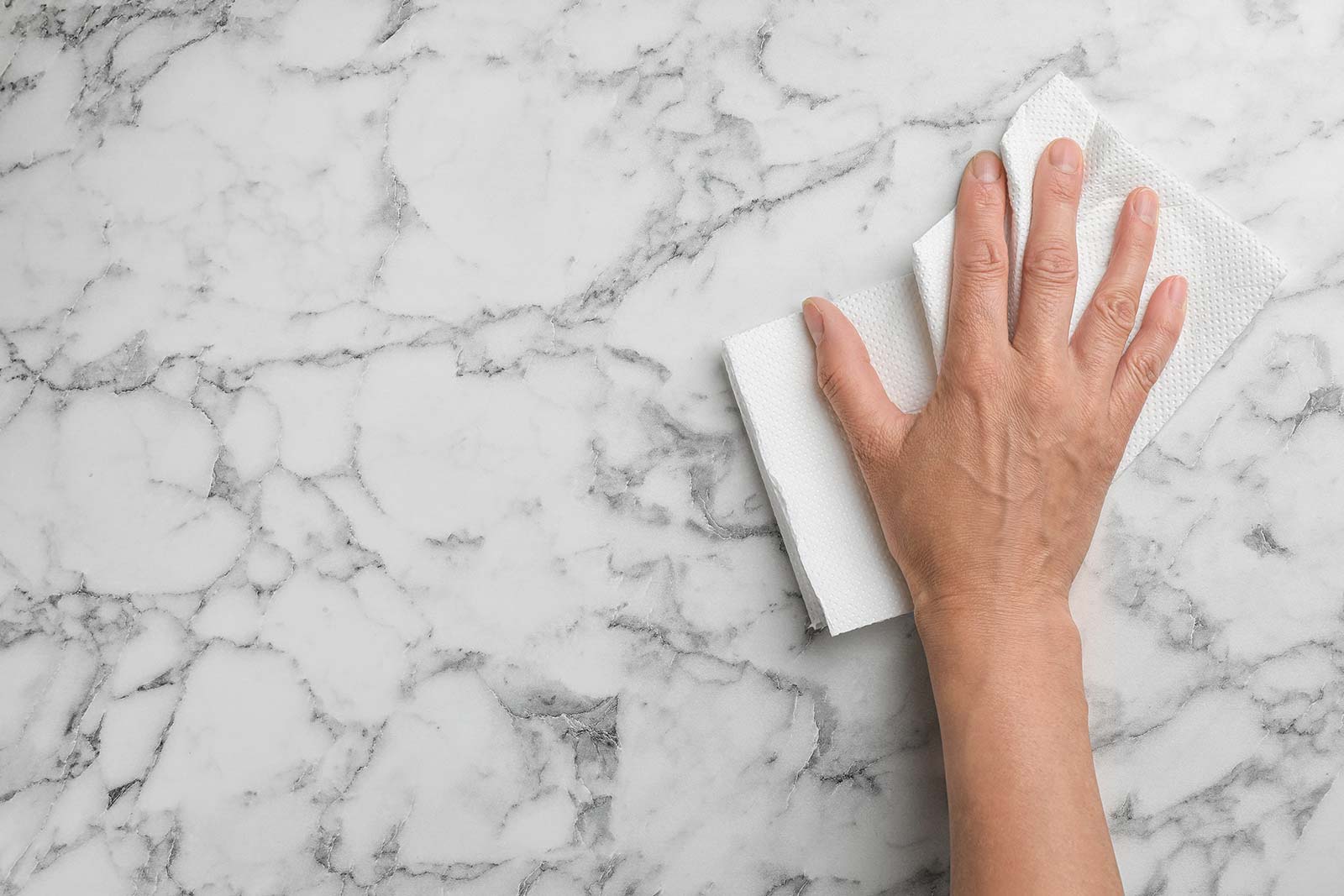
How to Clean and Care for a Marble Benchtop
How to clean and care for a marble benchtop, written for people who already own marble or are about to. Covers the daily routine, warm water and pH-neutral cleaner, wiping acidic spills fast, sealing with Lithofin MN Stain-Stop every 6 to 12 months, and the difference between a stain and an etch. Explains why heavy veining hides marks better than plain marble, and why a rehone and rebuff after 3 to 4 years brings a tired benchtop back. Honest about trade-offs. Marble is a relationship, not a set-and-forget surface. Written by Marble Hub, a Strathfield South stone factory and showroom.
How to Clean and Care for a Marble Benchtop
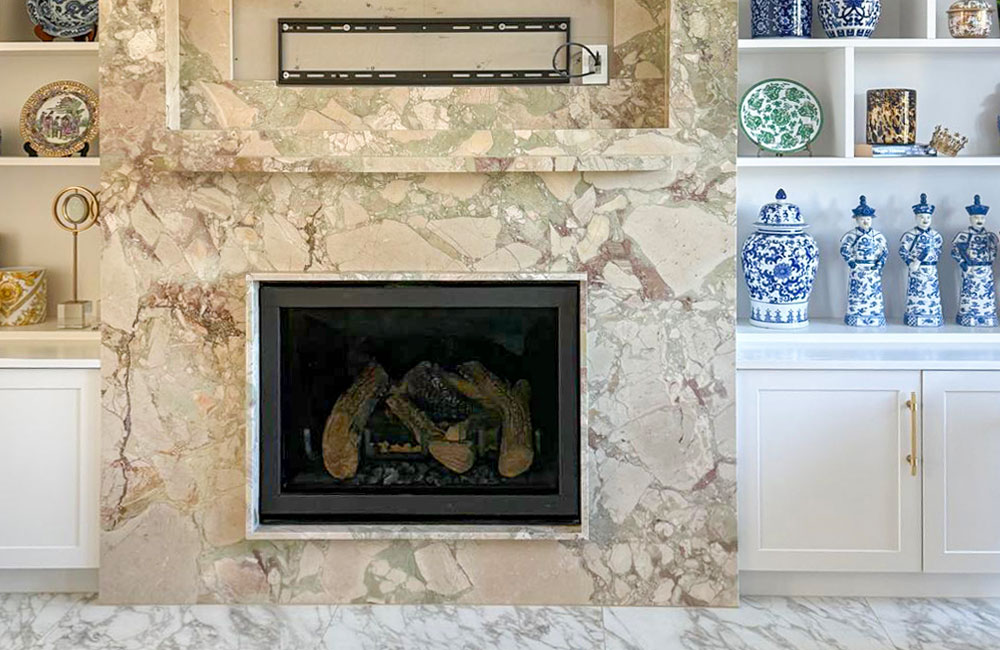
Breccia Stone Fireplace Surround Ideas
A feature fireplace in Breccia, running the full front of the central column. The stone frames a recessed television, steps out as a ledge, and wraps around and under the fire, all cut to read as one continuous slab with small, careful joins. White joinery either side keeps the stone as the feature without cladding the whole wall. Covers why restraint reads better, how the joins make a full-slab look, and why Breccia suits a living room. Tags: stone fireplace surround, Breccia fireplace, feature stone wall, recessed TV fireplace, full slab fireplace, marble fireplace Sydney, Marble Hub.
Breccia Stone Fireplace Surround Ideas
Let’s Get Started on Your Dream Space
Whether it’s a kitchen, bathroom, or laundry, Kitchen Hub is here to bring your vision to life.
