
Add slabs to your wishlist so we can give you custom quote.
Add productions from our slab collection so we create a quote for your next project!
If you're unsure of what you're after please reach out via our contact page.
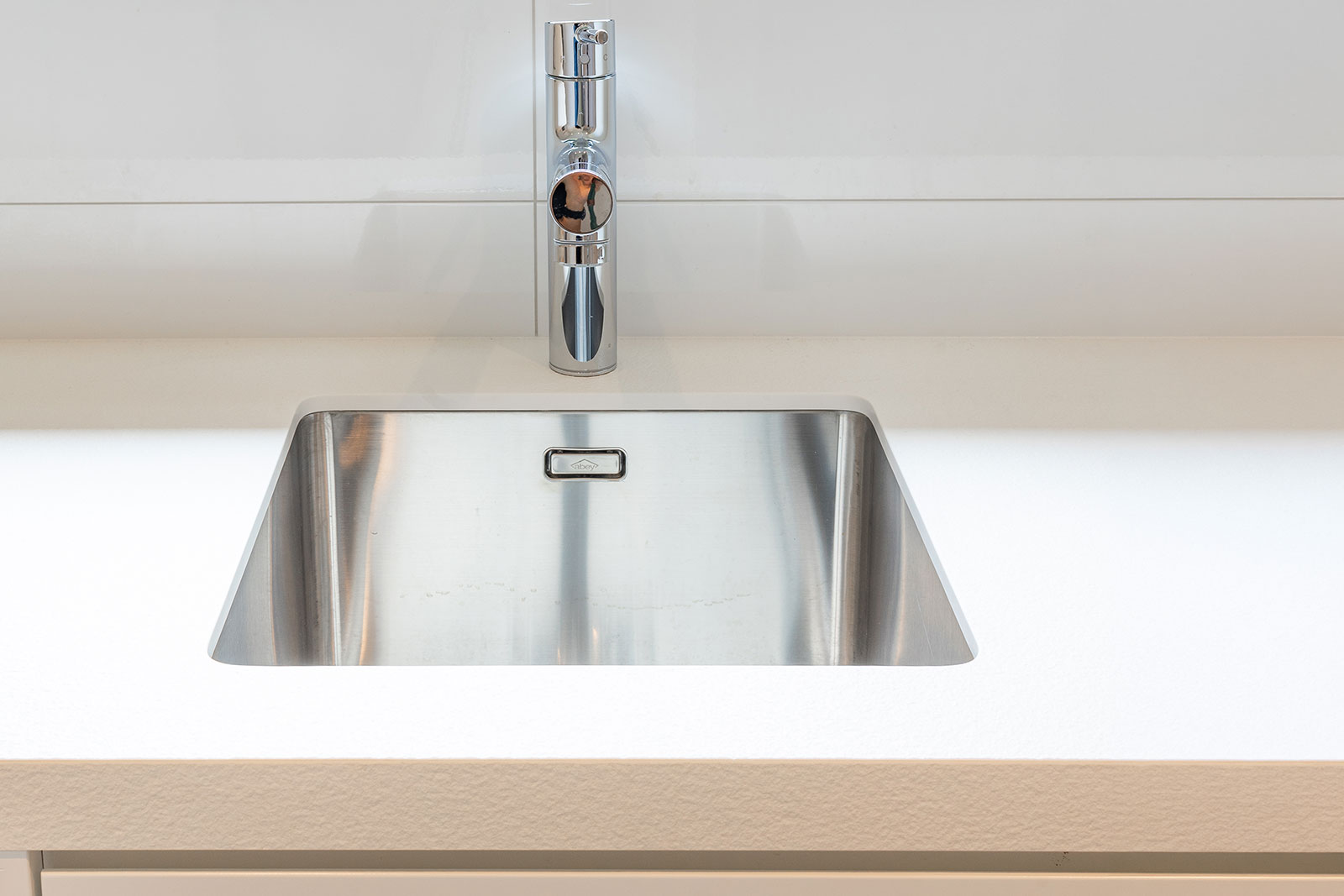
Undermount vs Flush Mount vs Drop-In Sink for Stone Benchtops | Marble Hub
Undermount, Flush Mount, Drop-In or Integrated Sink, and What Each One Does to Your Stone
There's no wrong sink style for a stone benchtop. Undermount shows the most stone and wipes clean easily. Drop-in is a hard worker in busy kitchens, butler's pantries and laundries. Flush mount gives the sharpest look and needs the most planning. Integrated stone sinks are the most crafted of all. What matters is understanding the finished look, the cost and the maintenance before you choose.
Most sink advice online is written by people who sell sinks. That's fair enough, but it only tells half the story. The sink style also decides how we cut, finish and support the stone around it. That changes what you see every day, what you clean, and what you pay.
Here's the stone side.
Undermount: stone right to the bowl
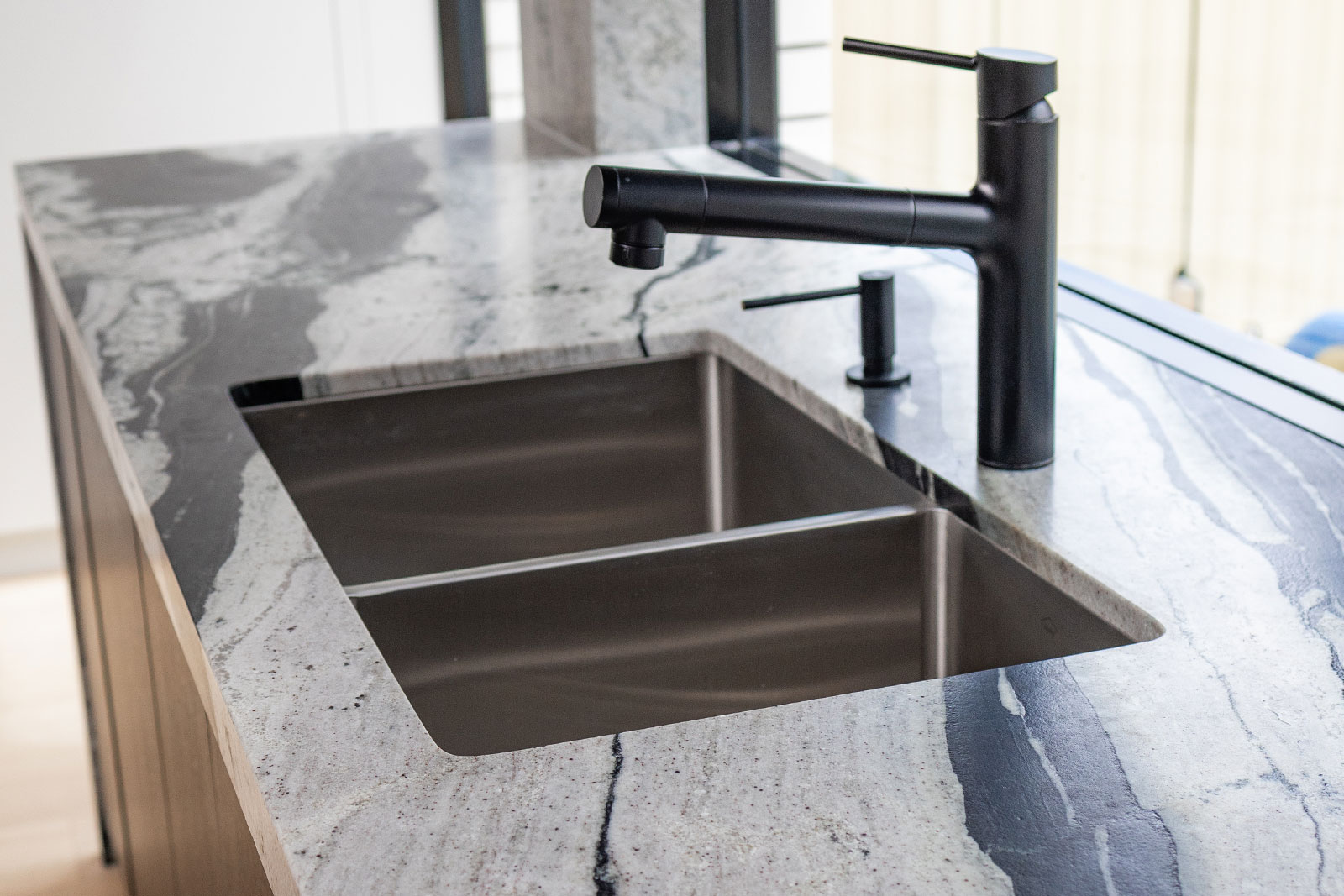
An undermount sink is fixed underneath the benchtop. The stone runs right to the edge of the bowl, with no rim on top. Crumbs and water wipe straight off the bench into the sink, which is why it's the most requested style in our kitchens.
Because the edge of the cut-out is on show, we finish it to match the benchtop surface, whether that's honed, polished or leathered. That's extra machine and hand time compared with a drop-in sink, and it's one reason undermount costs more to fabricate.
The sink is held in place by brackets and a structural adhesive, supported by the cabinetry. A well-built sink cabinet matters. It carries the weight of the sink, the water and whatever you leave soaking overnight.
Being mindful at the edge
With an undermount sink, the stone edge around the bowl is exposed. It's a finished, durable edge, and it handles everyday kitchen life well. It does ask you to be a little mindful. Heavy cast iron pots and pans lowered into the sink with care, rather than dropped, are kind to any stone edge.
We soften the cut-out edge slightly as part of finishing. It feels better under the hand and is more forgiving in daily use. Harder stones such as quartzite and granite are particularly comfortable around an undermount. With marble, a little extra care at the edge goes a long way.
Keeping it clean
The space between the stone and the sink sits under the benchtop, out of sight. Wipe the underside of the cut-out edge occasionally, as soap and grime can collect there. Our guide to living with natural stone covers the everyday habits that keep stone looking its best.
Undermount with a mitred edge
If your benchtop has a thick mitred edge, the stone is built up underneath along the front. Around the sink, we decide whether the cut-out shows the full built-up thickness or just the top layer. We'll show you both options at the design stage. Our edge profile guide explains how the mitred edge is formed.
Drop-in: the hard worker

A drop-in, or top mount, sink sits in a hole in the benchtop, with its rim resting on top of the stone. The rim covers and protects the cut-out edge.
This makes drop-in sinks the best choice for rooms that work hard. In a high-use kitchen where big pots, trays and heavy cookware go in and out all day, the rim takes the knocks. In a butler's pantry, where the messy prep and the stacked dishes live, it's a practical, robust option.
Drop-in is also a great choice for laundries that get heavy utility use. Cleaning BBQ grills, filling buckets, rinsing paint brushes, washing the dog after the beach. That kind of work is much easier on a sink where the rim protects the stone.
The maintenance is about the rim. Food, soap and grime can build up along the edge where the rim meets the stone, so it needs a regular wipe around the edge to stay clean. A small brush along the rim line every so often keeps it looking fresh.
Drop-in sinks are also simpler to fabricate and simpler to replace later. In the right room, it's the most sensible sink you can choose.
Flush mount: the sharpest look
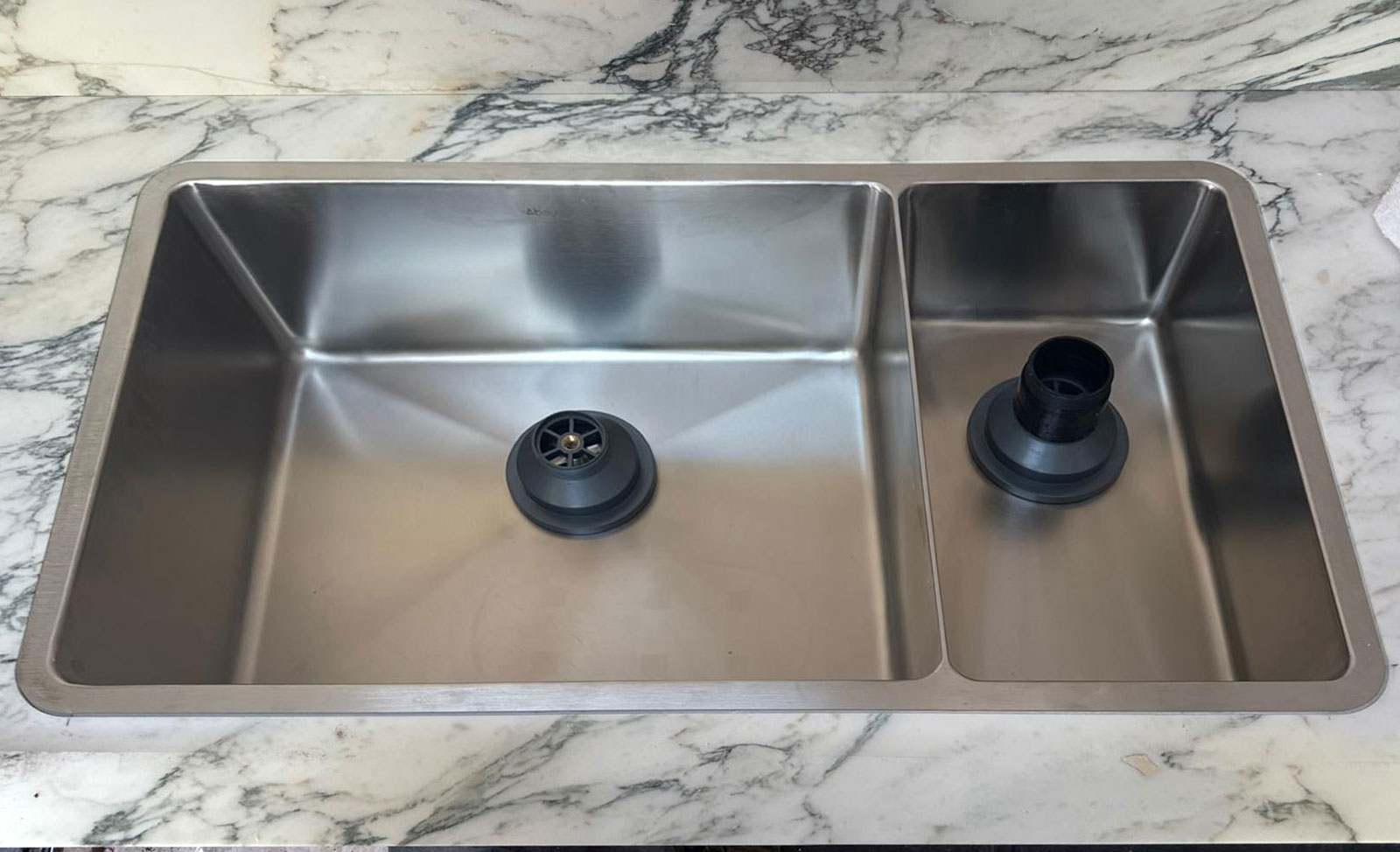
A flush mount sink sits level with the top of the benchtop. You see a fine metal rim and a fine silicone joint, and that's it. The stone and the sink read as one surface.
It's a striking look. In a contemporary kitchen with thin edges and minimal hardware, a flush mount sink makes the whole benchtop feel precise and deliberate.
There is still maintenance. The silicone joint around the rim needs to be kept clean, and from time to time it may need to be redone. It's a small job, but it's part of living with a flush mount sink.
Understand the finished look before you commit
Flush mount sinks vary more than people expect. Rim thickness, corner radius and how the sink sits against the stone all change the final look.
Before you commit, sit down with the person installing your sink and talk it through. Ask them exactly what the finished edge will look like, how wide the visible rim and silicone joint will be, and how the sink will be fixed. A flush mount sink is a detail you'll see every day, so it's worth seeing it clearly in your mind first.
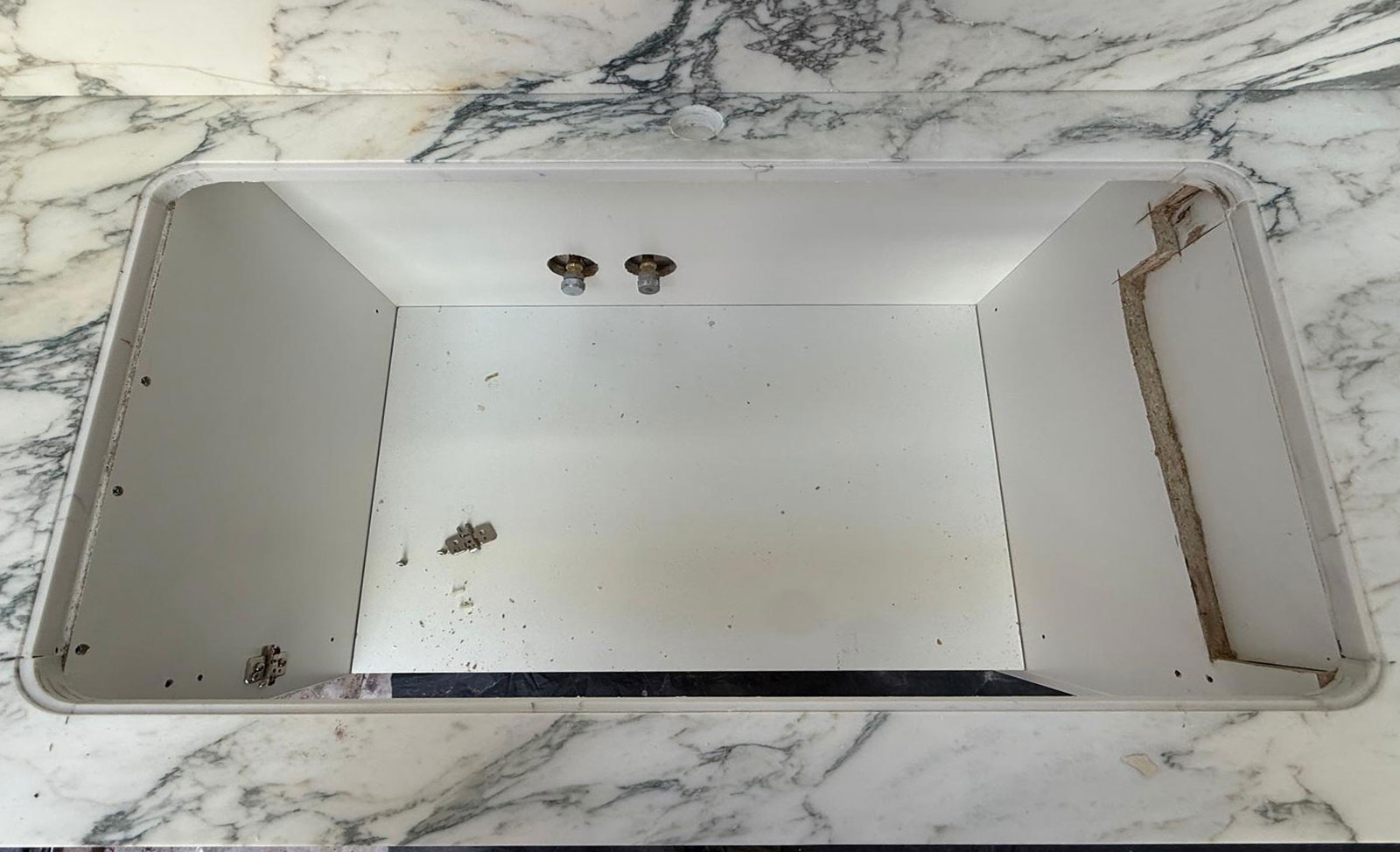
How we support every flush mount sink
For every flush mount install, we ask for the sink to be dropped off at our factory after the check measure. We review the sink against the template and the stone before anything is cut, so we can plan the fit precisely.
We also do something underneath that you'll never see. Rather than routing the natural stone thinner to create the recess, we add structural strips of crystalline-silica-free engineered stone underneath the benchtop. The flush mount sink sits on those strips. Your natural stone keeps its full strength around the sink, and the sink has a solid, level support to sit on.
It takes more time, but it's the difference between a flush mount sink that looks good on installation day and one that still sits perfectly years later.
Integrated stone sinks


An integrated sink is made from the same stone as the benchtop. The bowl is built from slab pieces, joined and finished so it reads as one piece of stone. It's the most crafted option and the most labour-intensive.
In bathrooms, it's one of our favourite details. We've written about it in our guide to the integrated stone sink. Bathrooms suit it because they're gentle on stone.
In kitchens, the stone choice matters more. A kitchen sink sees acidic food, hot pans, heavy pots and constant water. Quartzite, granite and porcelain handle this well. Marble will etch and develop a patina inside the bowl over time. Some people love that. Others would rather not see it.
Butler and apron-front sinks

An apron-front sink has an exposed front face that sits forward of the cabinetry. The stone is cut around three sides of the sink rather than over it.
This affects the cabinetry as much as the stone. The cabinet needs to be built for that exact sink, and the stone templates are made around it. It suits traditional and Hamptons-leaning kitchens, especially with shaker joinery.
Tap position and drainer grooves
A tap can go through the stone, through the sink deck, or on the wall. Through the stone is the most common. Wall-mounted taps free up the benchtop and look clean, but they need plumbing in the wall before the splashback goes on.
Drainer grooves are shallow channels routed into the stone beside the sink. They look good and save a dish rack. On marble, expect the grooves to etch over time from detergent and acidic residue. On quartzite and granite, they hold up well. Our quartz vs quartzite guide explains why those stones behave so differently.
Sink size: more than the cut-out
When we check a sink, the cut-out is only the start. We look at the overall size of the sink, including the rim, flanges and fixings, because all of it has to fit around the stone and the cabinetry.
Space at the front
There needs to be enough stone between the front edge of the benchtop and the sink. Too little, and that strip of stone is narrow and less robust. It also changes how the sink sits in front of you when you're standing at the bench.
Space at the back
Behind the sink, there needs to be room for the tap hole, any extra holes for a soap dispenser or filtered water tap, and the splashback. A large sink pushed too far back can leave no comfortable spot for the tap, or put the tap hard against the wall.
Fitting the sink cabinet
The sink also has to fit inside the carcass of the sink cabinet. A sink that suits the benchtop but is wider or deeper than the cabinet below it can't be installed properly. Your joinery team should confirm that the sink and tap both work within their joinery design. Let them know if you're also having a stone splashback, as it affects the space behind the sink and where the tap can go. Your joinery team, sink supplier and fabricator all need to be working from the same sink.
Clearance for undermount clips
Undermount sinks are held up by clips and brackets fixed underneath the stone. Those clips need clearance inside the cabinet so we can reach them and fit them correctly. If the cabinet sides or rails sit too close to the sink, there's no room to install the clips, and the sink can't be supported the way it should be.
Bring the sink to the measure
For every sink style, your sink, or its exact specification sheet and cut-out template, needs to be at the check measure. For flush mount sinks, we'll also ask for the sink itself at the factory.
Every sink has slightly different dimensions and corner radii. We cut the stone to that exact sink. A sink that changes after templating usually means recutting.
What each style costs
Sink style is one of the line items that moves a quote. Drop-in is the least fabrication. Undermount adds a finished cut-out edge. Flush mount adds factory review, structural support and precision fitting. Integrated adds a whole fabricated bowl.
The full picture of what drives benchtop pricing is slab count plus fabrication time. The sink is a small part of the slab count and a noticeable part of the fabrication.
A simple decision framework
Choose undermount for almost any kitchen. It works well in every style and gives the best visual look for a high-end design, with stone running right to the bowl and easy wiping. Just make sure the cabinet has clearance for the clips, and be a little mindful with heavy pots at the edge.
Choose drop-in for high-use kitchens, butler's pantries and laundries that do real utility work, and keep a cloth handy for the rim.
Choose flush mount if you want the sharpest, most architectural look, you've talked through the finished detail with your sink installer, and you're comfortable maintaining the silicone joint.
Choose integrated for bathrooms without hesitation, and for kitchens in a hard-wearing stone you're happy to see age.
There's no wrong choice
Every one of these sinks works beautifully in the right room. The regret we see usually comes from a surprise: a rim nobody expected to clean, a flush detail that looked different in person, or a cost that wasn't clear at quote stage.
Understand the finished look, the cost and the maintenance, and you'll choose well. Send us your plan and sink model with your quote request, or book a design consultation and we'll talk it through with your stone in front of us.
Frequently Asked Questions
Which sink style is best for a stone benchtop?
There's no wrong choice. Undermount shows the most stone and wipes clean easily. Drop-in suits high-use kitchens, butler's pantries and utility laundries. Flush mount gives the sharpest architectural look. Integrated stone sinks are the most crafted. Choose based on the finished look, the cost and the maintenance you're comfortable with.
Are undermount sinks hard on stone benchtops?
Undermount sinks work very well with stone. The cut-out edge is finished and durable, but because it's exposed, it pays to be mindful with heavy pots and pans around it. Harder stones such as quartzite and granite are particularly comfortable with undermount sinks.
When is a drop-in sink the better choice?
In rooms that work hard. A drop-in sink's rim protects the stone edge, which suits high-use kitchens, butler's pantries and laundries used for cleaning BBQ grills, buckets, paint brushes or pets. The trade-off is cleaning around the rim, where grime can build up.
Does a flush mount sink need maintenance?
Yes. The silicone joint around the rim needs to be kept clean, and occasionally redone. Before choosing a flush mount sink, talk to your sink installer about exactly how the finished edge and joint will look.
How does Marble Hub install flush mount sinks?
After the check measure, we ask for the sink to be dropped off at our factory so we can review it against the template. Instead of routing the natural stone thinner, we add structural strips of crystalline-silica-free engineered stone underneath for the sink to sit on. The natural stone keeps its full strength.
How do you know if a sink will fit a stone benchtop?
We check the overall size of the sink, not just the cut-out. There needs to be enough stone at the front, room at the back for the tap hole and splashback, and the sink has to fit inside the sink cabinet. Undermount sinks also need clearance inside the cabinet for the clips that hold them up.
Does the sink need to be on site for the check measure?
For every sink style, we need the sink or its exact specification sheet and cut-out template before templating. For flush mount sinks, we also need the sink at our factory after the check measure. Changing the sink after templating usually means recutting the stone.
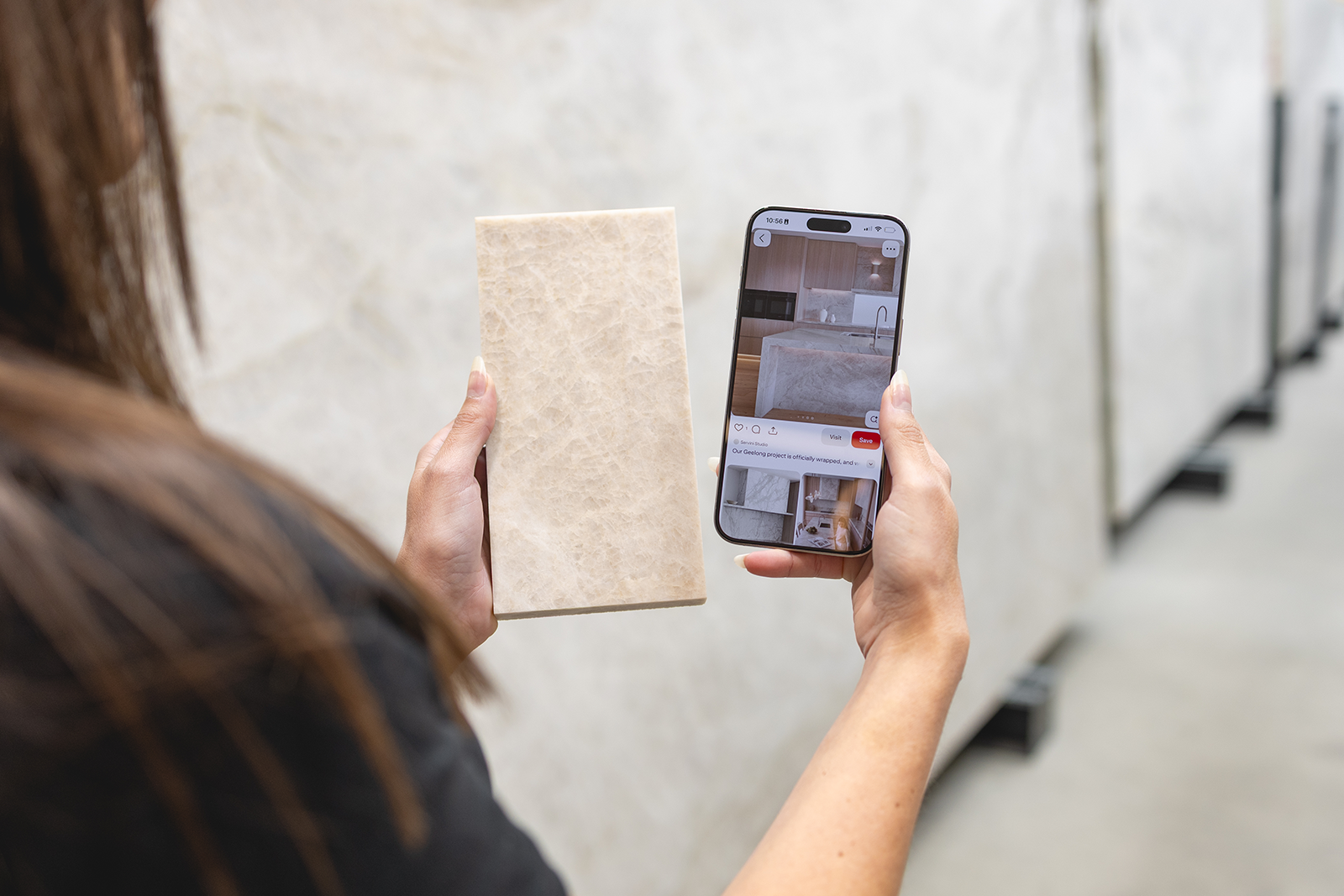
Where to Start When You Don't Know the Stone in Your Inspo Photos
For homeowners who don't know where to begin with stone. You don't need a stone name to start. Send your inspiration photos, tell us what you like and why you're drawn to it, and we'll identify the material and point you to the right slabs. Covers how your eye already picks matching tones, reading stone from a photo, which photos to trust online, and why picking stone is like picking art. Tags: how to choose stone, where to start, inspo photos, identify marble from photo, stone selection, Marble Hub Sydney.
Where to Start When You Don't Know the Stone in Your Inspo Photos
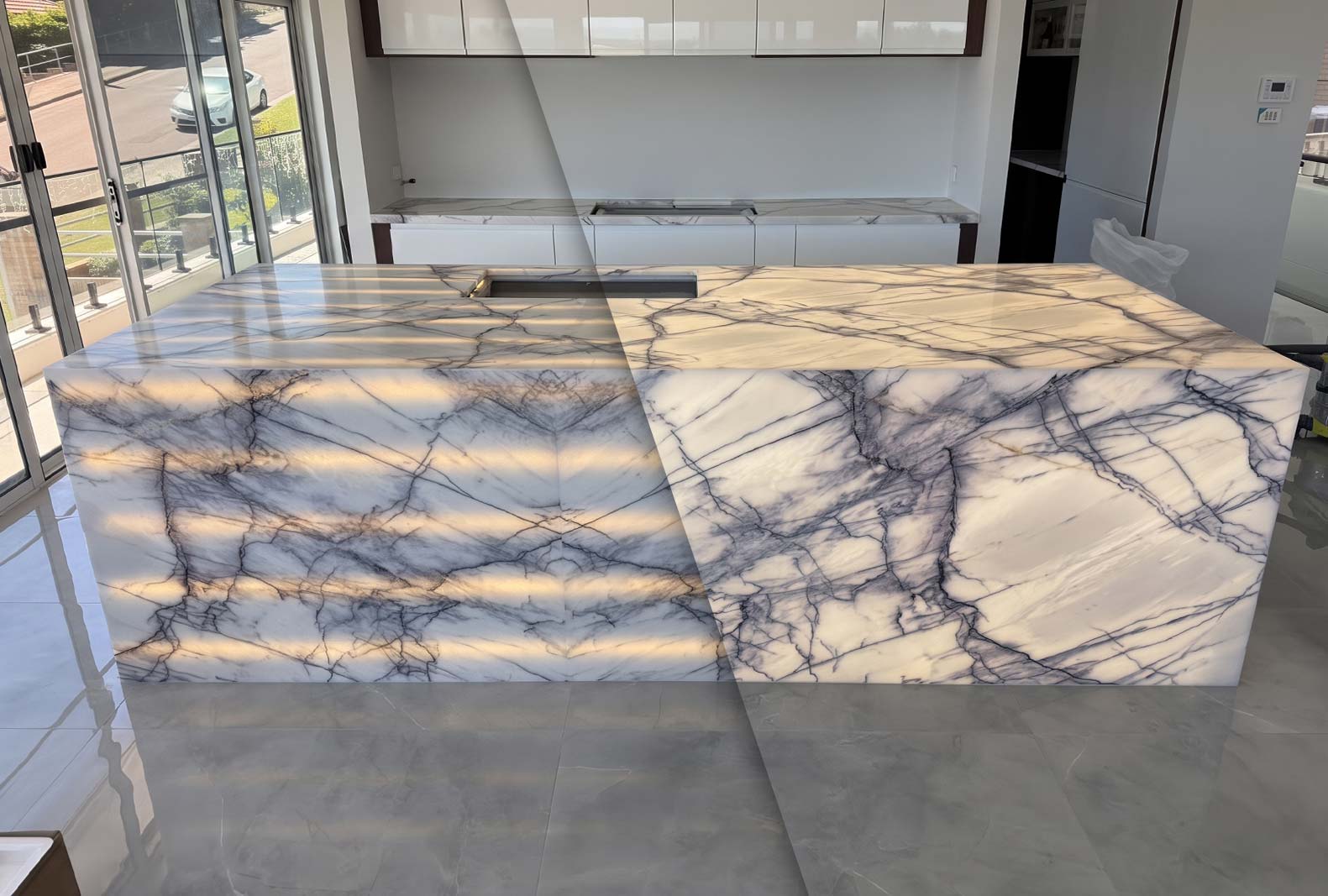
Backlit Stone and Why the LED You Choose Changes Everything
Backlit stone explained simply. The look changes a lot with the light behind the slab. LED strips give a striped, patterned glow; a full LED panel lights the whole slab evenly so it looks lit from within. Both are valid, so do what suits your budget, but plan it early with your electrician. Covers which stones are translucent and why the light install feeds into the check-measure. Tags: backlit stone, backlit marble, translucent stone, LED stone panel, backlit onyx, feature lighting, Marble Hub Sydney.
Backlit Stone and Why the LED You Choose Changes Everything
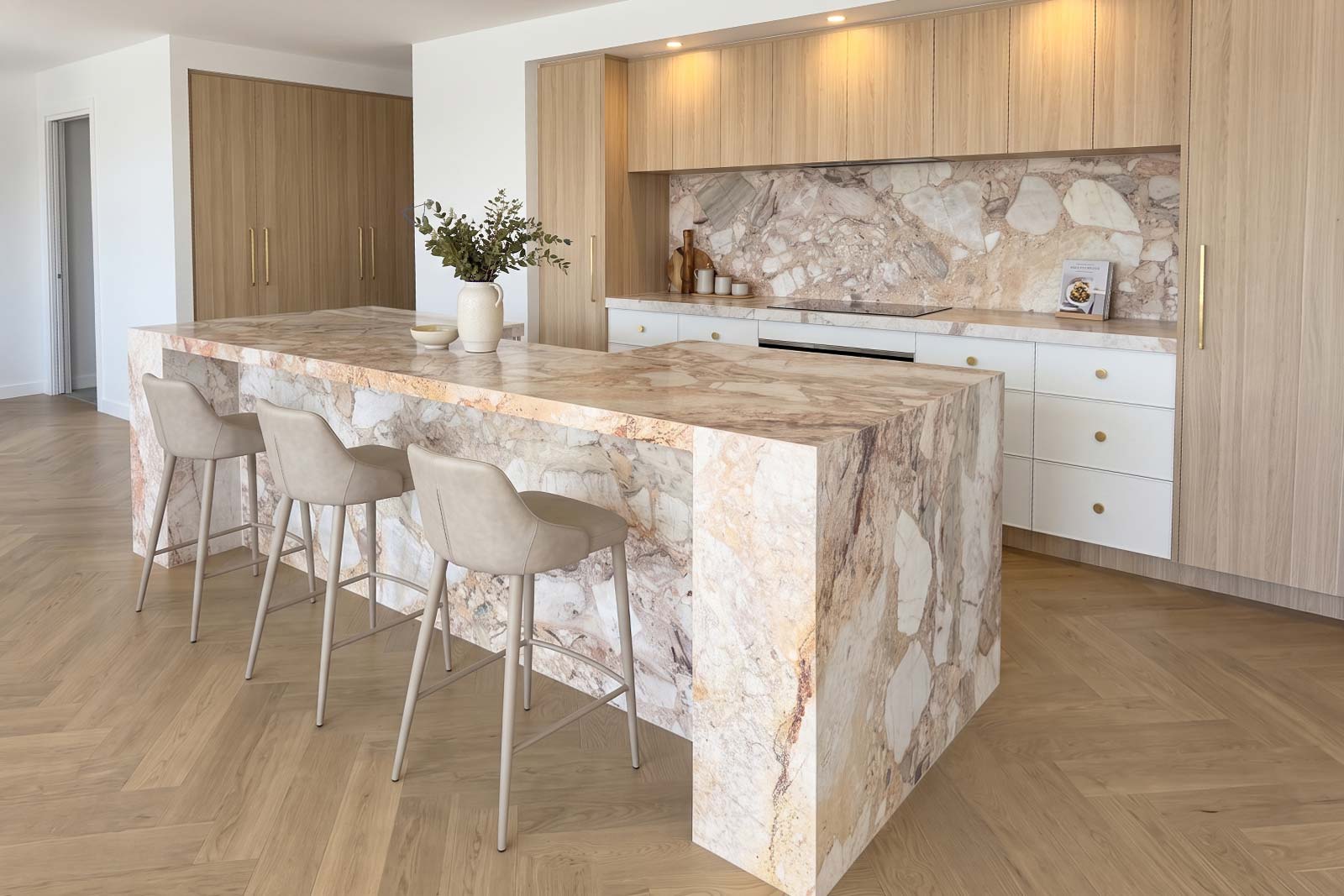
How We Plan Stone Across a Duplex Without Wasting a Slab
Planning stone across a duplex or dual-occupancy build. We work out real slab count, map every piece across the slabs, balance feature stone across both homes, and plan the stages so the check-measure and install land when each side is ready. Covers slab yield, offcut planning, mapping the cut to the stages, and getting every trade working to the same target dates. Tags: duplex stone benchtops, dual occupancy, slab count, stone yield, staged install, trade coordination, Marble Hub Strathfield South.
How We Plan Stone Across a Duplex Without Wasting a Slab
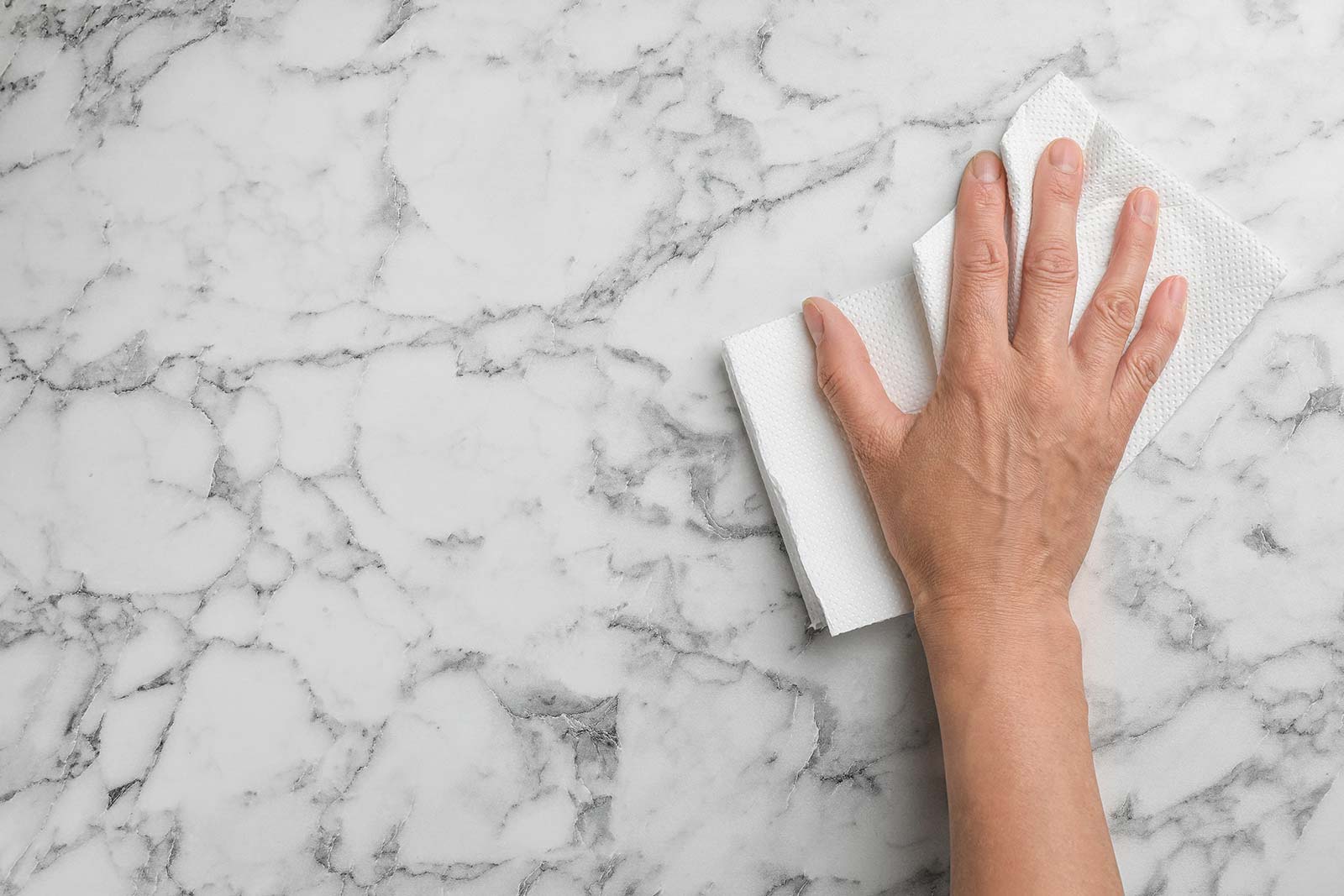
How to Clean and Care for a Marble Benchtop
How to clean and care for a marble benchtop, written for people who already own marble or are about to. Covers the daily routine, warm water and pH-neutral cleaner, wiping acidic spills fast, sealing with Lithofin MN Stain-Stop every 6 to 12 months, and the difference between a stain and an etch. Explains why heavy veining hides marks better than plain marble, and why a rehone and rebuff after 3 to 4 years brings a tired benchtop back. Honest about trade-offs. Marble is a relationship, not a set-and-forget surface. Written by Marble Hub, a Strathfield South stone factory and showroom.
How to Clean and Care for a Marble Benchtop
Let’s Get Started on Your Dream Space
Whether it’s a kitchen, bathroom, or laundry, Kitchen Hub is here to bring your vision to life.
